
ASIA · CHINA GUIDE
Shopping in China: Local Gifts, Shops & Souvenirs
A useful souvenir begins with a person and a purpose: tea they will brew, a scarf they will wear or a cup they can carry home intact. China’s regional products deserve more attention than a generic “silk, tea and jade” list. Compare the actual material, origin, size and packing before comparing the gift box.
This guide explains what to buy and how to select it. Named shops below are research-based starting points, not personal endorsements, live stock checks or guarantees of tax-refund eligibility. Reconfirm the branch and opening day before travelling across a city. For dishes to eat during the trip, use Food & Drink.
Choose a gift that fits the journey
On smaller screens, swipe or scroll horizontally to read the full table.
| Product | Useful for | Inspect before purchase |
|---|---|---|
| Sealed tea | A drinker who knows their preferred style | Named origin, harvest or packing details, net weight and storage |
| Silk accessory | A light, wearable gift | Fibre composition, stitching, care label and dimensions |
| Modern cup or small ceramic | A recipient who will use or display it | Rim, glaze, maker, food-use information and protective box |
| Paper, print or stationery | An easily packed design gift | Maker, reproduction description, paper size and flat packaging |
| Packaged regional food | A short journey to a permitted destination | Ingredients, shelf life, storage and destination import rules |
Buy bulky or delicate objects near the end of the mainland route if the product is not unique to an earlier stop. A teapot carried through four stations becomes part of every luggage decision. Leave space inside a rigid bag and keep the receipt with a photograph of the item. If the seller proposes shipping, obtain the full destination cost and responsibility for breakage in writing.
A small shop can be a worthwhile choice, but atmosphere is not a certificate of origin. Ask who made the product, where and from which material. A hand-finished edge and an attractive story do not establish that every part was made by hand. Choose the item on its documented qualities rather than treating a tourist district as proof of authenticity.
Tea: compare the leaves, not the presentation tin
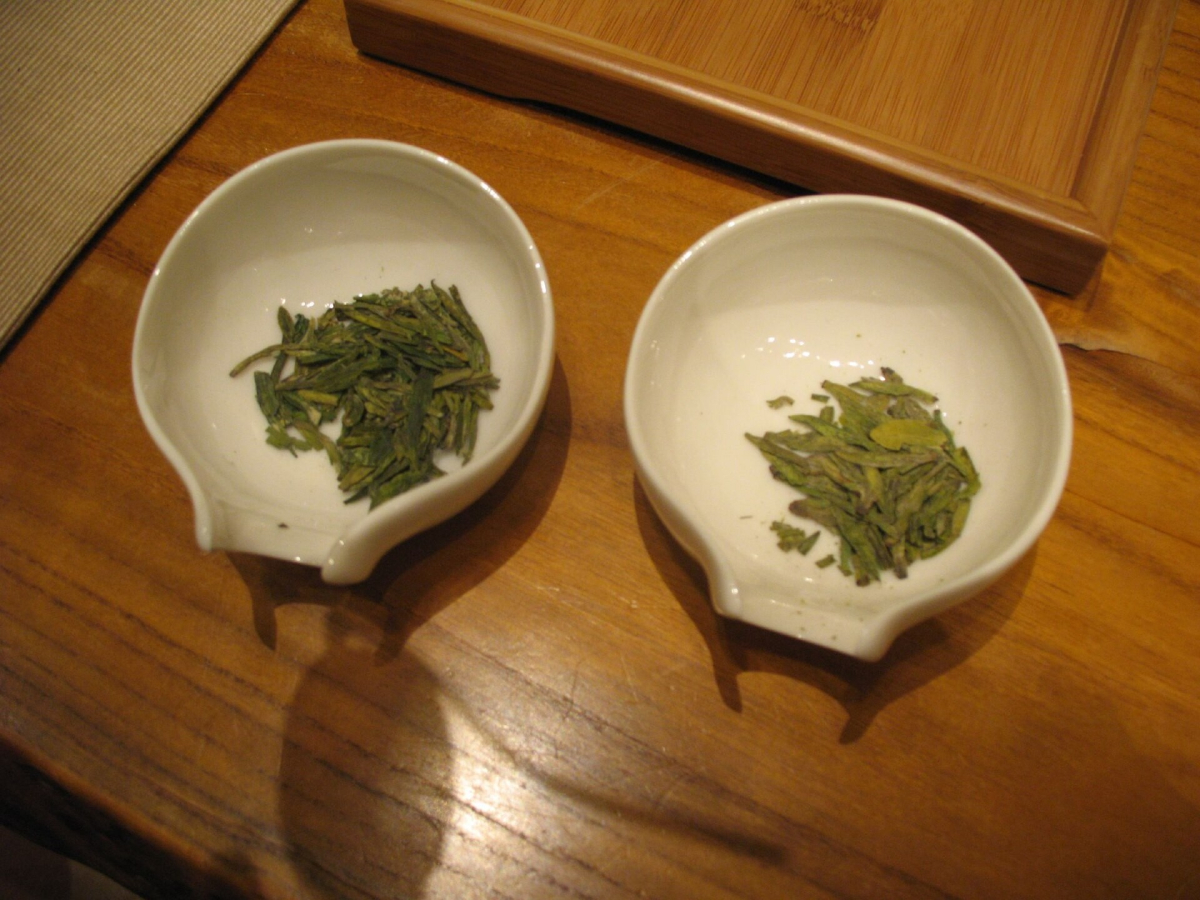
Longjing is a practical starting point around Hangzhou; Yunnan offers a different tea-shopping context, including Pu’er. Treat those names as the start of a question about origin and processing, not a promise that every packet sold in that city comes from a particular garden. Ask for the product’s Chinese name and labelled source so you can compare like with like.
If tasting is offered, ask which sealed packet corresponds to the tea being brewed and how much leaf is used. Strong aroma alone is not a quality grade. Compare the same weight and product type across offers; a large decorative tin can contain less tea than a plain packet. Ask how to store it and whether the intended recipient needs a brewing method they do not already use.
For a modest gift, a smaller labelled packet is often easier to explain, pack and use than an expensive collection of unfamiliar varieties. Buy sealed goods with a traceable seller and retain the receipt. A tasting is a shopping decision; agree any charge beforehand and avoid accepting an unsolicited invitation to an unknown venue merely because someone offers to practise English.
Silk and textiles: read composition and allow fitting time
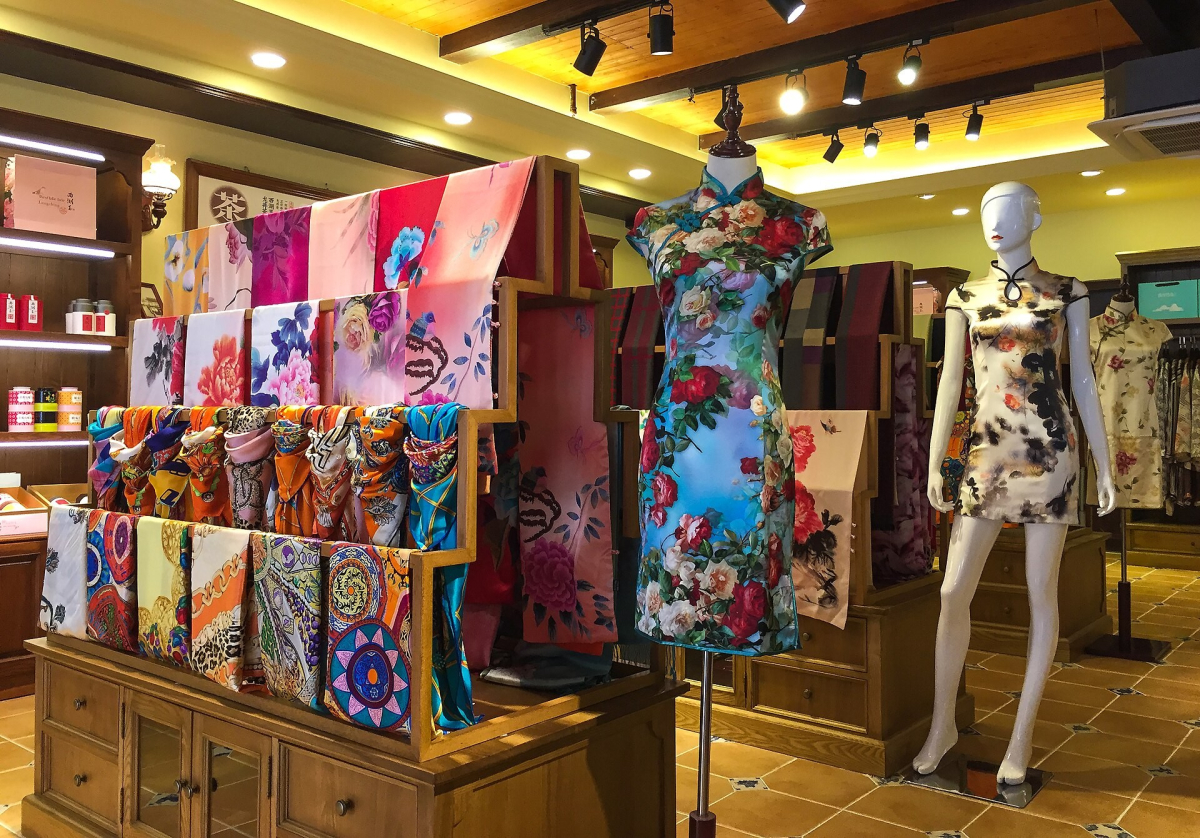
A scarf or fabric length can travel more easily than a tailored garment. Read the fibre-composition label: smoothness, shine and the word “silk” on a sales sign are not enough. Ask whether the item is pure silk, a blend or another fibre, and check the size against how the recipient will wear it. Inspect the hem and any pulled threads before the item is wrapped.
Beijing’s Ruifuxiang is a named starting point for silk and Chinese-style clothing. The official tourism branch listing identifies its Dashilan location at 5 Dashilan Street. Use that address to distinguish the historic shopping stop from other branches. The listing’s old opening hours and prices are not used here as current promises.
For made-to-measure work, agree the material, cut, fitting appointments, completion date and alteration arrangements before paying a deposit. A final-day fitting gives little room to correct a sleeve or collect a delayed order. If your route is tight, buy an inspected ready-made accessory instead of trusting a verbal promise that complex tailoring will be ready before the train.
Ceramics, prints and craft gifts
For a modern ceramic cup, examine the rim and foot, lid fit and any visible cracks under good light. Ask whether it is intended for food use or display and request the maker’s details. A decorative glaze should not be treated as verified food-safe material merely because the object looks like a teacup. Jingdezhen is a meaningful production context; the place name printed on a box still needs to match the maker’s account.
Buy a manageable object with a fitted protective box, then consider the luggage around it. Several small pieces can be harder to protect than one well-packed item. Photograph the condition before wrapping and keep lids separate if the seller’s packing requires it. A bargain that cannot survive the journey is poor value.
For paper gifts, distinguish an original work, an authorised reproduction and a decorative print. Ask for the creator or publisher and a flat sleeve or tube suitable for the medium. Museum shops can connect a design with the collection you have just visited, but check the actual opening and shopping access: a shop does not automatically permit entry without an attraction reservation. Choose contemporary, clearly documented souvenirs rather than guessing at the age or export status of an “antique”.
Named shopping stops in Beijing and Shanghai
In Beijing, Dashilan and the nearby Liulichang area offer different shopping questions. Dashilan is useful for comparing established retail brands and textile products; Liulichang is associated with art materials, books and prints. The municipal Dashilan guide provides the district context. Visit with a specific product in mind so that the historic setting does not make every purchase feel necessary.
Shanghai’s East Nanjing Road has several named food shops within one shopping corridor. The municipal shopping guide lists the addresses below. These are alternatives for comparing labelled packaged foods, not a requirement to shop in every store or a claim that every product is suitable for international carriage.
On smaller screens, swipe or scroll horizontally to read the full table.
| Place | Address or area | Shopping purpose |
|---|---|---|
| Ruifuxiang, Beijing | 5 Dashilan Street | Inspect silk accessories, fabrics or tailoring arrangements |
| Dashilan and Liulichang, Beijing | Qianmen/Dashilan; a separate walk towards Liulichang | Traditional retail context, art supplies and clearly described prints |
| Shanghai First Foodhall | 720 East Nanjing Road | Compare packaged regional foods and gift sizes |
| Sanyang Nanhuo Store, Shanghai | 630 East Nanjing Road | Compare labelled dried goods and ingredients |
| Tai Kang Foods, Shanghai | 766 East Nanjing Road | A second packaged-food comparison stop |
| Shao Wan Sheng, Shanghai | 414 East Nanjing Road | Inspect the exact preserved-food product and packing |
For an efficient Shanghai outing, choose First Foodhall and one comparison stop before continuing towards the waterfront. Check their positions on a current map and keep purchases manageable for the rest of the day. Avoid carrying perishables through a long afternoon simply because the shop was convenient in the morning.
In Beijing, combine a focused Dashilan browse with a meal in the same wider area. Add Liulichang only if prints, books or art materials are a real interest. This is a suggested shopping sequence, not a timed walking tour: street access, weather and the shop’s current operation still control the day. See Chinese addresses and navigation for saving the correct branch.
Payment, receipts and departure tax refunds
Confirm the total in yuan, the item and the quantity before authorising a payment. In a fixed-price store, compare labelled products rather than assuming bargaining is expected. In a setting where a price is negotiated, settle it clearly before wrapping or custom work begins. Keep a receipt showing what was actually purchased; an app payment record alone may not describe the goods or agreed service.
China’s departure tax-refund arrangements changed in 2026. The State Taxation Administration’s May policy update describes paperless verification from July and expanded cross-region instant-refund arrangements. These are not an automatic discount on every purchase. Before paying, ask whether the exact shop and goods participate, what identity and transaction information is required, which exit port can process the claim and whether your departure timing qualifies.
For an instant refund, ask about the conditions that apply after the shop pays it, including the deadline and exit formalities. Allow time at the departure point and keep the goods accessible until you know whether inspection is required. Do not calculate a universal refund percentage from a shop window: product treatment, service charges and your transaction may differ. Use the payment guide to prepare Alipay, Weixin Pay and a backup card or cash.
Packing, customs and the journey home
Check your destination country’s official rules before buying food, seeds, plants, animal products or medicines. A sealed retail packet does not establish permission to import it, and a seller cannot decide another country’s border requirements. If ingredients are unclear, choose a different gift rather than relying on a translation of the front label alone.
Cultural objects require particular care. Official exit guidance explains that cultural relics can require declaration and export documentation. Do not assume a shop receipt authorises export or that posting the object avoids the rules. For an ordinary souvenir purchase, a clearly described contemporary product is easier to assess than an item sold with an unverifiable historical story.
Separate shopping time from packing time. Leave enough room to inspect fragile goods again, organise receipts and check baggage limits before the last transfer. A photograph of a desired product and the maker’s contact can be a useful outcome of browsing; you do not have to buy immediately to make a market visit worthwhile.
Shopping & Souvenirs FAQs
What is an easy-to-pack gift from China?
A labelled tea packet, inspected silk accessory or contemporary stationery can be practical. Choose for the recipient and confirm destination import rules for edible products.
Are famous-brand shops a guarantee of every product’s origin?
No. Inspect the specific label, material, maker and receipt. A historic shop address helps identify the seller but does not replace product checks.
Can I assume all shopping qualifies for a departure tax refund?
No. Verify the participating shop, goods, purchaser requirements, exit port and deadlines before payment. Instant refunds also have conditions.
Should I buy an antique as a casual souvenir?
Only with appropriate expertise and confirmed export documentation. A clearly described modern craft or reproduction is a more straightforward choice for ordinary gift shopping.


