
Sign in
For Photos4Travel editors and team members.
Virgin Islands · Responsible Travel in the
Responsible Travel in the Virgin Islands: Reefs, Wildlife and Communities
Responsible travel in the Virgin Islands starts with the decisions made on an ordinary day: where a boat stops, how closely you follow a turtle, what you leave on a beach and whose work you pay for. The USVI and BVI have different protected areas and rules. Check the territory and protected-area rules for each stop. You can enjoy the islands' water, food and landscapes while giving their communities and habitats room to function.
On this page · 10 sections ShowHide
Choose a trip with time to understand the place
Pick a main base and a few outings that fit it. Repeated hotel changes and cross-border day trips can leave you seeing little beyond docks, taxis and a famous beach. Staying longer in one area gives room for a local meal, a heritage stop and a second visit to a favourite place without having to race another connection. This is a practical way to make the holiday more satisfying; it is not a claim that a particular itinerary has a measured carbon footprint.
On St. John, leave time for one beach and a short interpreted walk in the same area. On Tortola, allow time for the town, a forest visit or a restaurant as well as a charter departure. On Anegada, arrange the local transfer and respect the quieter pace instead of treating the island as a brief photograph between boats. Ask before entering private land or taking a shortcut to a viewpoint. The most considerate plan is one you can complete without pushing a driver, guide or boat crew to rush.
Keep fins, feet and hands away from coral and seagrass
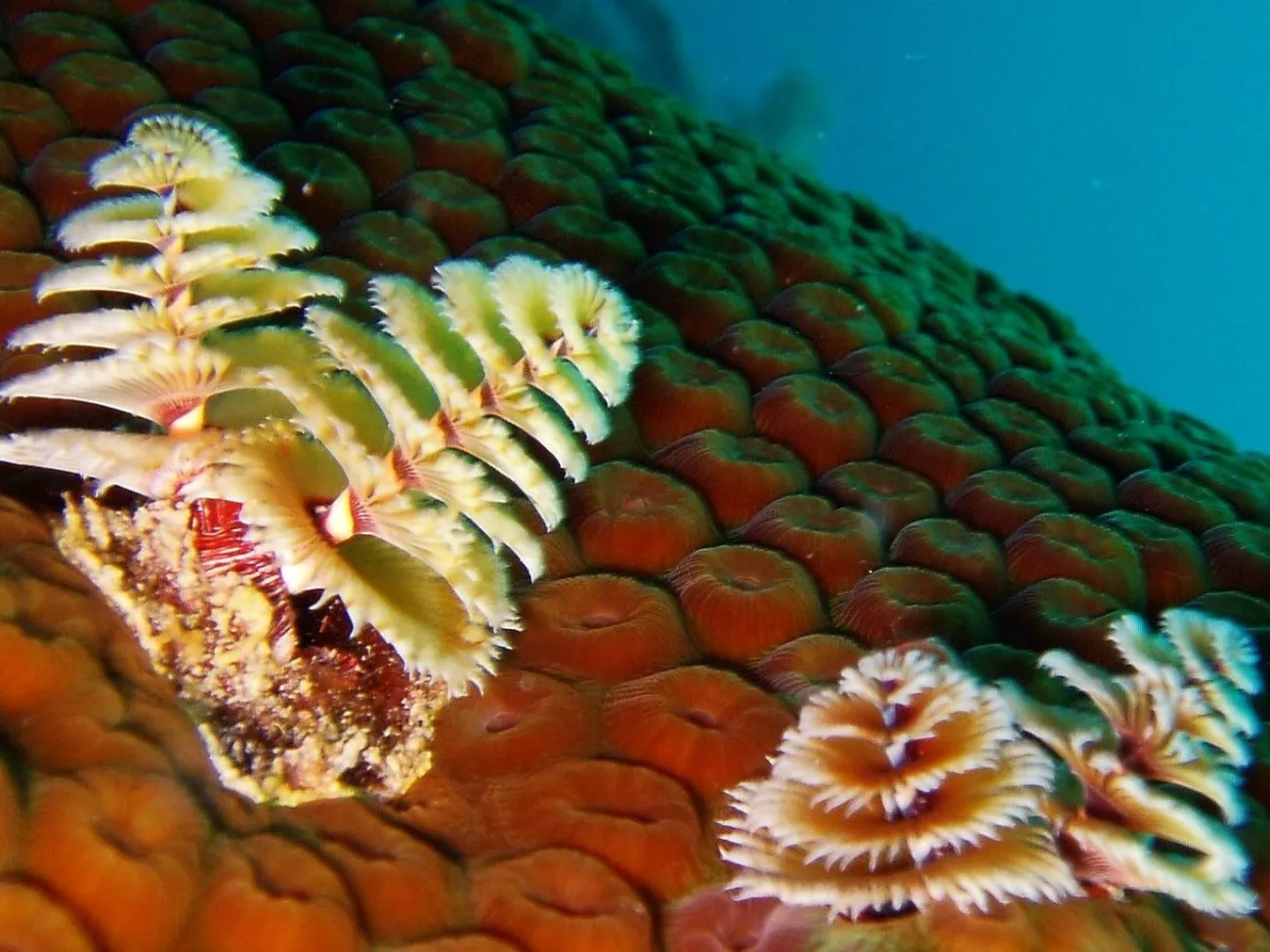
Photo: Becky A. Dayhuff / NOAA Photo Library · Public domain. Resized.
The Virgin Islands National Park snorkelling guide treats ability and daily conditions as central to choosing a site. Before entering, check how you will get out and whether wind or current could carry you beyond your comfortable range. Practise with equipment in suitable shallow water rather than learning buoyancy directly above a reef. A flotation aid can help where appropriate, but it does not make a hazardous site safe.
Keep enough clearance that fins do not strike coral or scrape the bottom. If you need to stand, use an appropriate sandy area rather than a living reef. Do not hold coral for a photograph, feed fish to gather them around a camera or collect a souvenir because it appears dead. Seagrass is habitat too, not an empty area to ignore while looking for brighter coral. At a busy bay, give other swimmers space and keep out of boat channels. A good water visit ends when conditions or fatigue require it; the fee paid for an excursion does not oblige you to complete every advertised swim.
Watch turtles without changing what they are doing
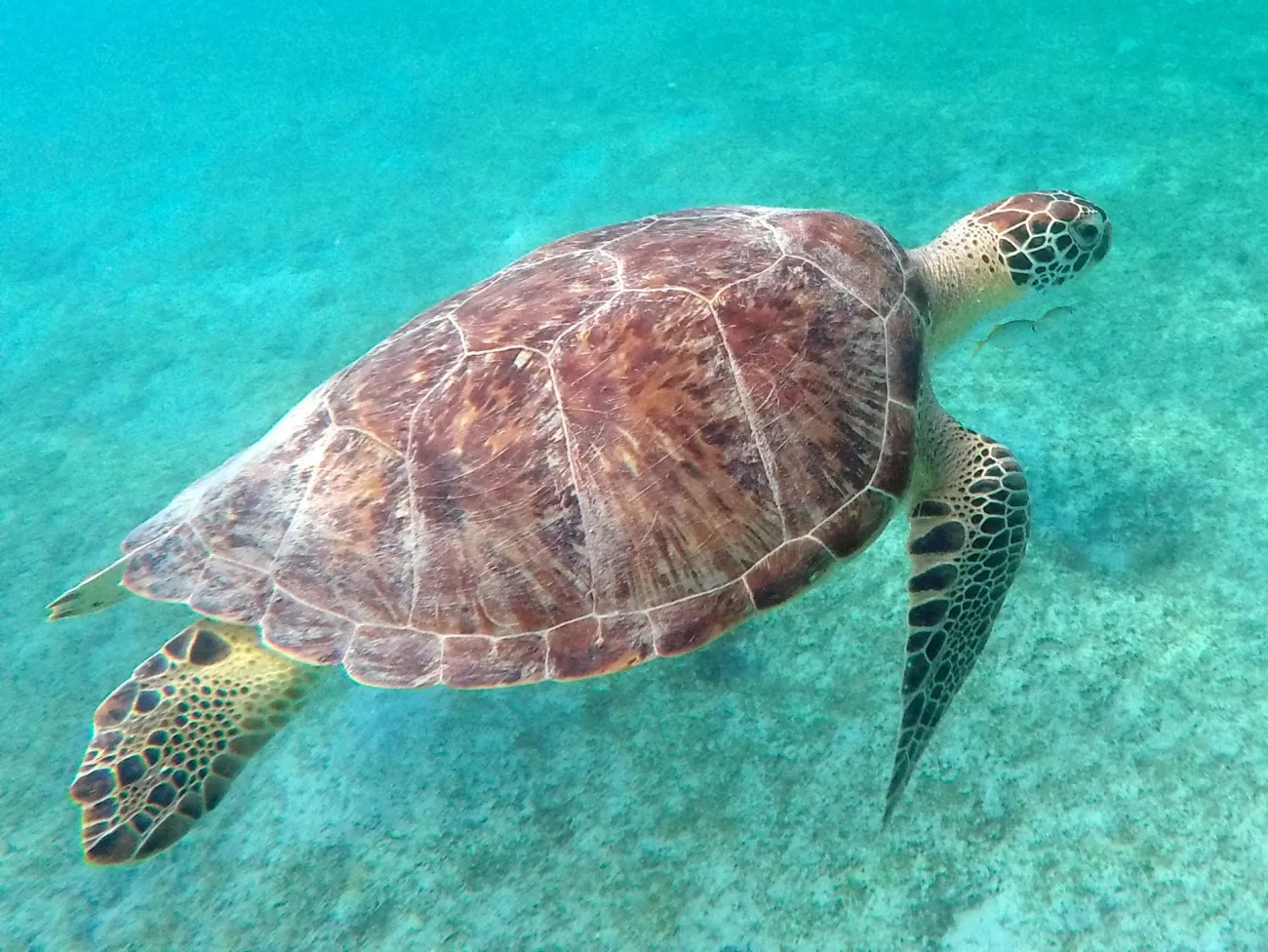
Photo: Gruepig · CC BY-SA 4.0. Resized.
At bays where turtles feed, let the animal choose its direction and keep its route to the surface clear. Do not chase, touch, ride or surround it. The NPS turtle guidance explains that disturbance interrupts feeding, resting and nesting. A photograph taken while the turtle is swimming away from a crowd is not a reason for the crowd to follow. Sightings remain a possibility, not something an operator or guide can guarantee.
On shore, keep clear of marked nests and follow closures. St. Croix's Sandy Point refuge closes to general beach visitors roughly from mid-April through August for nesting leatherbacks. Do not walk around a closed gate because an old beach list omitted the season. At accommodation near a nesting shore, close curtains and follow local lighting instructions after dark. Remove litter and fill deep beach holes before leaving. If a turtle or hatchling appears to need help, contact the relevant park or wildlife authority instead of handling it yourself or trying to improve its path for a video.
Ask the boat operator how the site will be visited
A useful operator briefing explains the actual departure point, group size, conditions, protected-area rules and what happens if the planned stop is unsuitable. Ask whether the boat uses an appropriate mooring and what arrangements apply to the particular park. A protected bay is not simply an empty anchorage. At The Baths, the National Parks Trust identifies a marine mooring permit requirement and warns that swell can prevent sea access. The safe alternative may be a different stop or a land-based visit, not a more determined swim from the boat.
For Buck Island off St. Croix, use the NPS authorized-concessioner information to understand who operates park excursions. If taking your own vessel, confirm the current permit and anchoring position directly with NPS: public pages contain differing private-vessel statements. Do not interpret a captain's confident sales pitch as permission to ignore a closure, overcrowd a mooring or approach wildlife. A transparent cancellation or substitute-stop policy is more useful than a promise that every day will reach the same photograph.
Bring useful protection and carry your waste back
Sun protection and reef care belong together. Bring shade options, a hat and suitable clothing for the outing, and follow current park and health guidance for sunscreen. NPS advises reading ingredients instead of relying solely on a 'reef-safe' label. Do not turn that marketing phrase into a certification or assume every product carrying it is accepted locally. Apply what you need in a way that follows the product instructions and the rules at your actual destination.
In the USVI, the sunscreen rule in Act 8185 covers oxybenzone, octinoxate and octocrylene: sunscreen containing these ingredients is prohibited for use or possession, with a narrow licensed-prescription and pharmacy exception. Check the ingredients alongside the label. This is a USVI rule; use the separate local guidance for a BVI outing.
Pack food in containers that will not blow away on a boat or beach. Bring a reusable bottle, but ask the accommodation or guide where safe drinking-water refills are available; do not assume an unfamiliar tap or stored-water supply is suitable. Keep a small bag for your own rubbish, including scraps, fruit peel and broken equipment. Do not leave waste beside a full bin for somebody else to recover. A remote St. John beach or quiet Anegada shore may not have the service infrastructure of a large resort. Carrying back what you brought is a manageable choice, and it prevents lunch packaging from becoming the next swimmer's problem.
Treat ruins, carvings and trails as places with a history
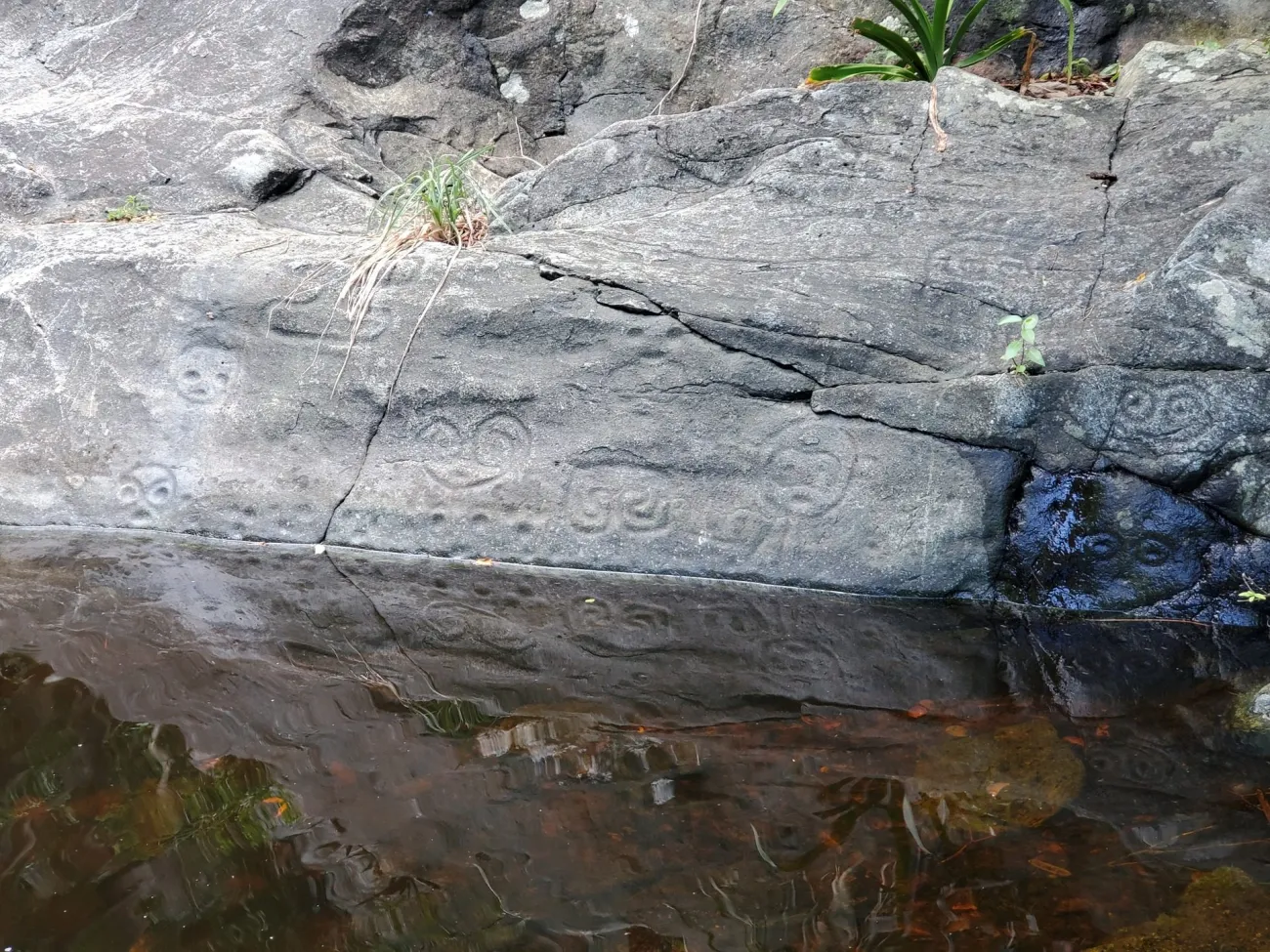
Photo: NPS/Parnicza · Public domain (U.S. Government work). Resized. No claim to original U.S. Government works.
At Annaberg, Reef Bay and other historic sites, read the interpretation and leave structures as you find them. The park's safety guidance says not to climb historic walls or touch petroglyphs. Those restrictions protect both people and material that cannot be replaced by rebuilding it for the next visitor. Include the histories of Indigenous people and enslaved workers when describing these places.
Stay on marked trails and avoid trampling vegetation to create a cleaner camera angle. If a route is muddy or a view is blocked, turning back is preferable to widening the path. The BVI National Parks Trust's work spans forest restoration, marine conservation and historical preservation, including the Coppermine, Mount Healthy and the RMS Rhone. Each site has its own way of being visited. A wreck dive, forest walk and heritage stop should not be treated as interchangeable activities with the same permissions. Ask about the interpretation and guide knowledge, not only how many places can be fitted into the excursion.
Pay for local knowledge and ask before taking portraits
A meal at a small restaurant, a locally led walk or a purchase from an identifiable maker can connect your trip with people doing the work on the islands. Ask where an item was made and who made it, then compare its value and usefulness. If you want a guide's expertise, book the service rather than collecting an itinerary from them and leaving without acknowledging the time involved.
Community events are not staged solely for visitors. At a food fair, carnival or fungi performance, give vendors and performers room to work. Ask before a close portrait and be especially considerate around children, worship and private celebrations. Learn the place and event name so a later caption does not collapse USVI and BVI traditions into a generic 'Caribbean party.' Support an actual programme if volunteering or joining a clean-up: confirm who organizes it, what work is needed and whether visitors can participate. Do not arrive expecting staff to invent a useful job for the afternoon because volunteering sounds appealing in a holiday post.
Make practical choices about meals and accommodation
Ask restaurants what is locally available and how a dish is prepared. Availability changes, and a menu photograph is not a promise that every fish or vegetable comes from the island. For seafood, respect closed seasons and protected species. The BVI visitor resource guidance explains fishing permits and species restrictions; tourists should not buy or collect an unfamiliar marine specimen simply because someone offers it. A legal restaurant meal, recreational fishing and exporting a shell are different questions.
For a self-catering stay, buy ingredients for the meals you actually plan to prepare. Ask about rubbish separation and collection before filling several bags on departure morning. Follow the host's instructions for water use and air conditioning, particularly when leaving windows or doors open. These choices should fit the property rather than rely on an assumption that every island has identical utilities. An accommodation's words 'eco' or 'sustainable' are a starting point for questions: ask what is actually done, what a certification covers and how guests can help. Attractive landscaping or a rustic tent alone does not establish a measured environmental benefit.
Build these choices into the day you want to have
A considerate St. John day could involve a shorter interpreted walk, a beach selected for the actual surf and your swimming ability, lunch with your waste carried away, and a return before tiredness turns the drive into a chore. A BVI outing could start with the correct documents and a skipper's briefing, use an appropriate protected-area arrangement, leave time for a local meal and finish without pressuring the crew to chase one last distant stop. These are examples of pacing, not fixed tours or guarantees of particular conditions.
Before paying an excursion provider, ask a few concrete questions: where will we depart, what is included, how are unsuitable conditions handled, which site rules apply and how large is the group? For accommodation, ask the questions that matter to your stay, from safe water refills to step-free access and waste collection. Keep the answers with the booking rather than relying on a vague impression. You do not need to measure every holiday decision to make useful ones. Respecting a closed beach, choosing an honest operator and leaving a turtle undisturbed are clear actions that fit naturally into an enjoyable trip.
Frequently asked questions
Can I touch a turtle or feed fish while snorkelling?
No. Watch without chasing, touching or surrounding wildlife, and keep a turtle's route to the surface clear. Feeding changes behaviour and can encourage crowds around animals; follow the park or guide's instructions.
Does a reef-safe sunscreen label guarantee it is suitable?
No. NPS advises checking ingredients and following current local rules rather than relying on the label alone. Combine appropriate sunscreen with clothing, shade and other sun protection.
Why might Sandy Point be closed when the weather is good?
The St. Croix refuge protects nesting leatherback turtles. Its public beach closure is generally roughly mid-April through August, so access depends on wildlife protection as well as weather.
Can I take shells or coral home from the BVI?
Do not assume that dead or washed-up material is free to collect or export. BVI conservation and customs restrictions apply; leave specimens in place and ask the relevant authority about any proposed purchase or export.
How can I identify a responsible boat excursion?
Look for clear answers about the actual operator, group size, protected-area arrangements, safety briefing and alternatives in unsuitable conditions. A promise of guaranteed wildlife or access regardless of weather is not a useful assurance.