
Sign in
For Photos4Travel editors and team members.
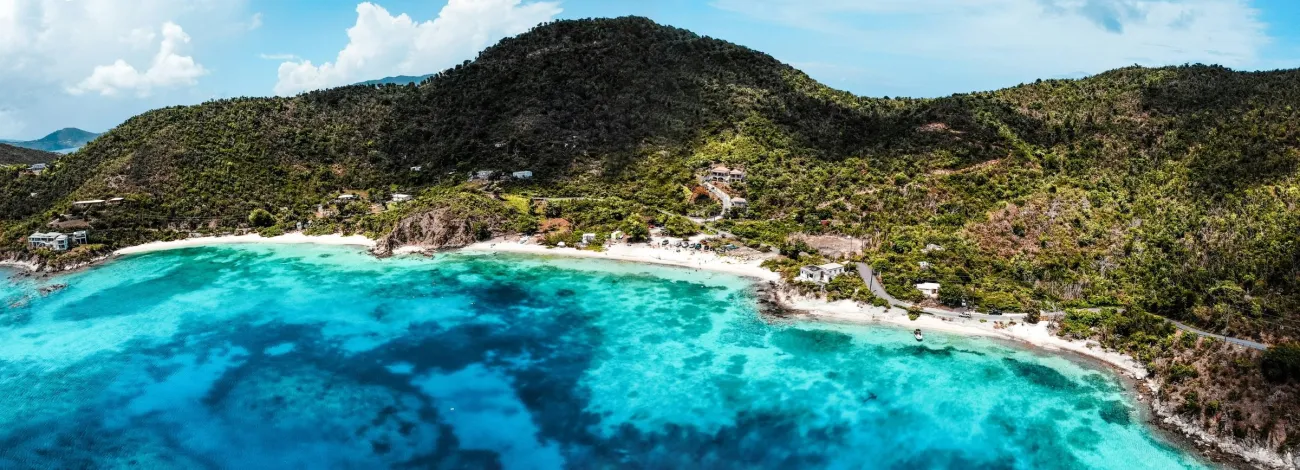
Photo: start livin · Unsplash License · Resized.
Caribbean · Virgin Islands guide
Virgin Islands Travel Guide: Plan a USVI or BVI Trip
The Virgin Islands lie in the northeastern Caribbean, east of Puerto Rico. For a holiday, the first distinction is between the United States Virgin Islands (USVI)—including St. Thomas, St. John and St. Croix—and the British Virgin Islands (BVI), including Tortola, Virgin Gorda, Jost Van Dyke and Anegada. They share a close island geography, but crossing between the two territories is an international journey.
On this page · 8 sections ShowHide
Choose your main island before shopping for a hotel. A week exploring St. John from one base, a St. Croix food-and-history trip, and a BVI holiday with two island stays require quite different arrivals and transport budgets. This guide helps you make those decisions in the right order, with detailed advice linked where it becomes useful.
US Virgin Islands or British Virgin Islands?
The USVI suits a trip organised around its three main islands, but those islands are not interchangeable. St. Thomas has an airport, harbour towns and a road connection to the passenger ferry for St. John. St. John is reached by boat and puts national-park beaches and trails close to the centre of the holiday. St. Croix has its own airport and a separate position farther south; treat it as a substantial stay rather than a quick extra on every St. Thomas itinerary.
In the BVI, Tortola is a useful starting point for a land-based holiday, while Virgin Gorda, Jost Van Dyke and Anegada can change the emphasis of the trip. Sailing is one way to connect them, but you do not need to charter a yacht: accommodation and passenger-ferry options also support independent travel. The important question is which services operate for your actual dates, not how many islands appear close together on a screen.
Both territories use US dollars. That does not create a shared immigration system. The USVI tourism authority describes the direct domestic-travel passport exception for US citizens; it does not cover a BVI excursion. Check the separate USVI and BVI entry requirements before committing to flights or boats across the boundary.
Choose the island around your days

Photo: NPS/Parnicza · Public domain (U.S. Government work). Resized. No claim to original U.S. Government works.
Swipe or scroll sideways to compare the full table.
| Trip priority | Starting shortlist | Decision to settle first |
|---|---|---|
| Beach days with a town base | St. Thomas or St. John | Will you drive, use taxis or stay close to Cruz Bay? |
| History, food and a longer island circuit | St. Croix | Can you arrive at STX and keep the whole stay there? |
| A BVI base with optional day trips | Tortola | Which ferry terminal matches the excursions you want? |
| Boulder scenery and a smaller island stay | Virgin Gorda | Do you want Spanish Town convenience or a different resort area? |
| Beach-bar atmosphere or a coral-island stay | Jost Van Dyke or Anegada | Are the onward transport and final return practical? |
Use these starting points to match an island with the way you want to spend your days. A family that wants an apartment kitchen and short daily outings may be better served by a practical base than a famous viewpoint. A couple planning several evenings out should consider the last road or ferry connection as carefully as the beach. Use the island comparison for the fuller trade-offs and the Virgin Islands maps to see their geographical relationship.
How many days do you need?
With four or five calendar days, choose one overnight island. You will normally lose useful hours to arrival and departure, and a hotel change can consume the part of the day you hoped to spend swimming. On St. Thomas, an optional St. John day can add variety without changing rooms; on St. Croix, use the time for different parts of the same island. A short BVI visit works better when its arrival airport or ferry destination is aligned with the chosen base.
Seven calendar days give six nights and, with ordinary flight timings, about five full exploration days. That is enough for a single island with a day trip, or a restrained two-base plan. Ten to fourteen days allow a second territory or a slower island combination, provided the itinerary has room for the transfer itself. Adding Anegada, St. Croix and Jost Van Dyke to the same short list is much easier than connecting all three comfortably.
Our 7-, 10- and 14-day itineraries separate nights from sightseeing days and include alternatives when a boat outing is unsuitable. Start with the route that serves your interests; consider spending extra nights at an existing base for more time to explore.
Choose dates for the holiday you want
Winter and early spring are sensible starting points if you prefer the generally drier part of the year, but dry weather does not mean a calm sea. The National Park Service notes stronger winter trade winds and warns visitors to check forecasts during winter swell events. A sheltered-looking bay in a photograph cannot tell you whether a particular morning is suitable for swimming.
Later-year travel needs a more flexible approach to weather and services. The National Hurricane Center defines the Atlantic hurricane season as 1 June to 30 November. That is a planning window, not a prediction that a storm will affect your stay. Compare cancellation terms and the number of transport connections you would have to rearrange.
Events can be the reason to travel. The current Crucian Christmas Festival season runs from 5 December 2026 to 2 January 2027, with its busiest village and parade period later in the season. Read the festival calendar alongside seasonal weather advice before choosing your island and nights.
Match your arrival to your first bed
For St. Thomas, look at Cyril E. King Airport (STT); for St. Croix, Henry E. Rohlsen Airport (STX). St. John has no commercial airport, so an STT arrival continues by road and boat. For Tortola, Terrance B. Lettsome Airport (EIS) is on neighbouring Beef Island. A ticket to St. Thomas can also begin a BVI journey, but it adds an international ferry connection and the need to meet both jurisdictions' entry rules.
Before paying for a remote first-night stay, follow the complete arrival chain: immigration where applicable, baggage, road transfer, terminal check-in, sailing, and the final ride to the property. A late landing may make a gateway-island overnight the more comfortable choice. The BVI arrival guidance specifically highlights onward-transfer planning after late flights.
Then compare the immediate area. Cruz Bay and Coral Bay are different St. John bases; Road Town and the north-coast beaches are different Tortola stays. A sea-view villa on a hill is not automatically walkable to dinner. Our areas and hotels guide, airport transfers, ferries and local transport and car-rental advice handle these separate decisions.
History and culture behind the island names
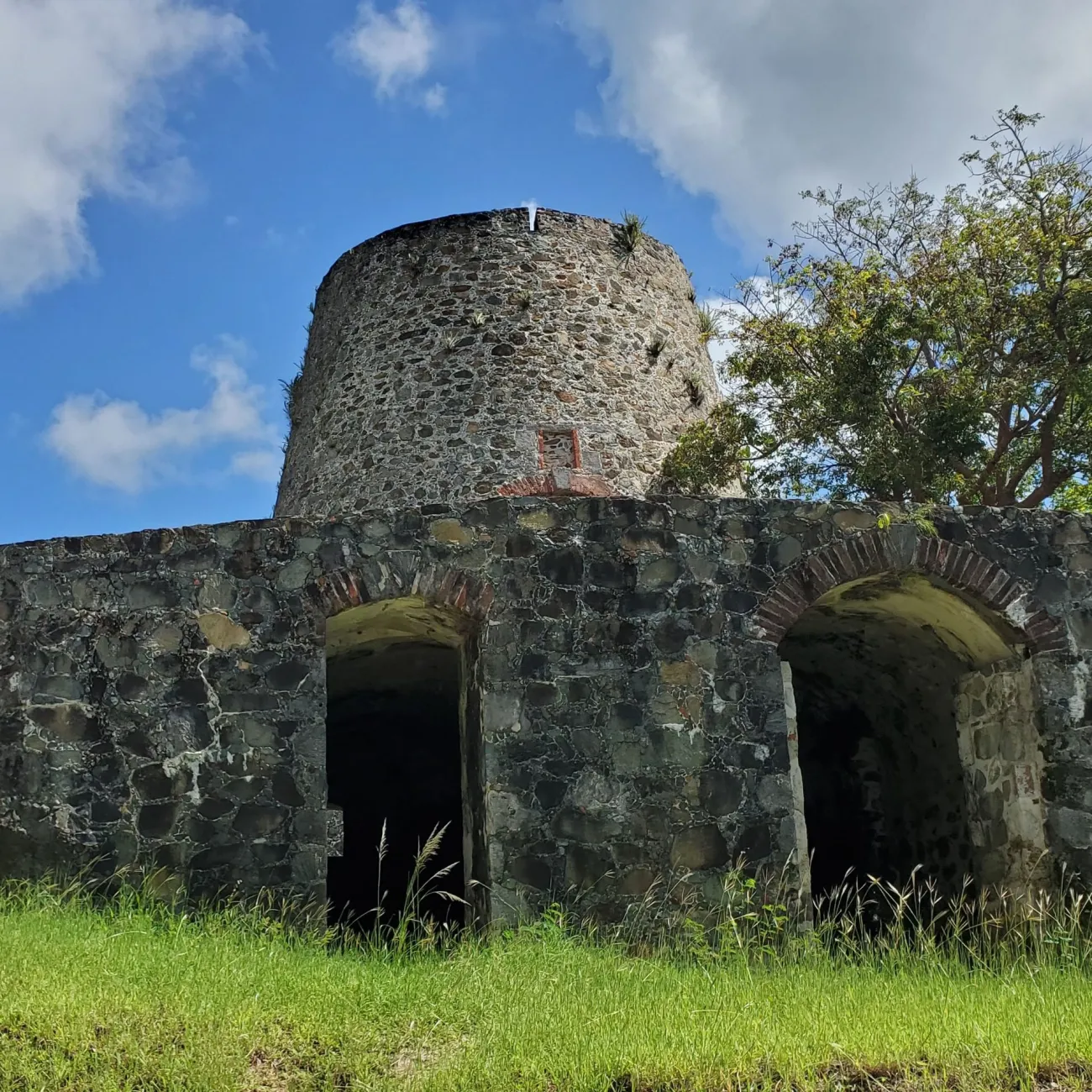
Photo: NPS/Parnicza · Public domain (U.S. Government work). Resized. No claim to original U.S. Government works.
The islands' story begins long before the European names on today's harbours and forts. Archaeological sites, including St. John's petroglyphs, record Indigenous histories; later plantation ruins and trading towns reveal the violence and wealth of colonial economies built through enslavement. The National Park Service's historical overview places those surviving structures within a much longer human landscape.
The present USVI were formerly the Danish West Indies; transfer to the United States took place in 1917. Emancipation in the Danish islands came in 1848. The neighbouring British islands followed a different colonial and emancipation history, commemorated in the BVI's August celebrations. At forts, sugar works and heritage trails, read the surviving buildings as evidence of the lives and conflicts behind them.
Living culture also deserves space in the trip. Listen for quelbe, calypso and steelpan, notice madras textiles, and try dishes that local families and cooks continue to adapt. USVI heritage guidance connects these traditions with present-day communities. Allow a town morning, local lunch or public festival alongside beach time; the islands need not be experienced only from a boat.
Build a few good days, then price the whole trip
Combine one main outing with a nearby meal or easy stop. A north-shore St. John day, a Christiansted heritage morning, and a Virgin Gorda boulder walk have different footwear, transport and weather needs. The experience guide, beach comparison and walks and national parks help you choose an outing you can actually complete.
Accommodation is only the first line of the bill. Add airport rides, bags on boats, rental charges or taxis, meals, activities and any border fees. Use travel costs and longer-stay budgeting to compare complete scenarios. A cheaper room can become an expensive choice when every meal and beach requires another paid ride.
Finish the plan with local food and places to eat, evening options, local gifts and shopping, and photography locations. Keep the practical essentials, health, safety and useful contacts, and responsible-visit advice handy for the trip itself.
Frequently asked questions
Are the US and British Virgin Islands the same destination?
They belong to the same geographical island group but are separate territories. Choose the islands you want to visit, then check the relevant entry rules and transport connections. A boat crossing between USVI and BVI is an international journey.
Which Virgin Island is a practical first choice?
St. Thomas is useful for an airport arrival, varied services and an optional St. John visit. St. John suits a stay centred on park beaches and trails; St. Croix works well as its own holiday. Tortola is a useful starting point for a BVI trip. Your interests and arrival route should decide.
Can I visit several islands without hiring a yacht?
Yes. Passenger ferries and land accommodation support many independent trips. Check the actual terminal, operating dates and last return with the operator; a published island connection is not a guarantee of a convenient same-day return.
Is one week enough for both USVI and BVI?
It can support a limited combination, but six nights disappear quickly when flights and an international transfer are included. A single territory with one main base usually leaves more time for the places you came to enjoy.