
Sign in
For Photos4Travel editors and team members.
Virgin Islands · Things to Do in the
Things to Do in the Virgin Islands: Build Days Around the Island You Choose
A good Virgin Islands trip has some empty space in it. You need time to swim after a walk, stop for lunch when the place looks promising and change an outing when the sea does not cooperate. The islands reward that flexibility, but ferries, international borders and steep roads make an overfilled itinerary surprisingly tiring.
On this page · 9 sections ShowHide
Choose a base first, then give each day one main purpose. St. Thomas combines town and beach time; St. John lends itself to national-park landscapes; St. Croix works well as a trip in its own right. In the British Virgin Islands, choose between a land-based holiday and a boating-focused plan before trying to connect every island on the map.
Match your days to your base
With three or four nights, stay on one island or use one island as a clear base. Add a second only when the outing matters enough to justify the transfer. A St. Thomas stay with a planned St. John day is different from moving hotels: you keep the same room, travel lightly and can adjust the day around a return sailing. St. Croix deserves more than an improvised connection between the two.
With a week, give yourself time for both activity and recovery. Follow a full walking day with an easy beach afternoon and time to recover. If you want both USVI and BVI, compare the value of staying several nights in each group with making repeated international day trips. Border procedures consume time even when the islands look close.
Choose the experience you would regret missing and secure its transport first. Then add nearby stops that leave a usable margin. Our Virgin Islands itineraries explain how to put those choices together; the activities below help you decide what deserves the space.
St. Thomas: give Charlotte Amalie time beyond the shops

Photo: Prayitno · CC BY 2.0. Resized.
Begin a Charlotte Amalie town outing around Fort Christian on the waterfront, pause in nearby Emancipation Garden, then explore Main Street's historic commercial blocks. If your group is comfortable with steep stairs, add the 99 Steps as an optional uphill extension. Check the fort museum's current opening before including an interior visit. The streets, waterfront and a lunch stop can still give the day a clear shape when you prefer to stay outdoors.
For a cruise visit, start with the pier where your ship actually arrives. A map marked only 'St. Thomas' is not enough to judge the walk or taxi journey. Confirm your ship's all-aboard time, choose one principal outing and treat the rest as optional. A distant beach, several viewpoints and a long shopping stop can use up the same afternoon several times over on paper.
If you are staying on the island, split the familiar attractions across different days. A morning in town and a separate beach day usually leave more room to notice the place than a single island circuit made entirely of photo stops. Use the beach guide to compare Magens Bay with your other shore options. Choose a viewpoint for the scene you want, then get there safely; narrow roads and informal stopping places are poor substitutes for a planned stop.
St. John: connect the landscape with its plantation history
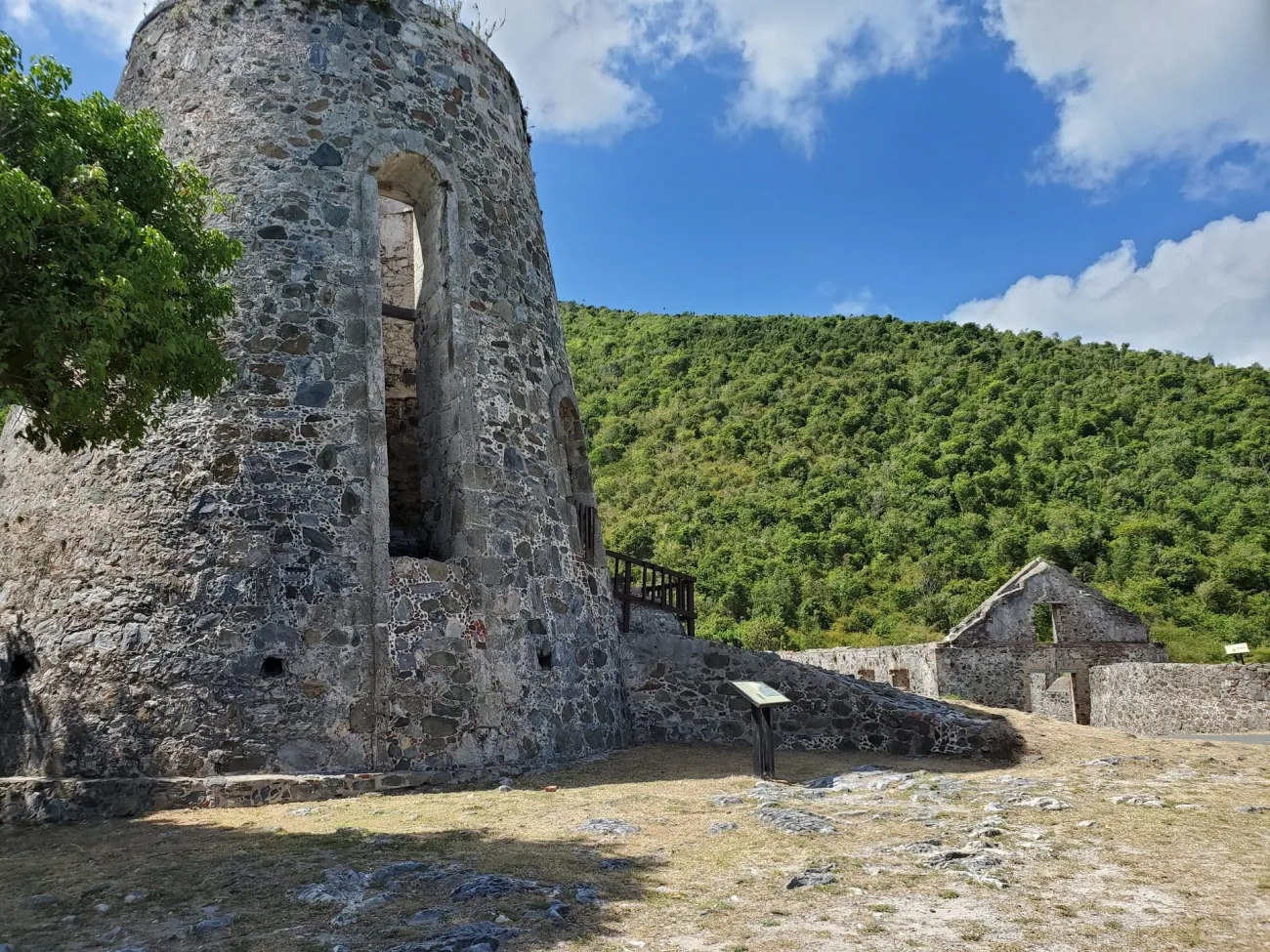
Photo: NPS/Parnicza · Public domain (U.S. Government work). Resized. No claim to original U.S. Government works.
The remains of Annaberg and other plantation sites change how you read St. John's landscape. The stone windmills and factory walls were part of an economy built on forced labor, not merely picturesque structures beside a tropical bay. Leave time to read the interpretation and consider the people whose work and resistance shaped the island.
Annaberg is a practical choice if you want a historic stop without committing to the long Reef Bay walk. The NPS identifies it as one of the park's more accessible plantation sites. Individual paths, surfaces and facilities still need checking against your group's needs. Do not turn a broad description of accessibility into a promise about every route through the ruins.
Pair one historic stop with a nearby stretch of coast and allow time at both. That gives each place a clear purpose and keeps the beach from becoming a hurried reward at the end of a long drive. The park's historic places guide provides the background. Keep to the permitted paths, leave artifacts in place and take photographs without climbing on masonry.
Reef Bay: choose the full walk with the return in mind
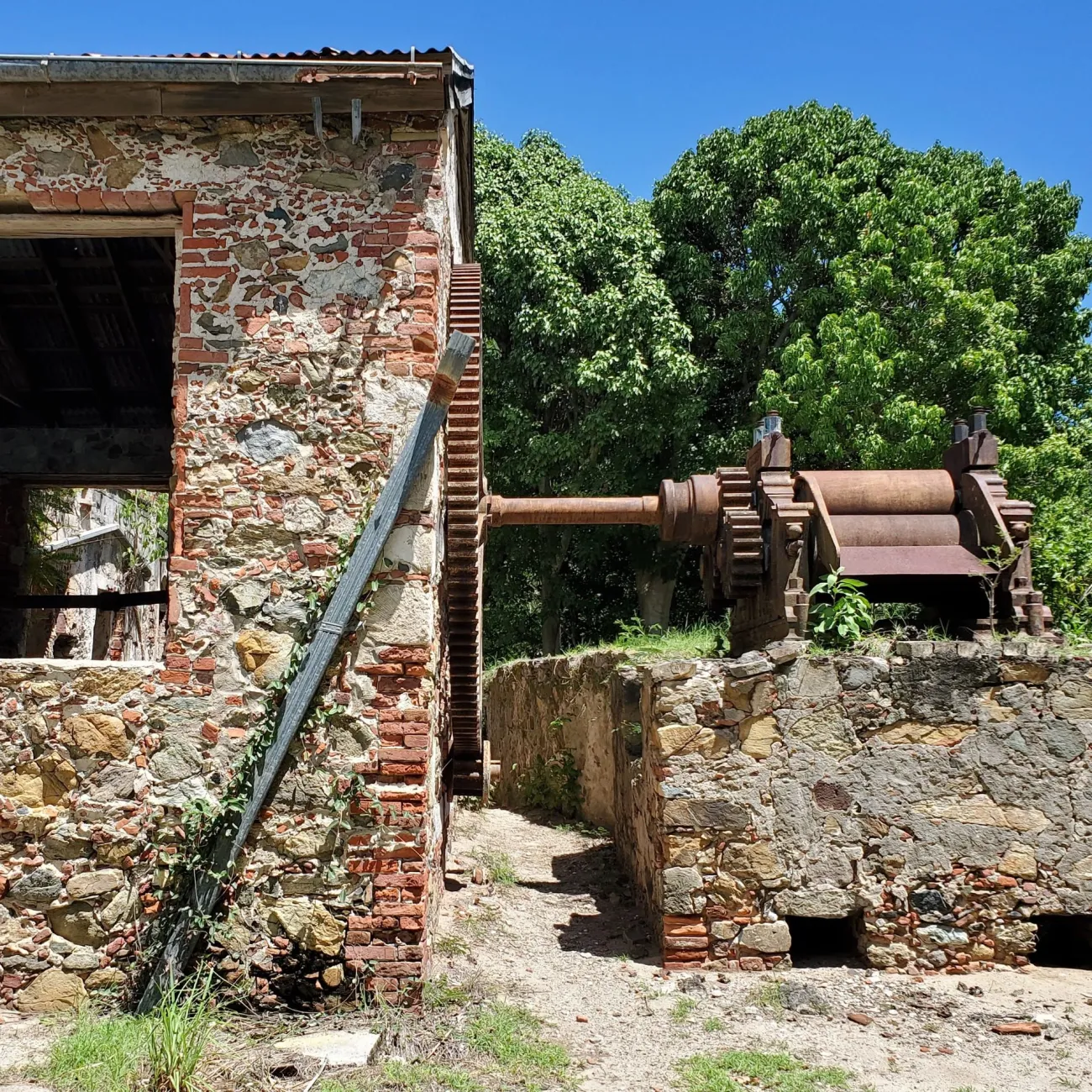
Photo: NPS/Parnicza · Public domain (U.S. Government work). Resized. No claim to original U.S. Government works.
Reef Bay is the outing to choose when you want the walk itself to be a substantial part of the day. The route combines woodland, traces of earlier land use and the remains of the sugar operation near the coast. It is not a short loop to add casually before lunch.
NPS guidance describes the journey from the trailhead to the beach as about three miles one way, with roughly 900 feet of ascent on the way back. Descending can make the outward walk feel easier than the return will be. Start with the time and energy needed for both directions, then add stops for interpretation, photographs and rest.
Take water, suitable footwear and food, and do not depend on mobile reception. If you book a guided program, ask exactly where it starts, how you return and what happens if conditions change. A guided one-way description should not be read as proof that an independent walker has transport waiting at the bottom. Check the park's hiking guidance and current guided-program information. For a less demanding day, choose a shorter historic stop and save the valley for another visit.
A snorkeling day should begin with conditions, not a checklist
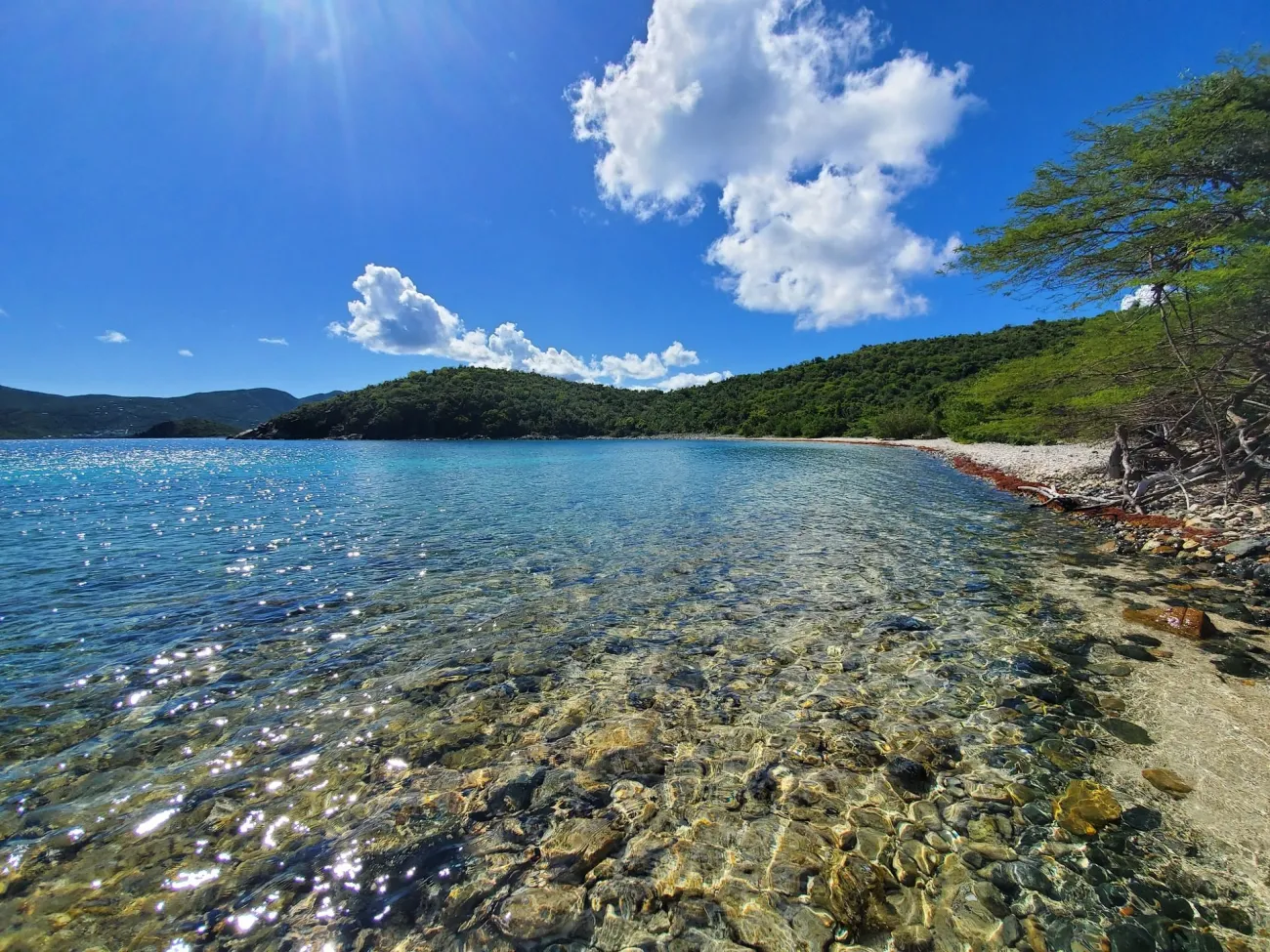
Photo: NPS/Parnicza · Public domain (U.S. Government work). Resized. No claim to original U.S. Government works.
The water can be the day's main activity without becoming an endurance test. Choose a suitable entry, stay within your ability and agree on a clear turnaround point. A short swim with time to look carefully can reveal more than a long route spent concentrating on getting back.
On St. John, the park's published snorkeling information helps you compare bays, but it cannot tell you the conditions at the instant you arrive. Assess the actual water, heed warnings and ask locally when in doubt. Avoid boat channels and dock areas. Keep clear of corals and other marine life, and rest only where you can do so without damaging the bottom.
If you have little experience, consider a guided introduction and explain your swimming ability before booking. Ask what flotation and instruction are provided, how much time is spent in the water and whether non-swimmers can take part in a meaningful way. Wildlife sightings, perfect visibility and calm sea are not part of a guarantee. A sensible operator should be able to explain alternatives when the original plan becomes unsuitable.
For a guided alternative on St. Thomas, the Cas Cay outing combines mangrove kayaking, a short island walk and snorkeling. It is a three-hour activity on the southeast side of St. Thomas; it does not visit Buck Island off St. Croix or cross into the BVI. Check the departure instructions, physical requirements and current inclusions before booking.
Compare St. Thomas kayak and snorkel tours
St. Croix: give the historic town and marine trip separate space

Photo: Christine Hawks · CC BY 2.0. Resized.
On St. Croix, build a day around Christiansted before deciding how many other stops it needs. Its historic waterfront and the national historic site's buildings give the town a clear focus. Take time to understand what you are seeing rather than moving straight from a photograph of a fort to the next beach.
Buck Island is a different sort of outing. If it is central to your trip, choose an authorized concessioner, confirm the departure location and ask what the trip includes. Compare time aboard with time on land or in the water, and check how weather can affect the route. Do not equate a tour booking with unrestricted independent boating access.
A protected shore visit also needs its own check. Sandy Point's seasonal turtle-protection closures mean that a beach shown in a guide may not be open when you travel. Consult the refuge directly before driving there. For a short St. Croix stay, a town-focused day and a separate marine excursion often make more sense than an itinerary that assumes both can be abbreviated without losing what makes them worthwhile.
Virgin Gorda: make the Baths the purpose of the outing

Photo: P. Hughes · CC BY-SA 4.0. Resized.
The Baths rewards a visit planned around the boulder landscape, not an itinerary that treats it as a quick photo on the way somewhere else. Before booking transport, consider whether the route suits your group: uneven ground, steps and narrow passages are part of the experience.
Check the BVI National Parks Trust's current access advice, opening information and flags. Winter swells can make sea access unsuitable. If you are arriving by boat, ask the operator where you land and how the day's conditions affect that plan; the existence of a mooring or a previous landing does not establish today's access.
Keep your equipment compact and leave your hands available for the route. Ask which parts of the outing can be enjoyed from land if someone prefers not to continue through the boulders. Visitors traveling from the USVI also need to account for the international crossing, not just the time on the water. Compare the complete return journey with spending a night or more in the BVI. See the entry guide before committing to a cross-border excursion.
BVI boating: choose a route, then choose the boat
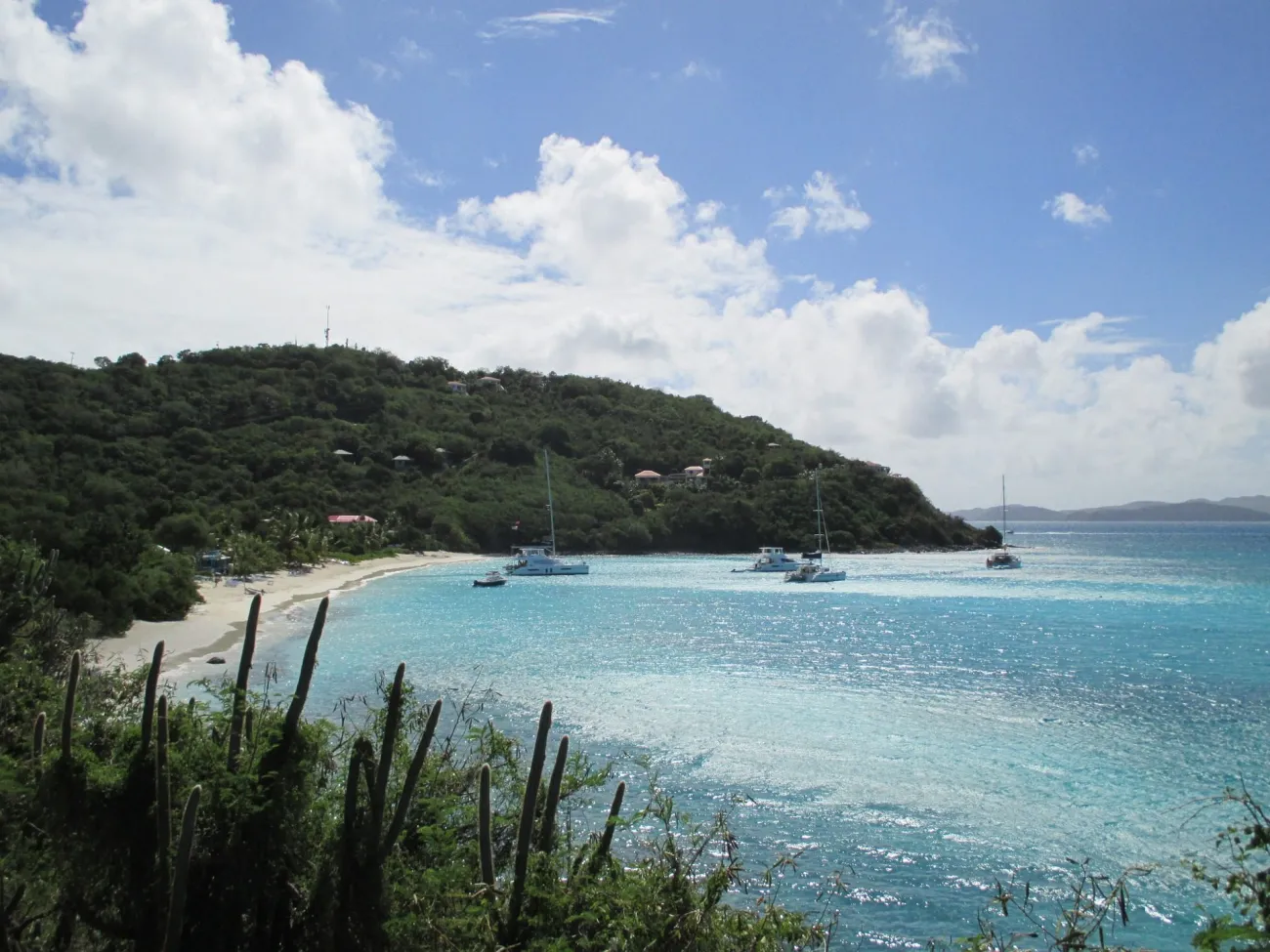
Photo: Mattes · CC BY 2.0 de. Resized.
A BVI boat day can mean very different things: an inter-island ferry followed by a beach visit, a shared excursion, a private skippered charter or a longer sailing holiday. Begin with what you want to do ashore and in the water. The boat is the means of reaching that day, not an explanation of what the day includes.
Ask the operator seven practical questions: where you board; which islands you actually visit; how long you spend at each; whether you step onto a dock, tender or enter the water; what food and equipment are included; which additional fees apply; and how cancellations or weather changes are handled. If the route crosses between the USVI and BVI, add document requirements and clearance arrangements.
For Jost Van Dyke, keep Great Harbour and White Bay distinct when reading an itinerary. For Anegada, check how much time the travel schedule leaves you ashore. A simpler itinerary can give you a longer swim, an unhurried lunch and a better sense of the place. Check current ferry services with the operating company, and leave the last evening before a flight free of an unnecessarily fragile connection.
Frequently asked questions
How many islands should I visit in a week?
One base with a few carefully chosen outings can fill a week well. Add another island or island group when the experience matters enough to justify transfers. Avoid repeated international day trips unless you have checked the complete schedule and entry arrangements.
Is Reef Bay a short, easy walk?
No. NPS describes about three miles one way from the trailhead to the beach, with a substantial uphill return for independent walkers. Choose it as a principal activity and confirm the exact return arrangements for any guided program.
What should I do if the sea is too rough for snorkeling?
Choose a land-based historic visit, town walk or other suitable activity. Follow local warnings and operator advice. A calm-looking photograph is not evidence that a bay is safe on the day.
Can I fit St. Croix into a St. Thomas beach day?
St. Croix should have its own transport plan and enough time on the island. Treating it as a casual extra to a St. Thomas or St. John day makes the schedule vulnerable and leaves little room for the visit itself.
Should I book a BVI boat trip before choosing my hotel?
Check the important boat departure points while choosing your base. A hotel can look close on a regional map but require a road transfer or another ferry before the excursion begins.
If you book through our GetYourGuide links, Photos4Travel may earn a commission.