
Sign in
For Photos4Travel editors and team members.
Puerto Rico · Walking & Nature
Puerto Rico Walking & National Parks: El Yunque and Nature Trails
Puerto Rico offers rainforest paths, dry-forest walks, coastal reserves and historic streets within one trip. The useful choice is not simply the most famous trail: it is an open route with a manageable approach, an honest walking load and enough time to return comfortably.
El Yunque is a national forest, Guánica is a state forest and San Juan's fortifications form a national historic site. Those different designations mean different managers and access information. This guide covers walking and protected areas without treating them as one national-park system or assuming that a general recreation pass covers every visit.
Choose the walk before building the day around it
Begin with the group's needs: steps, uneven ground, exposed heat, walking distance and the time available after the drive. A short path with a steep wet stairway may be a worse choice than a longer level route. Choose a definite turnaround point and leave room for food, parking and a slow return. If the priority is a river visit, decide separately whether anyone will enter the water.
For an introductory rainforest experience, compare El Portal's interpretation with a short open trail. For a south-coast stay, Guánica offers a different, drier landscape without making a rainforest drive the centre of every nature day. For a San Juan visit without a car, a measured historic walk may fit better than arranging a hurried cross-island excursion. The map and transport guide help turn those preferences into a day that works.
El Yunque entry, transport and the separate visitor centre
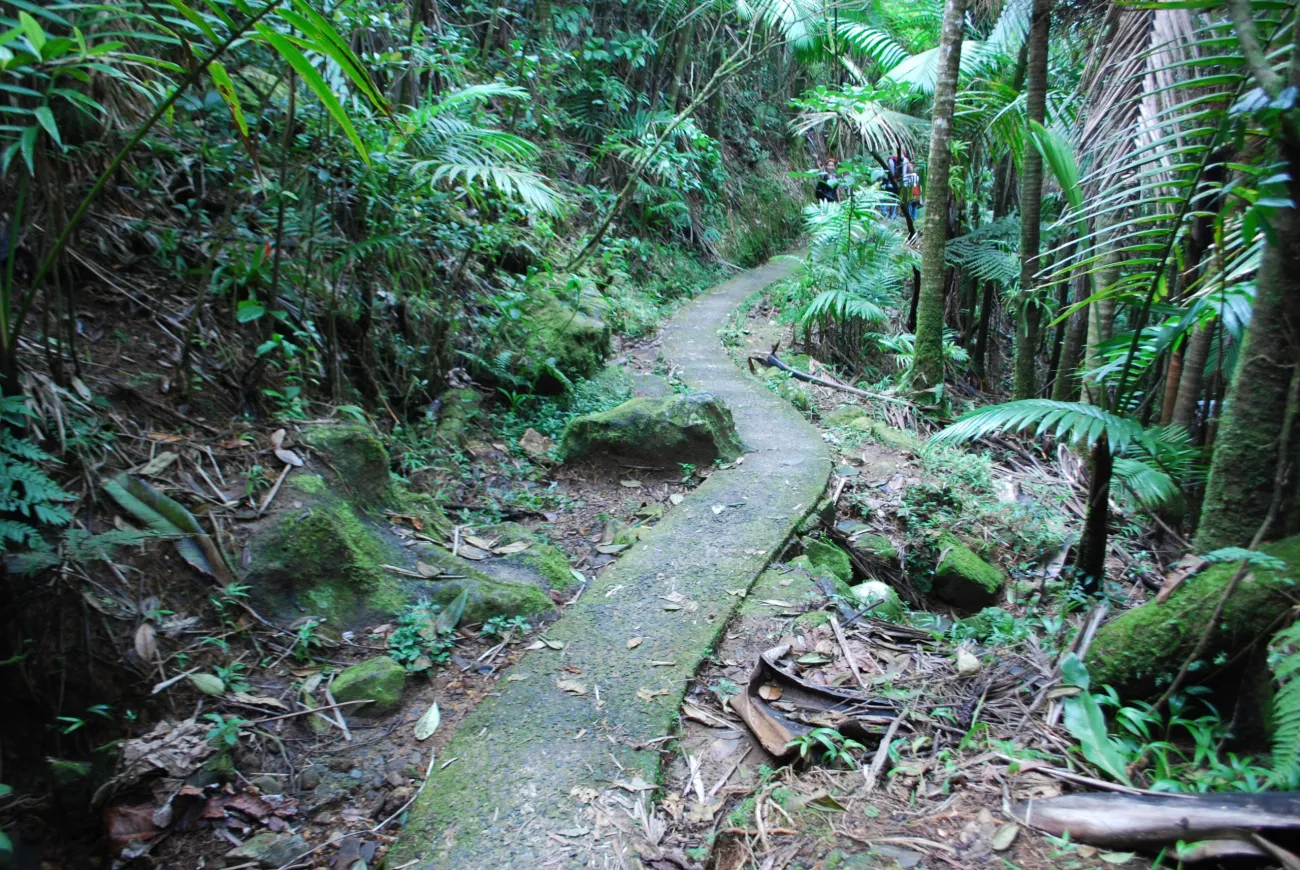
Photo: Cement trail in El Yunque, Puerto Rico — Gordon Tarpley · CC BY 2.0 · Resized.

The Forest Service's current conditions page says general entry to the PR-191 North corridor is free, with no reservation required. Published hours are 8 a.m.–5 p.m.; capacity remains controlled because of limited parking and works. Arrive with a short list of possible stops rather than assuming every car park will have a space.
El Portal is a separate visitor centre, normally open 8 a.m.–4 p.m. with specified holiday closures. The published regular admission is $8, with separate concession rules; confirm the current categories before buying. It offers exhibits and an accessible discovery experience, so it can be a worthwhile visit without a summit hike. Arrange a rental car or authorised transport with a return plan. The Forest Service warns that its main access points are not authorised rideshare pickup locations.
Three short El Yunque walking options
Angelito Trail starts on PR-988 at km 3.6 and descends through lower forest to Río Mameyes. The official listing marks it open and gives 0.2 mile, or approximately 0.4 km, one way, with about 40 m of elevation change. Return by the same path. Its easy walking grade does not settle river safety; remain on land when conditions or warnings make water entry unsuitable.
Caimitillo is a short option in the PR-191 corridor, with stairs, rocky ground and variable surfaces. Its listed 0.4 mile/0.6 km distance is not explicitly labelled one way or return, so use the trailhead information to set your turnaround. El Portal Trail is listed as a 0.3 mile/0.5 km loop with approximately 20 m of elevation change. Confirm the specific route suited to your access needs at the centre rather than assuming every surrounding path is step-free.
On smaller screens, swipe or use the arrow keys to see the whole table.
| Walk | Listed distance and main decision |
|---|---|
| Angelito | 0.2 mile / 0.4 km one way; descend and climb back. Assess river conditions separately. |
| Caimitillo | 0.4 mile / 0.6 km listed; stairs and variable ground. Confirm route extent at the trailhead. |
| El Portal Trail | 0.3 mile / 0.5 km loop; a visitor-centre setting. Ask about the accessible discovery route. |
Current closures: do not follow an old waterfall itinerary
As checked on November 19, 2026, the Forest Service closure list includes La Mina Trail, Big Tree Trail, Upper El Yunque Trail, Upper Mt. Britton Trail and Mt. Britton Spur. An older article recommending the usual La Mina Falls walk is not proof of present access. Read the notices and their maps before choosing a route.
The Mt. Britton Tower notice closes the upper approach through January 8, 2027. A separate phased project affects Mt. Britton Spur and the upper El Yunque/Los Picachos route through April 2027, with the affected section changing from December. Do not join those fragments into an assumed open summit circuit. The alerts also list a Yokahú Tower closure; confirm access rather than promising a climb. Palo Colorado's upper parking area has a further one-day closure on November 19. These are dated conditions, so recheck before travel.
Rain, rivers and realistic trail preparation
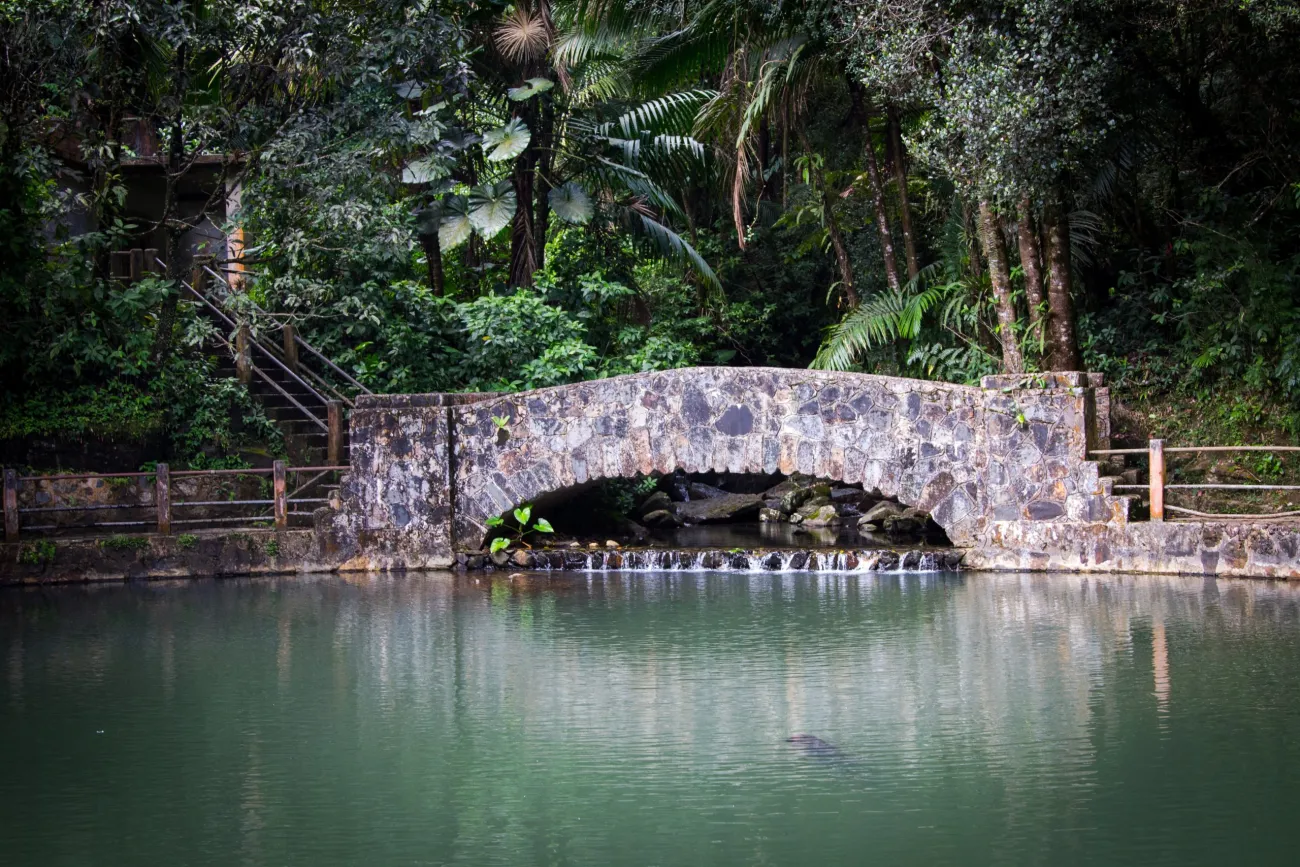
Photo: Baño Grande, El Yunque (1) — jon collier · CC BY-SA 2.0 · Resized.

Choose shoes with traction, carry drinking water and take a light rain layer. Keep the map available offline and tell someone the intended route and expected return. Estimate the entire outing, including the climb back from a river, rather than just the downhill approach. Stop early enough to leave the corridor within its operating hours.
A river swim is optional even when the trail is open. Flash floods can develop unexpectedly, and water upstream can change conditions below. Obey warnings and avoid crossing fast water or entering a pool to copy a photograph. Baño Grande is a historic scenic pool where swimming is prohibited; its bridge and masonry belong in a viewing or photography stop. In other places, ask the manager or permitted guide about current access and conditions. “Natural pool” describes a feature, not a safety rating.
A historic walking day in Old San Juan
For an urban walking day, choose a start in Old San Juan, visit San Cristóbal during opening hours and continue through the historic streets toward the El Morro area. Pause for food and shade rather than treating both fort interiors and every street as one uninterrupted circuit. The sequence is a suggested day structure, not a signed trail or a guaranteed accessible route.
The NPS standard $10 admission covers both fortifications for 24 hours; children aged 15 and younger are free. Current visitor information gives fort hours of 9 a.m.–5 p.m., with holiday exceptions. The exterior esplanade and wall areas have different access from the interiors. Uneven paving, slopes and stairs can affect the route, so consult NPS accessibility information for particular needs. Finish where a return ride or a comfortable walk to the accommodation is straightforward, leaving an exposed stretch for another day if the heat becomes tiring.
Guánica dry forest and Cabezas de San Juan
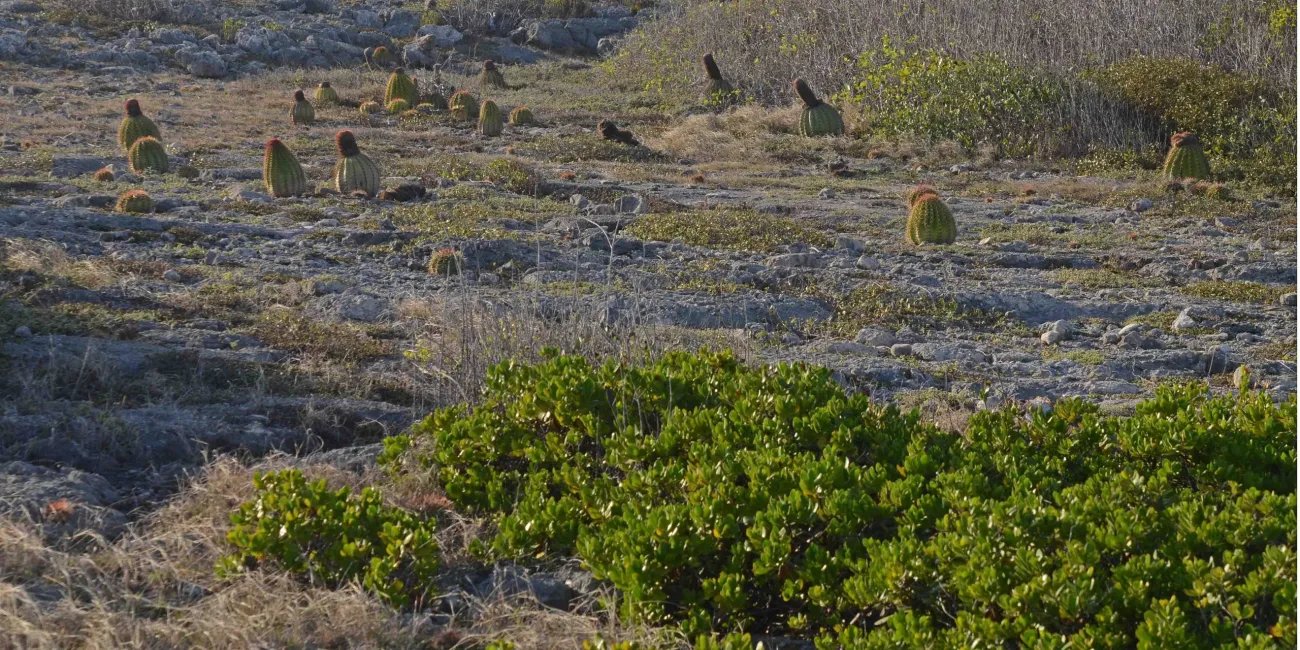
Photo: Bosque seco, Guánica State Forest, Puerto Rico by Geoff Gallice — Geoff Gallice from Gainesville, FL, USA · CC BY 2.0 · Resized.

Guánica's dry forest offers a clear contrast with El Yunque: dry coastal vegetation and a different walking environment in the southwest. Discover Puerto Rico describes several trails of different lengths and difficulty, including Ballena and routes toward Fuerte Caprón. Choose the current route at the visitor information point; do not turn a named destination into a promise of easy access. Start early, carry adequate water and account for exposed heat on the return.
In Fajardo, Para la Naturaleza's Cabezas de San Juan experience includes mangrove boardwalks and Laguna Grande. Check the actual departure, language, route and access arrangements before booking. A guided daytime reserve visit and a nighttime bioluminescence outing are different experiences. Keep the distinction clear when fitting either one into a northeast stay.
Leave room to notice the landscape
A worthwhile nature day needs time to stop. On a forest trail, look at the changes in vegetation and listen between the group's conversations. On a dry-forest or coastal route, make the return before heat or fatigue removes that attention. A shorter outing with a clear limit often provides more than a longer list of hurried stops.
Stay on authorised paths, carry rubbish out and leave wildlife, stones and plants where they are. Keep camera positions within the permitted route; a photograph is not a reason to approach a cliff edge or step into protected vegetation. Use the photo spots guide for subjects and the responsible travel guide for local choices. When access changes, choose another open experience rather than finding an unofficial bypass. The landscape is still there to enjoy without completing the route that happened to appear first in an old search result.
Use the Puerto Rico itineraries to place the walk within a route that allows time for the drive, the walk and the return to your base.
Puerto Rico walking and nature FAQs
Do I need an El Yunque reservation?
General entry to the PR-191 North recreation corridor is currently free and needs no reservation, but capacity is limited. El Portal has its own admission, and organised school groups have separate reservation rules. Check current conditions before travel.
Are La Mina Falls trails open?
The Forest Service list checked November 19, 2026 marks La Mina Trail and Big Tree Trail closed. Do not follow an old itinerary without checking the current official alerts.
Which short El Yunque trail is suitable for a first walk?
Compare El Portal for interpretation and access, Angelito for a short descent through lower forest, and Caimitillo for a brief corridor walk. Match steps, surface and return climbing to the group, and check access on the day.
Can I swim at Baño Grande?
No. The Forest Service explicitly prohibits swimming there. Treat the historic pool, bridge and surrounding vegetation as a scenic and photography stop.
Is El Yunque a national park?
It is El Yunque National Forest, managed by the U.S. Forest Service. Puerto Rico also has state forests, wildlife refuges and a national historic site, with different managers and access rules.
Last updated: