
Sign in
For Photos4Travel editors and team members.
Puerto Rico · Sustainable Travel
Sustainable Travel in Puerto Rico: Local Choices and Nature
Travelling more thoughtfully in Puerto Rico starts with ordinary decisions: stay long enough to use a base properly, pay people for their expertise, respect closed paths and buy something with a known local maker. These choices are easier to assess than an unexplained “eco” label on a tour or hotel page.
On this page · 9 sections ShowHide
The island's forests, reefs, dry landscapes and bioluminescent lagoons are living places with different managers and rules. A responsible visit follows those local arrangements. Use this guide to choose specific organisations, ask useful questions and avoid turning a good intention into extra pressure on a place.
Build a route with fewer repeated journeys
A San Juan base can work well for the city and northeast. For several days in Rincón or the south, moving accommodation once may make more sense than driving back and forth every evening. The same applies to Culebra and Vieques: an overnight stay can provide more useful island time than repeating transfers from the mainland.
This is a planning judgement, not a calculated carbon score. Compare the full route, available transport, luggage and the needs of your group. A tightly packed circuit with constant checkout and long drives can be tiring as well as wasteful of holiday time. The itineraries help you choose a manageable number of bases.
Within a suitable urban area, walk connected visits instead of requesting a separate ride for each short leg. In the forest or on remote coasts, use transport appropriate to the actual access. Do not assume public transport reaches every trailhead, or that a rideshare driver will collect you wherever an app shows a road.
Choose a conservation experience with a named host
Para la Naturaleza provides a concrete starting point for visits connected with conservation and interpretation. Its current site presents visitor centres, trails and activities in different regions. Hacienda Buena Vista in Ponce connects the landscape with coffee heritage; Cabezas de San Juan in Fajardo introduces a coastal reserve setting. Choose an actual listed visit and read its access requirements.
For Cabezas, read the dated approach-road and lighthouse-access notice before setting out. The reserve visit and entry to the lighthouse building are separate questions; use the provider’s instructions for your booked visit.
Check the date, meeting point, language, walking distance and terrain before reserving. Two activities run by the same organisation can have very different physical demands. Ask whether children can participate and whether the specific route suits a mobility need. A boardwalk in one part of a reserve does not establish that an entire tour is accessible.
Pay for the interpretation as part of the experience. A good guide helps explain why a place is managed in a particular way and can adapt the visit to conditions. Avoid seeking an unofficial shortcut around a closed gate or asking an operator to ignore a limit simply because you have travelled a long way. The organisation's reservation calendar is the place to establish what is available.
Casa Pueblo: connect a purchase with a community project
In Adjuntas, Casa Pueblo links environmental work with community self-management, cultural activity and solar-energy projects. It is a more specific example than a generic claim that a whole destination is sustainable. Read the organisation's own current visitor information and ask about the activity you hope to see before making the mountain journey.
Its Café Madre Isla project describes coffee as a source of income supporting the organisation's work. Buying an identified product directly gives you a clearer connection between the purchase and the producer than a souvenir with no stated origin. It does not require buying a large quantity or treating the visit as a staged tour.
Fit Adjuntas into a central or southern route with enough daylight for the road. Ask which spaces and activities are open to visitors and which need prior arrangements. Community work continues whether or not tourists are present. Be willing to learn about the place on its own terms, and avoid promising a particular workshop or solar-project visit to your group until the host confirms it.
In forests and refuges, the boundary is part of the visit
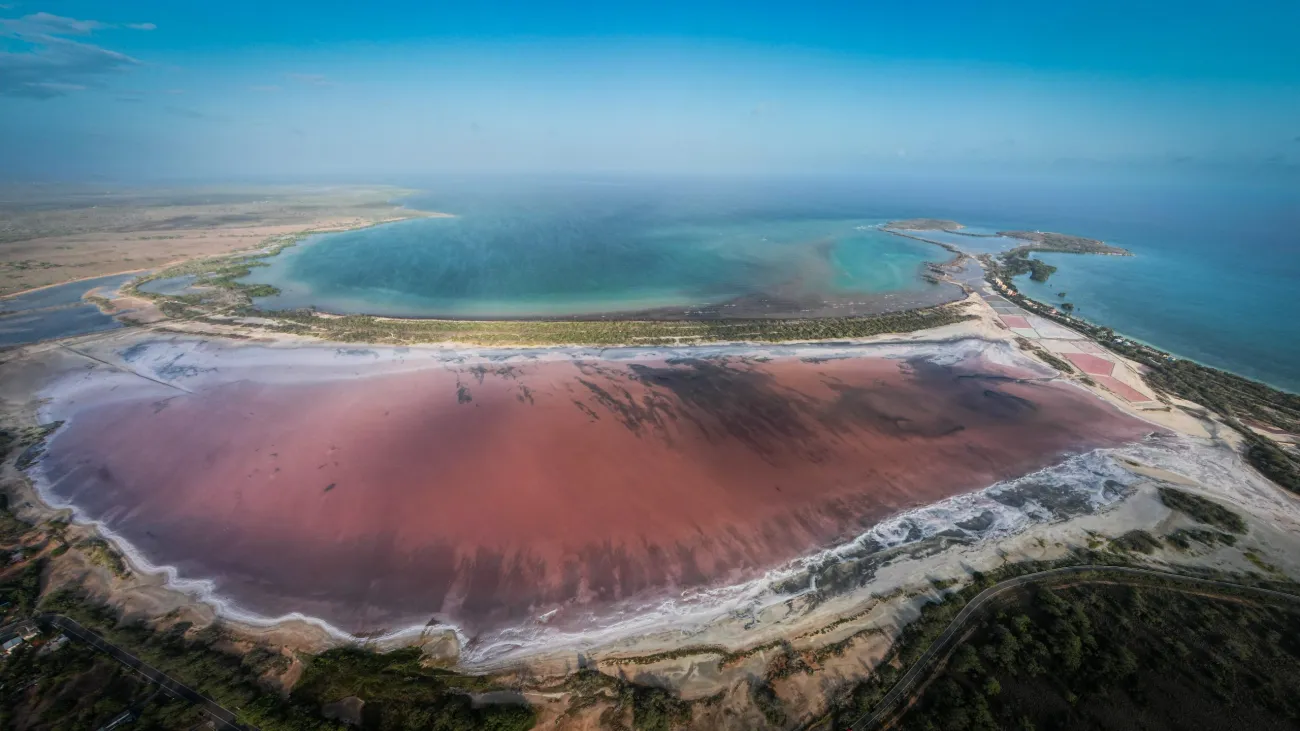
Photo: Salt Flats at Cabo Rojo, Puerto Rico by USFWS — José Gilberto Martínez/USFWS · Public domain — U.S. Government work · Resized.

El Yunque's closures protect visitors and allow work to proceed. Check the Forest Service alerts before travel and use the currently permitted route. A path appearing on an old map, or a summit photograph on a tour listing, is not evidence of access. Stay on designated surfaces and park only in established spaces.
Vieques has another important boundary: public refuge areas coexist with land closed for unexploded-ordnance risks and clean-up. The U.S. Fish and Wildlife Service identifies that restriction. Use only public roads and open areas, and follow the current map. The refuge prohibits drones and off-road driving; a remote beach is not permission to ignore either rule.
At Cabo Rojo, the current refuge page distinguishes visitor-centre construction from the salt-flat facilities and observation areas. Check the opening information for the specific facility you intend to use; an old PDF may describe a different arrangement. Keep to the designated route and leave birds, plants and the salt-flat landscape undisturbed.
Protect the experience at bio bays and on the coast
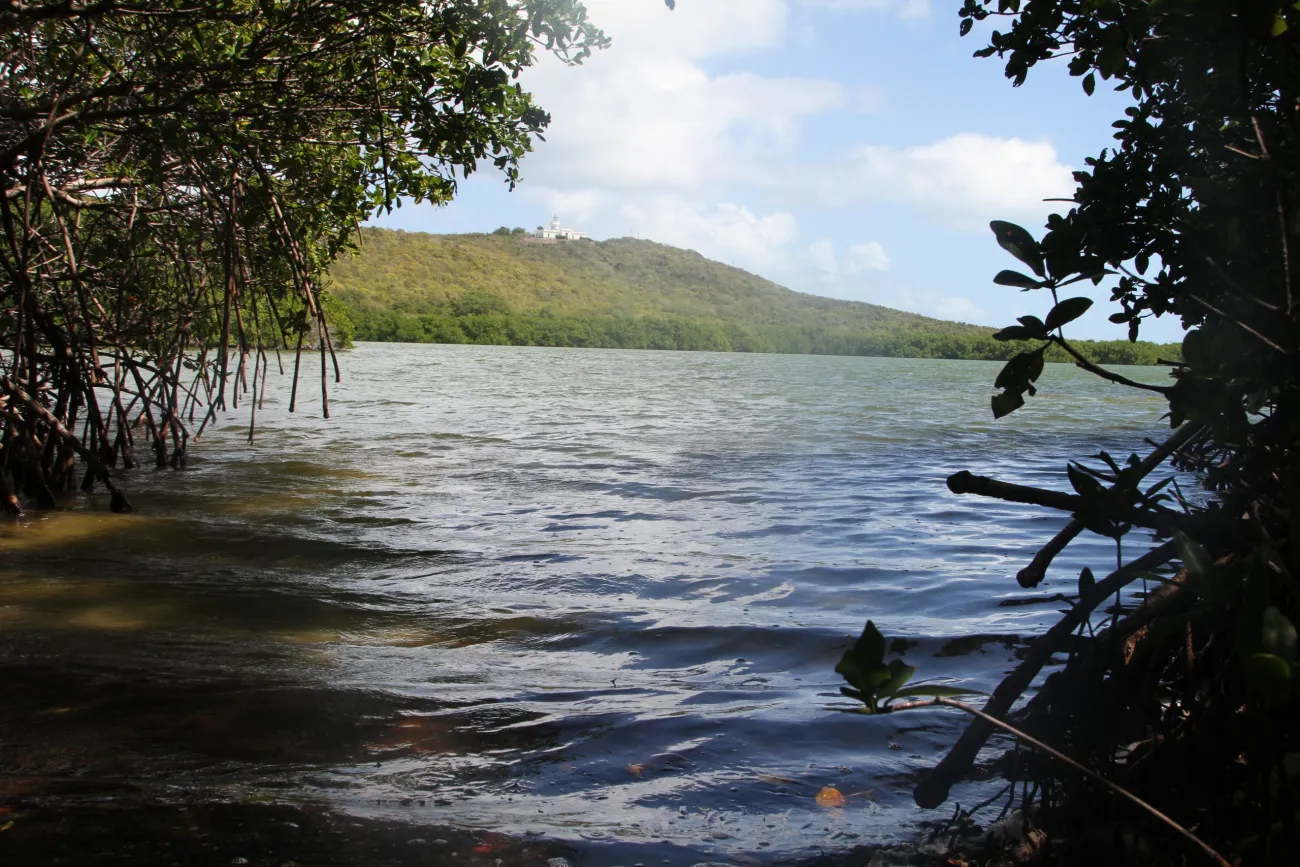
Photo: Las Cabezas de San Juan PR Fajardo IMG 2388 Laguna Grande — Bjoertvedt · CC BY-SA 4.0 · Resized.

At Mosquito Bay on Vieques and Laguna Grande in Fajardo, conservation guidance prohibits swimming. Choose an authorised guided experience and follow its instructions on lights, equipment and entry. La Parguera information is inconsistent across official tourism pages, so confirm the currently authorised activity instead of assuming a swim is included.
Keep artificial light low when instructed and leave shells, plants and natural material where they belong. Ask the operator how to apply effective mosquito protection before the outing; conservation guidance is not a reason to abandon bite prevention. A photograph of a glowing wake is not a guarantee of visibility, and a daylight lagoon image should be labelled as habitat context.
On beaches, use established access, keep clear of roped-off or nesting areas and remove your rubbish. Do not stand on coral or handle wildlife for a photograph. Choose a water activity only when local conditions and your ability permit it. For a beach day that fits both access and facilities, compare the options in the beach guide.
Ask accommodation providers for useful details
A property's location, water arrangements and operating practices can matter more than a leaf icon beside its name. Ask what an environmental claim means and whether an independent certification applies to that specific property. Do not treat a brand-wide statement as proof that every branch has the same performance.
For your own stay, use air conditioning thoughtfully, avoid unnecessary linen changes and report leaks. Ask where drinking-water refills are available and what the property's recycling arrangements actually accept. A reusable bottle is useful when you have a dependable refill source; do not assume every outdoor tap provides drinking water.
Plan for realistic utility arrangements as well. If reliable power or water is essential for your needs, ask the accommodation about its systems and limitations. Clear answers help you choose; a scenic room photograph cannot provide that assurance. The accommodation guide compares bases and the questions to resolve before booking.
Keep local spending specific and traceable
Ask who made a craft, where a food product was grown and who leads a tour. A named maker or producer gives you a practical basis for a decision. Locally owned businesses can be a meaningful part of the trip without every purchase needing a “sustainable” label.
Choose a restaurant near the day's activities, try a producer-labelled coffee or buy one carefully selected object. Check whether a market is actually operating on your date. Buying directly can also give you information about materials, care and the work behind the item. Keep the receipt and the maker's name when the object will be a gift.
On smaller screens, swipe or use the arrow keys to see the whole table.
| Decision | Useful question | Concrete action |
|---|---|---|
| Book a nature tour | Who manages the site and what access is authorised? | Use the stated route and current conditions |
| Choose a room | What does the property's environmental claim cover? | Compare documented practices and location |
| Buy a souvenir | Who made it and where? | Choose a known local maker when that is your aim |
| Join a volunteer activity | What help does the host actually need? | Register and follow the agreed task |
Volunteer through a host, not an improvised good intention
Para la Naturaleza publishes volunteer opportunities alongside its other activities. Read the age, clothing, fitness and registration requirements. Hosts may need routine planting maintenance or habitat work. Ask which task fits their current needs. Choose something you can complete reliably within the available time.
Do not organise an uninvited clean-up on sensitive land, move wildlife or collect natural material because it appears to be litter. Ask the land manager or host first. If your schedule does not match an organised activity, paying for a guided visit, buying an identified community product or following site rules is still a practical contribution.
Take those habits into the rest of the holiday. A shorter route, a paid local guide, respectful photography and properly disposed waste are decisions you can make repeatedly. They do not establish a zero-impact trip, but they keep the claim close to actions you can actually explain.
Sustainable travel in Puerto Rico: questions
Where can I find a concrete conservation-related visit?
Start with Para la Naturaleza's current visitor and reservation pages. Choose the specific activity, then check its meeting point, terrain, language, age rules and availability.
How does buying Café Madre Isla support a community project?
Casa Pueblo describes the coffee project as part of its economic self-sufficiency. Buying an identified product through the organisation connects the purchase with that work; check current visitor and sales arrangements directly.
Does an “eco” label prove a hotel is sustainable?
No. Ask what the claim covers and whether a current independent certification applies to the specific property. Base the choice on location and documented practices; a marketing icon alone provides little detail.
Can I visit a closed refuge area by boat?
No. A different method of arrival does not remove a closure. On Vieques, respect the public-access boundaries and the restrictions connected with clean-up and unexploded ordnance.