
User login
Puerto Rico Map
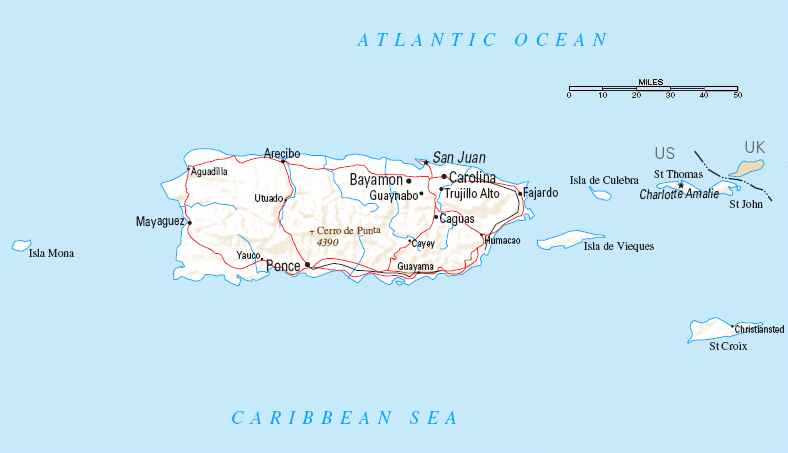
Where is Puerto Rico?
Understanding Puerto Rico’s layout makes trip planning significantly easier. This map-focused guide explains where the main regions are located, how different areas connect, and what distances realistically mean for travelers. Use this page to orient yourself before choosing a base, planning day trips or deciding on transportation. For a broader introduction to the island, start with the Puerto Rico Travel Guide.
Where is Puerto Rico located?
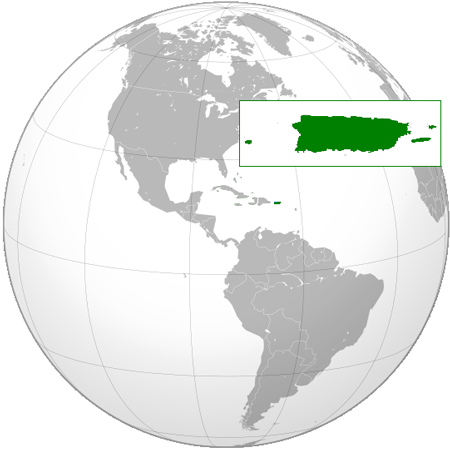
Puerto Rico is located in the northeastern Caribbean, east of the Dominican Republic and west of the Virgin Islands. Its position places it at the crossroads of major Caribbean travel routes, which is why coastal fortifications and ports played an important historical role. While the island is relatively compact, the variety of regions means that travel time can still vary depending on your route and destination.
Understanding Puerto Rico’s regions
Puerto Rico can be broadly divided into coastal zones and inland areas. The northern coast includes the capital area and some of the island’s most visited districts, while the southern and western coasts feel quieter and more spread out. Inland regions are greener and more mountainous, often offering a different climate and slower pace. If you are deciding where to stay, comparing regions side by side in Puerto Rico Top Destinations can help you match your travel style to the right area.
Major cities and travel hubs
San Juan is the primary urban and transportation hub, especially for first-time visitors. Other towns and coastal areas serve as gateways to beaches, scenic drives and nature-focused experiences. Knowing which cities act as natural bases helps you avoid unnecessary backtracking and long daily drives. For arrival planning and airport locations, see Puerto Rico Airports.
Distances and travel times
On a map, Puerto Rico may look small, but travel times depend on road conditions, traffic and terrain. Coastal routes are generally straightforward, while inland drives can take longer due to elevation changes and winding roads. Before building an ambitious itinerary, it’s worth checking realistic travel times rather than relying only on straight-line distances. Practical guidance on getting around is covered in Transportation in Puerto Rico.
Using maps to plan your itinerary
Maps are most useful when combined with your trip priorities. If beaches are central to your plans, reviewing coastal access points alongside Puerto Rico Beaches helps you cluster activities efficiently. If your focus is cultural exploration, mapping historic districts and city neighborhoods alongside Things to Do in Puerto Rico can prevent unnecessary travel.
Common mapping mistakes travelers make
- Assuming all drives are short: Terrain and traffic can extend travel times beyond expectations.
- Choosing accommodation without map context: A hotel may look central online but be far from your main activities.
- Planning too many regions in one trip: A focused itinerary often leads to a better experience.
What to check next
Once you understand Puerto Rico’s layout, the next step is refining logistics and experiences. Review Puerto Rico Weather to align activities with conditions, then explore Top Destinations and Transportation to finalize your route.