
Sign in
For Photos4Travel editors and team members.
Puerto Rico · Travel Tips & Essentials
Puerto Rico Travel Tips & Essentials: Facts for a Better Trip
A good Puerto Rico trip starts with a few ordinary decisions: the right first base, transport that works after dark, a phone that connects and enough room in the schedule for an unplanned meal or a changed beach day. Get those details right and the island's variety becomes easier to enjoy.
On this page · 9 sections ShowHide
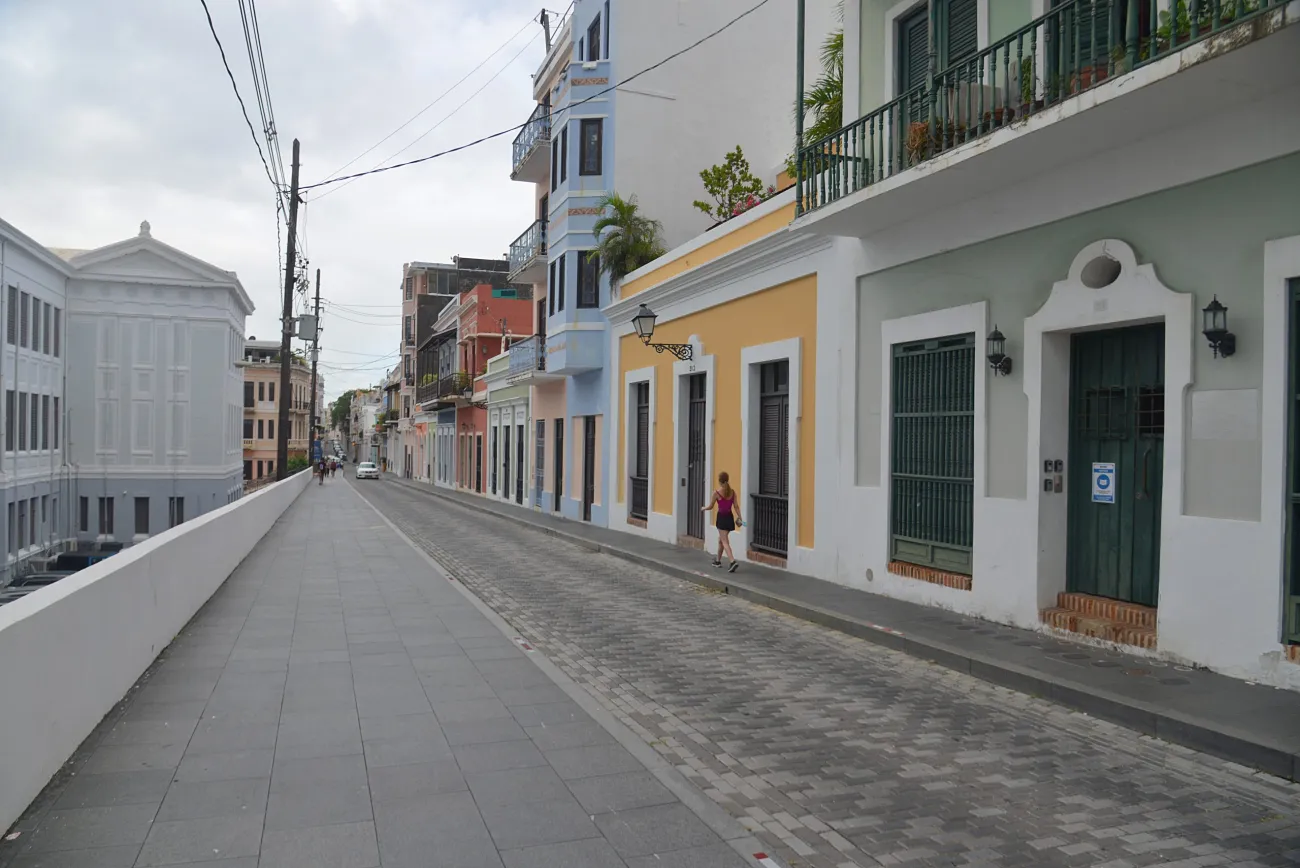
Photo: Calle de la Luna Viejo San Juan Puerto Rico 2021-08-10 11-51-27 1 — G. Edward Johnson · CC BY 4.0 · Resized.

These travel essentials bring practical tips and useful fast facts together. Use them alongside the Puerto Rico travel guide when arranging the practical details of your stay. The deeper pages cover costs and payments, entry documents and the experiences worth making time for.
Puerto Rico travel essentials at a glance
Puerto Rico is a U.S. territory in the Caribbean, east of the Dominican Republic. San Juan is the capital, but the territory includes a mountainous main island, Vieques, Culebra and other smaller islands and cays. It has its own strong cultural identity; familiar U.S. currency and infrastructure should not be read as a reason to ignore local language and customs.
Discover Puerto Rico's essentials confirm the U.S. dollar, Spanish and English as official languages, and Atlantic Standard Time without daylight saving changes. That last point is useful when scheduling calls: the time difference from another country can change even though Puerto Rico's clock does not. Use the local time on transport tickets and check that a phone calendar has not kept an event in your home time zone.
On smaller screens, swipe or use the arrow keys to see the whole table.
| Essential | Practical meaning |
|---|---|
| Currency | U.S. dollar (USD); include parking, activity fees and tips in the budget. |
| Languages | Spanish and English are official; a courteous greeting and a saved address help. |
| Time | Atlantic Standard Time, UTC−4; no daylight saving time. |
| Driving | Right-hand side; choose transport for the region and return journey. |
| Electricity | U.S.-style Type A/B outlets; check the device input label and any specialist equipment needs. |
| Emergency | 911; also save the accommodation address and insurer assistance contact. |
Give the first day a clear, modest shape

Photo: First Transit Of Puerto Rico bus (02) — Moebiusuibeom-en · CC BY-SA 4.0 · Resized.

After landing, focus on reaching the accommodation, eating and understanding the immediate area. Find the entrance you will use at night, the nearest suitable food option and the practical pickup point for the next morning. A short walk can be enjoyable when you feel ready; it should not be the compulsory final leg of an exhausting journey.
Before travelling, send the property your expected arrival and read the check-in instructions. A late flight into a regional airport needs a confirmed vehicle or driver and a plan if reception closes. Keep the address, confirmation and contact number offline. If rooms are unavailable before check-in, establish whether luggage can be stored securely. Do not fill that gap by carrying all your possessions to an exposed viewpoint. The airport guide explains how the gateway and transfer affect the first night.
Choose bases that reduce repeated journeys
San Juan suits historic streets and urban evenings; a northeast base can place El Yunque, Luquillo and Fajardo activities closer together. A west-coast stay makes more sense when the holiday's centre is Rincón, Aguadilla or nearby beaches. Put the desired nights on the map before adding activities. A place can be worth visiting without being a sensible day trip from every base.
For a week, compare a focused two-base plan with a single base and repeated long returns. For a short city break, one base may be the better decision. Changing accommodation also has a cost in packing, check-out and luggage handling, so move when the new base saves enough daily travel to justify the change. Make one activity the day's priority and keep the second optional. A forest walk, a boat departure and a cross-island dinner reservation can each be reasonable alone while forming an awkward combination together.
Reserve the parts that genuinely constrain the day
Book the arrangements that have a real time or capacity limit: the flight, chosen island sailings, accommodation and an excursion you particularly want. For a festival or a weekend-focused stay, check the actual event dates before confirming the room. For a bio-bay tour, ask about the date, meeting location, current conditions and cancellation policy before paying; a dramatic photograph cannot settle those details.
Then leave ordinary exploring more flexible. A neighbourhood walk and a relaxed meal rarely need the same planning effort as a separate-ticket connection. Keep confirmations in one place and note which provider must be contacted if the day changes. Read inclusion details: transport, equipment, admission and meals can be separate. An excursion sold as an El Yunque experience may involve a different river area from the main national-forest corridor. Ask where the activity actually takes place so it matches the landscape and walking load you expect.
Handle payments and meals without overplanning
The U.S. dollar removes exchange decisions for U.S. visitors, but it does not make every trip cost the same. Keep a modest amount of cash for smaller purchases and a separate payment backup. Check whether a bill already includes a service charge before adding a tip. Build parking, toll-related rental charges and island transport into the budget instead of treating the room rate as the whole cost of a location.
Plan one meal you are particularly interested in, then leave space for nearby choices. The food and drink guide explains dishes and dining styles. Check operating days and dietary needs with the venue when they are important; an old listing is not a reservation. For a rural or island arrival, establish where you can eat at the expected hour. Carry a useful snack on a transfer day, and avoid arriving at a timed tour hungry because lunch was left as a blank space between two long journeys.
Phones, maps, plugs and everyday backups
Ask your mobile provider whether Puerto Rico is included in your plan and what data and calling charges apply. Do not assume every U.S. or international package treats it identically. Download the map area, accommodation approach and key confirmations before leaving dependable connectivity. A screenshot of a pin is less useful than an address and a phone number if a driver cannot find the entrance.
Pack charging cables and any Type A/B plug adapter your devices require. Puerto Rico’s nominal electricity supply is 120V. Check the input label for voltage compatibility; a plug adapter changes the shape of a connection, not the voltage a device can accept. For medical equipment or another power-dependent need, discuss the electrical and backup arrangements directly with the property. Keep a charged power bank accessible. If electricity or water is interrupted, a basic offline note lets you contact the lodging and adjust the day without depending entirely on an app. The outage checklist covers questions to settle before booking.
Small courtesies improve the visit
A greeting before a request goes a long way. Spanish is an everyday language, and knowing “buenos días,” “por favor” and “gracias” makes routine exchanges easier. If a conversation needs a language switch, ask politely. Save a destination's written name and address so that a pronunciation difficulty does not become a navigation problem.
Ask before photographing people, private interiors or a performance at close range. Keep a respectful distance from worship, residential doorways and someone's working space. Buy directly from local makers when that is the product you want, and ask about the origin of an item instead of assuming every souvenir was made on the island. For music, food and festivals, learn what the occasion means as well as where it happens. The responsible travel guide offers ways to make those choices practical. Respect also means leaving paths, beaches and streets in a condition the next person can enjoy.
Pack for the day's actual activity
For a city walk, take comfortable shoes, sun protection, water and a light rain layer. For a trail, add suitable grip, a route plan and enough supplies to return without depending on a shop at the end. For a boat trip, ask what can be carried and how belongings stay dry. A beach bag and a hiking bag do not need to contain exactly the same things.
Check the forecast and seasonal advice for the destination, not just the capital. Make an early decision when a closure or marine warning changes the plan. Keep a genuinely different alternative: an indoor visit with confirmed hours, lunch near the base or a shorter permitted walk. Before bed, put the next morning's essentials together and confirm the departure point. These small habits protect the enjoyable part of the trip from repeated searches, forgotten chargers and rushed returns. More importantly, they leave enough attention for the meal, the street or the view you travelled to experience.
Puerto Rico travel essentials FAQs
What currency does Puerto Rico use?
The U.S. dollar, USD. Keep some cash for smaller purchases and a separate payment backup. See the costs guide for budgeting, fees and everyday payment decisions.
Does Puerto Rico change its clocks?
No. It uses Atlantic Standard Time, UTC−4, throughout the year. Time differences from places that change their clocks can therefore vary seasonally.
Will my phone plan work in Puerto Rico?
Confirm coverage and charges with your provider. Package rules vary. Download addresses, maps and confirmations before travel so a temporary connection problem does not stop the next journey.
Should I reserve every activity before arriving?
Reserve the capacity-limited arrangements that matter, including chosen island transport and priority tours. Leave ordinary walks and some meals flexible, with a clear alternative for a changed-weather day.
What should I do on my first day?
Reach the accommodation, eat and learn the immediate area. Add a short walk if you feel ready. Keep long drives and tightly timed sightseeing for a day when delays and arrival fatigue are no longer setting the pace.