
Sign in
For Photos4Travel editors and team members.
Puerto Rico · Photo Spots
Puerto Rico Photo Spots: Old San Juan, Forests & Coastal Frames
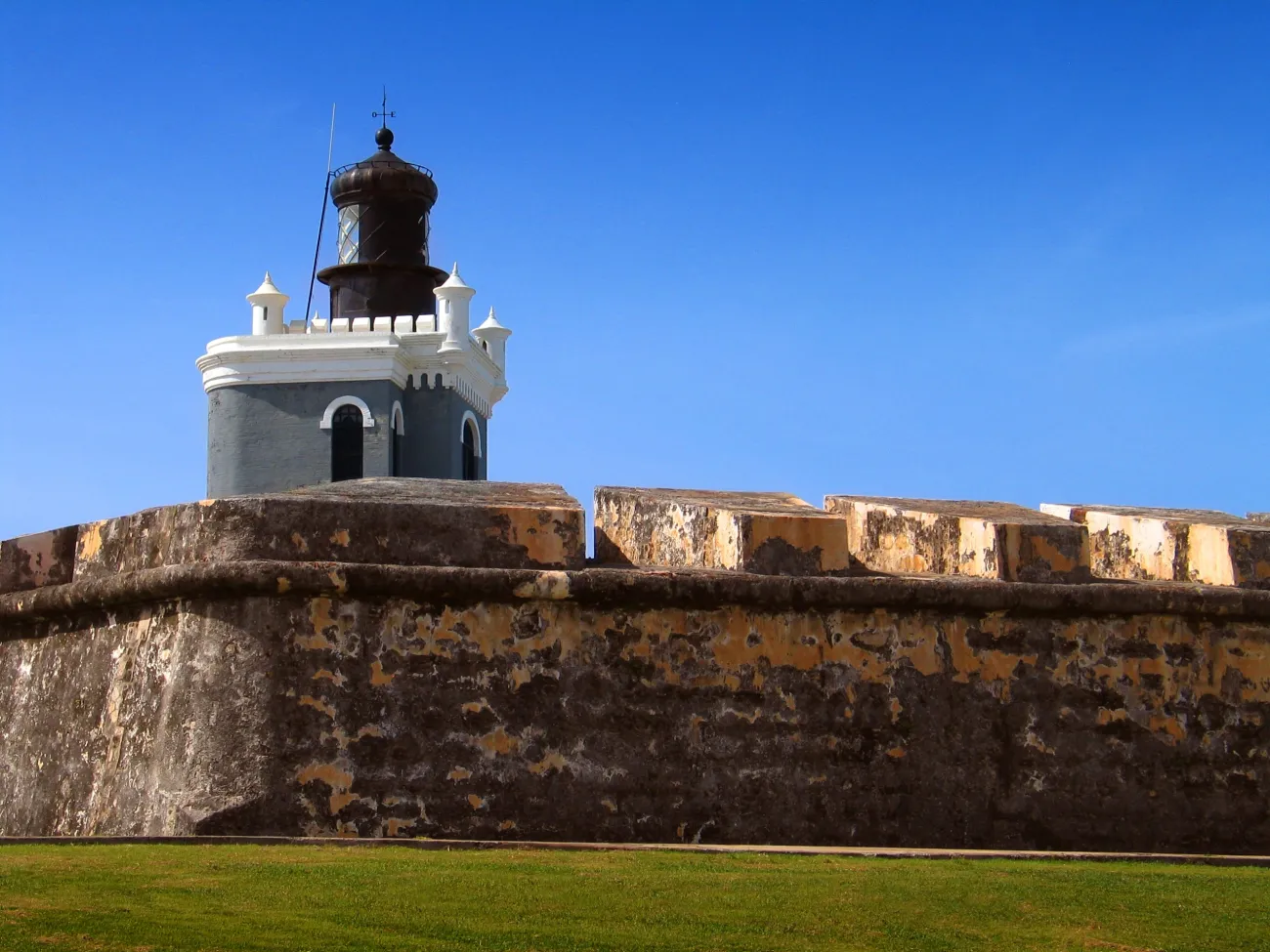
Photo: El Morro - Old San Juan, Puerto Rico — Jaime Olmo · CC BY-SA 3.0 · Resized.

The most useful Puerto Rico photo plan combines one compact walking area with a few deliberate landscape outings. Old San Juan can supply architecture, street details and coastal walls without constant driving. El Yunque requires current access checks and weather protection. The west, southwest and offshore islands need enough time to reach a location, assess conditions and still leave safely.
Think in terms of a frame, a legal place to stand and a workable return journey. A photograph made from a boat, rooftop or restricted viewpoint does not prove that the same angle is publicly accessible. The suggestions below are editorial shooting approaches, not accounts of personal visits or guarantees of the weather, crowd level or light on your date.
Plan the light and the journey together
Early and late daylight can soften the contrast on streets and coastal structures, while bright midday conditions can suit details, shade and graphic color. Check the sun’s direction for the actual date and street orientation. “Go at sunrise” is not a useful instruction if the entrance opens later or the return transport is unavailable.
Swipe or scroll sideways to compare the full table.
| Scene | Composition idea | Main check |
|---|---|---|
| Old San Juan streets | Repeated façades, doors, cobbles and a human-scale foreground | Traffic, privacy and room for other pedestrians |
| Fortifications | Walls and sentry boxes with sea or city context | Interior hours and equipment restrictions |
| El Yunque | Forest layers, water and close plant details | Open route, rainfall and stable footing |
| Coastal landscapes | A simple foreground and an uncluttered horizon | Surf, cliffs, access and the return journey |
| Nighttime bio-bay outing | Experience the darkness before attempting a camera setup | Operator rules; brightness and photographs are not guaranteed |
Old San Juan: façades, doors and ordinary street life
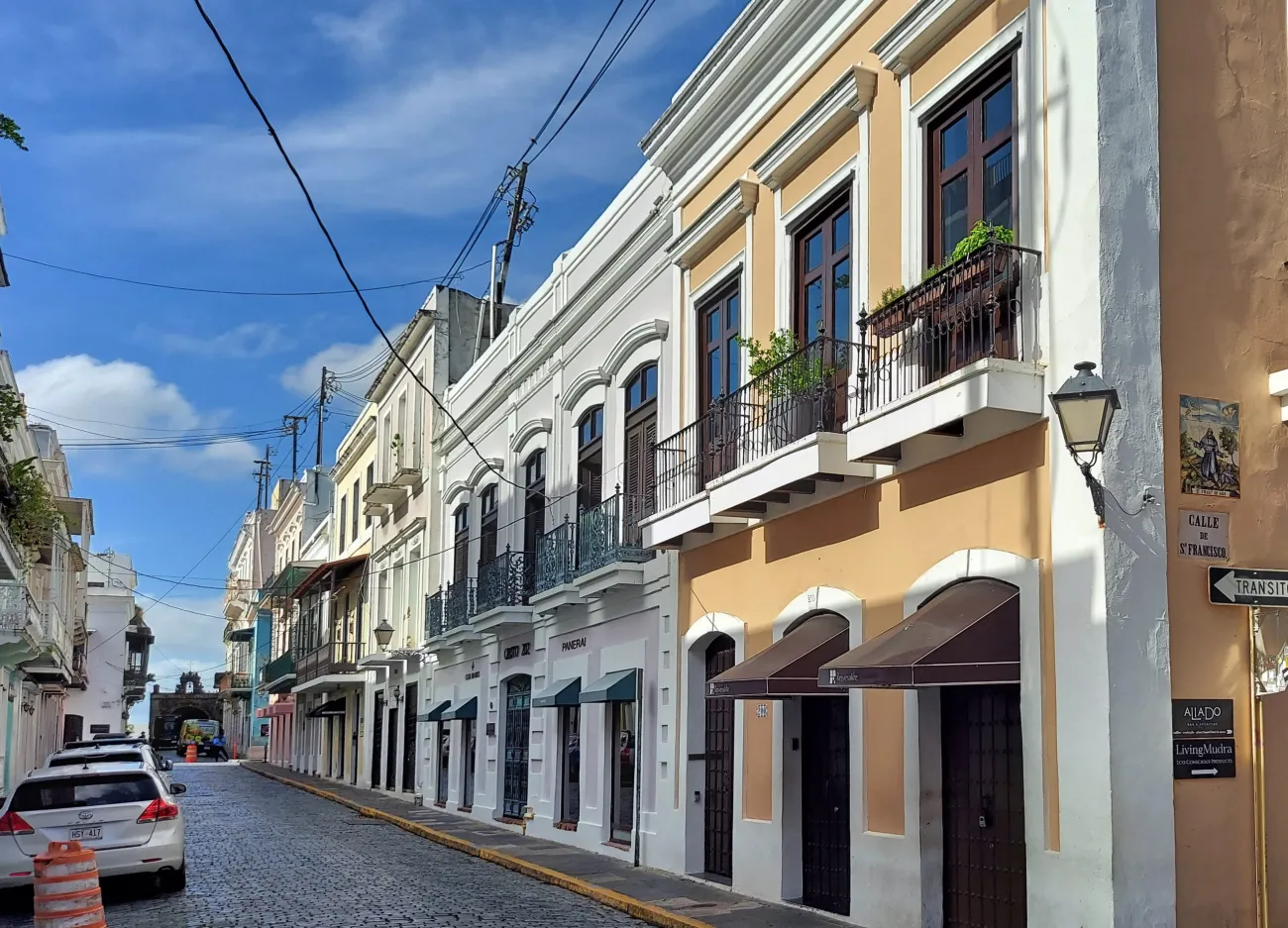
Photo: Old San Juan - Calle del Cristo — P. Hughes · CC BY-SA 4.0 · Resized.

Start with a short sequence rather than a hunt for a single famous doorway. Around Calle del Cristo and Calle San Sebastián, look for a clear relationship between a doorway, a balcony and the line of the street. A slightly longer lens can simplify repeated façades; a wider frame works when the street itself leads the eye toward the subject.
Move to the public side of a plaza or a wider pavement before stopping to compose. Avoid standing in the road, blocking a shop entrance or stepping into a private doorway to remove a parked car from the frame. A respectful photograph can include daily life without turning a resident into an unwilling subject.
Try a simple three-frame exercise: one view explaining the street, one architectural detail, and one image showing scale through a consenting companion. If the light is harsh, use shaded doorways and reflected color rather than forcing a high-contrast scene. The old city’s slopes and cobbles make supportive shoes more useful than carrying every lens.
El Morro: give the fortress space in the frame
The open approach to El Morro allows a composition that shows the structure as part of a coastal defensive landscape. Use the space in front of the fort to explain scale, keeping the horizon level and the structure away from a cluttered edge. Another option is a tighter arrangement of stone, sentry box and sea from an authorized public viewpoint.
Distinguish the outdoor grounds from the fort interior. The current NPS compendium gives different access conditions; interior visits normally fall within 09:00–17:00. A dawn exterior image should not be presented as proof that the paid interior is available at dawn. Closures can also affect grounds during weather or security incidents.
Do not climb onto historic walls for a cleaner angle or pose at an exposed edge. Wind can make equipment and loose belongings difficult to control. If the proposed photograph needs a tripod, staged setup, exclusive space or a group, ask NPS about the current requirements before planning the shoot.
San Cristóbal: make the layers tell the story
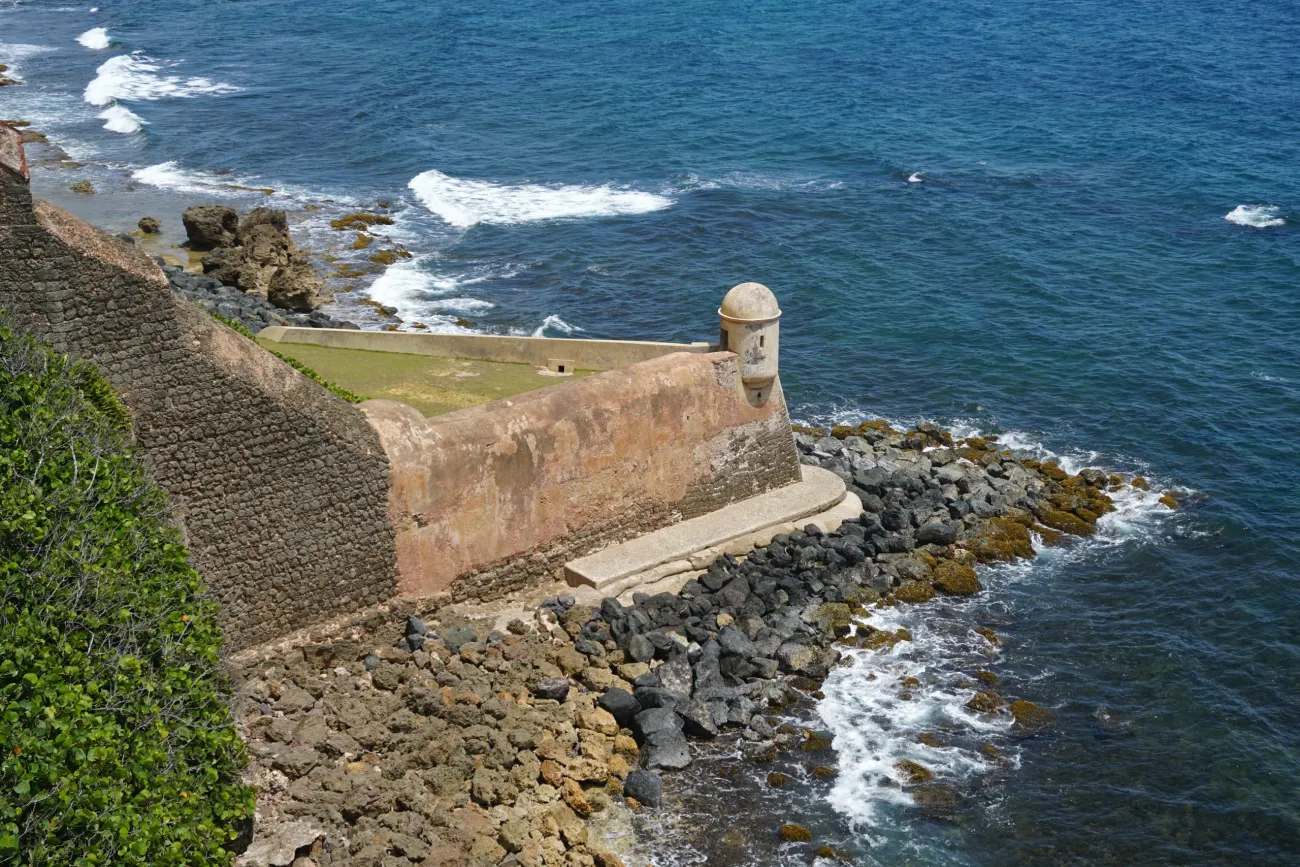
Photo: Garita del Diablo SJU 06 2019 8151 — Mariordo (Mario Roberto Durán Ortiz) · CC BY-SA 4.0 · Resized.

San Cristóbal is useful when you want a composition built from successive walls, ramps and openings rather than the broad approach associated with El Morro. Work from a permitted walkway and look for one clear progression from foreground stone to the next layer. An opening can frame the scene, but avoid holding a doorway while waiting for everyone else to leave.
Allow time to understand the structure before choosing a photograph. A wide view can explain the position of the defenses; a detail of masonry or a passage can complement it. Keep the caption specific to what is visible, instead of calling every coastal tower the same fort. The NPS visitor guide explains the different roles of the two principal fortifications.
El Yunque: photograph the route that is actually open
Forest photography often benefits from overcast light, which reduces bright patches and helps separate leaves, trunks and moving water. Bring a dry cover and wipe moisture from the lens before assuming a soft image is a focus problem. Stable footing and a modest amount of equipment matter more than reaching a waterfall with a large bag.
Use the Forest Service conditions and trail status immediately before visiting. La Mina, upper trails and tower access have been affected by closures; an old image is not an open-route recommendation. Do not cross a barrier to repeat the photographer’s position.
At Baño Grande, the historic pool can be photographed as a constructed landscape, using the stone edge and vegetation to organize the scene. Swimming is not permitted. Keep to the allowed approach, watch slippery steps and do not stand in the water for a low angle. For a river trail, rising water changes the decision immediately: the picture can wait.
Luquillo, the west and Cabo Rojo: choose a safe foreground
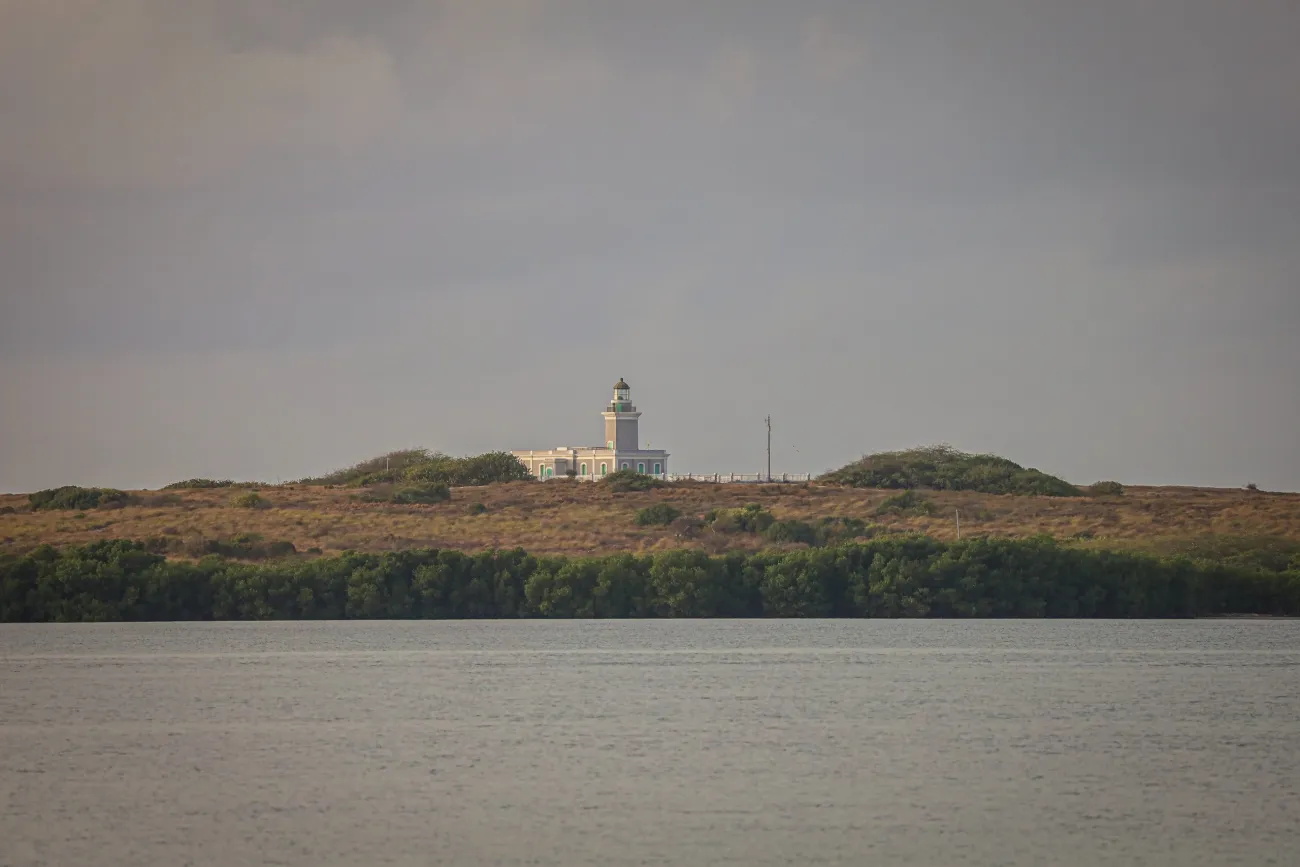
Photo: 2 Los Morrillos lighthouse — Ligocsicnarf89 · CC BY-SA 4.0 · Resized.

On the northeast coast around Luquillo, compare a broad beach scene with a closer view of a palm, boat or shoreline curve. Avoid placing a tree trunk against the main subject by moving a little along the public beach. A photograph of calm-looking water is not a swimming assessment; check current beach hazards before entering.
In the west, Rincón and Aguadilla offer coastal scenes that can be built around the relationship between town, beach and horizon. If surfers or swimmers are identifiable, consider their privacy and the context in which the photograph will be shared. Do not enter an active surf entry simply because it gives the closest viewpoint.
Cabo Rojo’s coastal scenery needs careful edge awareness and access planning. Keep back from cliffs, preserve barriers and use a lens change instead of stepping onto fragile ground. For a late-light outing, save the parking position and departure route before darkness. A car and an accessible gate solve different parts of the visit.
Island images and the historical record
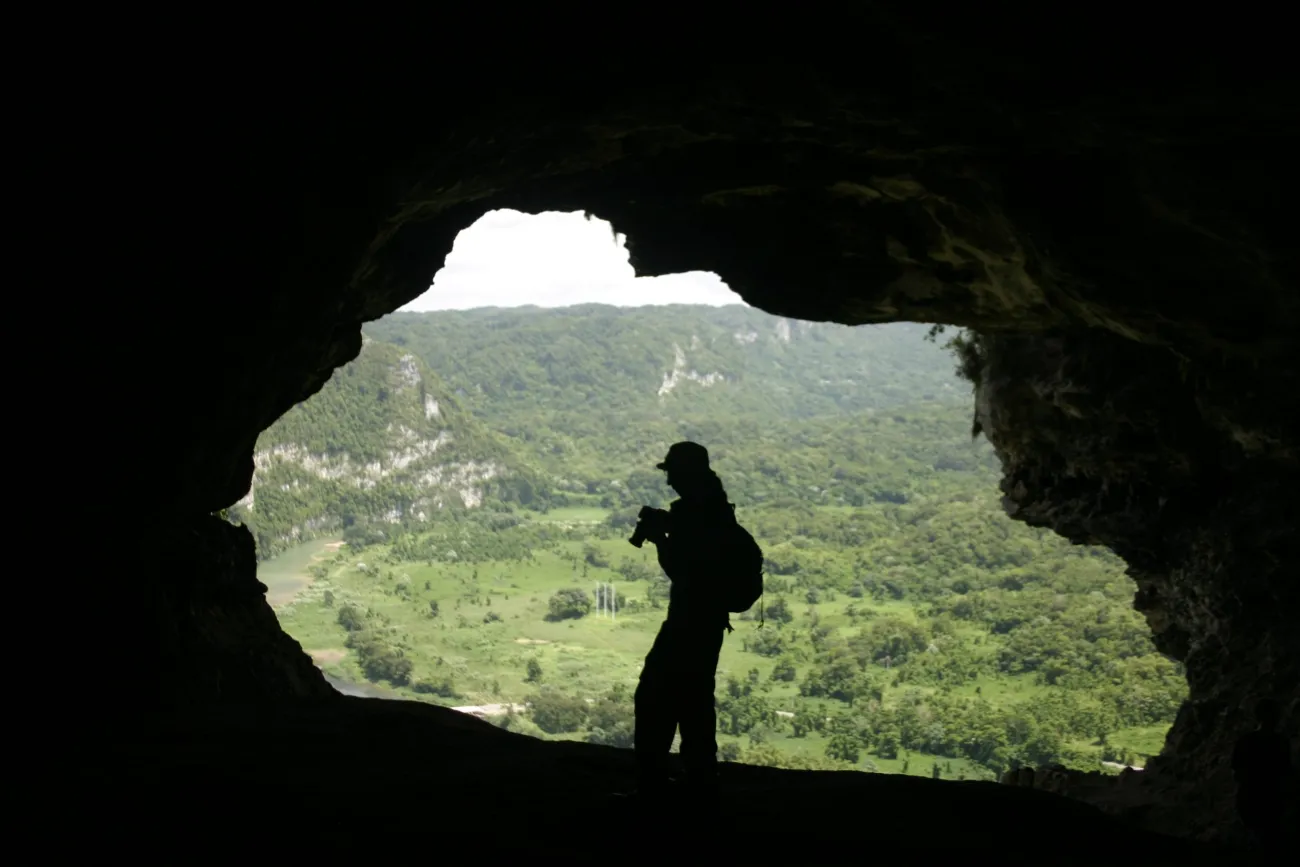
Photo: Cueva Ventana in Puerto Rico — J & E · CC BY 2.0 · Resized.

For Flamenco on Culebra or a Vieques beach, leave time between arrival and the photograph you hope to make. Ferry queues and local transport can consume the margin. A return sailing should be a fixed boundary for the plan, not an inconvenience to resolve after sunset.
Bioluminescent bays are particularly easy to misread through photographs. Camera settings and processing can make an image unlike the naked-eye experience. Follow the operator’s lighting and equipment rules, keep artificial light low and do not promise a phone photograph. Mosquito Bay and Laguna Grande should not be treated as swimming-photo locations.
Historic images also need accurate context. The intact Arecibo telescope shown in older photographs no longer represents the current site: the NSF documents its 2020 collapse. Older views of San Juan, the convention center, the Milla de Oro business district or street life can record a place and period without establishing today’s access, businesses or services.
Keep the photograph from becoming the disruption
Ask before making a close portrait, particularly of children, vendors or people at worship. Buy something because you want it, not as an assumed license to photograph a person. For festivals, stay behind barriers and avoid interrupting performers or a procession. A public setting does not remove the need for judgment about how an image portrays someone.
Protected areas, museums and private properties can have different equipment rules. Check with the manager before bringing a drone or arranging a staged shoot. Do not move shells, coral, plants or historic objects to improve a foreground. Share an honest caption that identifies the place, the meaningful date or archive context, and any significant manipulation.
Travel Tip: Choose one principal photograph for each outing, then make a wider context frame and a small detail. You will usually describe the place more clearly than by repeating the same wide view from ten nearby positions.
Puerto Rico photography questions
Can I photograph inside the forts at sunrise?
Do not assume so. Interior opening hours differ from access to outdoor grounds. Check NPS rules for the actual location and date, and obtain any authorization needed for a special setup or session.
Is a tripod allowed everywhere?
No universal rule applies to every site. Ask the land manager, museum or property about the specific equipment and activity. Even where permitted, keep walkways clear and avoid setups that interfere with visitors or resources.
Do I need to drive for good photographs?
A focused Old San Juan walk can produce a varied set without a car. Forest and regional coastal outings need suitable transport and a return plan. Pick the geography around the pictures you want rather than collecting distant viewpoints.
Will a bioluminescent bay look like the promotional image?
Not necessarily. Visibility changes and long exposures or processing affect photographs. Choose the outing for the experience, follow the operator’s rules and avoid treating a bright example image as a promise.
Last updated: