
EGYPT · CAIRO GUIDE
Ibn Tulun Mosque Photos: Courtyard, Arcades & Minaret
Ibn Tulun Mosque rewards a slower approach to architectural photography. Its open courtyard, repeated arcades and distinctive minaret create different subjects within one place. This guide helps you build a small, coherent set without turning a religious site into a staged photo session.
Begin with the Courtyard and Fountain
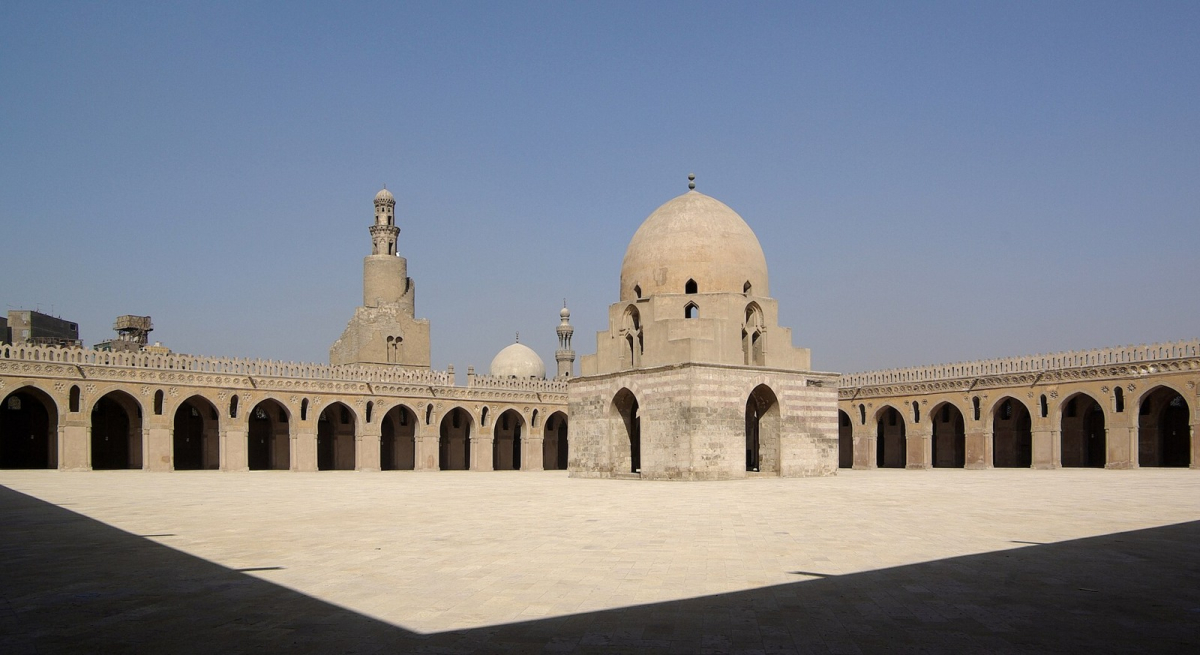
An overall courtyard image establishes the relationship between the open space, central fountain and surrounding arcades. Decide whether the fountain is the centre of the composition or an offset foreground element. Check the edge of the frame so that a column or arch is not accidentally cut at an awkward point. Leaving some breathing room can communicate the scale better than trying to fit every feature into one close view.
The Ministry’s Ibn Tulun Mosque overview identifies the monument in the Sayyida Zaynab area and describes its courtyard, decorated openings and spiral minaret. Use those particular features to distinguish this visit from Muhammad Ali Mosque at the Citadel.
Follow Repetition into a Smaller Detail
Move from the broad courtyard to a permitted arcade position. Repeated arches can lead the eye through the image; choose a viewpoint that keeps the nearest support from blocking the entire sequence. Then look for a smaller decorated opening or surface detail. One wide image and one detail explain the architecture more effectively than a series of nearly identical courtyard photographs.
Shade and bright open sky can coexist in the same frame. Decide which surface matters most and inspect its detail before leaving. Do not use flash or a lighting setup simply to overcome the contrast; follow the mosque’s current instructions and leave equipment out of circulation routes.
Treat Elevated Access as a Separate Question
A spiral minaret visible from the courtyard is a subject, not a promise that visitors can climb it. Ask about current access, conditions and permitted areas on arrival. Do not plan the whole photograph around an unverified roof or minaret opening, and do not follow another visitor into a restricted staircase.
Dress appropriately, follow shoe instructions and give prayer and quiet use priority. Avoid close photographs of worshippers without consent. If you combine the mosque with another historic-Cairo stop, allow a separate transfer rather than assuming all monuments share one compact pedestrian zone. Find the wider sequence in Cairo Photo Spots and city context in the Cairo map guide.
Frequently Asked Questions
Is Ibn Tulun Mosque inside the Citadel?
No. It is a separate monument in the Sayyida Zaynab area. Muhammad Ali Mosque is the mosque within the Citadel.
Can I rely on climbing the spiral minaret?
Do not assume it. Confirm current access and staff instructions during your visit and keep a worthwhile courtyard photo plan as the main option.
What if worship or restricted access interrupts the photo plan?
Give religious use priority, respect the visitor boundary and work with an authorised view. A quiet observation or shorter visit is preferable to obstructing the space.

