
EGYPT · CAIRO GUIDE
Cairo with Kids: Family Activities, Museums & Manageable Days
Plan around the Child’s Day, Not the City’s Checklist
A family trip to Cairo works best with one clear activity, a reliable meal break and an easy way back to the hotel. Age, curiosity and tolerance for long transfers matter more than how many famous sights appear on the route. Let each child choose a question or object to look for, then finish while there is still energy left.
Start with your base: a west-side stay helps a Giza-focused programme, while a central stay can suit Tahrir and shorter city outings. Compare the trade-offs in Where to Stay. A family room in an inconvenient district can turn every outing into a long journey.
Swipe horizontally if needed to compare all columns.
| Family situation | Useful choice | Check before committing |
|---|---|---|
| Baby or preschooler | A short museum selection or an early park break | Pushchair approach, changing facilities, shade and an easy exit |
| Child interested in hands-on history | A booked GEM or NMEC children’s activity | Exact age group, language, date and accompanying-adult arrangements |
| Child keen on role play | KidZania Cairo | Age/height conditions, session and east-side transfer |
| Older child or teenager curious about ancient places | A focused Giza or museum visit | The actual interest, physical demands and an agreed finish point |
| Mixed ages | One shared activity plus an optional extra | Whether adults can split the group and reunite easily |
GEM: Choose the Activity as Carefully as the Museum
GEM’s official booking site lists children’s programmes in age groups including six to nine and ten to twelve. Book the specific session rather than assuming general museum admission includes a workshop. Confirm the programme language, duration, drop-off and collection arrangements before arranging your day around it.
For an ordinary gallery visit, choose a small shared mission: find an animal, compare two statues or spot an everyday object made from an unfamiliar material. A child who enjoys that task may want more; another may be ready for lunch. Avoid promising the pyramids, every museum gallery and a further evening excursion as one family day.
NMEC and Kimet: Enquire about a Real Children’s Session
NMEC’s children’s visits information describes workshops, pre-booked children’s tours and Kimet, an experiential introduction to ancient Egyptian life. Contact the museum’s education team about the date, age fit and booking arrangements. A school programme described online is not automatically an individual family’s drop-in session.
Consider the child’s response to the Royal Mummies Gallery separately from their interest in crafts or ancient daily life. Explain what the display involves and allow a choice about entering. An adult can enjoy a museum without expecting every child to share the same interest or comfort level.
KidZania: A Different Kind of Cairo Day
KidZania Cairo offers role-play activities rather than an archaeological visit. It can suit a family wanting an activity-led change of pace. Treat its New Cairo outing as its own east-side commitment rather than a quick stop between Giza and central Cairo.
Read the venue’s ticket and access conditions before purchase. They require adult accompaniment for children under eight or below 120 cm, and individual activities can have further age or height limits. Confirm your own child’s eligibility and supervision arrangements; general admission does not promise that every activity will suit them. Check food restrictions and re-entry rules before planning to leave for lunch.
Al-Azhar Park and Giza: Different Outdoor Days
At Giza, the outdoor scale may be the attraction. A pyramid interior is a separate, physically demanding choice; children do not need to enter one to have visited the pyramids. Set a small number of viewpoints, carry water and arrange a clear pickup. Choose a vehicle with the required child restraint in advance rather than assuming a street taxi will have one.
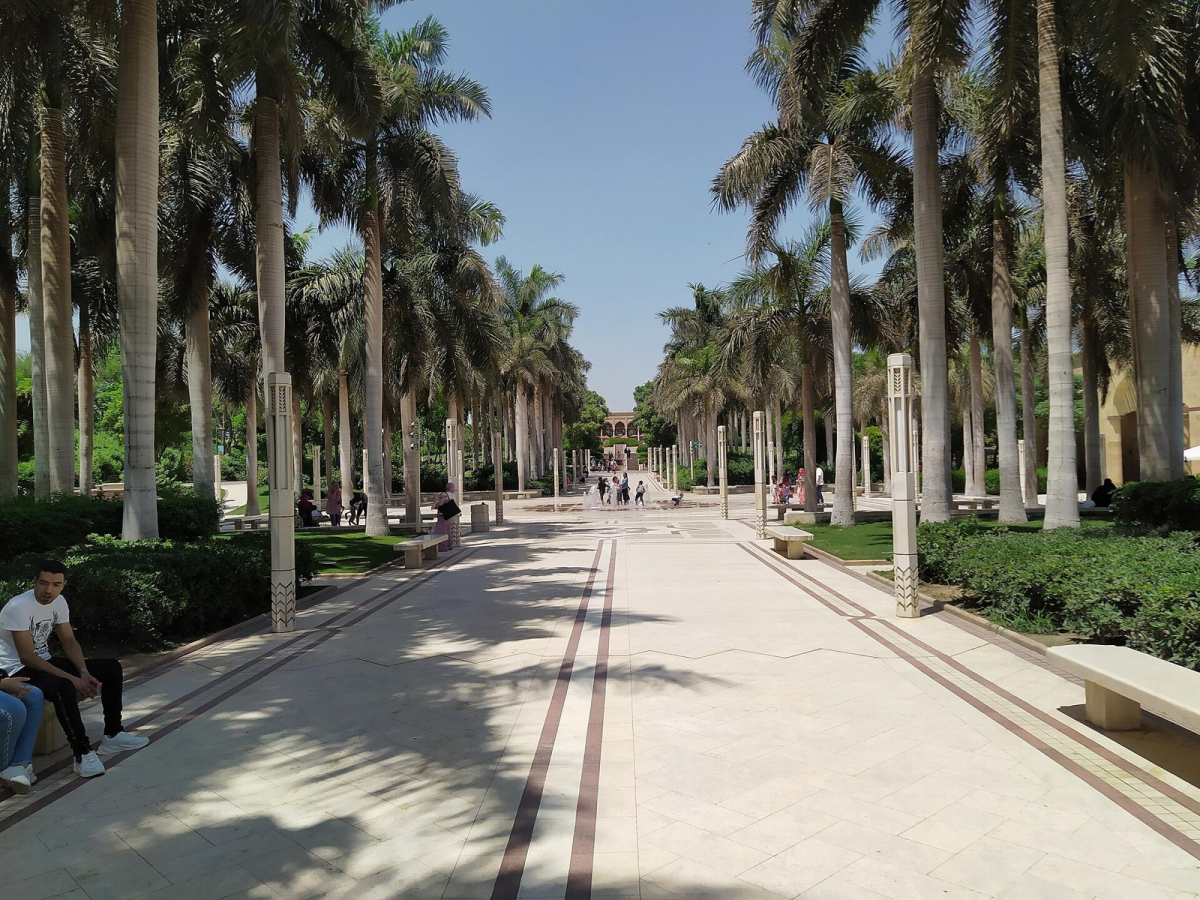
Al-Azhar Park provides a different outing, with planted space and a children’s area described by its official website. Use it as the activity itself or a shorter break, allowing for admission, slopes, the weather and the journey. Our parks and outdoor breaks section compares the city-break context.
Keep the Practical Details Small and Specific
Before leaving the hotel, identify the next toilet stop, a suitable meal and the way home. Ask venues about pushchair storage and the entrance you will actually use; an indoor gallery does not guarantee a smooth pavement approach. Families with particular access needs can use Cairo Accessibility alongside direct venue advice.
Keep snacks for places that permit them and follow gallery food rules. Carry children’s age evidence where a ticket category requires it, and check each venue’s policy rather than applying one museum’s free-entry rule everywhere. Tickets & Passes explains how to read the different admissions.
A workable rhythm is an early chosen visit, lunch and a rest, with a short optional outing later. This is a planning pattern, not a fixed timetable: adapt it to naps, heat and the actual journey. For longer museum and monument sequences, use Cairo Itineraries and remove activities until the family’s day has breathing room.
Frequently Asked Questions
Can an ordinary GEM ticket be treated as a children’s programme booking?
No. Check the exact programme and age group, then confirm what its ticket includes and whether a separate gallery admission or accompanying-adult ticket is needed.
Can an individual family turn up for an NMEC school activity?
Do not assume so. Ask NMEC’s education team about a session suitable for your children, its language, availability and the correct booking process.
Is KidZania suitable for every child who has an entrance ticket?
Activities can have their own age and height conditions. Review the venue’s supervision rules and ask about the activities that matter to your child before booking.
What should we remove first from an overfull family itinerary?
Remove the additional cross-city transfer. Keep one main activity and a nearby break, then make a later outing optional rather than attaching another distant attraction.

