
EGYPT · CAIRO GUIDE
Accessible Cairo: Museum Facilities, Metro Lifts & Journey Planning
Plan an accessible Cairo visit as a connected journey: the aircraft or arrival hall, the vehicle, the street approach, the entrance, the visit itself and the return. A useful answer describes each link. A museum’s facilities do not establish the accessibility of its neighbouring pavement, and a hotel’s general access label does not describe every bedroom.
This guide separates published local facilities from arrangements that need direct confirmation. Choose the places that suit your own requirements, then use the Cairo itineraries to keep the day manageable. It does not certify a route or replace the venue’s current access information.
Confirm the journey before reserving the day
Write down the dimensions and assistance requirements that affect your journey, such as a wheelchair’s folded size, whether you transfer to a car seat, or whether you need a step-free route throughout. Send the same concrete questions to the relevant provider. A driver confirming boot space has not necessarily confirmed a suitable boarding arrangement.
Swipe horizontally if needed to compare all columns.
| Stage | Confirm | Ask |
|---|---|---|
| Flight and airport | Assistance type, meeting point and mobility-aid handling | The operating airline |
| Vehicle | Boarding, transfer, equipment space and exact drop-off | The booked transport provider |
| Metro | Suitable entrance, working lifts and interchange route | The line operator or station team |
| Museum | Entrance, internal circulation, toilets and requested support | The museum’s visitor team |
| Hotel | The actual room, bathroom and route from the vehicle | The property, for your booked room type |
Airport assistance and the onward vehicle
Arrange assistance with the operating airline, including on a codeshare flight. EGYPTAIR’s own guidance requests assistance at least 48 hours before departure and gives separate instructions for mobility equipment. Use your airline’s current process and confirm the level of help you actually require; wheelchair assistance over a long terminal distance and assistance with boarding are different requests.
Tell the transfer provider which airport and terminal you will use, how you board a vehicle and what equipment travels with you. Request a specific meeting point and a way to reach the driver if assistance or baggage takes longer. For CAI and SPX arrival choices, see Airports & Transfers. An ordinary airport pickup should not be assumed to include an adapted vehicle.
Metro entrances, lifts and the complete station route
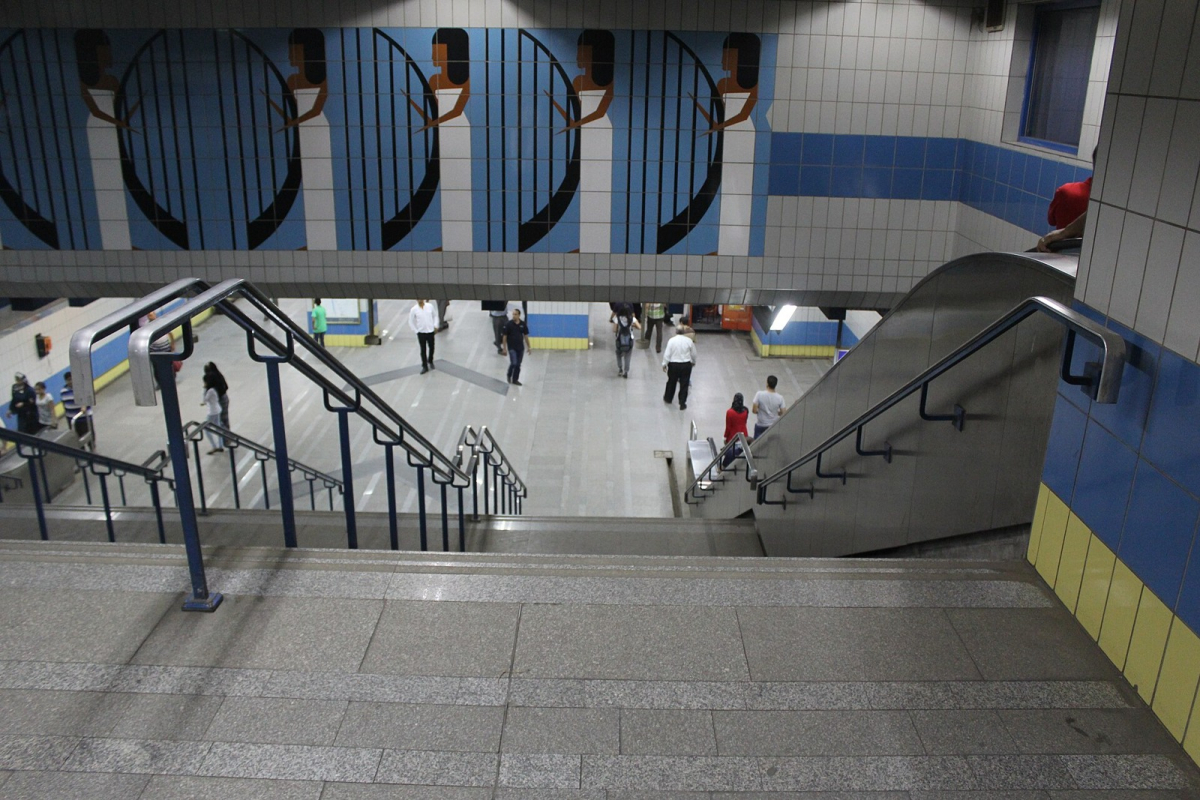
Mobility Cairo’s Green Line 3 guide describes station elevators and dedicated street-level lift access for passengers who need it. That is useful infrastructure information, rather than a live lift-status report. Confirm the entrance and operation at both ends, together with any interchange, before relying on a particular journey.
A photograph of a station entrance does not identify a continuous step-free route. Ask which side of the street reaches the appropriate lift and how to get from the exit to your actual destination. The operator also lists priority seating; it does not remove the need to assess boarding and the final street section. Keep a workable alternative if essential equipment is unavailable. Getting Around covers the wider network and corridor choices.
Museum facilities: NMEC and GEM
NMEC’s accessibility page lists wheelchairs, designated parking and elevator access to exhibits. It also describes Braille brochures on request and advance reservations for sign-language tours. Contact the museum about availability, the exact accommodation and the route you intend to take; these services have different arrangements. Allow time to collect equipment or meet the person providing assistance.
GEM publishes a separate accessibility page describing wheelchairs, accessible restrooms, seating and a tactile replica with Braille, among its own facilities and support. Ask the museum about the entrance, gallery route, rest opportunities and any equipment you need. Do not transfer a facility promise between GEM, NMEC and the Egyptian Museum at Tahrir merely because all three are museums. Cairo Museums helps choose the collection; the chosen institution must confirm the practical access.
Historic streets and archaeological visits
For Al-Muizz, Coptic Cairo, the Citadel or a pyramid visit, specify the exact entrance and the parts you hope to see. Ask about surfaces, gradients, thresholds, steps, distances and toilets, then decide whether the proposed visit matches your needs. Access to an outdoor viewing area does not establish access to a historic interior.
Plan the approach as carefully as the monument. A nearby map pin may still involve a road crossing or an unsuitable stretch of pavement. Agree a safe drop-off and return point with the provider and venue. At Giza or on a Saqqara and Dahshur excursion, ask about each optional interior separately; do not accept the access description of one space for the entire site.
Confirm the room and bathroom you will receive
Before choosing a non-refundable room, request current details for that room category: entrance and doorway measurements where relevant, bed height and approach, shower threshold or bath arrangement, grab rails, toilet layout and lift access. Ask for photographs or measurements that answer your own question. A photograph of a lobby or a hotel-wide filter is not enough to confirm a bathroom.
Also check the route from the vehicle to reception, the restaurant and any other facility you expect to use. Keep the property’s written confirmation beside the booking. Choose the most practical base in Where to Stay, then compare the actual property and room conditions in Cairo Hotels.
Build in rest and a simple return
Choose one main outing and a nearby optional stop rather than filling every available hour. Heat, crowds, queues and long transfers can change what feels comfortable. Identify a rest point and the return arrangement before starting, with the option to shorten the visit.
Save the entrance address, relevant provider contacts and written confirmations offline. If a condition changes on the day, ask the responsible operator or venue for the current alternative. Keeping a clear return plan gives you more useful flexibility than adding another distant attraction.
Frequently Asked Questions
Does a Line 3 elevator listing confirm that my full journey is step-free?
No. It describes infrastructure, not today’s lift operation or the street approach. Confirm the entrances, both station routes, any interchange and the final section to your destination.
What support does NMEC publish for visitors with access needs?
NMEC lists wheelchairs, designated parking and elevator access, with Braille brochures on request and advance arrangements for sign-language tours. Ask the museum about the specific service and availability for your visit.
Should I request an adapted transfer separately from airport assistance?
Yes. Tell the vehicle provider how you board and what equipment you carry. Airline or terminal assistance does not establish that an onward booked car is adapted to your requirements.
What should I ask a Cairo hotel before booking an accessible room?
Ask about the exact room category, entrance and bathroom layout, measurements that matter to you, the lift route and the approach from the vehicle. Obtain a written answer rather than relying only on a general access label.

