
EGYPT · CAIRO GUIDE
Shopping in Cairo: Khan al-Khalili, Khayamiya & Craft Choices
Shopping in Cairo is most rewarding when you know what you want to bring home and give yourself time to understand it. A textile, metal object and inexpensive souvenir involve different budgets and packing needs.
This guide focuses on buying and browsing in the city, particularly Khan al-Khalili and the tentmakers’ street at Khayamiya. For a historic walk without a purchase agenda, use Things to Do; food and café planning belong in Food & Drink.
Swipe horizontally if needed to compare all columns.
| Interest | Useful starting point | What to inspect |
|---|---|---|
| A textile with a craft story | Khayamiya / the tentmakers’ area | Applied fabric or printed design, stitching, backing and intended use. |
| A small decorative object | Khan al-Khalili browsing | Actual material, finish, moving parts and packing. |
| A gift with limited luggage space | One compact, clearly priced item | Dimensions, weight, durability and whether it suits the recipient. |
| A planned or custom piece | A maker who can explain the work | Specification, total price, completion and collection/delivery in writing. |
Khan al-Khalili: Compare Objects, Not Sales Pitches
The Cairo Governorate’s Khan al-Khalili page locates the market in the Al-Hussein area. Treat it as a network of working shops and lanes rather than one attraction entrance. Choose a manageable section, note a landmark for returning, and leave room for a stop without blocking someone else’s trade.
Compare similar objects in more than one shop. Ask what it is made from, where it was produced and which part of the work was done locally. Similar-looking pieces may differ in finish, material or production. Ask about the individual item; one shop can sell both locally made and imported goods.
Khayamiya: Look Closely at the Textile and the Work
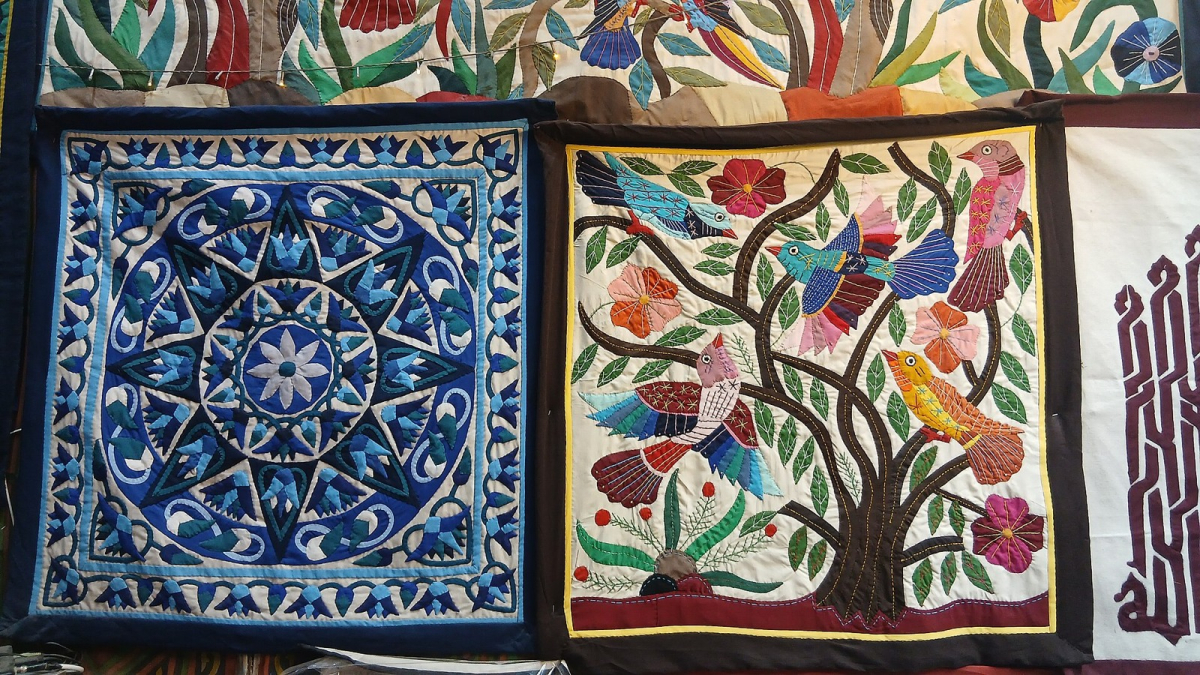
The tentmakers’ area south of Bab Zuweila is associated with khayamiya appliqué textiles. Give this its own purposeful stop: examine how shapes are attached, turn over a piece with permission and ask which stages were carried out by hand. A printed pattern and a design assembled from applied fabric are different products, even when their colours look similar from a distance.
Choose for the intended use. A wall hanging, cushion cover and table textile need different dimensions, backing and care. Ask whether the displayed piece is the exact one for sale, whether inserts or finishing are included and how it should be cleaned. For a commissioned design, settle the measurements, colours, price, completion date and collection arrangement before paying.
The UNESCO craft-inventory account describes work with Historic Cairo practitioners to document and transmit skills; it does not certify a shop or purchase. Ask before photographing makers, workshops or designs and accept a refusal.
Material and Finish: Ask Questions That Match the Object
For a metal object, ask which metal or coating is being offered and inspect joins, handles and any working parts. For a textile, check seams, edges and the actual dimensions. For a fragile gift, examine the packing before assuming it will survive the journey. Ask what handmade or traditional means for that piece.
For an object intended for food, heat or practical use, ask for suitable material and care information. A decorative finish does not demonstrate those properties. Choose a retailer able to answer your requirements rather than rushing a specialist purchase.
Agree the Price Calmly and Clearly
Ask whether the quoted price is fixed before assuming negotiation is expected. Where bargaining is welcome, make an offer you would be prepared to pay, keep the exchange courteous and leave politely if the figure does not work. There is no reliable universal discount percentage or correct price for every handmade piece.
Confirm the currency, quantity and total before money changes hands. Check whether alterations, packaging, card charges or delivery add to the price. For a valuable or ordered item, request a written description and receipt with the seller’s contact and any agreed return terms. Keep a small spending amount separate so an ordinary purchase does not require displaying the whole travel wallet.
Build a Shopping Session That Fits the City Day
Khan al-Khalili browsing can sit beside a selected Al-Muizz walk. Khayamiya is a different stop around the Bab Zuweila end of the historic-city area; use the Cairo map and an actual route to decide whether to combine them. For route and access preparation, use Cairo Accessibility.
If one particular workshop or shop is important, confirm its own opening before crossing the city. Do not assume all traders share one timetable, including during religious holidays. Save a pickup point on a road your driver can reach and allow time to inspect the final purchase without rushing a departure. For a shorter outing, one carefully chosen object can be enough.
Packing, Customs and the Journey Home
Measure a larger piece against your actual luggage and ask how it will be folded or protected. Check airline baggage and any shipping arrangement separately; a seller’s offer to send an item is not proof of the full transport cost, insurance or arrival conditions. Retain the agreed specification and receipt if collection or delivery comes later.
For national preparation, use Egypt Visa & Entry. The FCDO’s Egypt customs summary directs travellers to the official rules for goods taken into or out of the country. This guide covers contemporary crafts and gifts; it does not determine an object’s age or legal status. Get appropriate official advice before buying an item whose origin is unclear.
Frequently Asked Questions
How do I distinguish an appliqué textile from a printed design?
With the seller’s permission, examine how the fabric shapes are attached, inspect the backing and ask about the making process. Compare the actual piece and intended use rather than judging only the colour or a handmade label.
Should I bargain in every Cairo shop?
No. Ask whether the price is fixed. If negotiation is welcome, be courteous, agree a complete total and avoid relying on a universal discount rule.
What should I confirm for a custom textile order?
Record the measurements, materials, colours, total, finishing, completion date and collection or delivery terms. Confirm what any deposit secures and keep the maker’s contact.
Can I assume a souvenir receipt settles customs requirements?
No. Use the national customs guidance and official sources for the item concerned. A city purchase or a seller’s assurance does not itself establish export permission.

