
EGYPT · CAIRO GUIDE
Cairo Photo Spots: Pyramids, Mosques, Streets & Nile Views
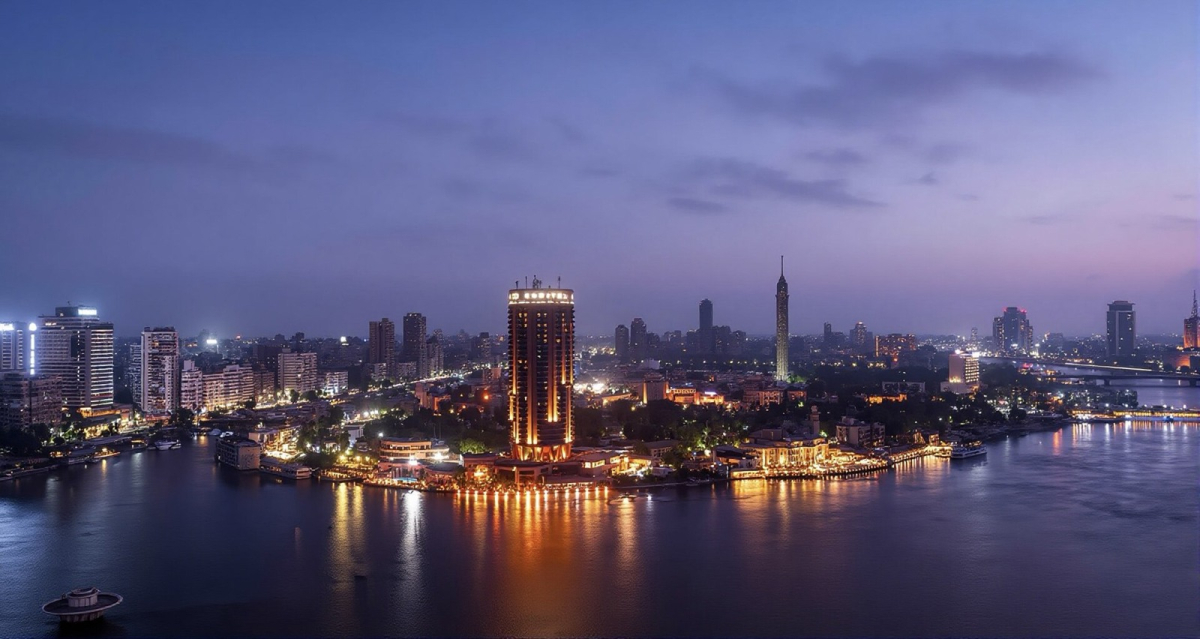
Cairo photography changes with the subject: a pyramid panorama needs space and visibility, a mosque interior needs permission and restraint, and a neighbourhood walk needs attention to people who live and work there. This page chooses photographic approaches. The linked place pages develop a specific subject rather than repeating a general attraction list.
Swipe horizontally if needed to compare all columns.
| Subject | Visual opportunity | Access decision |
|---|---|---|
| Giza panorama | Scale, spacing and layered pyramid forms | Use an authorised viewpoint and confirm current site access. |
| Historic mosque | Courtyard geometry, stone and interior light | Visitor opening, worship, footwear and equipment rules. |
| Old Cairo | Church/fortress details and a compact street sequence | Actual quarter and permitted interiors; ask before people. |
| Modern Nile cityscape | Bridges, river reflections and urban layers | Lawful viewpoint; no assumptions about rooftops or infrastructure. |
| Saqqara / Memphis | Stepped form or a distinctive sculpture study | Separate sites and ticket conditions; identify the subject accurately. |
Giza: Separate the Panorama from the Individual Monument
For the relationship between several pyramids, use the Giza panorama guide. The Khufu/Cheops page concerns mass and stone detail; Khafre/Chephren concerns its distinctive profile and surviving upper casing. The Sphinx page treats the relationship of head, body and background separately.
Do not cross barriers or climb masonry to reproduce an online frame. Site access and permitted stopping points can change. Heat shimmer, haze and crowds affect the result; a photographed viewpoint is not a promise of exclusive access. Keep the site visit and interior-ticket decisions in the Giza attraction section.
Mosques: Courtyards, Repetition and Quiet Interiors
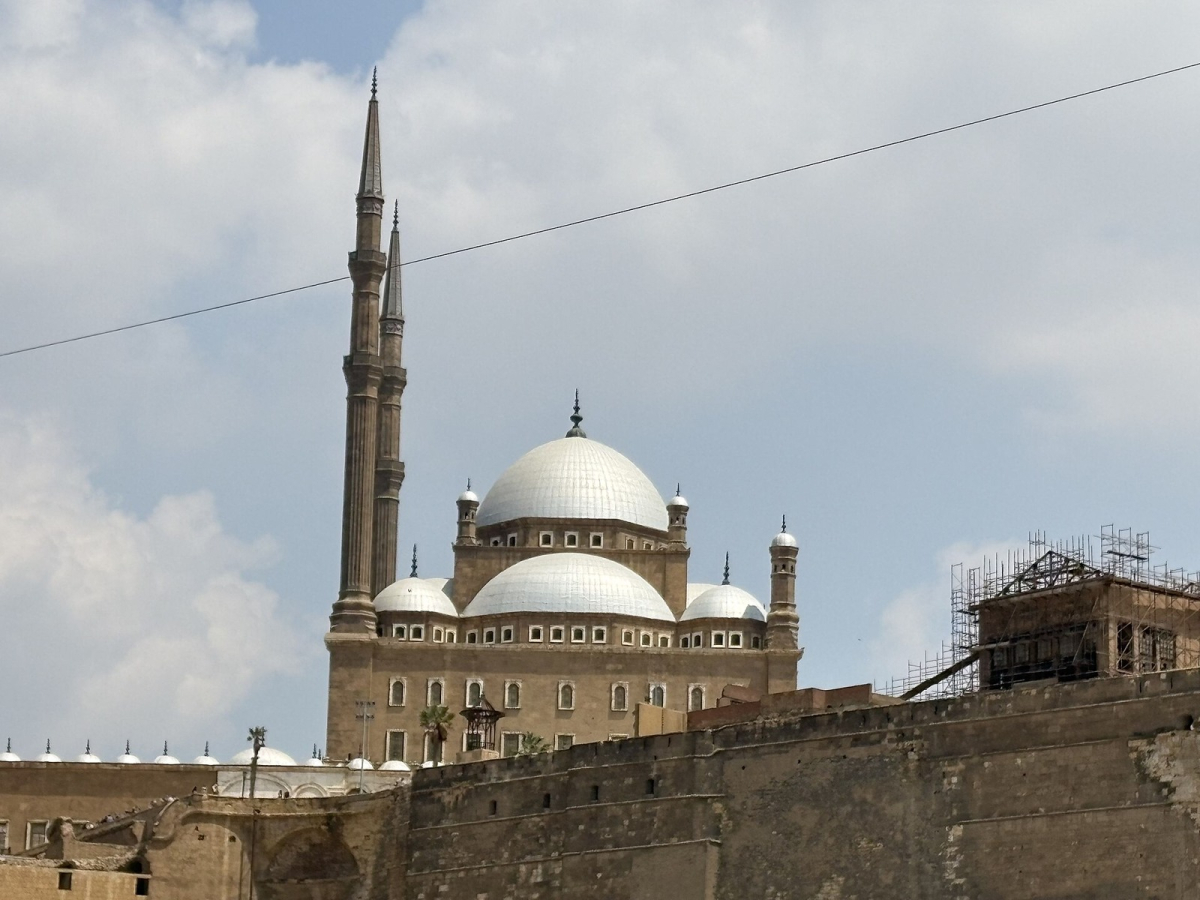
Choose one building and learn its spatial character before photographing every detail. The Muhammad Ali Mosque guide separates exterior mass and interior detail; Ibn Tulun focuses on its courtyard and repeating forms. They are different architectural subjects, not interchangeable “Islamic Cairo” illustrations.
Ask about photography and equipment at the visitor entrance. Avoid flash where restricted, do not interrupt worship and keep bags and tripods out of circulation routes. A small handheld setup often makes a respectful architectural visit easier; permission for professional or commercial work is a separate question.
City Views: Historic Walks, the Nile & Al-Azhar Park
The Old Cairo photo walk concerns the actual Coptic quarter and fortress setting. Modern Cairo focuses on the Nile, urban layers and the city’s later skyline.
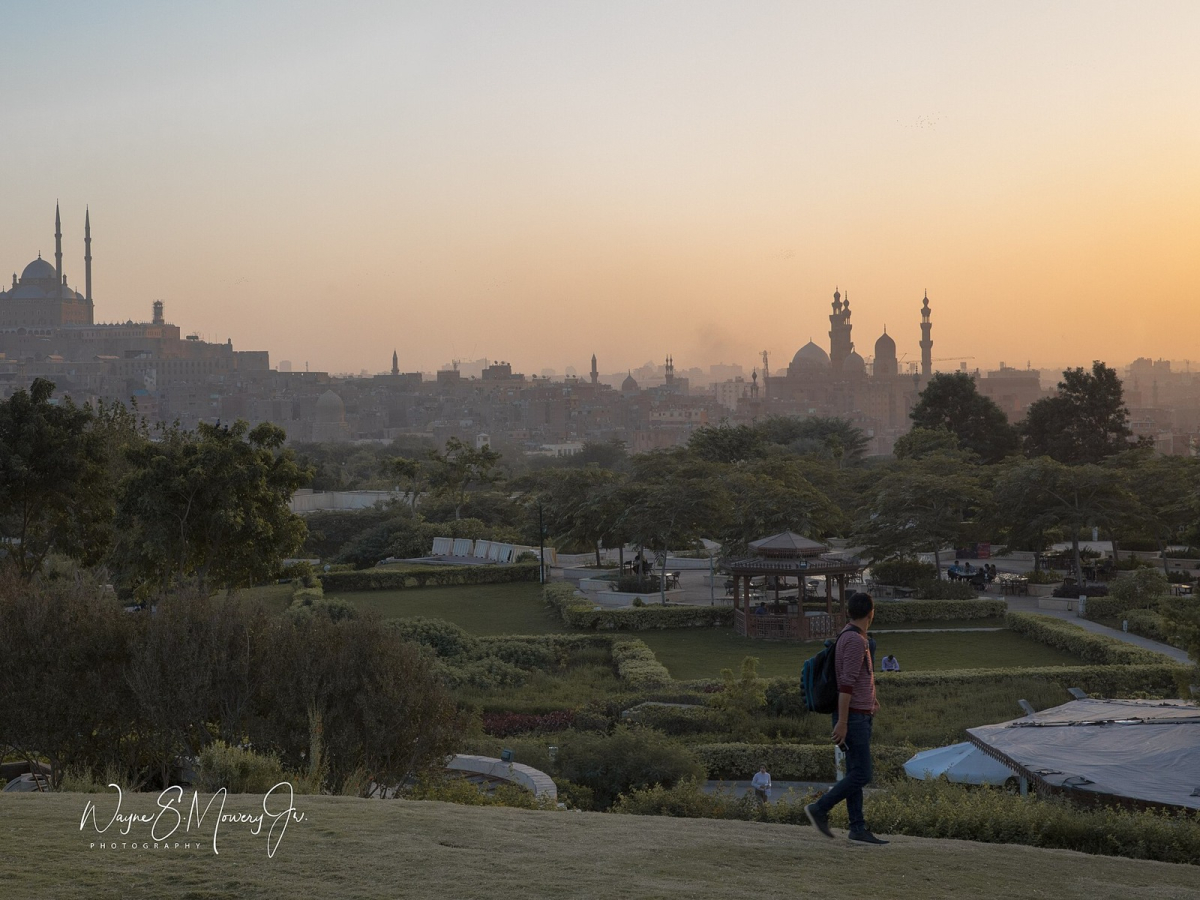
Al-Azhar Park offers a separate skyline subject: the sunset photograph here looks across the city from landscaped park grounds. This is a different viewpoint from the Coptic Old Cairo walk or a Nile-side cityscape. Check the park’s current visitor hours, permitted areas and photography conditions before planning a sunset visit; the photograph does not establish access after normal closing or permission for special equipment.
Choose a lawful public or explicitly authorised viewpoint. Hotel terraces, rooftops and cultural compounds may have visitor or commercial-photography conditions. A historical photograph demonstrates a composition, not today’s access or current skyline in every detail. Ask before portraits, close workshop photographs and private interiors.
Saqqara and Memphis: Identify the Subject Correctly
The Djoser Step Pyramid guide develops the stepped profile and enclosure context at Saqqara. The Ramesses II page concerns the reclining Memphis/Mit Rahina colossus, not GEM’s standing statue. Plan these as a south-of-city excursion with an agreed return.
Different structures and museum shelters create different light. Work with the accessible view and keep barriers clear; avoid prescribing a lens or exposure as though every visitor has the same light and equipment. A camera setting is a starting experiment, not a fact about the site.
Museum Photography and Equipment
Check the current rules for the actual institution and gallery. GEM, Tahrir and NMEC have their own conditions, and a phone permission in one space may not extend to another. Ask before using a camera support, flash or external lighting; commercial work requires a separate approval process.
Do not treat national drone permissions as a casual extension of a handheld photo visit. For the country-level requirements, follow Egypt Photo Spots. This Cairo guide does not promise equipment entry, private roof access or a permit on arrival.
Build One Small Photo Route
For a historic-city session, choose a short Al-Muizz segment and finish near a practical pickup. For a central cityscape session, combine a permitted river viewpoint with a nearby neighbourhood rather than racing between distant roofs. For archaeology, give the site and the return enough daylight.
Review the images you already have before adding another stop. A coherent sequence of a wide view, a built detail and a scene with consent tells more than repeating the same pyramid frame. All photographs here retain their individual source and licence; they are illustrations, not claims of personal visits by the author.
Frequently Asked Questions
Can I use the same photo ticket at every Cairo museum?
Do not assume so. Check the rules for the institution, gallery and equipment you will use; personal handheld permission differs from professional work.
Where is the reclining Ramesses II statue shown in the photo guide?
It is at Memphis/Mit Rahina, a separate south-of-city excursion. It is not the standing colossus in the Grand Egyptian Museum.
Is every rooftop skyline viewpoint publicly accessible?
No. Confirm lawful visitor access and any photography conditions directly. A published photograph does not grant access to the place where it was made.
Do the photo guides replace attraction tickets and opening information?
No. Use them for subject, composition and respectful practice; use the linked attraction and official ticket pages for the actual visit.



