
SEYCHELLES TRAVEL GUIDE
Praslin Beach Photos: Granite and Sand at Anse Volbert
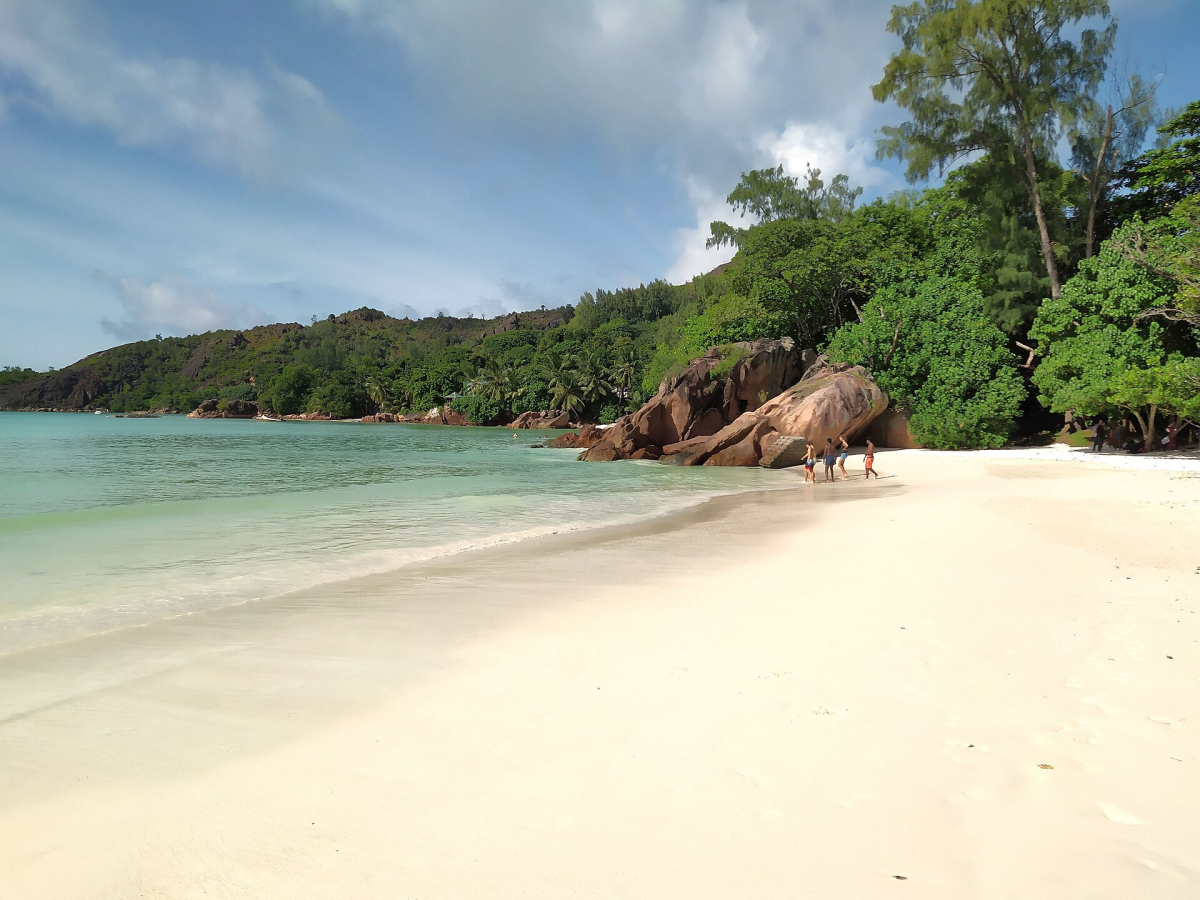
Praslin’s beaches offer more than a single postcard angle. This photograph shows granite and pale sand in the Anse Volbert area, also known as Côte d’Or. The low shoreline viewpoint makes the relationship between rock, water and trees the main subject. Use it to plan a short photographic walk while keeping the wider beach visit flexible.
Find a subject within the wider shoreline
Begin with an establishing view that shows the bay and the beach’s length, then look for one clear foreground. A granite outcrop can separate the frame into near and distant layers. Leave breathing room around the rock so that its shape is visible. If boats appear farther out, decide whether they add a useful sense of scale or compete with the main subject.
The photograph’s broad Praslin beach context is useful, but specific names still matter. Anse Volbert, Anse Lazio and Anse Georgette are different places with different approaches. Write the actual location in your notes at the time rather than choosing a more familiar beach name when you share the picture.
Photograph a short stretch well
A slow walk along one accessible section can produce a better sequence than rushing between several beaches. Compare a broad bay view, a rock detail and a picture showing the edge of the vegetation. Pause where you can stand without blocking the route or leaving possessions exposed beside the water. Check behind you before stepping back to widen a frame.
Move with the conditions you find. If the waterline is close to the vegetation, choose a different angle rather than forcing a path through plants. If the sand is busy, a tighter composition can still show the coast clearly. The purpose is to make an accurate picture of the place you experience, including ordinary human activity when appropriate.
Use bright water without losing detail
Reflective sand can mislead a camera’s automatic exposure. Check the bright areas and the water’s surface rather than judging only the screen’s overall brightness. A little cloud can make foliage easier to photograph; a brighter break can bring out blue and green in the bay. Take another frame after checking the edges and horizon, not simply a long burst of almost identical views.
Keep spray and sand away from the lens. Close the bag while walking, carry a clean cloth and avoid changing equipment in wind. For a phone, check that the lens is clean and that the frame has not tilted while you adjusted the screen. These small checks often improve a beach image more than a heavier kit.
Fit photographs around a practical Praslin day
Combine the coast with a forest visit only if the transport and opening arrangements leave enough time for both. Leave space for food, heat and a rest; a camera bag can make a short walk feel longer. Where to Stay explains the role of Côte d’Or as a base, while Itineraries helps distribute beach and forest time across several days.
For swimming, ask about current conditions and follow warnings independently of the photograph. A clear-looking bay is not a safety assessment. Continue to Anse Georgette photos for another Praslin composition, or use the Photo Spots guide to plan a varied island collection.
Frequently Asked Questions
Which Praslin beach does this photograph show?
The photograph shows Anse Volbert on Praslin, in the Côte d’Or area.
Can I copy the same waterline position?
Use a stable permitted shore position appropriate to the current surf and tide. Conditions in a source photograph do not establish safe access today.
What makes a varied Praslin photo sequence?
Combine a broad coastal view with a close detail and a different subject such as palm forest, rather than collecting several nearly identical bay photographs.

