ITALY · PISA GUIDE
Pisa Photos & Photo Spots: A Practical Photo Walk
Photograph Pisa as a connected city: a monumental ensemble, a civic square, university lanes and a river. The guide below helps you choose different subjects and safe public positions; the eight detailed studies explain particular places without repeating one generic tower itinerary.
A photo walk with a clear sequence
Start at Piazza dei Miracoli with the light and access available that day, then continue to Piazza dei Cavalieri, San Frediano and the university lanes before reaching the Arno. Return to a river composition when the light suits it rather than carrying a tripod through every indoor visit. This is a walking framework, not a promise of clear skies or empty viewpoints.
| Subject | Composition decision · practical limit |
|---|---|
| Cathedral square | Balance the separate buildings and leave room around the tower’s lean. Crowd levels and barriers affect the usable position. |
| Cavalieri | Use the square to read the palace façades; maintain a safe public position and do not imply access to institutional interiors. |
| San Frediano / university lanes | Look for the relationship between a church or palace and the street around it. Keep entrances and pedestrian routes clear. |
| Arno and bridges | Choose a bank and safe pavement position before the light changes. Watch traffic and reflections rather than standing in the road. |
Piazza dei Miracoli: the group and its details
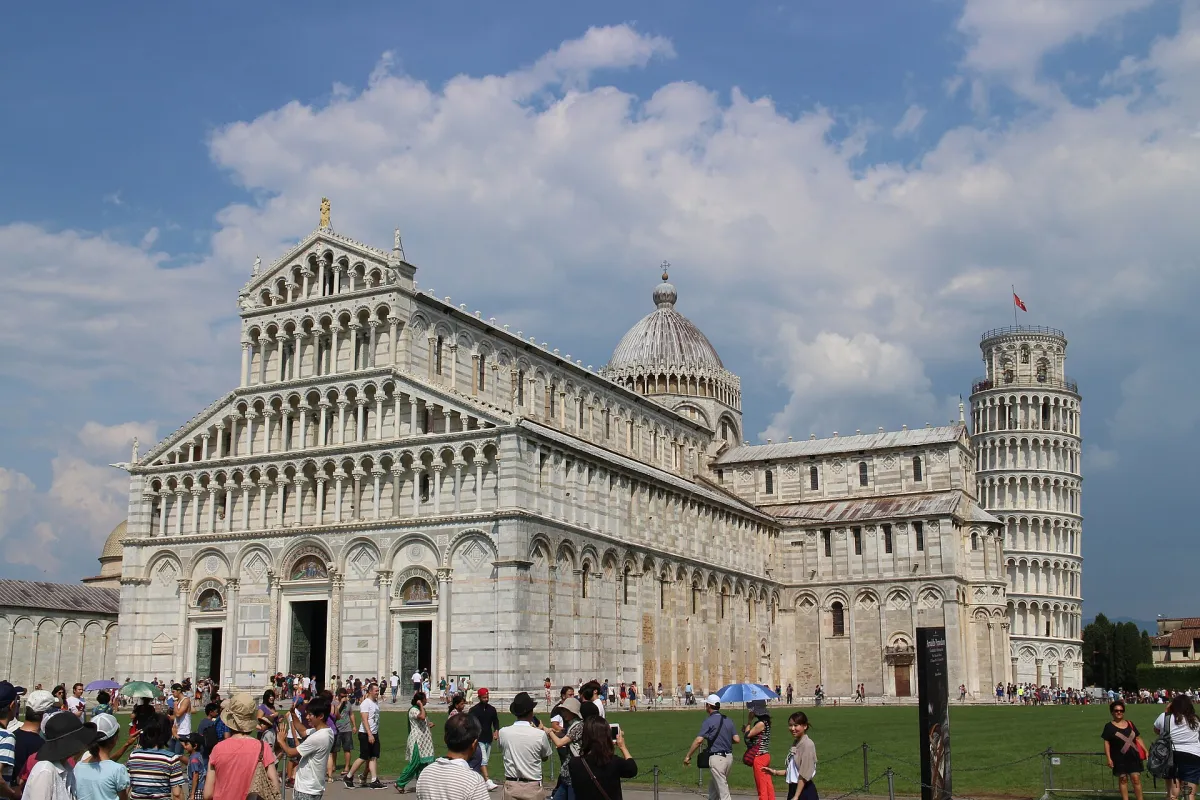
For an ensemble view, allow space between the cathedral, baptistery and bell tower rather than making every frame a tower portrait. A wider view can explain the square’s layout; a tighter detail can show sculpture, arcades or the contrast of materials. Keep vertical correction modest enough that the architecture remains believable.
The individual guides examine different needs: the baptistery’s round form, cathedral façade and perspective and the tower’s lean and framing. They use distinct licensed photographs and explain what can be learned from each view without claiming an unknown camera position or capture time.
Cavalieri and the university streets
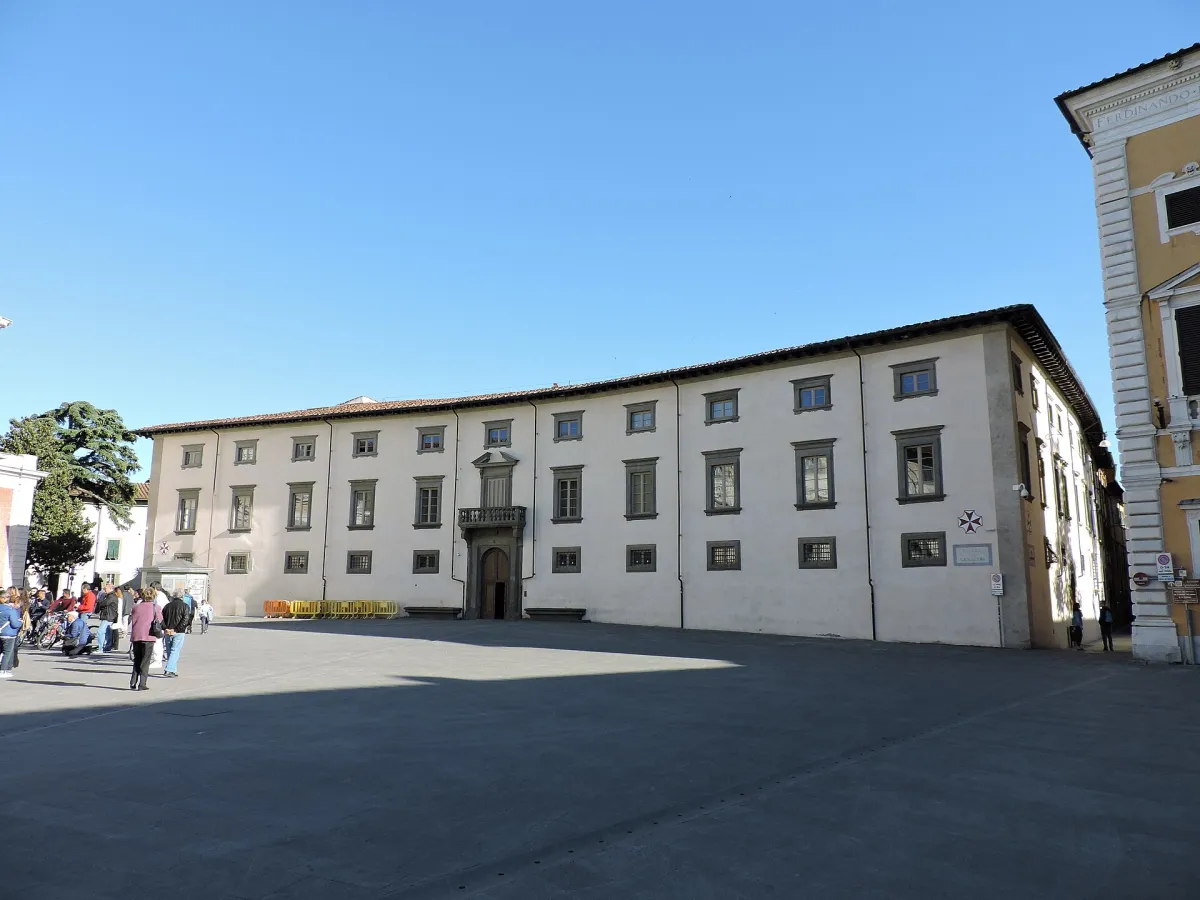
Piazza dei Cavalieri offers a more enclosed composition than the monumental lawn. Decide whether the subject is the Carovana’s decorated façade or the joined form and clock of Palazzo dell’Orologio. Using the whole square in every frame can make two different subjects look like the same photograph.
Follow Palazzo della Carovana and Palazzo dell’Orologio for the separate exterior studies. The Via Curtatone e Montanara and San Frediano street guides continue into the smaller university lanes.
Arno: reflections, façades and a quieter church
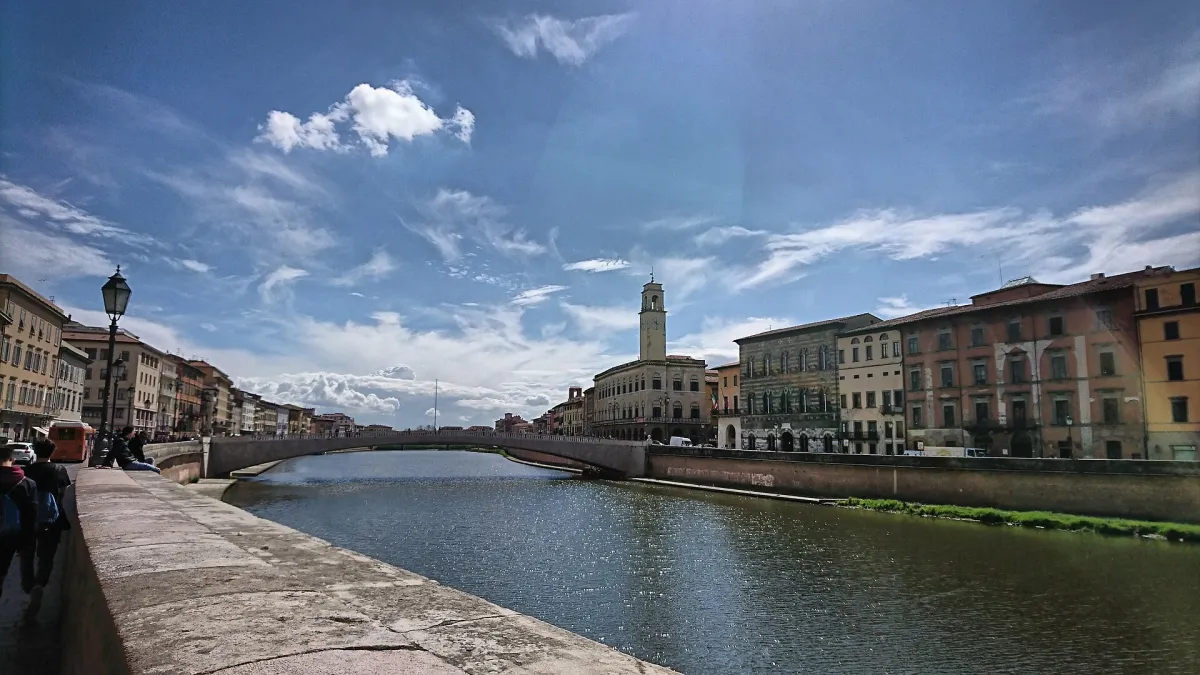
Choose the bank that places your subject in a safe and uncluttered line of sight. The river’s reflections depend on wind, water and light; a previous image does not establish what you will see. Leave the composition flexible instead of chasing an exact frame by stepping into traffic or onto a closed landing.
The Santa Cristina photo guide gives a smaller architectural subject on the south bank. It complements the large river panorama rather than duplicating the same skyline. At dusk, expose for the brighter façades and lights as appropriate to your equipment, and keep a handheld alternative where a tripod would obstruct others.
Photography rules and realistic light planning
For indoor visits, read the attraction’s current photography rules. Flash, tripods, services and commercial use can have separate restrictions. Follow the Opera della Primaziale Pisana for the cathedral complex and the relevant museum for its own rules; an exterior photo licence does not grant access or a commercial shooting permit.
Early and later daylight can help with contrast and atmosphere, but the season and building orientation determine the result. Scout in ordinary daylight, check the forecast and return when practical. Night photographs, festival illuminations and temporary installations must be described as those specific conditions, not as every evening in Pisa.
Frequently asked questions
Where should I start a Pisa photo walk?
Start with the cathedral ensemble if it is your priority, then continue through Cavalieri and university lanes to the river. Adjust to light, reservations and crowd conditions.
Can I use a tripod everywhere?
No. Check site rules indoors and any event restrictions, and keep public paths and entrances clear outside. Have a handheld alternative.
Will I get the same reflections as a published river photograph?
Not necessarily. Wind, water, light, traffic and temporary conditions change; use the image to understand a composition rather than as a guarantee.
Can I connect the main photo spots in one walk?
Yes, the cathedral quarter, Cavalieri, university lanes and river can form a connected walk. Give light-sensitive locations a separate return if it improves the image.