ITALY · PISA GUIDE
Pisa History & Culture
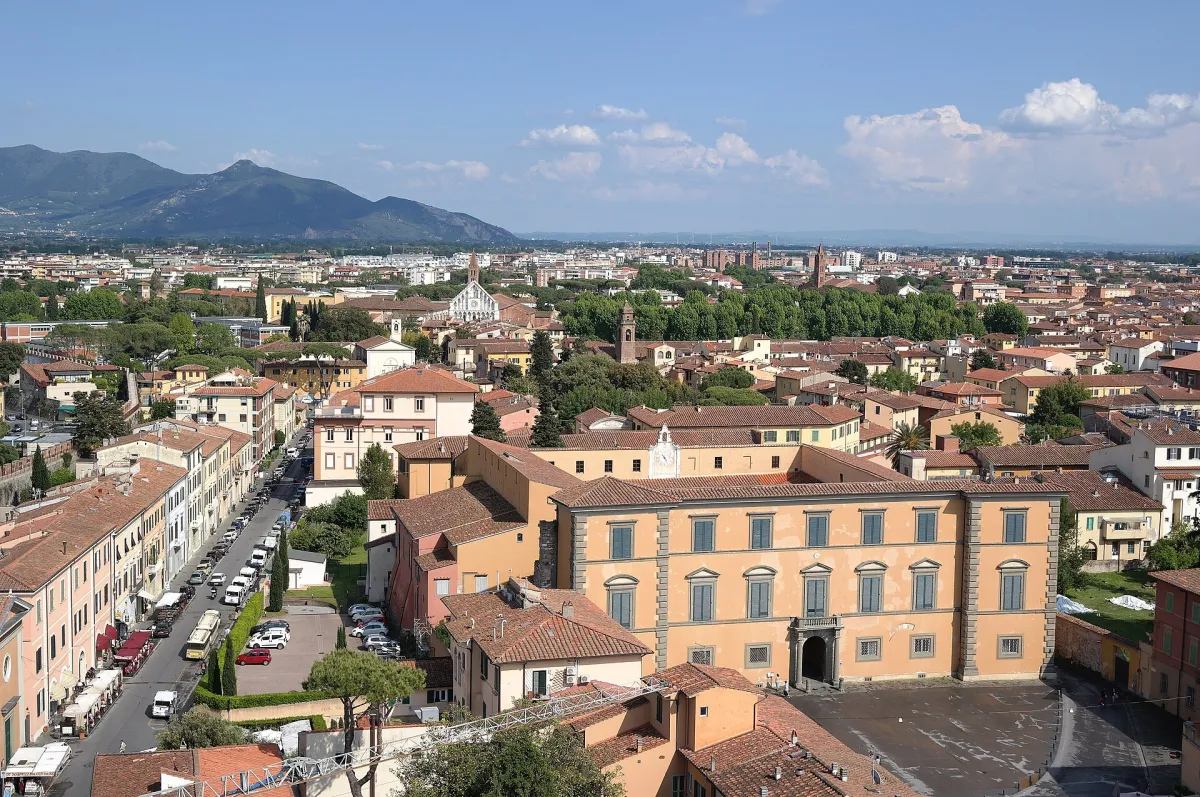
Pisa’s history is easier to read as a sequence of changing centres of power than as a list of dates. The cathedral square expresses medieval civic and religious ambition; Piazza dei Cavalieri shows a later political transformation; the river and museums recover the maritime city behind the leaning bell tower.
A maritime city beside a changing river
Pisa was a major Mediterranean maritime republic in the Middle Ages. Its present inland setting can make that story seem surprising, but the river system, coastal landscape and connections to ports are central to understanding the city. Avoid treating today’s distance from the sea as a map of medieval navigation.
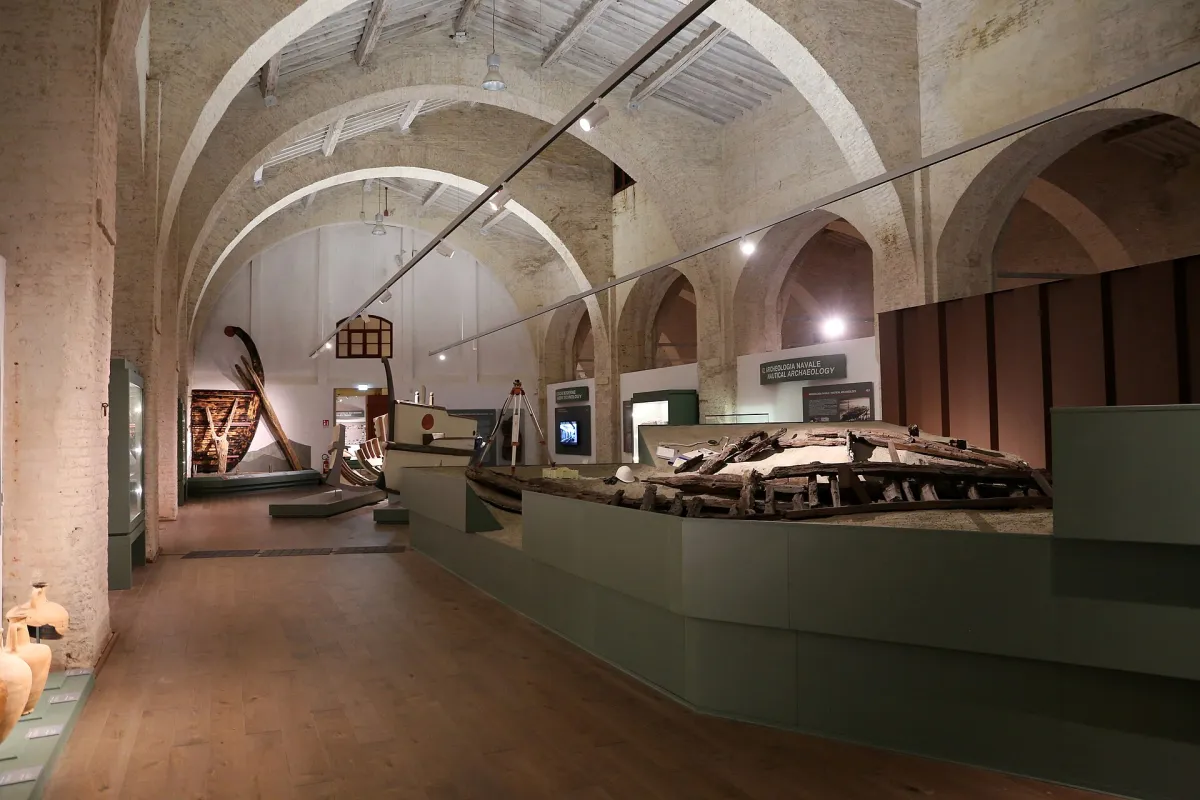
The Ancient Ships Museum provides the clearest material introduction to this relationship. Its archaeology concerns a much longer history of movement, trade and river life than the medieval republic alone. Visit it before deciding that Pisa’s identity begins and ends at the monumental square.
Romanesque Pisa in a single ensemble
The UNESCO-listed Piazza del Duomo brings together the cathedral, baptistery, bell tower and cemetery as an ensemble. Compare their functions as well as their silhouettes: worship, baptism, time and burial create a more useful reading of the square than a succession of photographs.
The tower is the cathedral’s campanile. Its lean makes the structure instantly recognisable, but calling it an imminent collapse or repeating an old stabilisation project as current work misrepresents the present visit. Use the Opera della Primaziale Pisana for the monuments and current visitor conditions.
From medieval commune to Medici stage
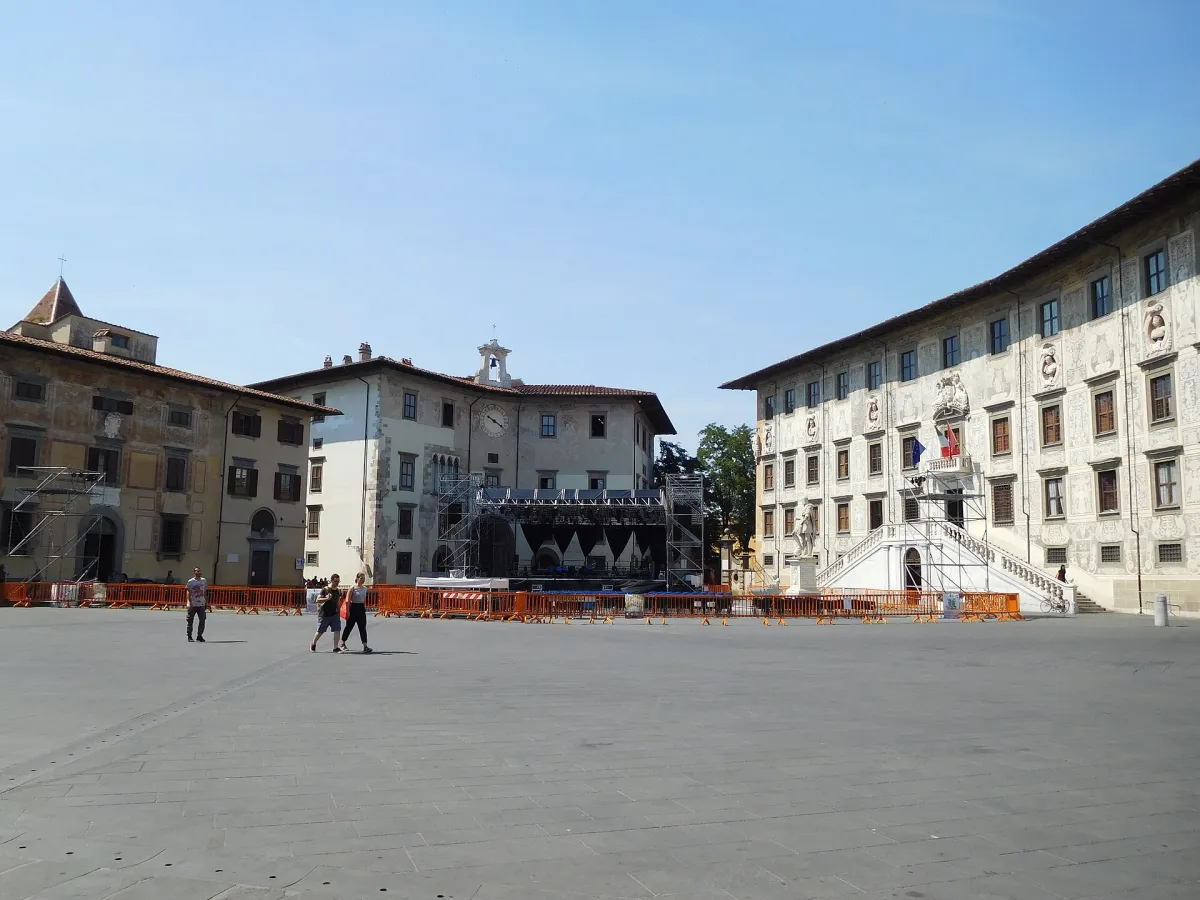
Piazza dei Cavalieri offers a deliberate change of scene from the cathedral square. Its monumental façades and the Palazzo della Carovana connect the earlier civic centre with the Medici Order of the Knights of Saint Stephen. Read the palace as part of this transformation, not as a surviving medieval knight’s castle.
The Scuola Normale Superiore now gives the square an academic role. The exterior public square and the buildings’ interiors are different visitor propositions: a façade photograph does not imply that classrooms, libraries or courtyards are open without an arranged visit. Our Carovana photo guide explains the exterior view.
University life and living culture
Pisa is a working university city. Borgo Stretto, the lanes around San Frediano and the south-bank streets contain shops, cafés, homes and university buildings within a compact area. Allow a quieter walk here after the monuments rather than describing the city as a place time forgot.
Galileo’s association with Pisa is an important part of its scientific identity, but a picturesque building should not automatically be labelled his birthplace or a location of a particular experiment. Use institutional sources for those claims. The University Museum System offers distinct scientific and cultural collections; check individual opening arrangements.
A history walk with choices
Begin at Piazza dei Miracoli for religious and civic display, continue to Piazza dei Cavalieri for political change, then reach the Arno for the river setting. If maritime archaeology interests you, end towards the Medici Arsenals and the Ships Museum; for medieval painting and sculpture, turn east to San Matteo. Doing both museums after a full monument visit is a longer and less focused day.
Use Attractions for selecting interiors, Itineraries for an achievable order, and Responsible Travel for respectful access to churches and everyday neighbourhoods.
Frequently asked questions
Why is Pisa called a maritime republic when it is inland?
The city’s history is tied to the Arno, ports and a changing coastal landscape. Modern coastline distance should not be used as a simple reconstruction of medieval routes.
Is Piazza dei Cavalieri the same place as Piazza dei Miracoli?
No. They are separate squares with different histories: the cathedral ensemble is at Piazza dei Miracoli, while Piazza dei Cavalieri is associated with civic power, the Medici order and the Scuola Normale.
Can I enter all the historic palaces?
Many are active institutional buildings. Treat exterior access separately and check the relevant institution for organised openings.