




Sign in
For Photos4Travel editors and team members.
Getting Around Norway: Trains, Boats, Flights & Driving
Europe · Norway guide
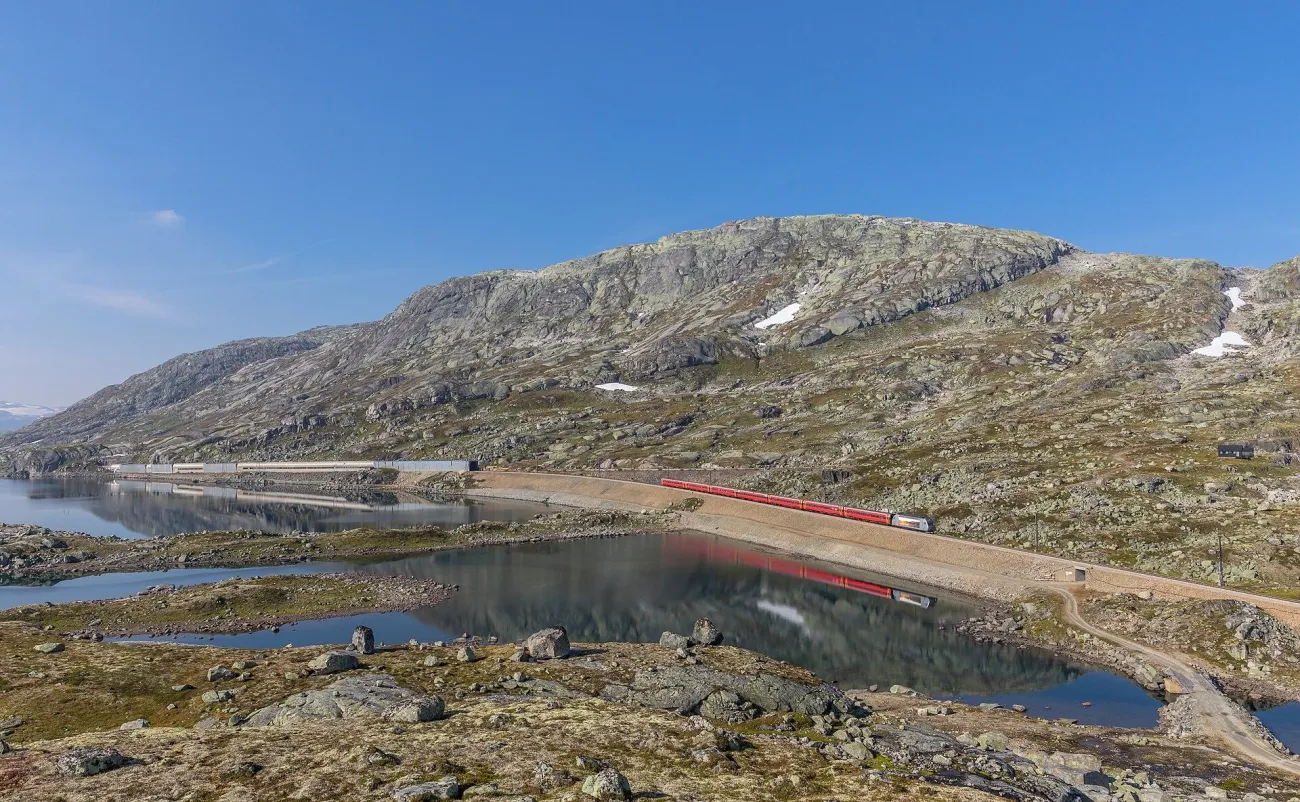
Getting around Norway is a route-design decision before it is a ticket purchase. Trains connect some major corridors, buses and boats extend the network, and flights can make a northern stay practical within a shorter holiday. A rental car offers flexibility in selected regions, but adds responsibilities and costs that public transport avoids.
Begin with your overnight bases and test the complete journey between them. Entur is the national starting point for public-transport planning. Use Airports & Transfers for arrival journeys and Map & Regions when the geography of a proposed route is unclear.
Choose transport for the corridor
| Mode | Useful role | Main planning constraint |
|---|---|---|
| Train | Selected city-to-city and scenic corridors | Route coverage, departure time and engineering work |
| Regional bus | Connections beyond the railway | Operating days, exact stop and last return |
| Passenger boat or ferry | Fjord and coastal connections | Correct quay, season, weather and passenger/vehicle terms |
| Domestic flight | A distant regional stay within limited days | Total airport-to-hotel time, baggage and separate tickets |
| Rental car | Rural stays and flexible regional exploration | Roads, parking, tolls, ferries and driving conditions |
Do not choose a mode for the whole country by habit. A trip can use rail between cities, a boat into a fjord and a short regional car rental where it adds real value. Compare the combination against the time needed to collect and return the vehicle.
Use Entur for the whole route, then read the ticket conditions
Search the exact accommodation, station or quay in Entur, choose the travel date and inspect every change. Entur sells tickets for all train journeys in Norway without an added fee; the train operator's own conditions and travel guarantee still govern the journey. A route appearing in a planner is not proof that every bus, boat or independent excursion can be bought in the same transaction.
Before paying, check the operator on each leg, passenger categories, seat reservations where offered, cancellation terms and any connection guarantee. Save the tickets offline. Use the fjord cruise and scenic railway guide for the detailed Flåm, Bergen and Rauma choices; this page compares the transport modes that connect your overnight bases.
Railways: make the journey part of the holiday
The Bergen Line is a useful Oslo–Bergen connection and a scenic travel day. Vy’s route information gives approximately 6.5–7.5 hours end to end. Choose the actual departure for your dates, and remember that this range excludes sightseeing stops or a Flåm detour.
The Flåm Railway links Myrdal and Flåm. Plan both the mountain connection and what happens after reaching the fjord. A return railway excursion and a one-way route continuing by boat solve different needs. Check whether your chosen ticket permits a stopover rather than assuming you can get off and board a later train freely.
The Rauma Line can fit an Åndalsnes-oriented route, while other rail corridors support Trondheim and northern mainland journeys. Rail does not reach every place in Northern Norway. Use the current network and planner to establish the last station and any connecting bus instead of extending a railway line in your imagination.
Buses: the last connection matters
Regional buses can make a car-free fjord itinerary possible. Search from the actual hotel or village to the next destination, then inspect each leg. A journey may involve a different boarding point, a seasonal timetable or a wait that significantly changes the day.
Save the return service before beginning a day trip. A frequent morning connection does not guarantee an equally useful evening service. Check weekends and public holidays separately, and leave enough time to walk from the attraction to the stop. A local bus is transport, not a tour that waits while you take photographs.
For luggage, bicycles or accessibility needs, confirm the operator’s arrangements. A route shown in a planner does not establish that the specific vehicle has the space or boarding support you need. Contact the provider early when that detail determines whether the journey works.
Ferries, express boats and coastal ships
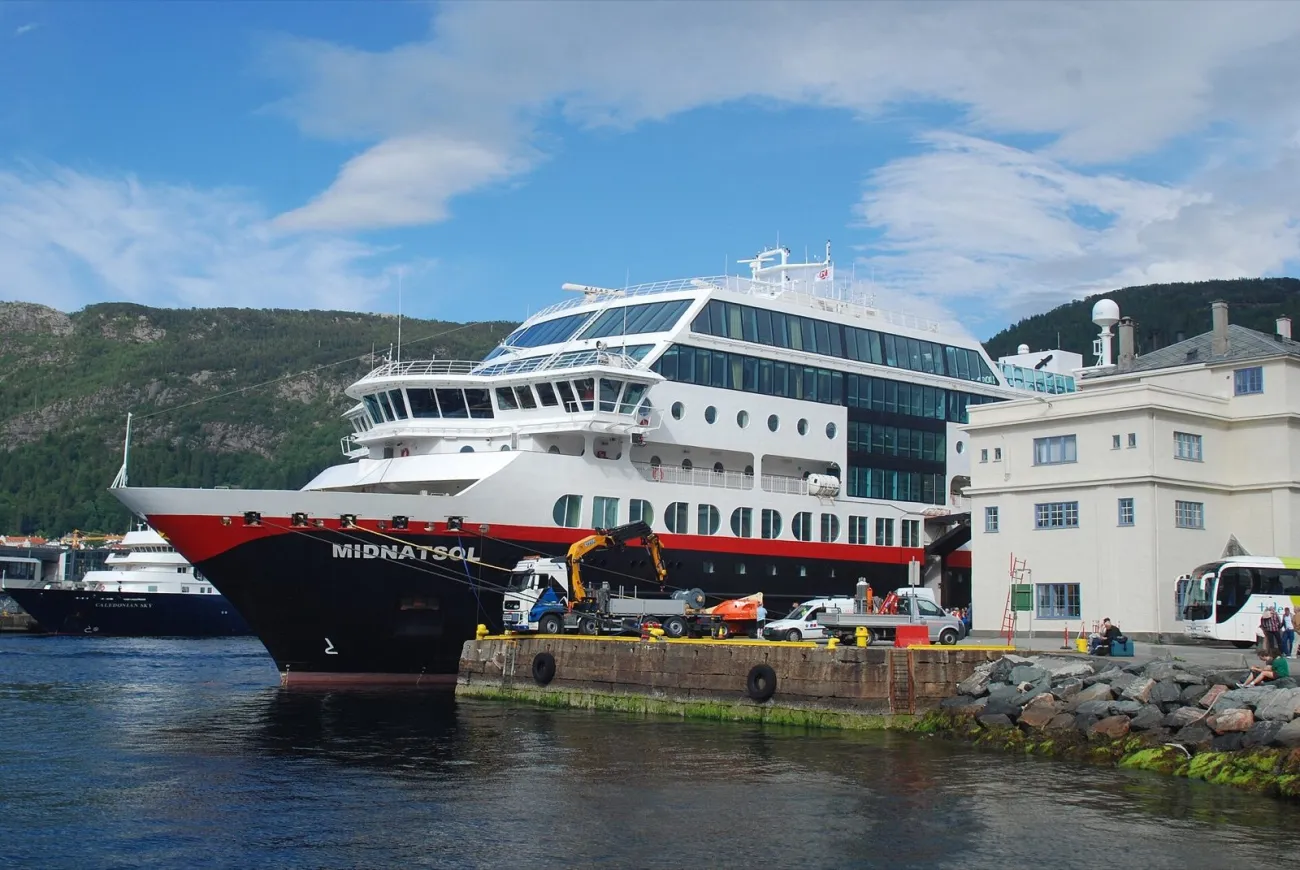
A car ferry, a passenger express boat and a scenic cruise are different products. Check the boarding point and whether your ticket covers a person, a vehicle or an excursion. If driving, confirm booking and queue arrangements for that crossing; if travelling on foot, check the onward connection after arrival.
Hurtigruten and Havila operate coastal-voyage products and port-to-port travel. Compare the exact ship, ports, arrival times and cabin or fare arrangements through the operator. A voyage can be the holiday itself; it should not be added as if it were a quick substitute for an inland train.
Before a tight onward connection, consider weather and the consequences of separate tickets. Keep the final night practical when departing Norway. If a service is cancelled, follow the operator’s instructions rather than assuming another vessel serves the same quay or accepts the same ticket.
Compare Hurtigruten port-to-port journeys with Havila's port-to-port information for the exact date and ports. Check whether a cabin, meals and vehicle carriage are available and included in the particular booking. A coastal ship's port call is not necessarily a convenient arrival time for hotel check-in or a connection inland.
For a fjord crossing, establish whether you need a vehicle ferry or a passenger-only connection. The road itinerary must include the correct quay and the sailing wait, while a foot passenger needs onward transport at the far side. Keep scenic sightseeing cruises separate from the ferry needed to complete a driving route.
Domestic flights and realistic travel time
Compare flights from SAS, Norwegian and Widerøe for the routes and dates they actually operate. Do not assume that every pair of regional airports has a nonstop connection. Include airport transfers, check-in, baggage and waiting when deciding whether a flight saves useful holiday time.
Separate tickets can change what happens after a delay. Read the booking conditions and leave a comfortable transfer margin if you are arranging independent legs. For a northern stay, an open-jaw international itinerary or a different departure airport may reduce backtracking more effectively than a rushed domestic connection.
Car rentals and driving
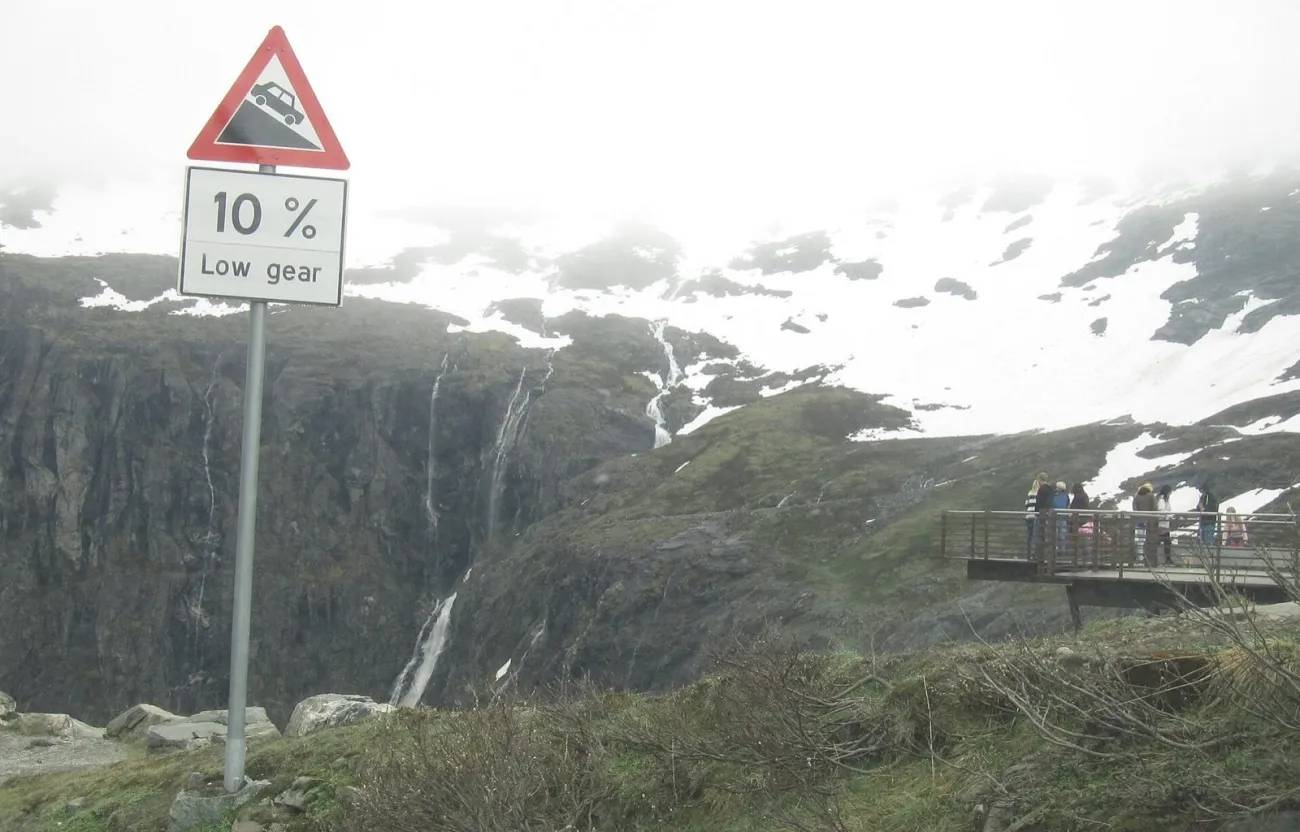
Rent for the part of the route where a car helps. It can be useful for rural accommodation and flexible regional outings; it can be an unnecessary expense in a city stay. Compare the whole cost, including parking, fuel or charging, toll administration, ferries and any one-way fee.
Ask the supplier about licence acceptance, minimum age, the named driver’s payment card, deposit, insurance excess and exclusions. These are provider-specific conditions, not one universal Norway rule. Photograph the vehicle at collection and return and understand the procedure for damage or a breakdown before leaving the desk.
Choose the pick-up point around your first driving day
Start the rental when the road journey begins. If the first nights are in Oslo or Bergen, compare collecting later with paying for a parked car during a city stay. For a rural cabin or a Lofoten road trip, an airport collection can simplify the onward journey, provided the desk hours and conditions fit the flight. Use Airports & Transfers to plan the arrival before choosing the vehicle.
| Starting point | When collection can make sense | Check with the rental desk |
|---|---|---|
| Oslo Gardermoen (OSL) | An eastern Norway or onward regional driving stage | The correct airport; Gardermoen and Torp are different collection points |
| Bergen (BGO or city) | A western fjord stage after the city stay | Airport versus city office, opening hours and return location |
| Tromsø (TOS) | Independent regional outings suited to your driving experience | Winter equipment, parking and whether organised excursions already cover transport |
| Evenes (EVE) | A planned Lofoten or Vesterålen driving route | Late-flight arrangements and enough time for the onward drive |
| Bodø (BOO) | A Salten road trip or a specifically planned ferry connection | Permission for the crossing and the vehicle details needed for ferry booking |
Price a one-way rental with the intended return office entered from the start. Compare the complete quote, including the one-way charge, with returning to the original branch. Confirm permission separately for ferries and any trip into another country. A route shown on a map does not establish the supplier's permission or the availability of a return branch.
Enter Norway, your intended pick-up location, travel dates and the main driver's age on Booking.com to compare the available rental offers.
Compare car rentals on Booking.com · Affiliate link disclosure
Licence, driver age and the payment card
Check both the legal driving entitlement and the supplier's hire conditions. Statens vegvesen explains the rules for EU/EEA licences and licences from other countries. Most short-term visitors using a non-EU/EEA licence can normally drive for three months; country and document exceptions apply. An international driving permit may be required in addition to the original licence, depending on the document. Check the separate rules for UK and Swiss licences rather than applying the three-month summary to them.
Minimum age, how long a licence must have been held, young-driver charges and permitted vehicle groups depend on the supplier and offer. Enter the actual driver's age before comparing prices. For example, Avis Norway's requirements distinguish age and vehicle categories. Do not assume that eligibility for a small car extends to every SUV or premium group.
Bring the original licence, the required identity documents and the payment card specified for the main driver. Read the exact card rules before paying online: a successful reservation does not settle the collection requirements. Check whether a physical credit or debit card is accepted, whether its name matches the main driver and whether the available limit covers the hold. Digital wallets and prepaid cards can have different restrictions.
Separate the deposit, damage excess and protection
| Item | What it means for the booking | Question to resolve |
|---|---|---|
| Security deposit | Funds the supplier may hold or take as security | What amount, which card, and what release process apply? |
| Damage or theft excess | The amount you may remain responsible for under the applicable cover | Is the excess per incident, and what damage is excluded? |
| Supplier excess reduction | A rental-company product that can change your liability under its terms | Does it cover glass, tyres, roof, underbody and keys, and does the deposit change? |
| Reimbursement protection | A separate policy may repay eligible charges after you have paid the supplier | Who handles claims, which documents are needed, and must you still fund the deposit? |
Read the CDW/LDW and theft-protection wording on the selected offer, together with the exclusions and excess. Check whether roadside assistance, lost keys, tyres and glass have separate conditions. A product described as full protection is not enough information to establish your remaining liability or the funds needed at collection.
A reimbursement policy can involve paying the rental company first and submitting evidence afterwards. RentalCover's claims guidance illustrates that process; your own policy determines what is covered. Keep the rental agreement, condition reports, invoices and incident documents. Compare an external reimbursement product with the supplier's excess reduction on its actual terms, rather than assuming they work identically.
Choose the vehicle and compare the whole bill
Check the gearbox, passenger space and luggage allowance. A compact car can be easier to park, but a small boot may not hold four people's winter luggage. A photograph labelled “or similar” identifies a category rather than promising that exact model. If a specific feature is essential, get confirmation through the offer or the supplier before paying.
For an EV, match the driving days to available charging and confirm the cable, charging instructions and required return charge. Ask how winter equipment is specified for the actual pick-up season. A larger vehicle or four-wheel drive does not remove the need for suitable tyres, road checks and a route within the driver's experience.
Compare the rental, chosen protection, extra drivers, child seats, mileage terms, one-way charge, toll/ferry administration, parking and fuel or charging. Record the currency and any amount payable at the desk. Read the fuel policy, cancellation deadline and late-arrival instructions. Booking.com's car-rental terms explain why the selected supplier's agreement and collection requirements matter; contact the desk if a delayed flight threatens the booked pick-up time.
At collection and return
- Inspect the bodywork, glass, wheels, tyres and interior with the supplier's report. Record existing marks and keep dated photographs or video.
- Confirm the fuel or battery level, charging cable where relevant, winter equipment and the contact number for breakdowns.
- Check the return address, office hours, key-drop procedure and what happens if the desk is closed. Leave enough time before a flight or ferry.
- Keep the final condition record and fuel or charging receipts. Monitor the deposit release and any later toll or ferry invoice against the agreement.
Check car rental availability on Booking.com · Affiliate link disclosure
Car rental questions before booking
Does extra protection remove the deposit?
Check the supplier's actual collection conditions. A reimbursement policy may cover eligible charges later while the rental company still requires a deposit or card hold.
Can I rent with a debit card?
Some offers accept particular debit cards, while others require a credit card or additional cards. Read the selected office and vehicle group's terms and bring the physical card required for the main driver.
Should I collect the car as soon as I land?
Collect when it supports the itinerary. Compare a later city-office collection if the first nights are car-free; check desk hours carefully if the first night is a rural stay.
Tolls and ferry billing
Read the rental agreement’s toll and ferry arrangements rather than registering the hired vehicle independently without checking. AutoPASS explains options for foreign-registered vehicles; a Norwegian rental normally has the supplier’s own billing process. Avoid creating a conflicting agreement or assuming that road tolls and every ferry charge use the same payment arrangement.
Separate road tolls from ferry payment. AutoPASS ferry guidance says a tag can pay on most participating ferries, with exceptions. Ask the rental supplier how its tag, administration charges and ferry agreements work before adding another payment agreement. A foreign-registered private car and a Norwegian hire car can need different billing arrangements; do not assume the same discount applies to both.
Winter tyres and road conditions
Statens vegvesen states that drivers must maintain adequate grip throughout the year. Its tyre requirements specify a minimum winter tread of 3 mm during the applicable period, with different dates in Nordland, Troms and Finnmark. Appropriate grip can require winter equipment outside those calendar windows too. Confirm the actual vehicle and conditions, not merely a “winter-ready” label.
Narrow roads, darkness, snow or ice can make an unfamiliar route more demanding. Use official road information before setting out and follow closures or convoy instructions. A navigation app’s suggested arrival time is not a promise that a mountain pass is open.
For a normal passenger car up to 3,500 kg, the official winter tread requirement is at least 3 mm from 1 November through the first Sunday after Easter Monday. In Nordland, Troms and Finnmark it applies from 16 October through 30 April. These dates are not permission to use unsuitable tyres: the driver must maintain sufficient grip in the actual conditions, including outside the calendar period. Heavier vehicles have separate requirements.
On narrow mountain roads, leave room for passing places and allow for oncoming vehicles instead of treating the map's driving time as continuous progress. If darkness, ice or unfamiliar winter driving exceeds your experience, simplify the route or choose public transport. Check closures and convoy instructions with the road authority before departure.
Scenic roads and EV charging
Trollstigen requires a current access check; the Atlantic Ocean Road has a different coastal setting and weather exposure. Do not describe both with one fixed opening season. Check each route, viewpoint and any visitor facility separately before adding it to the day.
For an electric car, identify suitable chargers near the route and overnight base, check connector and payment arrangements, and allow a fallback. Cold conditions, luggage and repeated short stops can change the practical rhythm of charging. Confirm the required return charge with the rental company rather than leaving that decision to the last morning.
| Road | Seasonal decision | Before setting out |
|---|---|---|
| Trollstigen | Seasonal mountain-road closures; reopening and short-notice restrictions vary | Check the official route and live road messages; access to a viewpoint does not establish an open through-road |
| Atlantic Ocean Road / Atlanterhavsvegen | An exposed coastal route with different winter and weather considerations | Check wind, ice, road messages and safe stopping places; do not apply Trollstigen's opening calendar |
Use the official Geiranger–Trollstigen and Atlanterhavsvegen route pages alongside live road information. For an EV, use the Norwegian EV Association's visitor guidance as background, then confirm the current charger, connector and payment method with its operator. Plan an alternative charger and check the return-charge terms before leaving the rental desk.
Build a transport day that works
Record departure and arrival locations, travel time, connection margin, luggage arrangements and the next meal opportunity. Keep important tickets offline and check whether a confirmation must be exchanged for a travel ticket. For a group, share the route so it does not depend on one phone.
Choose fewer bases if the itinerary repeatedly produces late arrivals and early departures. A comfortable two-night stay can be more useful than another short transfer designed around a photograph. Transport should support the places you want to experience, not consume most of the holiday.
Travel Tip: Check the final connection first when planning a remote day trip. It determines how much time you can actually spend there.
Norway transport FAQs
Do I need a car?
Not for every route. Cities and selected rail-and-fjord corridors work well with public transport; remote stays need a more detailed connection check.
Can I take a rental car on a ferry?
Check both the supplier’s permission and the crossing’s vehicle arrangements. A general rental booking does not establish every route condition.
Can I trust the driving time shown by navigation?
Use it as one input, then add breaks, ferry waits and local conditions. Check official closures and seasonal access before committing to the route.
We may earn a commission if you book through our Booking.com links, at no extra cost to you.
Last updated:
Tours, Tickets & Experiences
Norway Travel Tips & Inspiration