


Begin with periods, places and sources
A historical explanation should identify the period and territory it describes. A medieval political centre, an imperial province and a modern sovereign state do not have identical boundaries or institutions. Treating all three as the same country under different names creates misleading conclusions. Use maps appropriate to each period, and keep historical terminology separate from contemporary claims about sovereignty.
The Internet Encyclopedia of Ukraine, a scholarly reference associated with the Canadian Institute of Ukrainian Studies, offers a starting point for Kyivan Rus'. Its account should be read as a historical explanation rather than a visitor itinerary. For an individual building, compare the institution's own description with a wider historical source: the two can explain different aspects of what survives.
Architectural photographs also need interpretation. A building may contain original fabric, later additions, restoration or reconstruction. The visible date of a photograph does not date every part of its subject. Ask what you are looking at before attributing the whole structure to a single ruler, century or community. That question is particularly useful when a dramatic exterior is reproduced without its accompanying museum information.
Kyiv and the medieval world of Rus'
Kyiv was a major centre of the medieval polity conventionally called Kyivan Rus'. That history connects the city to trade, princely politics and religious change across a much wider territory than a modern city map. It does not make modern Ukraine a derivative of the Russian Federation. Medieval dynastic relationships should not be used as shortcuts for deciding the rights of present-day states.
The adoption of Christianity under Volodymyr in 988 and the cultural importance of Kyiv's religious institutions are useful points of orientation. The UNESCO record for Saint-Sophia and the Kyiv-Pechersk Lavra explains the significance of a particular heritage property. Its boundaries and conservation material are more precise than a general statement that all old churches belong to one period. They do not establish today's visitor access.
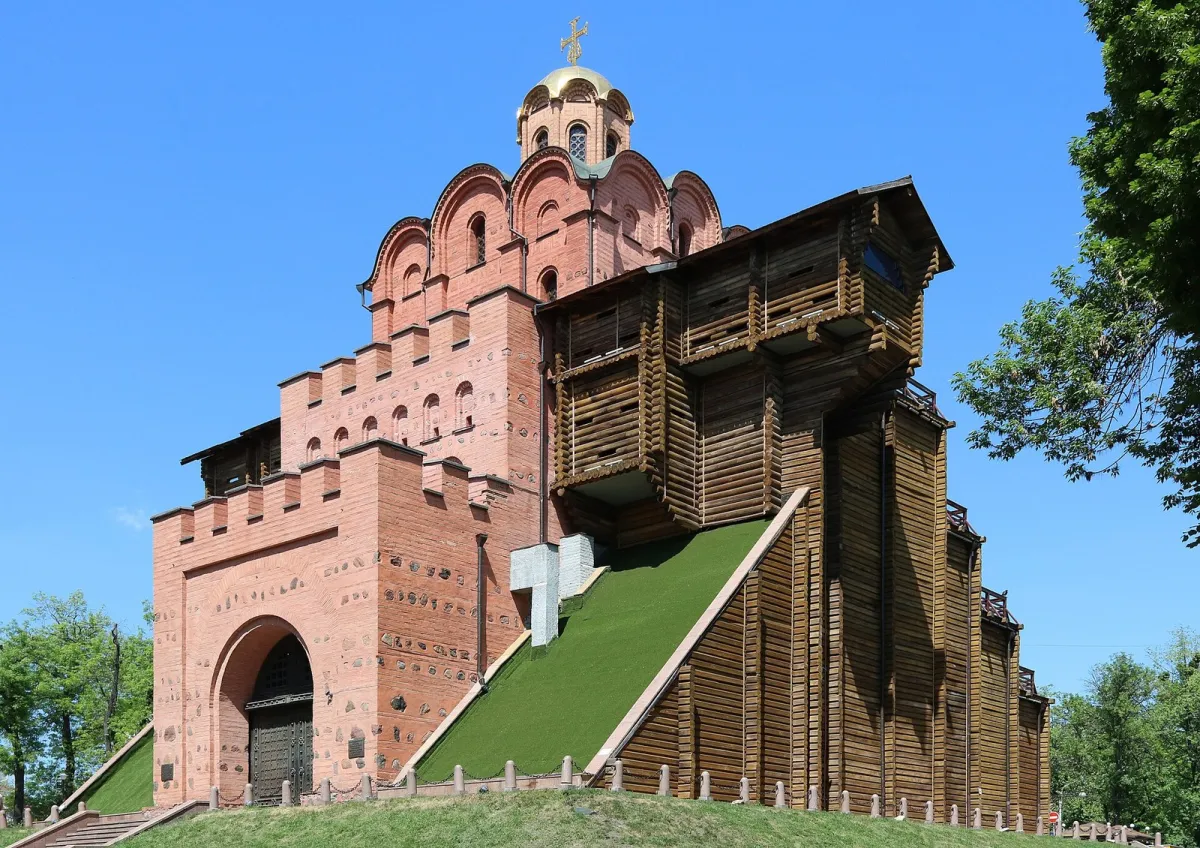
The Golden Gate is another example of why interpretation matters. A contemporary photograph shows a presentation of a medieval gateway, including later reconstruction, rather than an untouched survival from the eleventh century. Research the relationship between surviving remains and the structure visible above them. This is a better historical question than treating a modern-looking roof or wall as an immediate guide to the age of the whole monument.
Different regions followed different historical paths

The territories of present-day Ukraine were shaped by several political and cultural settings over time. Lithuanian and Polish rule, the Polish-Lithuanian Commonwealth, Cossack political formations, the Crimean Khanate, the Ottoman world, the Habsburg monarchy and the Russian Empire all belong in that account. Their influence was not identical across every region or century. A useful introduction therefore follows several regional paths rather than a single sequence in which the whole country changes rulers at once.
Lviv and Chernivtsi offer particularly clear reasons to ask which community and period a building represents. Churches, synagogues, cemeteries, schools and civic buildings can record overlapping histories. Reading the city only through the most visually prominent architectural style can leave entire communities out of the story. Compare institutional histories, inscriptions and maps rather than assuming that one façade expresses the identity of every resident.
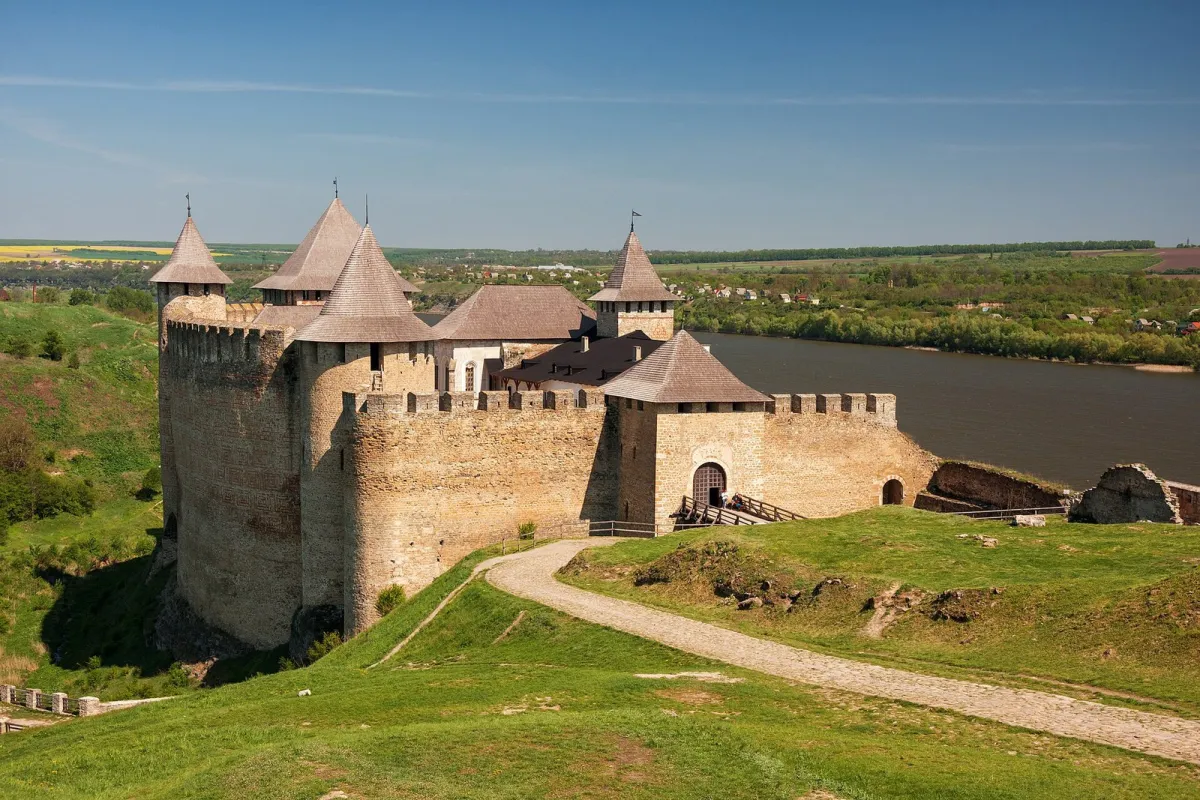
Fortified sites such as Khotyn also reward this approach. A fortress can be associated with different states, armies and later interpretations over its lifetime. A photograph supplies a starting point for researching defensive architecture and borderland history; it does not prove that the site is currently open. Do not turn that historical interest into a remote driving route without separate, current access information.
The twentieth century and independence


The twentieth century includes state-building efforts, war, Soviet rule, political repression, mass violence and profound social change. These subjects should not be condensed into a cheerful attraction list. For the Holodomor of 1932–1933, the National Museum of the Holodomor-Genocide provides an institutional introduction. Approach memorial material with attention to the people being remembered and the terminology used by the source.
The Holocaust and the destruction of Jewish communities are indispensable to understanding Ukraine's towns and cities. A synagogue or cemetery photograph should not be used merely as decorative proof of an “eclectic” past. Before photographing or describing a memorial, learn whom it commemorates and what conduct the institution requests. Absence is also part of a city's history: an empty site may matter as much as a surviving ornate building.
Ukraine declared independence on 24 August 1991, documented in the Verkhovna Rada resolution. The 2004 Orange Revolution and the 2013–2014 Revolution of Dignity belong to the later political history of that independent state. They should not be described as the moment Ukraine first became a nation or as events that erased the diversity of its citizens' experiences.
Occupation, war and cultural heritage
Russia occupied Crimea in 2014 and launched its full-scale invasion in February 2022. The United Nations record on territorial integrity helps distinguish internationally recognised borders from occupation. This guide uses Ukrainian place names in contemporary editorial text and identifies occupied territory explicitly. A historical connection with another state does not justify describing that territory as an ordinary resort destination belonging to the occupying power.
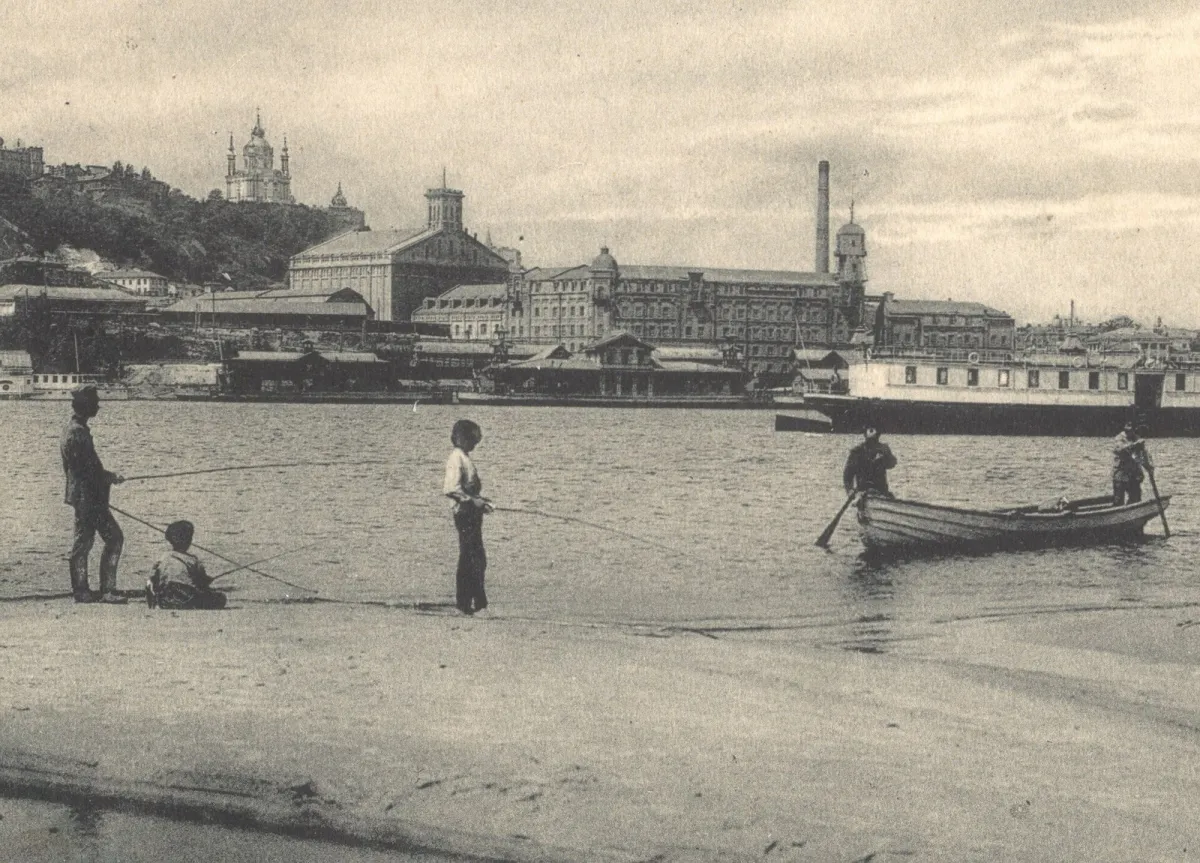
UNESCO's Ukraine country record connects individual heritage properties to conservation information. A World Heritage designation describes cultural or natural significance, while the List of World Heritage in Danger concerns threats and safeguarding. Neither label is a tourist-access certificate. Older images of Kyiv, Lviv or Odesa must not be used to claim that every pictured building remains in the same condition.
Readers can support cultural understanding without travelling: explore an institution's digital collection, read a Ukrainian author in translation, or follow a museum's own account of its work. When sharing images or stories, retain dates and context. Do not convert someone else's experience of displacement or damage into a dramatic caption without their consent and reliable supporting information.
Living traditions: people, practice and transmission
History also continues through practice. Petrykivka decorative painting is associated with ornamental forms rooted in local natural subjects and community transmission. UNESCO's entry helps explain why it is a living tradition, not simply a decorative pattern that can be detached from its practitioners. A workshop photograph should identify the occasion rather than imply an appointment is currently available.
The pysanka tradition concerns decorated eggs and the knowledge, meanings and relationships surrounding their making. An individual object can reflect a maker's practice and family or regional traditions. Avoid assigning a single universal meaning to every symbol in a photograph. Ask the maker or consult a relevant collection when the interpretation matters.
Food traditions also have regional and personal histories. The Food & Drink guide explores dishes without claiming one compulsory national recipe. Embroidery, ceramics, literature and music deserve the same attention to creators and communities. Supporting a named maker or institution is more informative than buying an object simply because its colours look recognisably Ukrainian.
A practical reading framework
On a narrow screen, swipe the table or focus it and use the left and right arrow keys to see every column.
| Subject in front of you | Question to ask | Useful evidence |
|---|---|---|
| Historic building | What is original, altered or reconstructed? | Institution's architectural history |
| Town or region | Which communities and political periods shaped it? | Period-specific maps and scholarship |
| Memorial | Whom does it commemorate, and how should visitors behave? | Memorial or museum guidance |
| Craft object | Who made it, where and by what practice? | Maker information and collection records |
| Archival photograph | When and where was it made? | Original source, date and caption |
This is an editorial research framework, not an access or opening-hours table. Keep notes on what remains uncertain instead of filling gaps with an attractive story. The Map & Regions page helps with geographical relationships; the main guide introduces broader planning decisions. Here, the aim is to make cultural research more accurate and attentive.