
EUROPE · UKRAINE GUIDE
Things to Do in Ukraine: Cultural Research, Institutions and Responsible Choices

Ukraine's art, architecture, landscapes and living traditions deserve attention without being turned into a ready-to-follow holiday circuit during Russia's war. This guide offers subjects to research and institutions to consult. It separates learning about a place from confirming today's access. Readers can engage with collections and cultural work remotely; anyone already considering a necessary journey should resolve the travel decision before adding optional activities.
Choose a subject rather than collecting stops
A stronger way to learn about Ukraine is to choose a theme: visual art, regional domestic architecture, conservation or a particular craft tradition. Follow it through a museum's collection, a maker's account and a historical source. That approach can be useful whether you travel in the future or remain at home. It avoids converting a list of famous places into an implied itinerary.
For every institution, distinguish its collection from what is on display, and its website from today's access. A museum may protect parts of its collection while offering temporary projects. A programme can change, and an outdoor site may involve conditions not visible in a photograph. Keep the provider's current instructions with the actual date of any proposed activity.
The main Ukraine guide explains the planning framework, while History & Culture provides historical context. This page concentrates on the particular sources and questions behind experiences. It does not reproduce the main guide's city list or promise that every institution mentioned can be visited on the same trip.
Research Ukrainian art through NAMU
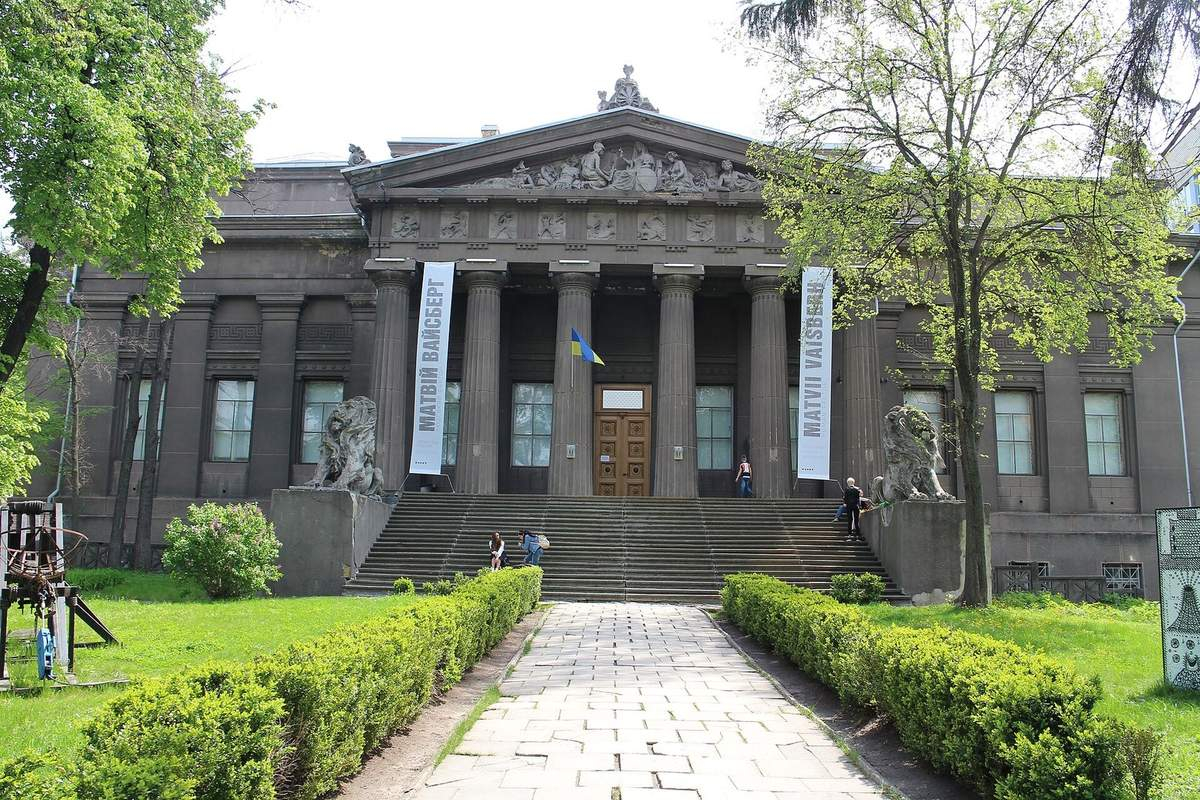
The National Art Museum of Ukraine in Kyiv is a useful starting point for exploring Ukrainian visual art. Its own website distinguishes its collection, temporary exhibitions and virtual material. Read those sections separately: a work in the museum's holdings is not necessarily available in a current display. A photograph of the building identifies the institution, not a confirmed exhibition programme.
The museum's published material explains that the main collection is under protection because of Russian aggression, while temporary projects continue. Check the current project rather than assuming that a standard historical overview is on view. Its visitor rules also distinguish non-commercial photography from other uses. A permission to take an image does not automatically include permission to publish it commercially.
For remote research, explore a named artist or period through the museum's digital resources. Keep the work's creator, title and date with your notes. If considering a visit during an otherwise necessary stay, confirm the actual exhibition, admission arrangements and local instructions directly. This guide does not turn a current museum webpage into an endorsement of travel to Kyiv.
Read regional domestic architecture at Pyrohiv
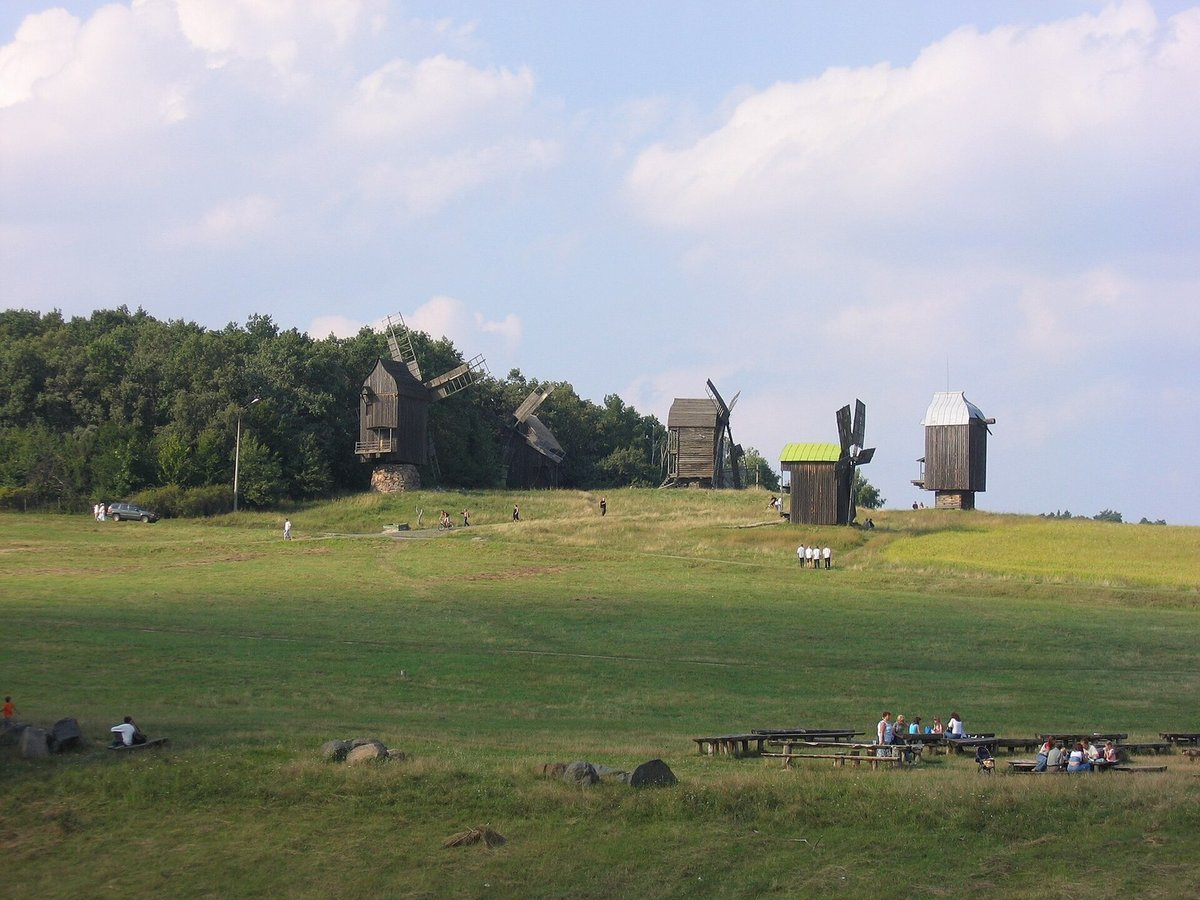
The National Museum of Folk Architecture and Life of Ukraine at Pyrohiv presents architecture and domestic settings associated with different historical and ethnographic regions. Its official site identifies regional exhibitions and research topics. This provides a way to compare buildings as part of everyday life rather than treating a windmill or wooden house as a picturesque isolated object.
Ask how a building's original location, period and function are described. A museum landscape assembles material for interpretation; it should not be mistaken for an untouched village inhabited in the same way today. A historical photograph of the museum also cannot establish the current condition of every structure, which exhibitions are accessible or whether a particular event is taking place.
For an actual visit, use the museum's visitor information and contact channel, not a copied opening time. Check the requirements relevant to the day and the people attending, including mobility needs and how interruptions are handled. For research from elsewhere, its exhibition and scholarly material can still help connect architecture, work and domestic traditions across regions.
Walking & National Parks: conservation before routes

The Carpathian Biosphere Reserve and the Carpathian National Nature Park's visitor resources are distinct official sources. Do not treat the reserve, the national park and the entire mountain range as the same visitor area. A national designation explains conservation status and management; it does not establish permission to enter every location or follow an unverified route.
This guide supplies no summit itinerary, secluded trailhead or borderland shortcut. During the war, terrain, local restrictions and assistance need their own assessment. Read the actual protected area's current visitor and safety information, then establish what permission and support are relevant. A scenic photograph is landscape context, not proof that a route is open or that a guide can remove an official restriction.
For future research, compare habitats, traditional land use and the conservation purpose of a site. Learn why staying within permitted access matters for both people and ecosystems. Avoid making remote walking a generic alternative to an urban stay. The Weather guide helps distinguish climate from a location-specific forecast; neither one confirms trail access.
Shopping and living craft traditions
Choose a craft for its maker, use and provenance rather than a generic “Ukrainian souvenir” label. Ceramics, textiles and decorated eggs can serve different recipients and budgets, and their regional associations should be explained accurately. An object made in a traditional style is not automatically antique, locally produced or suitable for food use. Ask for the maker's name, materials, intended use and care instructions.
Kosiv ceramics
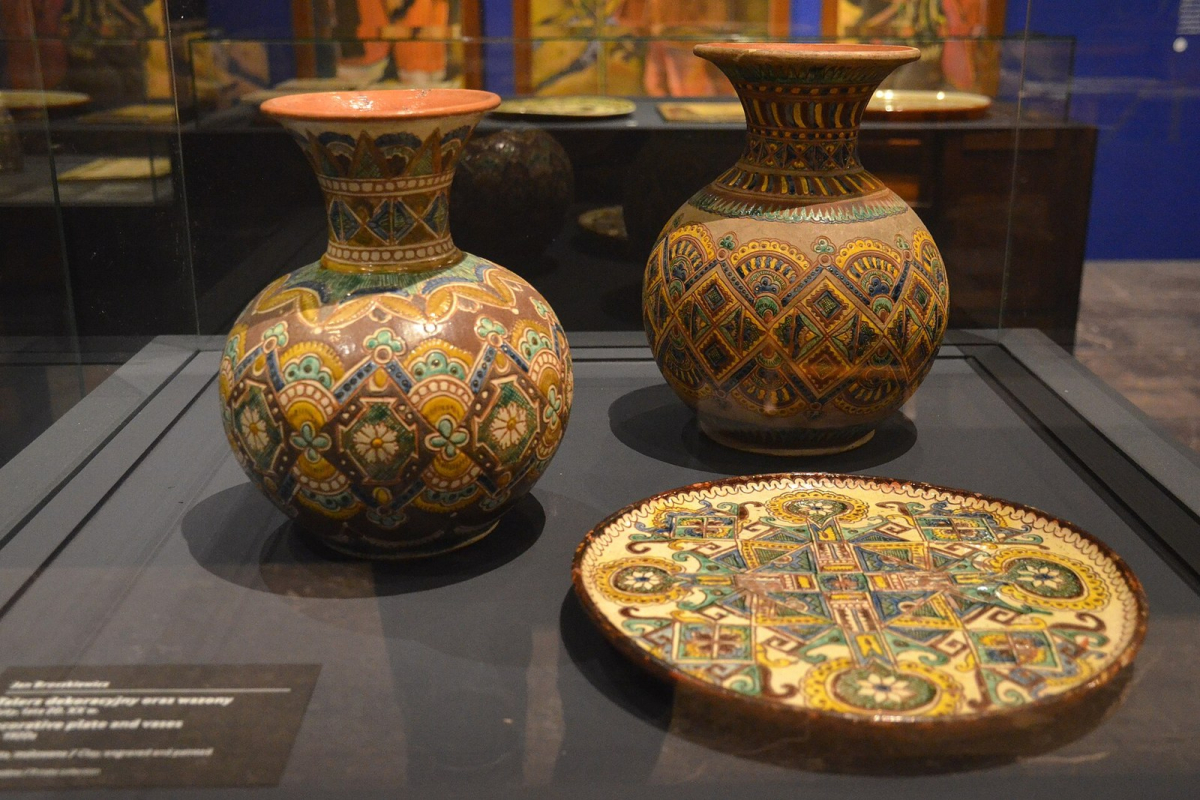
The accompanying historical objects are a plate and vases attributed by the image source to Jan Broszkiewicz, made in Kuty in the early twentieth century. They illustrate regional ceramic heritage within the Kosiv district; they are not presented as contemporary shop stock or as works from the previously illustrated Kosiv institute collection.
UNESCO's Kosiv ceramics record describes a tradition involving functional and decorative objects, characteristic colouring and the transmission of skills. A museum photograph illustrates objects within that tradition; it is not a catalogue of items available for sale. A buyer should ask who made the actual piece and whether a vessel is intended for food, heat or display.
For a gift, compare weight, fragility and the recipient's use before choosing a large object. Request protective packaging and written maker information. Decorative appearance is not a food-safety certificate. Do not seek archaeological pieces or undocumented antiques as souvenirs, and do not infer export permission from a seller's willingness to accept payment.
Embroidery and textiles
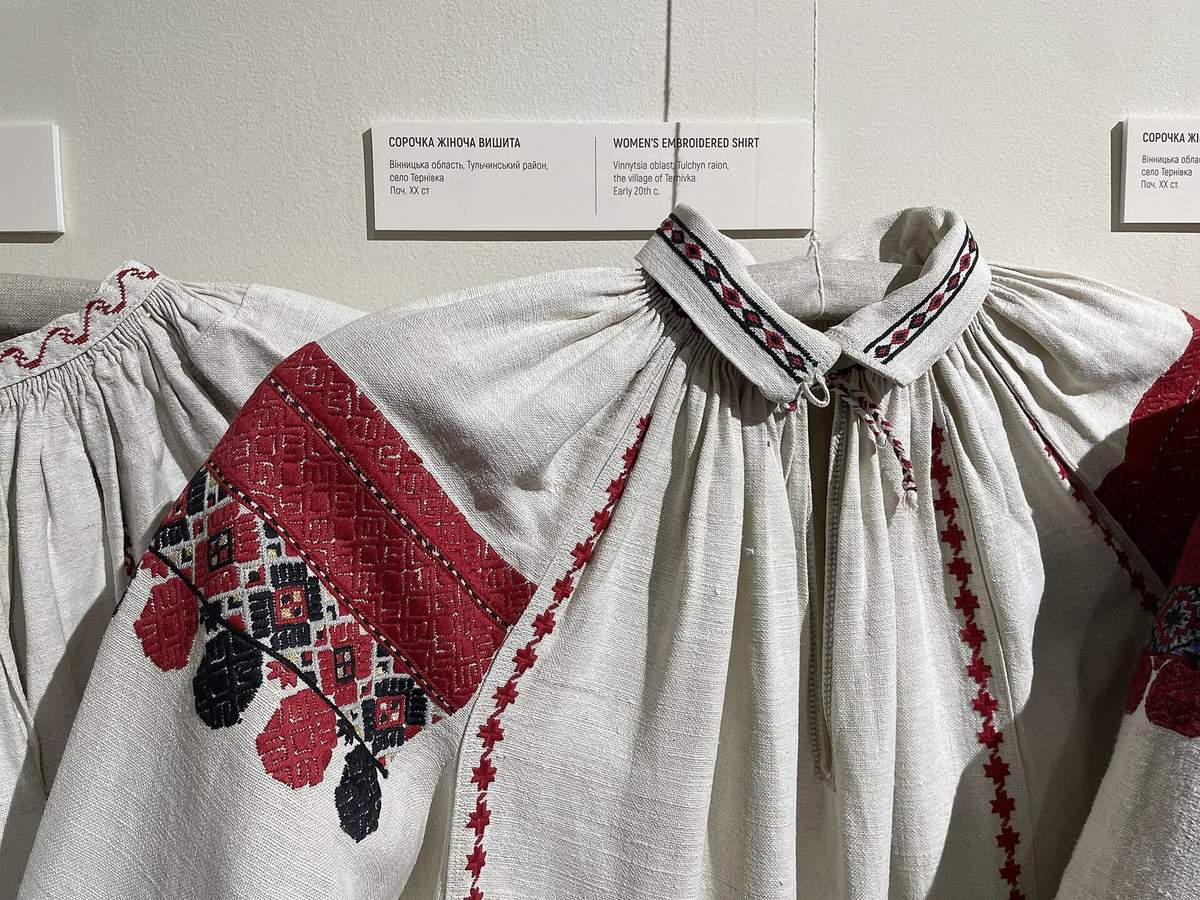
An embroidered textile can interest someone who values a named regional practice or a useful fabric object. The historical shirt illustrated here comes from Ternivka in Eastern Podillia and was photographed in an exhibition at Kyiv's Ivan Honchar Museum. It is a collection example, not shop stock and not a costume worn by everyone in Ukraine. Ask who made a contemporary piece, where, by hand or machine, and from which fabric.
Check size, care instructions and whether the recipient intends to wear or display the object. A printed imitation, machine embroidery and a hand-embroidered piece are different products; a low price alone does not tell you which is offered. Keep maker information and a receipt, and do not buy undocumented historical textiles as souvenirs. A contemporary maker's authorised sales channel is a better starting point than an untraceable claim of antiquity.
Where to research purchases
Visit Kyiv's Folkmart listing records a branch at 13/2 Khreshchatyk Street. Its Narodnyi Dim Ukraina listing records 14a Yaroslaviv Val Street; the shop's own information corroborates that address. These are traceable starting points for contacting a seller, not confirmation of a specific maker's stock. Ask about the exact item and the branch's current operation before acting.
For ceramics, compare intended use and packing; for textiles, compare material, technique and size. A seller carrying several Ukrainian crafts is not evidence that every object is from Kosiv or handmade. Confirm the current opening day or any appointment directly. We provide no shopping route during the war and do not recommend buying undocumented antiques. For a remote purchase, check shipping terms and the destination country's applicable import requirements before payment.
On a narrow screen, swipe the table or focus it and use the left and right arrow keys to see every column.
| Choice | Who might value it | Check before paying |
|---|---|---|
| Ceramic vessel or tile | Someone interested in craft and a specific maker | Functional versus decorative use, packing and provenance |
| Embroidered textile | Someone interested in a wearable or display textile | Fabric, size, technique, maker and care |
| Book or print | A reader researching a subject or artist | Language, author, edition and reproduction rights |
Festivals & Events: use current institutional programmes
Do not carry a pre-war annual festival list into a current guide without confirmation. Event titles can survive online after cancellation or a move. Check the year, organiser, actual venue, programme and ticket terms. A national holiday, a festival brand and an event confirmed for a particular date are different things. A full calendar does not establish that travel to attend is advisable.
The Lviv Opera calendar and Lviv Philharmonic programme provide examples of institution-led information. The latter showed a Baroque+ opening event on 24 October 2026 when researched; this is a dated programme observation, not a permanent annual promise. Reconfirm before acting, and use the Nightlife guide for ticket and return-planning questions.
Keep cultural engagement proportionate
Respect people, collections and local instructions. Do not ask staff to bend restrictions for a visitor, treat a memorial as a backdrop or publish another person's circumstances without consent. If travel is postponed, cultural learning can continue through legitimate digital collections, books and the work of Ukrainian practitioners. The value of a country's culture does not depend on presenting every experience as something available to book today.

.jpg)


