
EUROPE · UKRAINE GUIDE
Getting Around Ukraine: Transport Checks, Borders and Airport Connections

Transport planning for Ukraine has to answer more than how to get from one city to another. Establish whether travel is appropriate, whether the traveller can cross each border, and whether the exact service is operating. A route shown on a booking screen answers only part of that work. Russia’s ongoing war against Ukraine makes current information and the ability to reassess arrangements especially important.
This page explains a method for checking rail, road and connecting journeys. It does not designate safe routes, endorse a particular crossing or provide a guaranteed evacuation plan. Read Health & Safety for risk and assistance questions, and Travel Essentials for nationality-specific document preparation.
Airports & transfers: begin outside the timetable
At the check on 21 October 2026, the FCDO’s Ukraine guidance stated that Ukrainian airspace remained closed. Do not plan a normal international flight arrival into a Ukrainian airport from an old airport-transfer article. A building’s existence, airport code or historical airline route is not proof of a current passenger service.
If researching an arrival through another country, separate the flight, airport ground connection, onward international service and final local journey. Check the airport’s actual location and the station used by the onward operator. A connection described by a city name can involve a change of terminal, a different station or an overnight stop. Establish those details before comparing headline fares.
Ukrzaliznytsia’s official international-connections resource lists routes and links to partner railways. It provides examples involving countries such as Poland, Hungary, Slovakia, Moldova and Romania. That is a route-research resource, not a reservation for your dates or a security recommendation. This guide does not copy its timetable into a static promise about present-day departures.
A useful comparison includes the total number of changes, the conditions attached to each ticket and what happens if a preceding service is delayed. Avoid selecting a flight solely because the airport looks geographically close to Ukraine. The workable connection may depend more on the onward station, immigration process and date-specific timetable than on straight-line distance.
Build a complete journey record
Write the journey as individual legs. For each leg, record the operator, the full departure and arrival place, the date, the local time shown and the reservation reference. Add the walking or ground-transport connection between legs. This exposes omissions that can remain hidden in a map search or a screenshot of a long itinerary.
Use the table below as a comparison method. It deliberately contains no assumed fares or journey times: those should come from the actual services and dates being considered. The purpose is to identify what still needs checking before any commitment.
| Component | Verify directly | Common planning gap |
|---|---|---|
| Flight outside Ukraine | Airport, terminal and arrival date | Confusing a city label with the actual airport |
| Ground connection | Exact station or coach stop | Allowing no time for the transfer |
| International train or coach | Operator, border process and ticket terms | Assuming one booking protects a separate connection |
| Domestic onward leg | Station, date and available reservation | Reusing an old timetable |
| Final local journey | Address, reception arrangements and current restrictions | Treating arrival at a station as arrival at the accommodation |
Keep a separate note of which information is confirmed and which remains provisional. A journey is not complete merely because most of the legs can be booked. The missing connection is often the one that determines whether the rest of the plan is practical.
Rail: operator information and the actual ticket
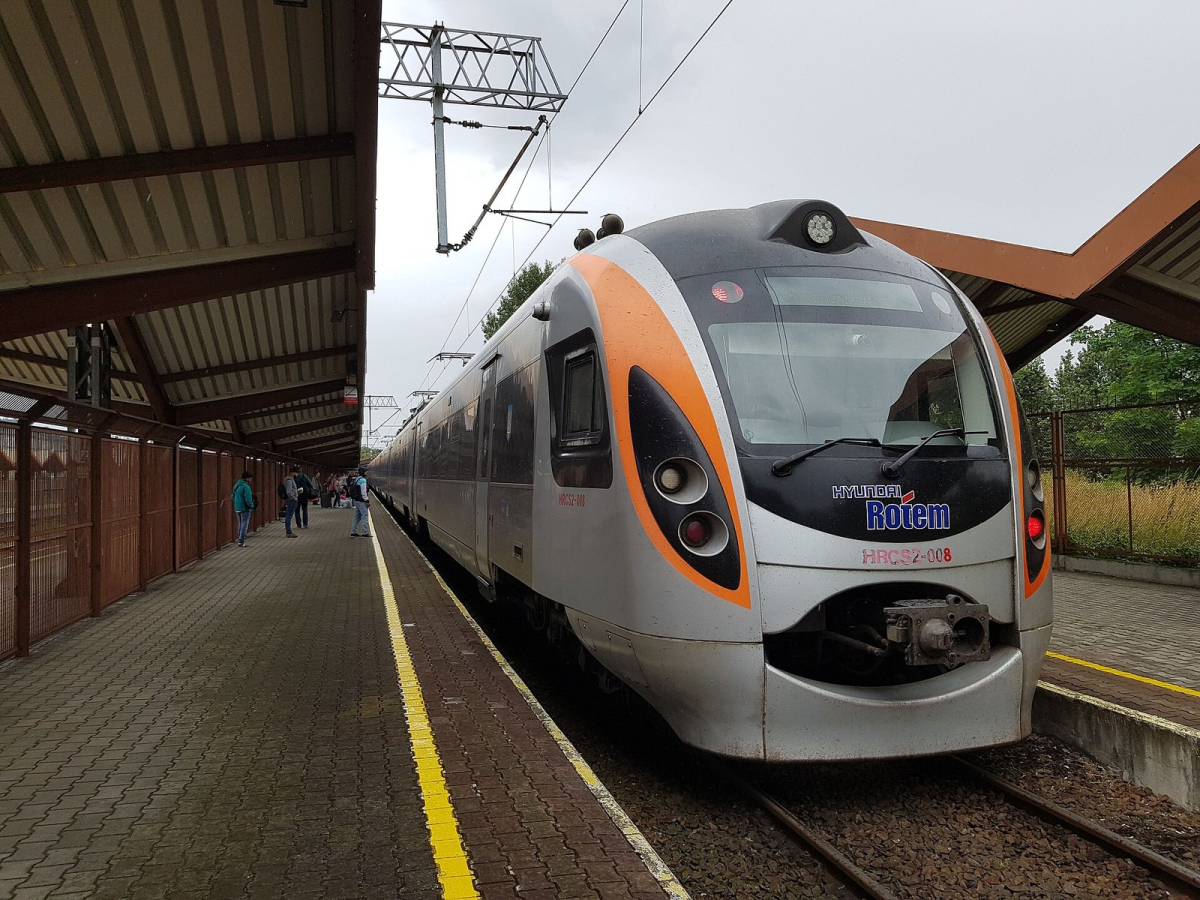
Start rail research from the official operator and follow its own booking links. Ukrzaliznytsia’s international resource links to its website or app and to relevant partner operators. Search the exact date and station pair; a route appearing in general information does not establish a reservable seat on every day. Verify the direction as well as the station names.
Before payment, read the conditions for the selected fare and accommodation type. Check the passenger name, identity requirements, change and refund terms, and how the ticket will be presented. Do not assume that rules for one international service apply to every domestic or cross-border train. If the booking process is unclear, ask the operator rather than relying on a reseller’s abbreviated description.
Save the reservation and the operator’s contact route in an accessible form. A confirmation email and a valid travel document serve different purposes; keep both available where required. If more than one company issues tickets, identify who is responsible for each part. When asking for help, quote the relevant service, date and booking reference rather than sending an unexplained image of an itinerary.
Station changes, coaches and separate bookings
For a change of station, establish the exact arrival point, departure point and method of moving between them. Include luggage and mobility needs. If the route depends on a local service, verify that service through its operator or the relevant local authority. A walking estimate from a mapping app is not enough to resolve access or local restrictions.
For coaches, obtain the stop address and boarding instructions directly from the carrier. Ask about luggage, documentation, ticket presentation and changes. Compare the complete conditions, not just the cheapest fare. If a journey crosses a border, clarify how the carrier handles passenger processing without assuming a predictable queue or guaranteed arrival time.
Separate bookings deserve particular attention. Write down whether a missed connection is protected, who can change the onward ticket and what extra accommodation might be needed. Do not treat extra transfer time as a universal solution: the legal ability to enter the transit country and the actual availability of a later service still need checking.
Border crossings and legal permission
Transport availability and permission to cross a border are different matters. Consult Ukraine’s responsible authorities and the authorities of every country entered. Check nationality, passport and purpose-specific rules through the Travel Essentials entry section. A carrier accepting payment does not make an immigration decision on behalf of the border authorities.
Avoid designing a route from a crowd-sourced list of “easy” crossings. Conditions and eligibility may differ by traveller, direction and date. If you have Ukrainian citizenship, possible citizenship obligations or a residence issue, resolve that position before assuming you can return by the same route. Do not copy an anecdote about someone using a foreign passport as a legal strategy.
Keep document questions in one file and transport questions in another. This makes an unresolved issue visible: a confirmed train does not settle an exit question, and confirmed entry eligibility does not reserve a seat. Review both files again before departure rather than allowing one confirmation to stand in for the whole journey.
Driving and vehicle arrangements
If considering driving, check the vehicle, driver and insurance requirements for every country on the route. Ask the insurer and rental company for the exact permitted geographical scope. The FCDO transport guidance tells British drivers to carry the relevant original vehicle documentation and confirm permission for rental vehicles crossing the Ukrainian border. Rules for another licence or ownership arrangement need their own official check.
Do not build a route around a hire car until the company confirms the proposed use in writing. A rental available in one country may not be authorised for the next. Ask what assistance is provided, how a breakdown would be handled and which costs remain your responsibility. A collision waiver is not a general statement about all the risks involved.
Avoid improvising shortcuts through unfamiliar rural areas to recover lost time. Use current official restrictions and instructions rather than an old navigation track. For questions about mines, debris and outdoor access, read Health & Safety. This guide does not provide alternative roads around checkpoints or restricted areas.
Local transport and the final address

At the destination, check the relevant municipality and operator for current local transport arrangements. Do not assume that a metro, tram, bus or taxi service follows the timetable described in an old city article. Ask how local restrictions affect the journey from the arrival point to the accommodation, particularly if a delay changes the time of arrival.
Keep the full address in Ukrainian and the host’s current contact details. For a prearranged pickup, establish who is meeting you, how you will identify them and what happens if the arrival changes. Do not give an unidentified driver sensitive documents merely to confirm a booking. If arrangements become unclear, contact the company or host using a known channel.
Compare the entire final leg, including walking, baggage and access to the building. Arriving near an address may still leave an unsuitable entrance or an unanswered reception desk. For travellers with assistance needs, a photograph of the building is less useful than specific answers about steps, lifts, door access and the arrangements that will actually be available.
Accessibility and assistance
Ukrzaliznytsia’s official services portal provides routes for requesting station assistance and a specialised carriage for passengers with disabilities. A request option is not confirmation of availability for your train. Contact the operator with the actual date, service and assistance required, and retain the response.
Describe the practical need rather than relying on a broad label such as “accessible”. Include boarding, transfer between platforms, baggage, any mobility equipment and the final connection. Confirm how assistance will be identified on the day and what to do if the service changes. Do not assume an arrangement made with one operator automatically covers the next.
Recheck before committing and before moving
Recheck current official advice, service information and personal documents before moving. A valid ticket can remain valid while the wider circumstances change. Keep a record of the last check and the organisation to contact if a change occurs. The point of preparation is to support a new decision when needed, rather than to defend an itinerary simply because it has already been booked.



