
EUROPE · UKRAINE GUIDE
Ukraine Photos & Photo Spots: Reading Images, Architecture and Permissions
Photographs can help readers understand Ukraine's architectural and geographical variety, but they can also mislead when their dates and limits disappear. This page pairs distinct images with cultural interpretation and photographic questions. It is not a current photography route or an invitation to travel during Russia's war. It avoids military locations, precise sensitive viewpoints and drone instructions. Any future visit depends on current official advice, lawful access and the permission appropriate to the actual activity.
Start by identifying what an image records
Read the location, photographer, date and source together. A picture uploaded recently may have been taken many years earlier, and a file name can preserve an older spelling. Neither the upload date nor the date of this guide establishes the current condition of the subject. When sharing an image, retain the context that allows another reader to understand those limits.
An architectural photograph also involves choices about lens, viewpoint, cropping and light. A wide view may emphasise spatial relationships; a detail may draw attention to material or ornament. Those are photographic effects, not evidence of what a person can access today. Compare the image with an institution's description before drawing conclusions about the function, age or ownership of a building.
The History & Culture guide explains how to approach historical subjects, while Map & Regions helps with geographical relationships. This page contributes image-specific interpretation and permission questions. It does not reproduce the same photographs used elsewhere in the Ukraine guide or turn a set of heritage names into another sightseeing list.
Chernivtsi: framing a heritage complex
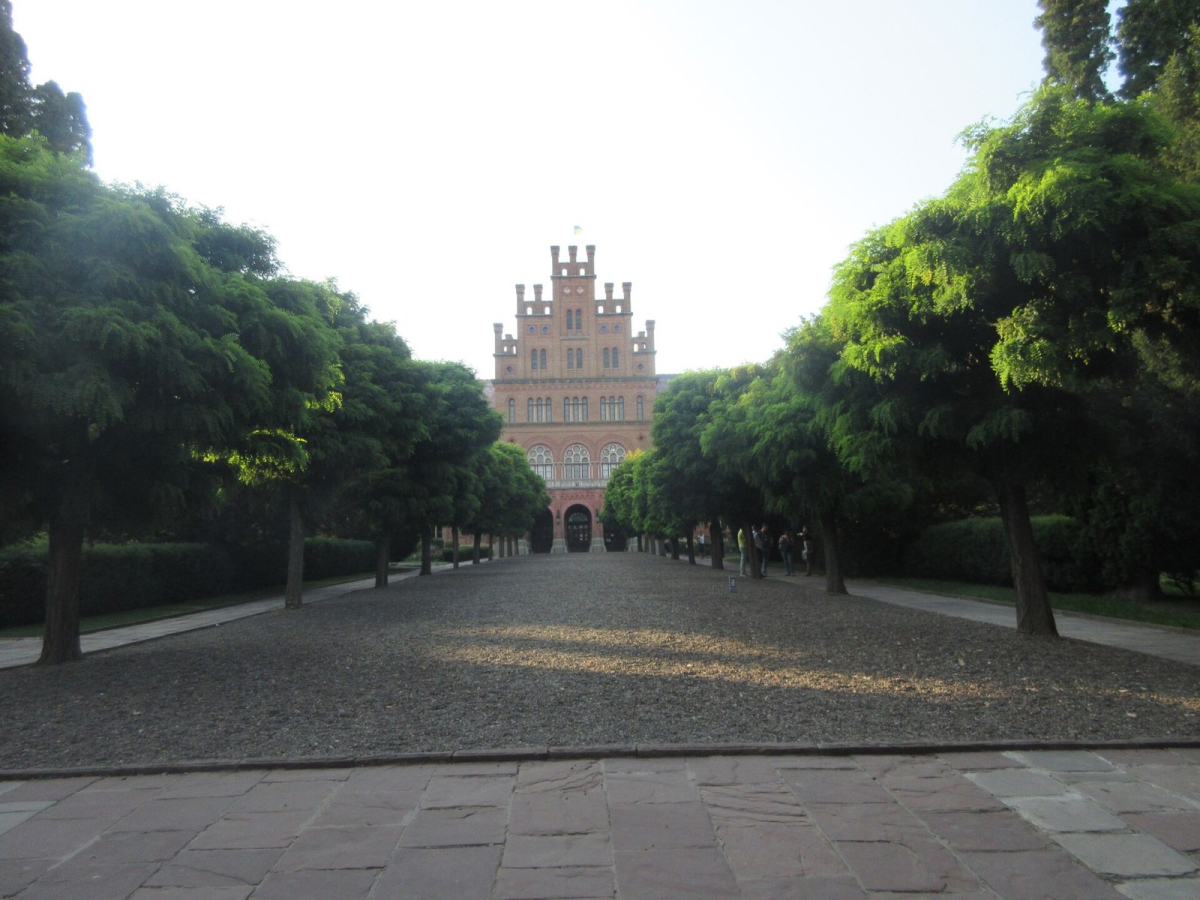
The Residence of Bukovinian and Dalmatian Metropolitans is a useful subject for studying the relationship between a building, its surrounding space and architectural detail. The UNESCO property record identifies the complex and its historical significance. The photograph on this page should be read alongside that description, rather than as a claim that every visible area is currently accessible.
In a composition, an approach or avenue can lead the eye towards the architecture, while vegetation and repeated forms provide scale and rhythm. Those are observations about the image itself. They do not establish an available viewpoint, a permitted entrance or the right to work from within the grounds. No time-of-day recommendation here overrides current access or local instructions.
If researching a future permitted visit, ask the institution about public access, any guided arrangements and the distinction between personal photographs and a commercial shoot. Keep equipment requirements in that request. A phone snapshot and a tripod-based production may be treated differently. This guide has not obtained a current photography permit or booked access to the complex.
Kamianets-Podilskyi: reading the fortress as a landscape
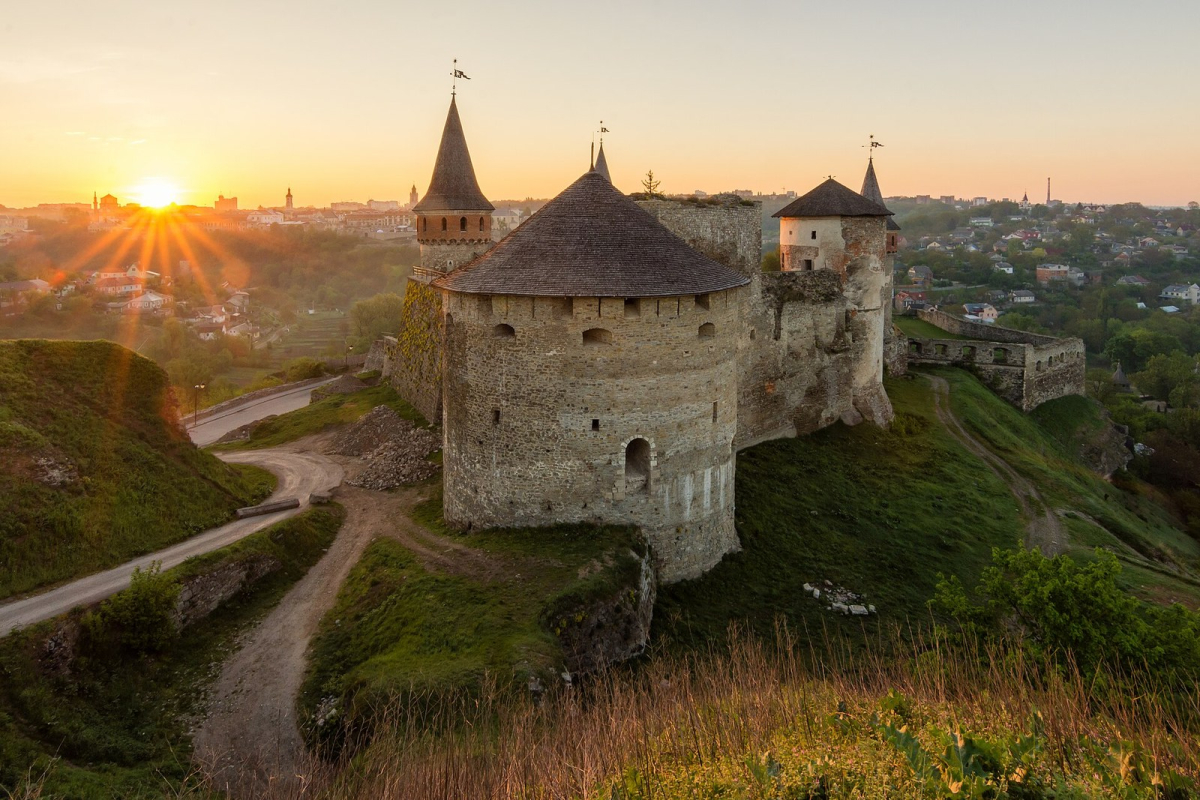
A fortress photograph can combine walls, towers, terrain and changing light in one frame. At Kamianets-Podilskyi, those relationships are part of what makes the subject useful for architectural research. Read the image first as a recorded arrangement of forms. Avoid assuming that the visible slope, wall, bridge or approach is a visitor route, especially when no present access assessment accompanies the photograph.
A low sun can separate towers from the surrounding landscape and create long shadows. That is an interpretation of the pictured light, not a current recommendation to wait outside after dark or arrive before local restrictions allow movement. Likewise, a dramatic sky does not mean the photographer's weather or access conditions can be repeated. The image is an individual occasion, not a reservation for the same experience.
For a future lawful visit, ask the responsible institution about current admission and photography conditions. Do not use another photographer's image to identify a shortcut around a boundary or a private property. If a view cannot be obtained through permitted access, choose a different subject. A composition is not more valuable than the people and places affected by the attempt to make it.
Uzhhorod: a castle entrance and its context
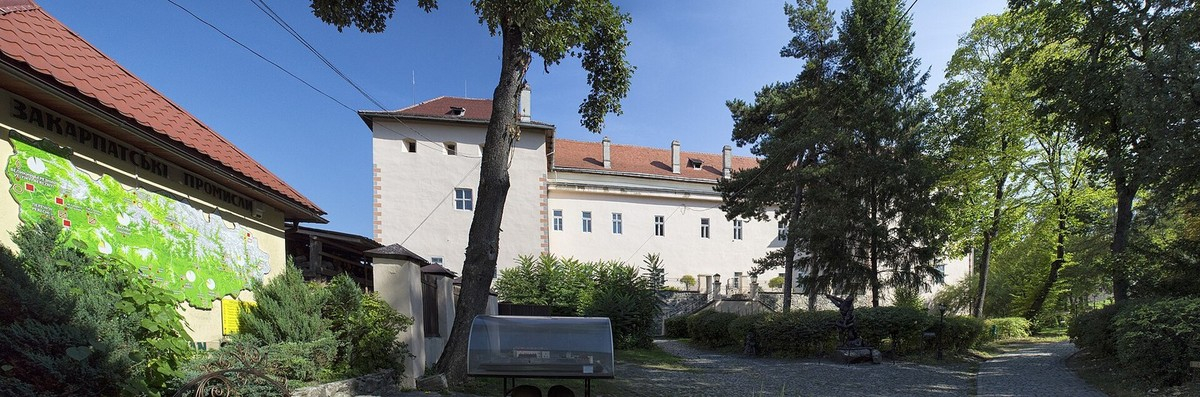
An entrance view of Uzhhorod Castle gives a different scale from a distant fortress landscape. It can direct attention to the relationship between the gateway, walls, ground surface and the space beyond. The source photograph establishes that recorded view, not the present entry arrangement. A door visible in an image should not be interpreted as an invitation to enter without permission.
For visual study, compare how the gateway frames the scene and how the image handles bright and shaded areas. Architectural details can be researched through institutional or scholarly material without requiring a visit. If the photograph includes people, avoid identifying them or inventing a story about their activities. Their incidental presence does not make them available as the subject of a new commercial narrative.
Uzhhorod's geographical location can also encourage mistaken assumptions about combining a photograph with a cross-border journey. This page provides no such route. The Getting Around guide separates transport and border research from cultural interest. A castle image and a map position do not establish an operating connection or a person's right to cross a border.
Photography during the war
The FCDO's safety guidance warns against photography near government or military establishments. This guide does not identify military viewpoints, checkpoints, air-defence activity or sensitive infrastructure as photographic subjects. Do not infer that something may be photographed simply because it is visible from a public place or appears in someone else's online post.
Follow current local instructions, including any direction from security personnel. If unsure whether the subject or location is appropriate, put the camera away and seek a clear answer through the relevant authority. Do not argue from an old travel article, a public-domain image or a map application. Copyright permission to reuse an existing photograph is entirely different from permission to take a new photograph at the location today.
A quiet image of a street, river or landscape can unintentionally communicate normality if its caption omits the war and its date. Retain historical context, and do not use the aesthetics of an image to imply that an area is unaffected. Photographs should support understanding, not become visual evidence for a safety claim they cannot establish.
People, memorials and privacy
Ask before making a recognisable person the subject of a photograph, and explain the intended use when publication is involved. Consent to a personal picture is not automatically consent to advertising, a public travel article or the sharing of a location. Be particularly careful around children, displaced people, patients and anyone whose circumstances make refusal difficult.
At memorials and places of loss, read the institution's rules and behave as a guest. A visually striking background is not a reason to interrupt remembrance or ask someone to move for a composition. Avoid staging an image that changes the meaning of the place. Where a person or institution declines photography, written notes or permitted public material can support research instead.
Do not publish another person's live location, accommodation or travel plan without clear permission. Remove unnecessary sensitive context rather than assuming that a beautiful photograph is harmless. This page does not offer instructions for concealing prohibited photography or evading restrictions. Respect for the subject is part of making a useful image, not an optional step after the camera has been put away.
Permissions and reuse are separate checks
On a narrow screen, swipe the table or focus it and use the left and right arrow keys to see every column.
| Question | Relevant evidence | What it does not establish |
|---|---|---|
| May I enter? | Current access rules from the responsible institution | Permission for every kind of photography |
| May I photograph? | Rules for the actual equipment and purpose | Commercial publication rights |
| May I publish this existing image? | Photographer's licence and any applicable additional rights | Today's access or subject condition |
| May I photograph a person? | Appropriate, informed consent and applicable rules | Permission to publish private circumstances |
For an existing licensed image, keep its creator, title where required, source, licence and any modification notice. A Creative Commons label is not a statement that the pictured property can be entered or a person can be used to endorse a service. If additional rights are unresolved, choose a different image or obtain the appropriate permission rather than removing the credit.
Building a future photographic project
For future interest, create a reading list around architecture, domestic objects, regional landscapes or a named artist. Separate subjects that can be explored through legitimate digital collections from those that would require access. Revisit permission, official advice and institutional rules only when there is a real plan to assess. A careful photographic project can begin with learning, without making a current journey necessary.



