
TÜRKİYE · CAPPADOCIA GUIDE
Cappadocia Travel Guide: Where to Stay, What to See and How to Plan
Cappadocia is a high volcanic plateau in central Türkiye, where soft tuff has been worn into fairy chimneys, ridged valleys and cliffs full of carved rooms. Most visitors come for a sunrise balloon flight, but the region rewards slower travel: rock-cut churches with frescoes, walking trails between villages, underground cities and cave hotels that are part of the landscape.
The short answer for a first visit: stay three nights in Göreme, Uçhisar or Ürgüp, book a balloon flight for your first morning, and plan one day for the northern sights and one for the underground cities and the Ihlara Valley. The rest of this guide explains how to choose your base, what to book in advance and what to check before you go.
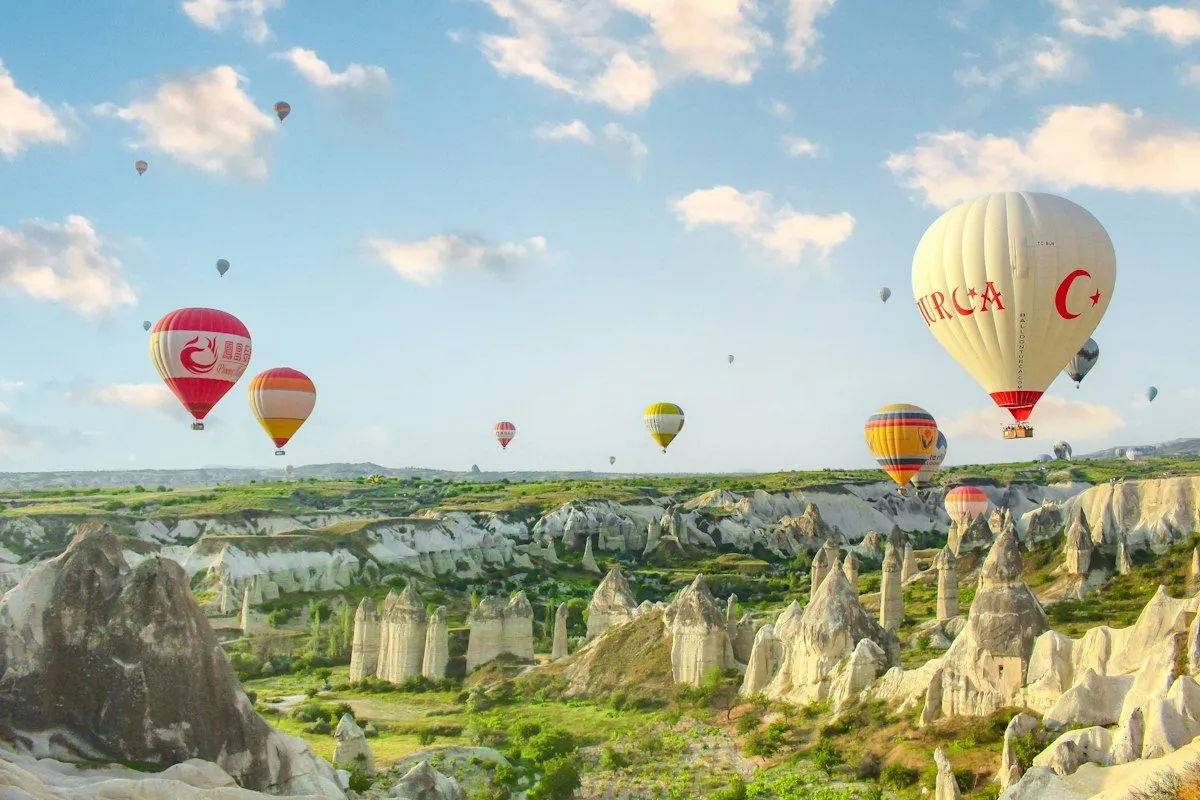
Cappadocia at a Glance
| Question | Short answer |
|---|---|
| How many days? | Three nights is a comfortable minimum; two is possible but leaves no spare morning if a balloon flight is cancelled. |
| Best first-time base | Göreme for convenience and walks, Uçhisar for views and quieter evenings, Ürgüp for a town with more restaurants. |
| Nearest airports | Nevşehir Kapadokya (NAV), roughly 40 km from Göreme, and Kayseri (ASR), roughly 75 km away. |
| Best seasons | April to June and September to October for walking; winter brings snow, short days and more balloon cancellations. |
| Book ahead | Balloon flight, cave hotel in spring and autumn, and an airport transfer if you arrive late. |
| Do you need a car? | No for a Göreme-based trip with tours; useful for Soğanlı, Mustafapaşa and flexible sunrise viewpoints. |
How the Fairy Chimneys Formed
Millions of years ago, eruptions from the volcanoes of central Anatolia, including Erciyes and Hasan, buried the plateau under thick layers of ash and lava. The ash hardened into tuff, a rock soft enough to cut with hand tools. Wind, rain and frost then wore it down unevenly: where a harder layer sat on top, it protected the softer rock below and left tall cones with caps, the fairy chimneys. Erosion has not stopped, which is why the shapes keep changing and why climbing on them is discouraged.
The same softness made the rock easy to live in. From the Roman period onwards people carved tombs, homes, churches, monasteries, stables and dovecotes into the cliffs; the Ministry of Culture and Tourism counts more than 600 rock-cut churches in the valleys. Several valley settlements were lived in until the mid-20th century, and today many hotels occupy restored cave houses.
Getting to Cappadocia
Two airports serve the region. Nevşehir Kapadokya Airport (NAV) is the closer one, roughly 40 km from Göreme by road. Kayseri Erkilet Airport (ASR) is about 75 km away but usually has more flights, especially from Istanbul. Most hotels in Göreme, Uçhisar and Ürgüp arrange shared shuttles that meet flights at both airports; book one when you reserve your room, and give the hotel your flight number so that a delay does not leave you without a ride.
Long-distance buses run overnight from Istanbul, Ankara, İzmir and Antalya to Nevşehir and, on some services, to Göreme. Check whether your ticket ends at the Göreme bus station or at Nevşehir, from where you need a local minibus or taxi. Driving from Ankara takes you across the open steppe and is straightforward; from the coast it is a long day. See our Turkey transportation guide for flights, buses and car rental.
Where to Stay in Cappadocia
The villages are close together, but each base changes the feel of the trip.
- Göreme — the most practical first base. It sits next to the Open-Air Museum, has the most tour departures and restaurants, and several valley walks start on the edge of the village. It is also the busiest, and early-morning balloon traffic is part of the experience.
- Uçhisar — higher up, around the rock castle, with wide views over Pigeon Valley. Evenings are quieter and many hotels have terraces for watching the balloons. You will rely more on taxis or tours.
- Ürgüp — a real town with shops, wine bars and a wider choice of restaurants, about 10 km from Göreme. Good for longer stays and for travellers who prefer a town to a village.
- Ortahisar — a smaller village around its own rock citadel, between Göreme and Ürgüp, with a more local atmosphere.
- Avanos — on the Kızılırmak river and known for pottery; flatter and less scenic, but convenient for Paşabağ and Zelve.
- Mustafapaşa — a former Greek village with carved stone mansions, south of Ürgüp. Peaceful, but you will want a car or arranged transfers.
Cave rooms are carved into the rock or built against it. They stay cool in summer, but they can feel damp, have steep stone stairs and small windows. If mobility, heating or light matter to you, ask the hotel which rooms have level access and how they are heated before you book. For a village-by-village comparison with distances, cave-hotel checks and the best base for each type of trip, see where to stay in Cappadocia. For the rest of the country, see Where to Stay in Turkey.
Affiliate disclosure: Photos4Travel may earn a commission if you book through the Booking.com link below.
Compare options in Hotels in Turkey or search cave hotels in Cappadocia on Booking.com.
Göreme Open-Air Museum
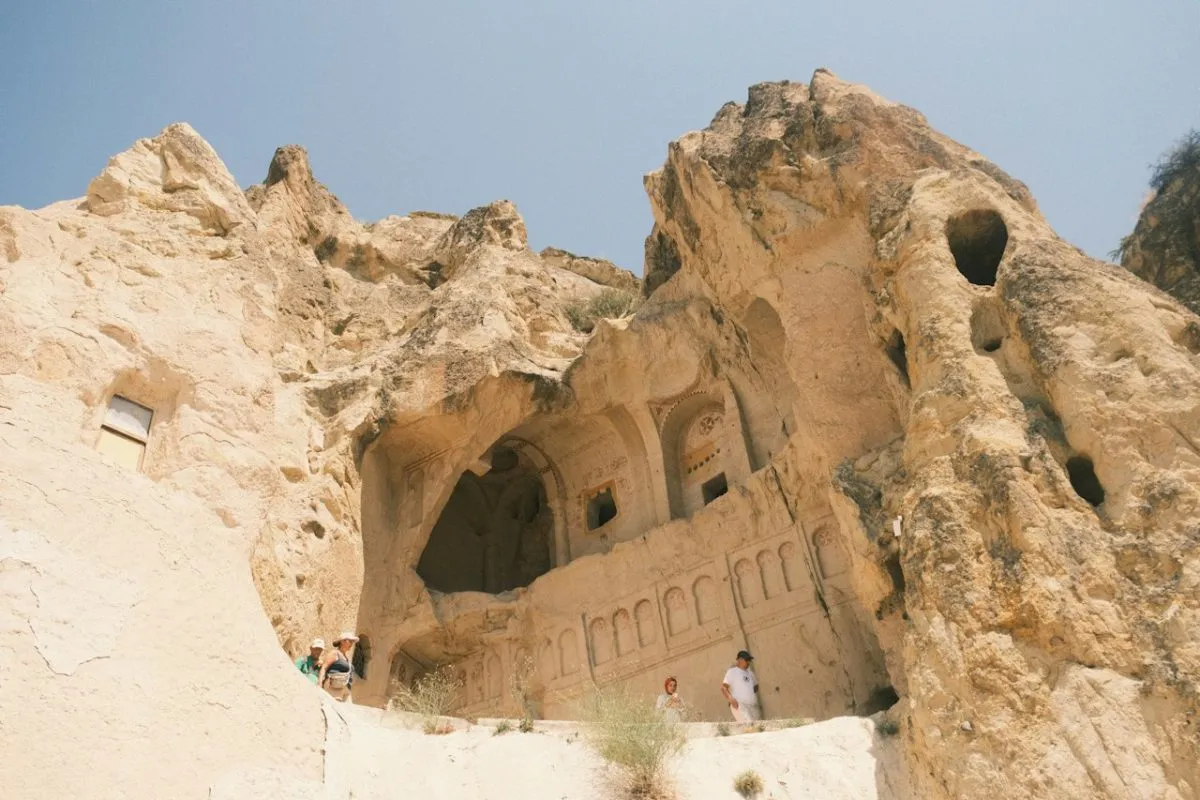
The Open-Air Museum is a valley of monastic buildings carved into the rock between roughly the 4th and 13th centuries: churches, chapels, refectories and living spaces, several decorated with frescoes. It is the core of the UNESCO World Heritage Site Göreme National Park and the Rock Sites of Cappadocia, inscribed in 1985. The Dark Church (Karanlık Kilise), dated to the late 11th or early 12th century, has the best-preserved paintings: it takes its name from the single small window in its narthex, and the lack of light is what kept the colours vivid. It has its own entrance and requires a separate ticket.
In November 2026 the Ministry of Culture and Tourism lists the site as open every day from 08:00 to 17:00, with the ticket office closing at 16:15 (16:45 for the Dark Church). Hours change between seasons, so check the official Göreme page for your dates. Tickets are sold at the entrance and on the official museums e-ticket site; prices for foreign visitors are set in euros and change regularly. Arrive at opening time or in the last two hours to avoid the main tour groups, and expect queues for the smaller churches.
If you plan to visit several state sites, compare the price of individual tickets with the MuseumPass Cappadocia, a multi-day card that covers a number of museums and sites in the region. Confirm the current price and the list of included sites on the official museum portal before you buy; supplements such as the Dark Church are not always included.
Valleys and Walks
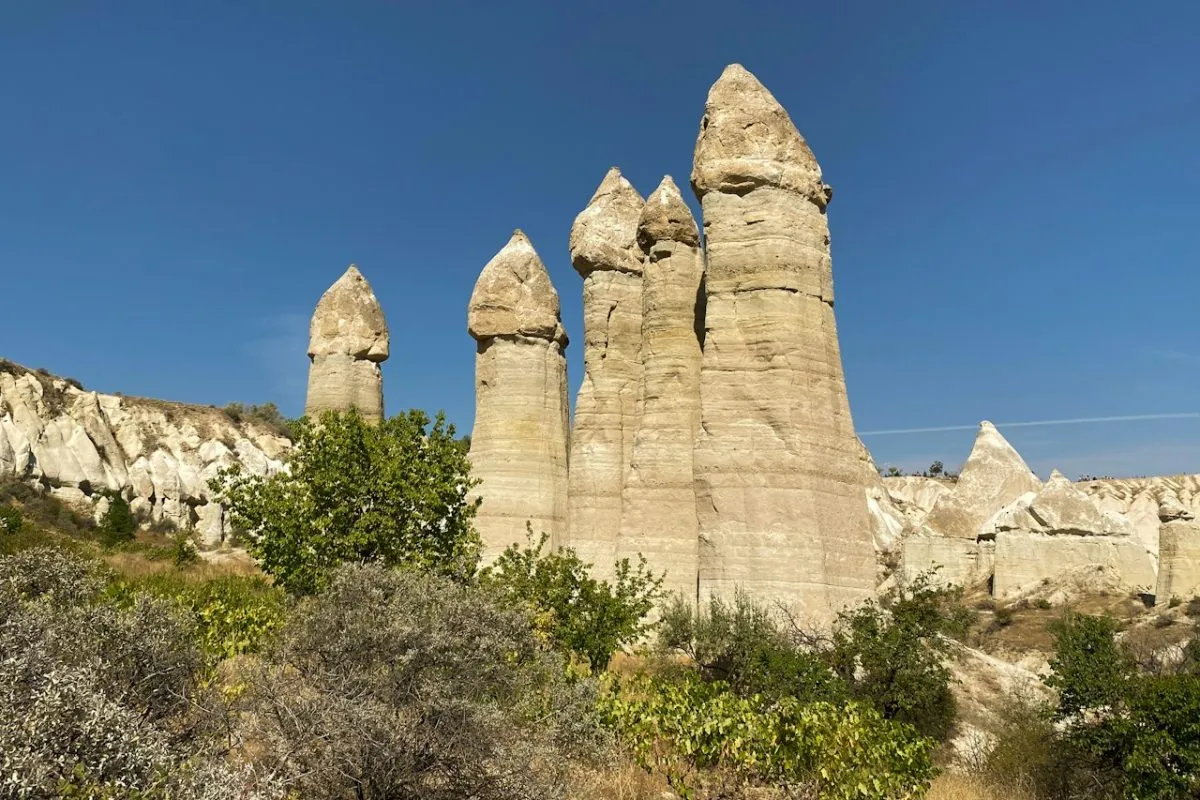
Walking is the best way to understand Cappadocia's landscape, and several valleys can be reached on foot from Göreme or Uçhisar.
- Love Valley — tall, smooth chimneys in a green valley north-west of Göreme; easiest from the upper viewpoint on the Uçhisar road.
- Rose and Red Valleys — pink and ochre ridges with small rock churches, best in late afternoon; many walkers finish at a sunset viewpoint above Çavuşin.
- Pigeon Valley — links Göreme and Uçhisar, named after the dovecotes carved into the cliffs.
- Paşabağ (Monks Valley) — multi-capped chimneys on the road to Zelve, often included in northern tours.
- Zelve — three valleys with some of the densest clusters of fairy chimneys, about 5 km from Avanos and 1 km from Paşabağ. It was an important Christian settlement between the 9th and 13th centuries and was inhabited until 1952; carved churches, a mill and tunnels remain. Zelve and Paşabağ are one ticketed site.
- Ihlara Valley — a canyon about 1.5 hours' drive south-west of Göreme. The Ministry's site page notes that 14 of its 105 rock churches are open to visitors and that the main approach descends 382 steps.
Trails in the valleys are informal and signposting is patchy. Download an offline map, carry water and sun protection, and avoid steep, crumbling slopes, especially after rain. In summer, walk early or late in the day. Do not climb fairy chimneys or enter unstable rock rooms: the tuff is soft and breaks easily.
Uçhisar Castle and Viewpoints
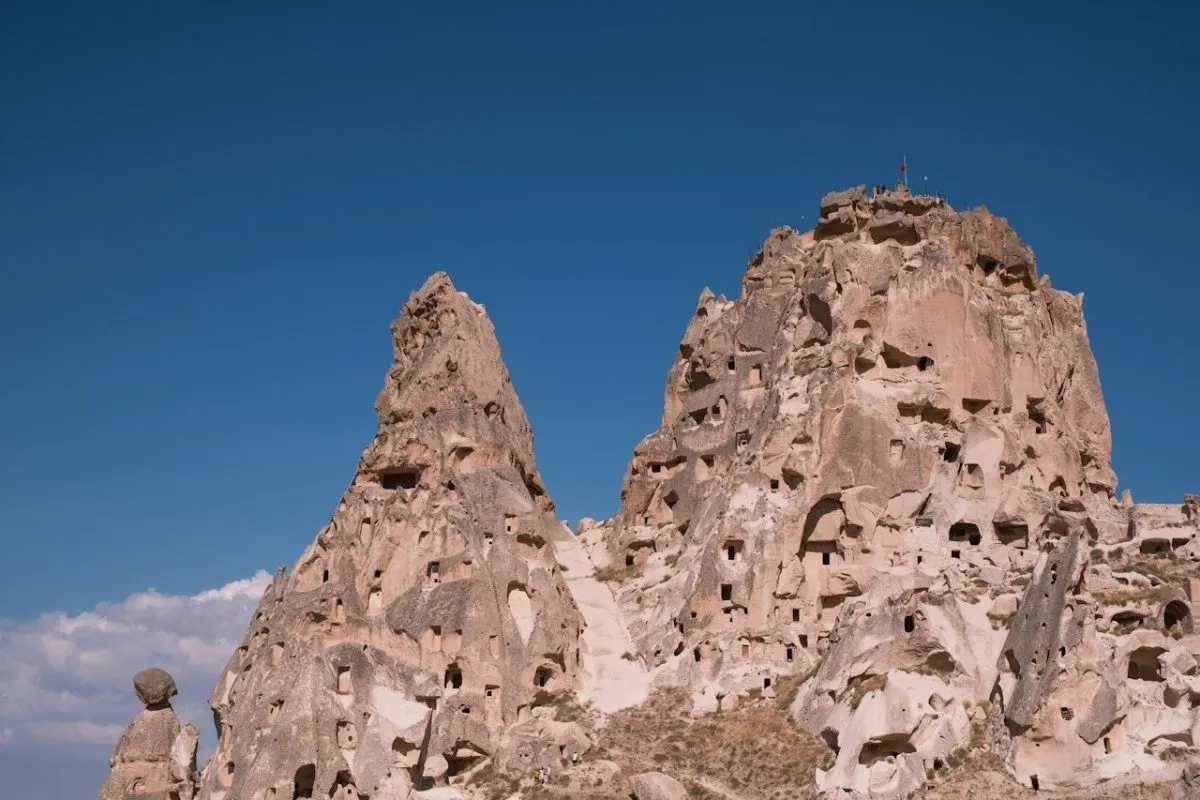
Uçhisar Castle is a rock outcrop honeycombed with rooms, standing over the highest village in the area. The climb to the top is short but uneven, and the summit gives one of the widest views over Pigeon Valley, Göreme and, on clear days, Erciyes, the high volcanic peak on the eastern horizon. Ortahisar has a similar, smaller rock citadel. For sunrise balloon views without flying, ask your hotel about the nearest roof terrace or viewpoint, and leave in darkness so you are in place before the first balloons rise.
The Underground Cities
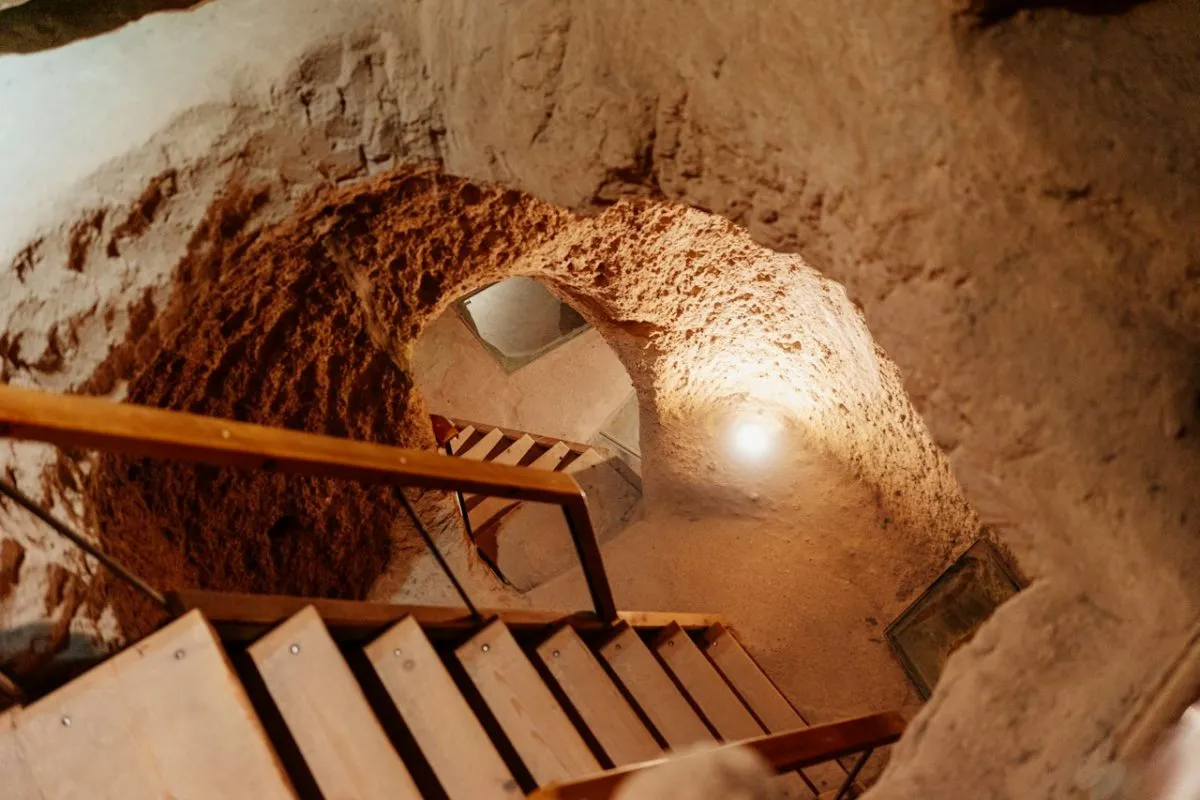
The region has many underground settlements dug into the tuff, with ventilation shafts, storerooms, stables and rolling stone doors that could seal each level. The two most visited are on the road south from Nevşehir towards Niğde. Kaymaklı, about 20 km from Nevşehir, is an eight-level city of rooms, wine cellars, water cisterns, kitchens, stores and a church linked by narrow corridors. Derinkuyu, about 30 km from Nevşehir, also has eight levels and adds a baptismal pool, a confessional and a deep well. Both are roughly 30 to 45 minutes' drive from Göreme. For a quieter visit, Özkonak, about 14 km from Avanos, is smaller and only partly cleared.
In November 2026 the Ministry lists all three as open daily from 08:00 to 17:00. Only part of each city is open to visitors, and passages are narrow and low, with steep steps. They are not suitable if you are claustrophobic, have back or knee problems, or need step-free access. Go early or late to avoid the tour-bus peak, and bring a light layer: it stays cool underground in every season.
Hot-Air Balloon Flights
A sunrise flight lasts around an hour in the air, with hotel pick-up before dawn. Flights are run by licensed operators and are authorised each morning by Türkiye's civil aviation authority (SHGM) according to the weather. Wind and visibility cancel flights on a significant number of days, more often in winter, sometimes several days in a row.
- Book for your first morning, so that a cancellation can be moved to the next day.
- Prices are set by each operator and change with the season and demand; there is no official price list. Compare what is included: basket size, flight time, transfers, insurance and the refund or rebooking policy if a flight is cancelled.
- Book through your hotel or directly with an operator that can show its licence. Ask about age, pregnancy and mobility limits before you pay: you need to climb into the basket and take a braced position for landing.
- If you prefer not to fly, watching the balloons rise from the ground is free and, on a calm morning, just as memorable.
For prices, cancellation statistics, operator checks and the best places to watch, see our full guide to hot-air balloon rides in Cappadocia.
Beyond Göreme: Quieter Sites
Most tours follow the same circuit, so a car or a private driver for one day opens up places with far fewer visitors.
- Çavuşin Church — on the Göreme–Avanos road, about 2.5 km from Göreme. Built in the name of Emperor Nikephoros Phokas, it is dated to 964–965 and decorated with scenes from the life of Christ. The old village of Çavuşin, below a cliff of abandoned cave houses, is worth a short walk.
- Gülşehir — on the Kızılırmak, about 20 km from Nevşehir. Açıksaray, 3 km before the town, is a field of rock-cut halls, Roman tombs and 9th–10th-century churches that was once a bishop's seat. In the town, St Jean Church (Karşı Kilise) has well-preserved paintings.
- Soğanlı — a valley in Kayseri province, about 15 km from Yeşilhisar, where rock churches with 10th–12th-century frescoes sit among village houses and thousands of dovecotes. The Ministry lists it as closed on Mondays and open 08:30 to 17:30 on other days.
- Güzelyurt Monastery Valley — a 4–5 km valley near Ihlara, sometimes called a small Ihlara, with 28 rock-cut churches. It combines well with the Ihlara Valley and Selime on a southern day.
- Mustafapaşa and Ürgüp — stone mansions with carved façades from the former Greek community, and quieter evenings than Göreme.
Opening days and hours for smaller sites change more often than for the main museums, so check the official page for each site before you go.
Food and Wine
Cappadocian cooking is built around slow-cooked dishes made in local earthenware. The best known is testi kebabı, meat and vegetables sealed in a clay pot and cooked for hours, then cracked open at the table; some restaurants ask you to order it in advance. Look also for Nevşehir mantı (small dumplings with garlic yoghurt and spiced butter), kayısı yahnisi (a stew of meat and apricots), stuffed quince and kuru kaymak, a dried clotted cream eaten with honey at breakfast. Roasted pumpkin seeds, dried apricots and grape molasses (pekmez) are the classic food souvenirs; the pumpkin seeds are harvested in early September.
The volcanic tuff soils have supported vineyards for thousands of years. Local and Anatolian grapes include Emir and Narince for white wines and Öküzgözü, Kalecik Karası and Boğazkere for reds, and several wineries around Ürgüp and Uçhisar offer tastings year-round. In Avanos, potters still work the red clay of the Kızılırmak, and many workshops welcome visitors. The region's restaurant scene has grown quickly and now appears in the MICHELIN Guide Türkiye, so book ahead for well-known dining rooms in high season.
For dishes across the country, see Turkish Food & Drink.
Tours and Getting Around
Day tours are sold in every village, often under colour names. The northern route (often called the Red Tour) usually combines the Open-Air Museum, Paşabağ, Avanos and Uçhisar. The southern route (often called the Green Tour) usually includes an underground city, a walk in the Ihlara Valley and the Selime cliff monastery. Itineraries vary by company, so check which sites are included, whether entry fees are in the price and how much time you get at each stop.
Local minibuses connect Göreme, Avanos, Ürgüp, Uçhisar and Nevşehir during the day, and taxis are easy to find in the main villages. A rental car gives the most freedom for sunrise viewpoints, Soğanlı and Mustafapaşa; roads are generally good, but give way to tour buses on narrow village streets. If you book quad-bike or horse-riding outings, choose operators that keep to permitted tracks and supply helmets.
When to Visit
Spring (April to June) brings green valleys, mild days and the best walking. Autumn (September to October) is similar, with harvest colours and stable weather. Summer days are hot and dry, but nights cool down quickly at this altitude, so walk early and rest at midday. Winter is cold and often snowy: the landscape is beautiful, hotels are cheaper and quieter, but days are short and balloon cancellations are more frequent. Turkish public holidays bring large domestic crowds, so book early for those dates. See Turkey weather for regional seasons.
Suggested Itineraries
| Trip length | Suggested plan |
|---|---|
| 2 days | Day 1: balloon flight or sunrise viewpoint, Open-Air Museum, Love Valley walk, Rose Valley sunset. Day 2: underground city and Uçhisar Castle, or the southern tour. |
| 3 days | Add a full southern day (underground city, Ihlara Valley, Selime) and a spare sunrise for a cancelled flight. |
| 4 days or more | Add Zelve and Paşabağ, Çavuşin and Avanos pottery, a driving day to Gülşehir or Soğanlı, Ürgüp and Mustafapaşa with a winery visit, or a slow day of valley walking. |
Responsible Travel
The landscape that makes Cappadocia famous is fragile. Stay on existing paths, do not carve, write on or climb the rock, and leave frescoes untouched, without flash. Many rock churches are still sacred places, so dress and behave accordingly. Drone use in Türkiye is regulated and the skies over the valleys are shared with balloons at dawn; check the current civil aviation rules and any local restrictions before you fly. For more ideas, see Sustainable Tourism in Turkey.
For more experiences in the region, continue to Things to Do in Turkey.
Cappadocia FAQ
How many days do you need in Cappadocia?
Three nights is a good minimum. It gives you two full days for sights and walks and a spare morning if your balloon flight is cancelled.
Is Göreme, Uçhisar or Ürgüp the best base?
Göreme is the most practical for a first visit without a car. Uçhisar suits travellers who want views and quieter evenings. Ürgüp suits longer stays and those who prefer a town with more restaurants.
Can you visit Cappadocia without a car?
Yes. Stay in Göreme, walk the nearby valleys, use local minibuses and taxis, and take a tour for the underground cities and the Ihlara Valley.
Is Cappadocia worth visiting in winter?
Yes, if you dress for cold and accept short days. Snow on the chimneys is spectacular, but balloon flights are cancelled more often, so allow more mornings.
Sources and Planning Checks
Facts were checked on 5 November 2026 against the Ministry of Culture and Tourism pages for Göreme, the Dark Church, Zelve–Paşabağ, Kaymaklı, Derinkuyu, Özkonak, Çavuşin, Gülşehir, Soğanlı, Güzelyurt Monastery Valley and Ihlara, the UNESCO World Heritage listing, and Go Türkiye's pages on Cappadocia and its food. Airport distances are approximate road distances. Museum prices, MuseumPass coverage, balloon prices and current drone rules could not be confirmed on official pages; check them before you travel. Recommendations are editorial judgments.