
About Turkey
About Turkey
Plan your Turkey trip: Where to go · When to visit · Where to stay · Getting around · Visa & entry · Safety
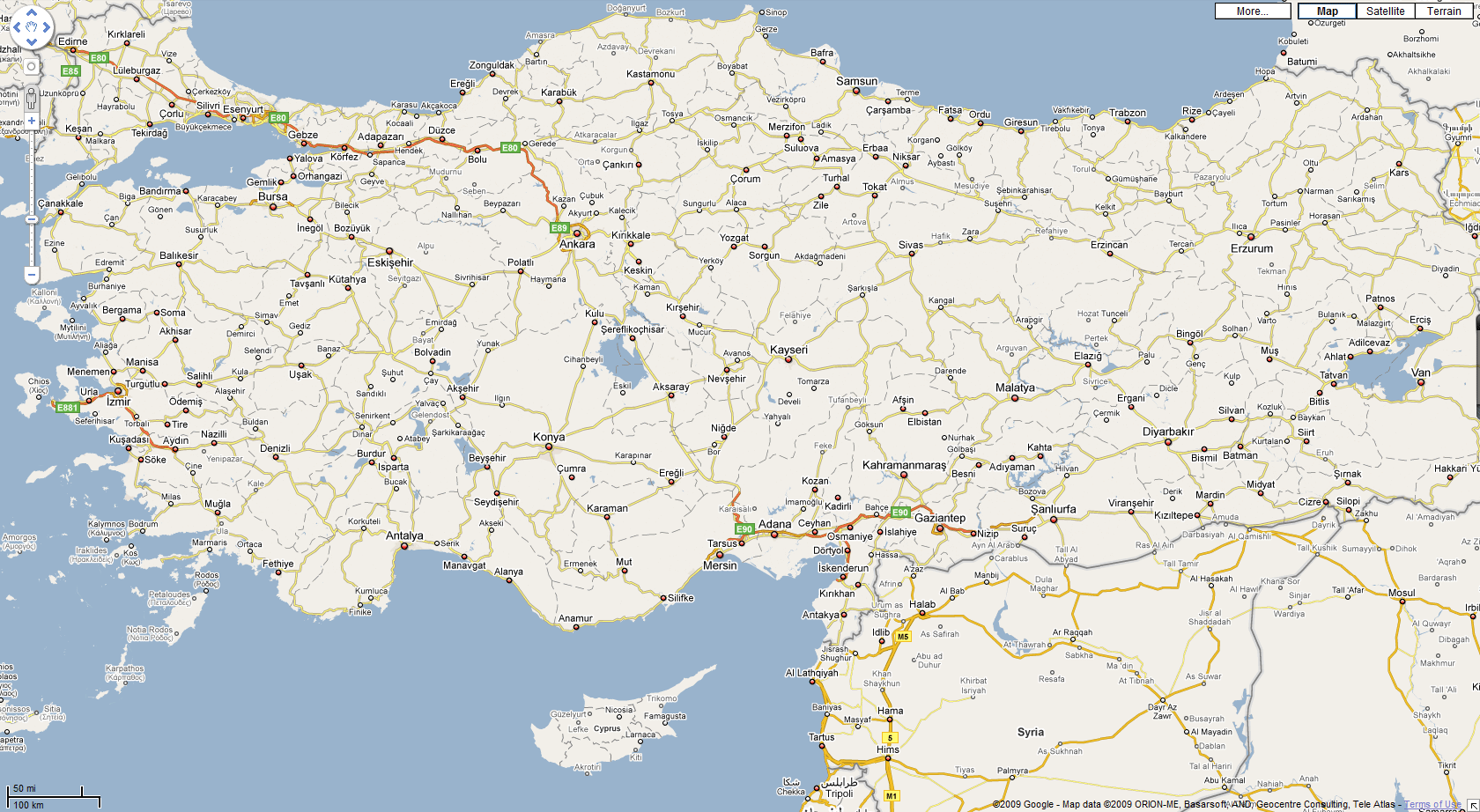
Turkey, officially known as Türkiye, occupies a remarkable position between Europe and Asia. Its territory stretches from the Balkans and the Aegean coast to the Caucasus-facing northeast and the borders of the Middle East. That geography has shaped the country’s history, food, architecture, trade routes and regional identities for thousands of years.
For travelers, this diversity means that “Turkey” is not one uniform destination. Istanbul feels very different from Cappadocia; the Mediterranean coast differs from the Black Sea; and the landscapes of eastern Anatolia contrast sharply with the resort towns of the southwest. Before planning an itinerary, it helps to understand the country’s main regions and cultural background.
Where Is Turkey?
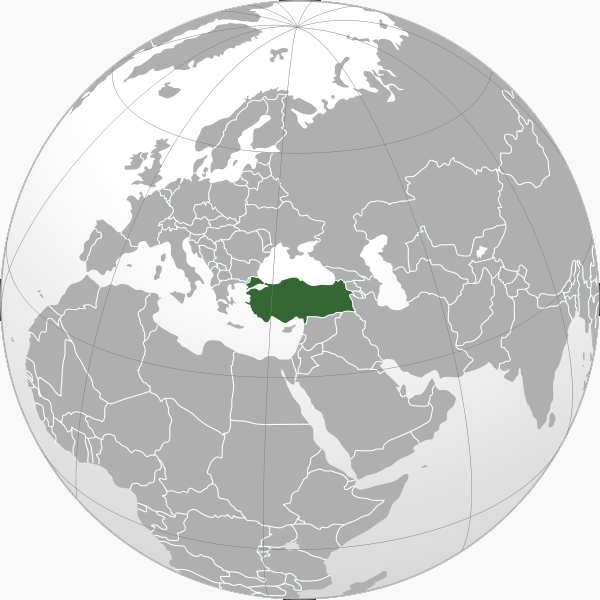
Most of Turkey lies in Anatolia, also called Asia Minor, while a smaller portion known as Eastern Thrace lies in southeastern Europe. The Bosphorus and Dardanelles connect the Black Sea with the Mediterranean system and have made the area strategically important for centuries.
Turkey borders Greece and Bulgaria to the west and northwest; Georgia, Armenia, Azerbaijan’s Nakhchivan exclave and Iran to the east; and Iraq and Syria to the south. It is bordered by the Black Sea, Aegean Sea and Mediterranean Sea.
The Main Regions of Turkey
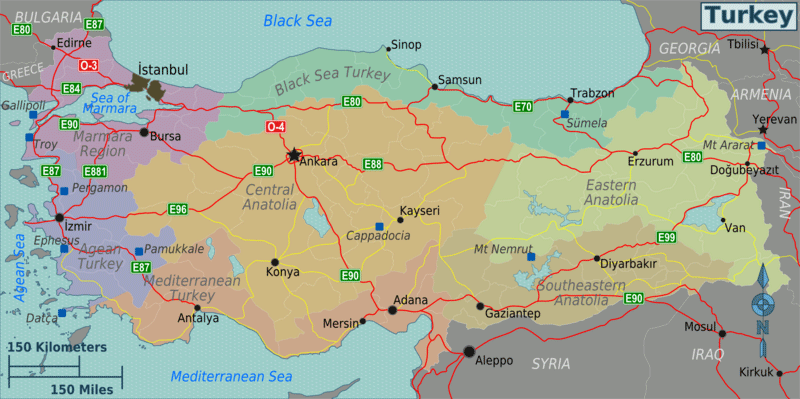
Marmara
Marmara includes Istanbul and parts of northwestern Turkey. It is the country’s most urbanized region and a major center of commerce, transport and culture. Travelers often begin here because Istanbul is one of the principal international gateways.
Aegean
The Aegean region combines olive-growing landscapes, resort towns, archaeological sites and major cities such as Izmir. Ephesus, Çeşme, Alaçatı, Bodrum’s northern approaches and numerous ancient sites make this one of the strongest regions for mixed cultural and coastal travel.
Mediterranean
The Mediterranean coast includes Antalya, Kaş, Kemer, Alanya and areas farther west toward Fethiye. Beaches, resorts, mountains and Lycian ruins sit surprisingly close together, making this region especially attractive for road trips.
Central Anatolia
Central Anatolia is characterized by broad plateaus and continental climate. Ankara, the capital, lies here, as does Cappadocia, one of the country’s best-known landscapes.
Black Sea
The Black Sea region is greener, wetter and more mountainous than many visitors expect. Tea-growing areas, forested slopes, historic towns and highland settlements create a distinct travel experience.
Eastern and Southeastern Anatolia
These regions contain some of the country’s most dramatic mountain scenery and important archaeological and cultural sites. Travel distances can be long, so itineraries require more planning than in the western tourism corridors.
A Brief Historical Overview
Anatolia has been home to many civilizations, including Hittite, Greek, Roman, Byzantine, Seljuk and Ottoman societies. Ancient cities, religious monuments and trade routes remain visible throughout the country.
Constantinople, now Istanbul, served as the capital of the Byzantine Empire and later the Ottoman Empire. The Republic of Turkey was founded in 1923, with Ankara chosen as the capital. Modern Turkey combines republican institutions, rapid urban development and deep regional traditions.
Language
Turkish is the official language. English is commonly encountered in major tourist areas, hotels and many tourism businesses, but it is much less predictable in smaller towns. Learning a few Turkish phrases is appreciated and can make everyday interactions easier.
For practical information such as currency, emergency numbers, time zone and plugs, see Turkey Fast Facts.
Culture and Everyday Life
Hospitality is an important part of social life, and visitors are often offered tea as part of ordinary conversation. Family ties remain significant, while large cities also have highly modern and cosmopolitan lifestyles. Dress varies widely by location, setting and personal preference.
Religious and secular traditions coexist. Most of the population is Muslim, but Turkey is a secular republic. Travelers visiting mosques should dress respectfully, remove shoes where required and avoid interrupting prayer.
Food as a Part of Regional Identity
Turkish cuisine reflects geography and migration. Aegean cooking is associated with olive oil, herbs and vegetables; the southeast is known for richly seasoned meat dishes and sweets; the Black Sea has its own seafood and corn-based traditions; and Istanbul brings together influences from across the country.
Our Turkish Food & Drinks guide explains what to try and how dining differs by region.
What Is Turkey Known For?
Internationally, Turkey is associated with Istanbul’s skyline, Cappadocia’s rock formations and balloons, Mediterranean beaches, Ottoman architecture, ancient sites such as Ephesus, Turkish coffee, tea culture, carpets, ceramics and one of the most varied cuisines in the eastern Mediterranean.
Its appeal is broader than these icons. Travelers who move beyond the most famous stops discover local markets, small archaeological sites, mountain landscapes, village traditions, contemporary art and regional food cultures.
Travel Tip: Use Turkey’s regions to plan your route. Grouping nearby destinations—such as Istanbul and Marmara, Cappadocia and central Anatolia, or Antalya and the Mediterranean coast—usually creates a smoother itinerary than jumping repeatedly across the country.
Landscape and Natural Diversity
Turkey’s landscapes change quickly. The west has fertile Aegean valleys and olive-growing areas; the south combines Mediterranean coastline with the Taurus Mountains; central Anatolia is dominated by plateau landscapes; the Black Sea has dense vegetation and steep, humid mountains; and eastern Turkey rises to high plateaus and rugged peaks. These differences influence architecture, agriculture, food and even the pace of daily life.
Religion and Secular Public Life
Islam is the majority religion, yet Turkey’s public life includes a wide range of secular and religious lifestyles. Visitors will encounter mosques as active places of worship as well as historic monuments. During prayer times, some spaces may be temporarily less convenient for sightseeing. Modest clothing and quiet behavior are appropriate in active religious sites.
Turkish Hospitality
Hospitality is often expressed through tea, food and conversation. In smaller towns, a simple commercial interaction may turn into a longer social exchange. Visitors do not need to accept every invitation, but polite conversation and a few Turkish words are usually appreciated.
Contemporary Turkey
Modern Turkey is highly urbanized and digitally connected. Istanbul, Ankara and Izmir have contemporary art, fashion, technology and food scenes, while resort areas have international tourism infrastructure. At the same time, regional traditions remain visible in markets, family life, craft production, festivals and local cuisine.
Where to Go Next
If you are deciding where to travel first, continue with Top Destinations in Turkey. For activity ideas, use Things to Do in Turkey, and return to the main Turkey Travel Guide for complete trip planning.