
Sign in
For Photos4Travel editors and team members.
Peru · Machu Picchu
Machu Picchu Tickets, Circuits and How to Get There
The first Machu Picchu decision is the route printed on your entry ticket. It determines whether your visit concentrates on the upper panorama, the principal urban ruins or a lower circuit with an optional mountain climb. The train gets you to Machupicchu Pueblo, also called Aguas Calientes; it does not deliver you to the archaeological entrance. Once those two distinctions are clear, the booking becomes much easier to organize.
For most first-time visitors who want a substantial walk through the city, start by comparing Circuit 2 routes 2-A and 2-B. Choose an upper-terrace route if the wide panorama is your main priority, or a specifically named mountain route if you want that additional climb. Book the actual admission before you buy a nonrefundable train itinerary, and check every package’s inclusions rather than relying on the words “Machu Picchu tour.”
Which Machu Picchu circuit should you book?
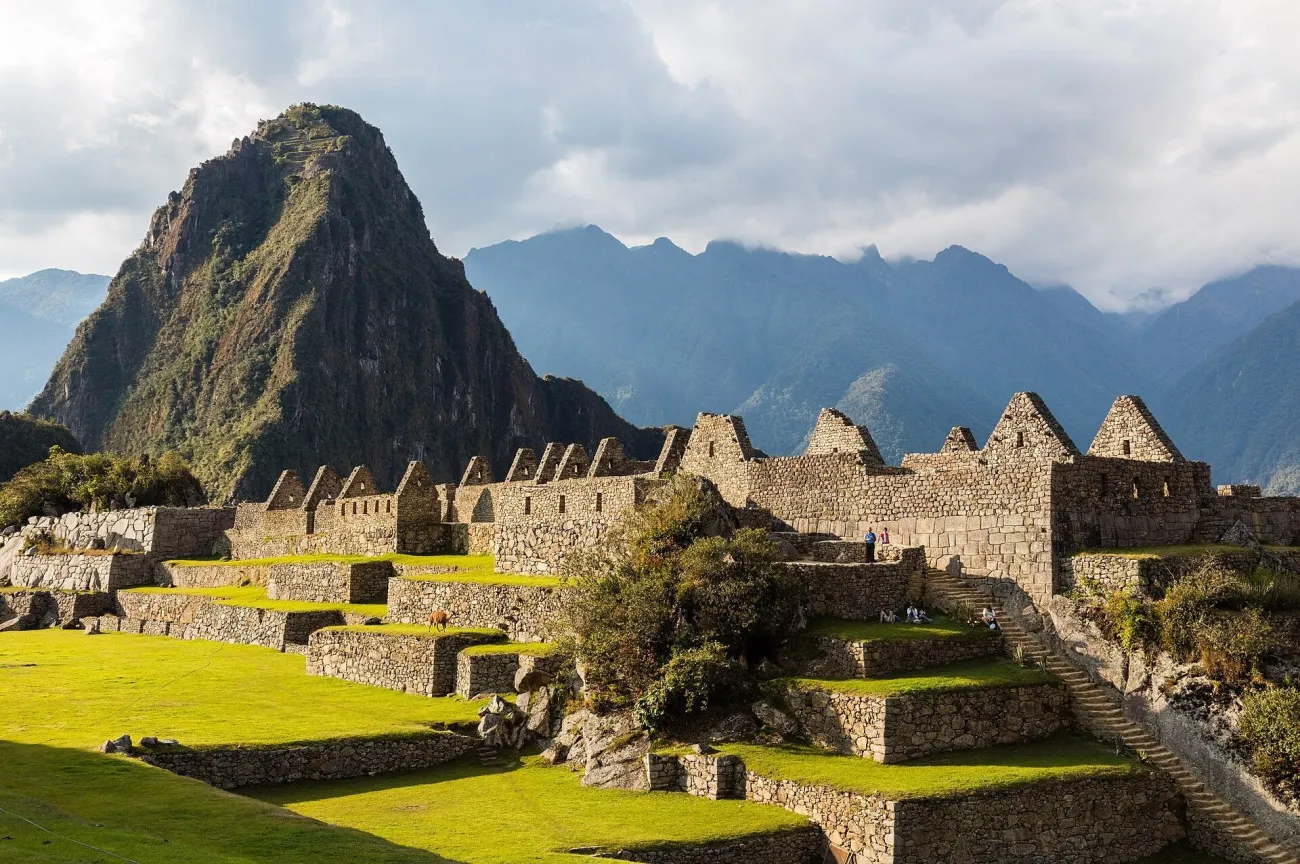

The current arrangement has three circuits and ten routes. The Ministry of Culture’s circuit page links the official maps. Read the map for the route actually available on your date; a photograph on a reseller’s page is not evidence that its ticket reaches that viewpoint.
On small screens, swipe horizontally to read the whole table.
| Circuit | Routes | Why choose it? | Check before paying |
|---|---|---|---|
| 1: Panoramic | 1-A Machupicchu Mountain; 1-B Upper Terrace; seasonal 1-C Intipunku and 1-D Inca Bridge | Upper landscape views, with an additional walk on selected tickets | The upper panorama does not make this the same urban visit as Circuit 2 |
| 2: Classic | 2-A Designed Route; 2-B Lower Terrace | A first visit centered on the principal archaeological circuit | Compare each mapped path and photographic terrace; they are specific routes |
| 3: Royalty | 3-A Waynapicchu; 3-B Designed Route; seasonal 3-C Great Cavern and 3-D Huchuypicchu | Lower archaeological sectors or the explicitly booked additional objective | Do not expect the upper-terrace viewpoint or another mountain to be included |
The official 2-A map shows a maximum stay of two hours and thirty minutes, with a controlled route passing viewpoints and archaeological sectors. This is not an unrestricted all-day ticket. Position names on the map do not imply that every interior structure is open or that you can leave the path to find a different camera angle.
If your preferred route has sold out, decide what matters before taking the remaining ticket. A traveler mainly seeking the panorama may be happy with 1-B; someone expecting to explore the urban ruins may prefer a different date. Buying two separate visits can serve two genuinely different interests, but it also means coordinating two entry times, the exit/re-entry arrangements and the return train. Ask about those details before committing.
Buy and verify the official entry ticket
Use the Ministry of Culture’s TuBoleto Machupicchu page. Have every traveler’s passport details ready, choose the route and entry time, check the visitor category and complete payment within the window shown. The September 2026 system reform replaced the former three-hour unpaid reservation with a direct sale and a 15-minute payment window, described in the official announcement reported by the state news agency. Do not follow older instructions telling you to pay later that night.
Tickets identify the visitor, date, hour and circuit. The current rules prohibit changing the name or visit date; an obvious passport-number error may be corrected once. Unused tickets generally expire, with exceptions for properly documented force majeure. Carry the original valid identity document used for the booking. These conditions are set out in RM 334-2026-MC.
After an agency books for you, ask for the named ticket, not just a tour confirmation. The official ticket-verification tool accepts the document number plus a ticket code or visit date. The DDC Cusco’s 4 November 2026 notice confirms that it covers agency-purchased entries too. Check the route, date and spelling while there is time to resolve a problem.
Keep a copy of the ticket on your phone and a separate accessible copy of the booking details. If payment appears to have failed after your bank reports a charge, inspect the purchase history or contact official support before trying repeatedly. A second train booking will not help if the actual difficulty is an unconfirmed admission ticket.
What the Machu Picchu trip actually costs
Compare the whole journey rather than the headline admission. A lower-priced train at an inconvenient hour can require another hotel night or an expensive private transfer; an apparently inclusive tour may still exclude the final bus. Make a written list for each traveler, including children, and check whether amounts are in soles or US dollars.
On small screens, swipe horizontally to read the whole table.
| Component | What to verify |
|---|---|
| Archaeological admission | Exact route, date, entry hour, age/nationality category and any payment charge |
| Natural-area charge | Whether the SERNANP sanctuary charge is already included in your checkout or package |
| Train | Departure station, return station, class, baggage and change terms |
| Road transfers | Hotel–station connections, and whether a bimodal bus leg is included |
| Final shuttle | Town–citadel one-way or return ticket; do not assume the train fare covers it |
| Guide and overnight stay | Private/shared guiding, meeting point, hotel night and meals actually included |
As a dated reference, the official tariff gives a general rate of S/200 for Route 3-A Waynapicchu and 3-C Great Cavern; Route 3-D is S/152. The published tariff resolution is a reference for these routes, while your live purchase sets the payable amount and eligibility. The separate 2026 SERNANP sanctuary tariff lists S/11 for a foreign adult. Check inclusion before adding it again; neither figure covers your entire train-and-bus journey.
Cusco or Ollantaytambo: where should you start?
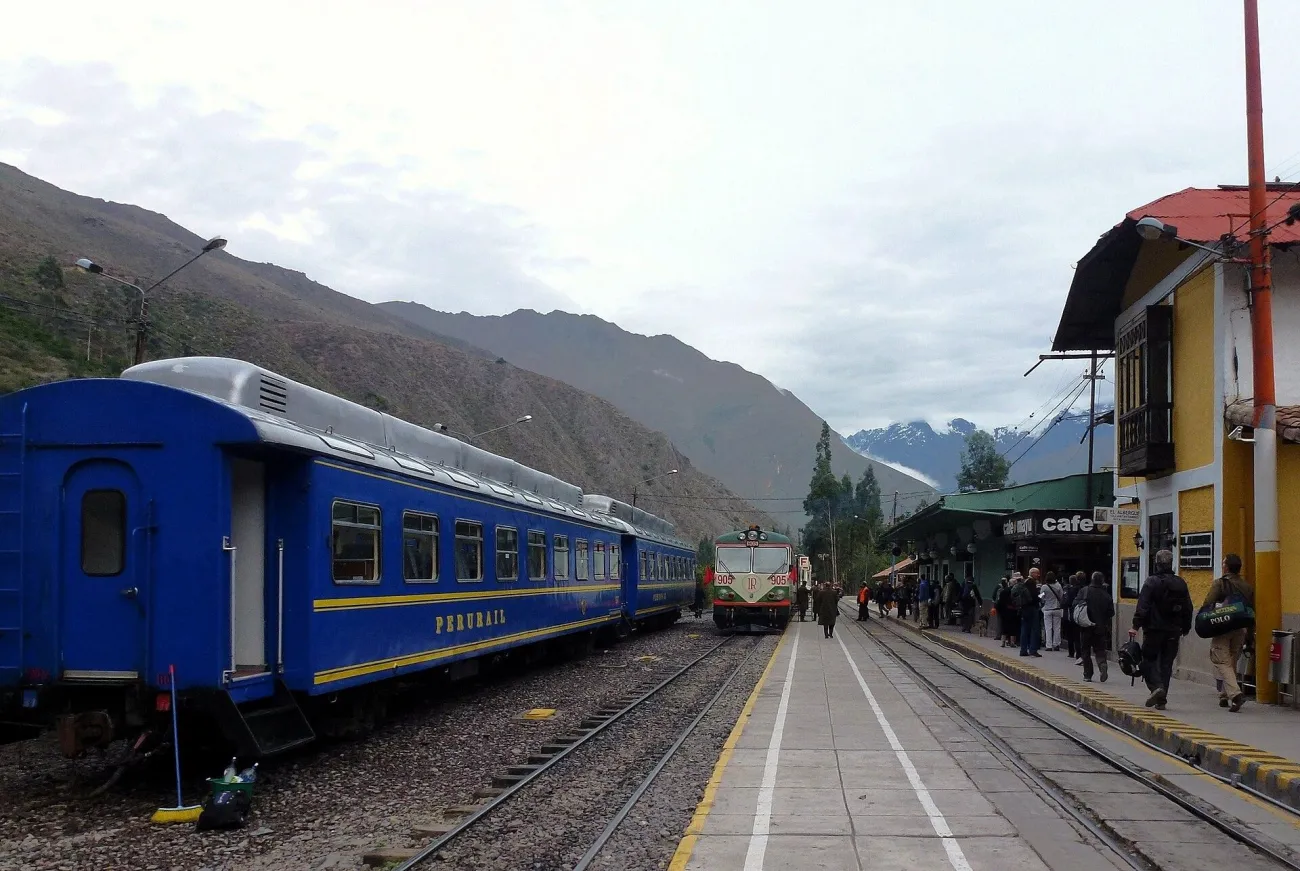

Ollantaytambo works well if you are already sleeping in the Sacred Valley. You can finish a valley stay, leave the main suitcase with your hotel by arrangement and take a small bag to Machupicchu Pueblo. It reduces the need for an extremely early road transfer from Cusco, although you still need to allow time to reach the station and board.
If your next night is in Cusco, agree how you will collect that stored luggage on the return road transfer. Storage at a valley hotel does not include delivery to a different city.
From Cusco, compare a genuinely direct train with a bimodal journey that includes a road transfer to the railway. Read the starting address and the arrival address on both tickets. A return advertised as “Cusco” may finish after a bus transfer; a ticket ending in Ollantaytambo leaves you with a separate road journey. Use PeruRail or Inca Rail to check the service for your actual dates.
The familiar scenic train classes are different comfort choices, not different admission rights. A bigger window does not include Machu Picchu unless the purchased package explicitly says so. Decide what you want to spend on the train after your entry time is secure, and remember that very late returns make an early flight the following morning less comfortable.
Pack to the operator’s current service conditions. PeruRail’s updated luggage page distinguishes an 8kg backpack from a 12kg carry-on allowance on applicable services; its route-specific rules matter. Inca Rail’s rail terms list one 8kg bag up to 118 linear centimeters. Neither policy means a full-size suitcase can be carried into the archaeological site.
Machupicchu Pueblo: the final bus and the overnight decision
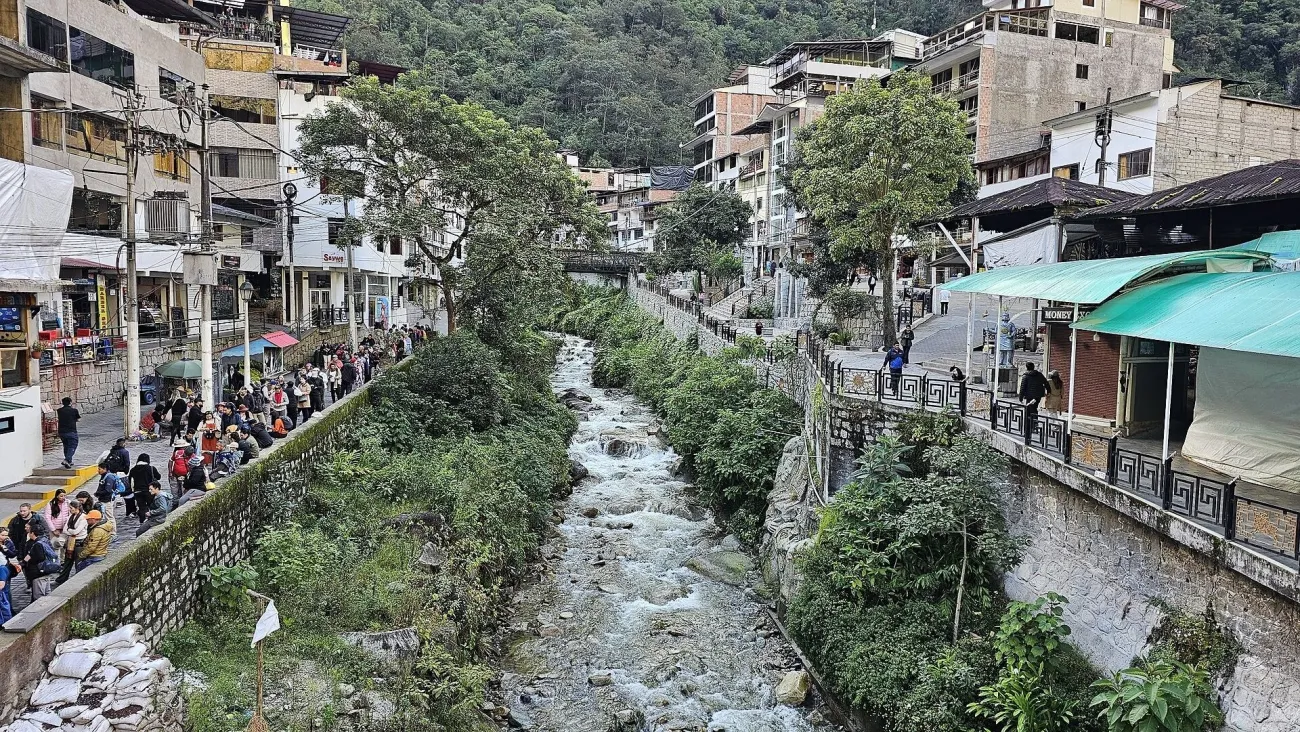

A night in town is the practical choice for an early entry. Arrive the previous afternoon, find the bus departure area, confirm the ticket arrangements and eat before turning in. Choose the room for sleep rather than a view alone: proximity to restaurants and trains can bring noise. Keep the next morning’s passport, ticket and day bag ready.
The road shuttle takes roughly half an hour, but queueing and boarding are additional. PeruRail’s current FAQ confirms that ordinary Expedition and Vistadome tickets exclude the final bus and archaeological admission. The bus purchase address linked by the rail operator is Consettur’s booking site; confirm the service, fare and instructions when buying.
Walking up can save a bus fare but changes the effort of the day. The approach is a sustained climb, followed by more steps inside the site, and wet conditions can make it less attractive. It is a poor default for someone who is already tired, ill or short of time. If you choose to walk, ask locally about the pedestrian access and allow a generous margin before the printed entry hour.
A same-day journey from Cusco is possible with suitable confirmed transport and entry times. It is best regarded as a long excursion rather than a way to save all the time associated with an overnight. Compare the actual pickup and return hours, not just the time spent among the ruins. Leave the rest of that day free.
Mountain routes and the 2027 timetable change
Waynapicchu, Machupicchu Mountain and the Great Cavern are additional physical objectives, not interchangeable scenic viewpoints. Choose them only if you want the climb or extended walk, have suitable fitness and footwear, and are comfortable with the route’s stairs, exposure and weather. A general citadel ticket cannot be upgraded by simply walking to a mountain checkpoint.
For visits from 1 January 2027: RM 407-2026-MC changes alternate-route controls. Mountain and Great Cavern entry closes at 10:00, with noon summit/cavern return limits; the Machupicchu Mountain route has a combined maximum of 6.5 hours and Waynapicchu 5.5 hours. Visits through 31 December 2026 explicitly follow the previous rules. Match your ticket’s main entrance time with its separate route-control window.
Does the Inca Trail include the same visit?
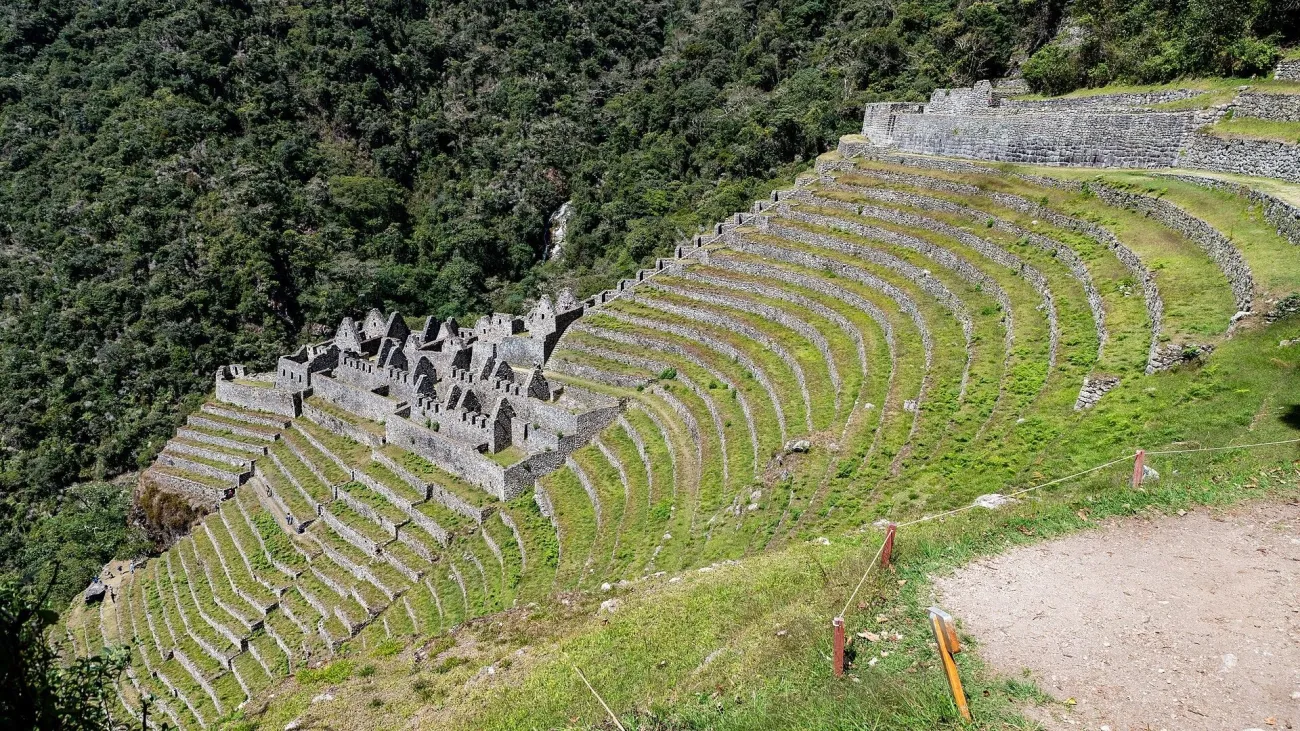

The classic Inca Trail is a four-day walking journey, while the shorter option is commonly arranged over two days. Neither should be added casually to an already full train itinerary. Ask the operator for the exact trail route, the daily walking profile, the named permit and the Machu Picchu visit included at its end.
The current official rules link Inca Trail arrivals to Route 3-B. Trail permits are purchased for named clients through registered agencies, and their validity includes the specified Machu Picchu visit. See the Inca Trail purchase rules. Do not assume the package also includes a separate Circuit 2 visit or a Waynapicchu climb; arrange any additional admission explicitly.
What to carry and what to leave behind
Carry a compact day bag, drinking water according to the current entry instructions, sun protection and rainwear that leaves your hands free. The official conduct rules prohibit bags larger than 40 × 35 × 20cm, umbrellas, tripods and camera extensions, drones, food and utensils, and baby strollers. Use a poncho instead of an umbrella and leave surplus luggage in confirmed storage.
For photographs, choose a safe place on the permitted path, make the image and move on when others need to pass. Do not lean on walls or step onto agricultural terraces for a cleaner frame. Cloud is part of a mountain visit; a very early entry does not guarantee a clear panorama, and waiting for the view cannot override the route’s time limit.
If you need mobility assistance, discuss the precise route and any equipment exception before purchasing. A lower route can reduce some climbing, but “lower” does not mean level, step-free or suitable for every visitor. Ask a guide or operator to explain actual surfaces and stair sections, rather than accepting a general assurance that Machu Picchu is easy.
Machu Picchu planning questions
Which circuit is best for a first visit?
Compare 2-A and 2-B first if your priority is a substantial archaeological walk. Choose 1-B if the high panoramic terrace is the main objective. Review the official map before paying; the routes do not provide identical access.
Do I need a guide for the ordinary citadel visit?
The September 2026 amendment recommends a guide for the ordinary visit. A knowledgeable guide can be valuable for understanding the site and managing the permitted route. The Inca Trail is a separate regulated activity with its own operator and guiding requirements.
Can I change my Machu Picchu ticket date?
The current ordinary-ticket rules do not permit a date or holder-name change. An obvious passport-number error may be corrected once, and documented force majeure has specific exceptions. Check the official conditions before paying.
Should I rely on buying tickets after reaching Aguas Calientes?
In-person inventory exists, but it is a poor foundation for a tight itinerary. The desired circuit or time may be unavailable. Check the official live availability page and allow flexibility; do not assume arriving in town guarantees the next morning’s route.
Does a train ticket include the bus and entry?
An ordinary train ticket generally covers rail travel only. Check archaeological admission, the town–citadel bus, road transfers and guide separately. Packages may include some or all of them, but the written inclusions and named admission ticket should establish that.
Last updated: