
| Fact | Meaning for a visitor |
|---|---|
| Currency: MYR / RM | Budget in ringgit and use a current conversion |
| Time: UTC+8 | No seasonal clock change |
| National capital: Kuala Lumpur | Different from administrative Putrajaya |
| Country code: +60 | Save a full international-format contact |
| Two main land areas | Plan the peninsula and Borneo separately |
| Type G plugs | Check device voltage; an adaptor is not a converter |
Swipe or scroll the table sideways if needed.
Flag
These facts explain the practical basics of a Malaysia visit and what they mean on the ground. Keep the national overview separate from current rules: immigration, transport timetables, local warnings and prices should be checked through their responsible authorities. Malaysia is divided between the peninsula and northern Borneo, so a single country label does not make every journey short.
Country Overview
Malaysia is in Southeast Asia and consists of Peninsular Malaysia and territories on northern Borneo. Kuala Lumpur is the national capital; Putrajaya is the federal administrative centre. The country uses Malaysia Time, UTC+8, without a seasonal clock change. The international telephone code is +60.
National area and population figures depend on the statistical reference date and method, so use the Department of Statistics Malaysia for a current count rather than treating an approximate travel-page figure as a live statistic.
Geography & Regions
Malaysia consists of two main regions separated by the South China Sea:
- Peninsular Malaysia (West Malaysia): Includes major cities like Kuala Lumpur, Penang, and Johor Bahru.
- East Malaysia (Borneo): Comprises the states of Sabah and Sarawak, known for their lush rainforests and wildlife.
The country’s terrain ranges from highland tea plantations in the Cameron Highlands to the pristine beaches of Langkawi and coral reefs of Sabah.
Language & Communication
- Official Language: Bahasa Malaysia (Malay)
- Widely Spoken: English, Mandarin, Tamil, and various Chinese dialects
- English Proficiency: High — especially in tourist areas, hotels, and major cities
Malay is easy to pick up, with simple greetings like “Selamat datang” (welcome) and “Terima kasih” (thank you) helping you connect with locals.
Religion & Culture
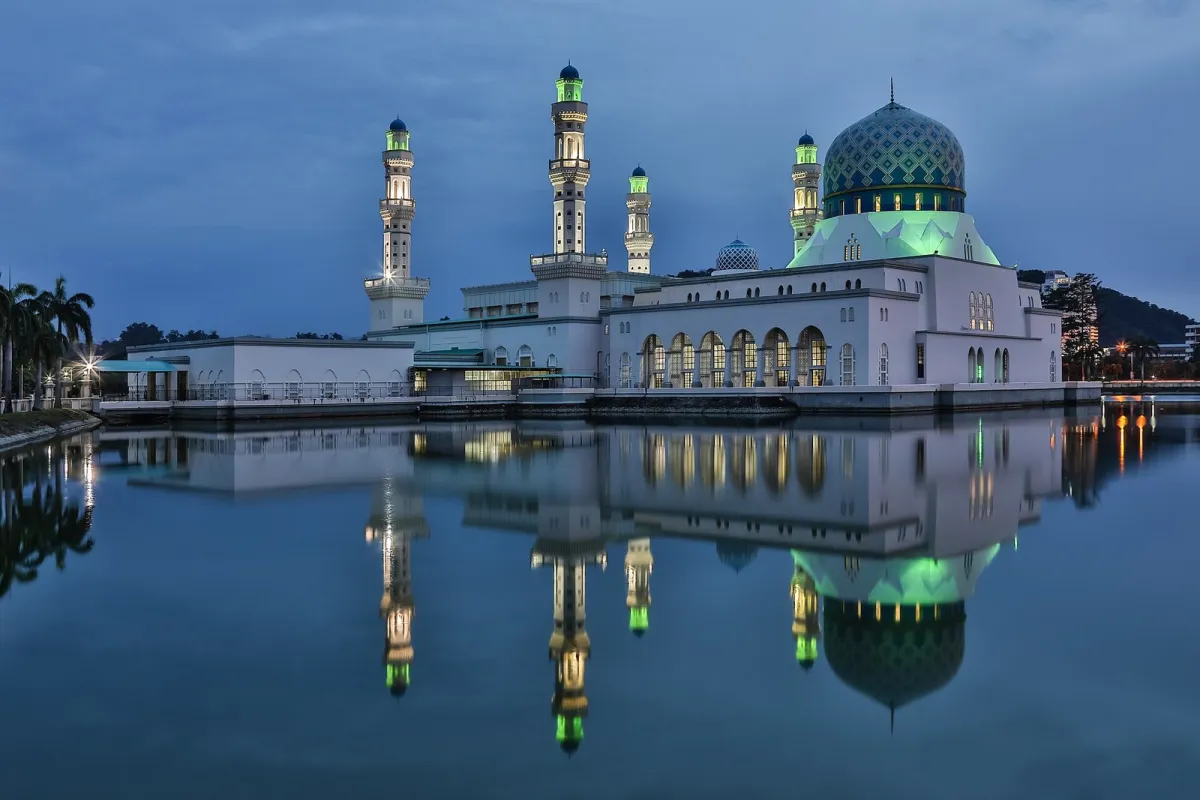
Malaysia is known for its cultural and religious diversity. The main religions include Islam, Buddhism, Christianity, and Hinduism. Festivals from all faiths — like Hari Raya Aidilfitri, Chinese New Year, Deepavali, and Christmas — are celebrated nationwide.
Respecting religious customs is important, especially when visiting temples or mosques. Dress modestly, remove shoes before entering holy sites, and avoid public displays of affection.
Government & Politics
- Type: Federal Constitutional Monarchy
- Head of State: Yang di-Pertuan Agong (King of Malaysia)
- Head of Government: Prime Minister
- Administrative Capital: Putrajaya
Malaysia is divided into 13 states and 3 federal territories, each with its own local government and unique cultural identity.
Economy
The ringgit, MYR or RM, is the currency used for ordinary travel budgeting. Prices vary by location, season and product. A remote guided stay can cost more than a city hotel because of meals, guiding and transfers. The Money guide explains a short-trip budget; Cost of Living covers monthly housing and related costs.
Climate & Weather
Malaysia has an equatorial climate with rain and humidity throughout the year. The northeast monsoon generally runs November to March and the southwest monsoon late May to September, with important regional differences. Use METMalaysia for climate context and current warnings; a travel guide is not a live forecast.
Transportation & Connectivity
Malaysia has excellent transportation infrastructure, connecting major cities and tourist hubs with highways, rail, and air routes.
- Main Airport: Kuala Lumpur International Airport (KLIA)
- Domestic Airlines: Malaysia Airlines, AirAsia, Firefly
- Rail: KTM (Keretapi Tanah Melayu) and ETS (Electric Train Service)
- Urban Transit: LRT, MRT, and monorail systems in Kuala Lumpur
Get more info in our Malaysia Transportation Guide.
Travel Documents & Visa
Check the Immigration Department’s rules for your passport nationality and purpose. Visa requirements, MDAC and the permission granted at entry are separate. Keep the passport and entry evidence available when travelling to Sabah or Sarawak as well as for international crossings.
Health & Safety
Review current official advice for the actual itinerary, arrange appropriate insurance and seek individual travel-health advice where necessary. Cities, mountains and remote islands have different access to help. The emergency number is 999; keep your accommodation address and insurer’s contact offline.
Currency & Tipping
Budget in ringgit and check the current conversion offered by your payment provider. Cards can be convenient in larger businesses, but cash remains useful for smaller purchases. Read the final bill for taxes or service charges and do not assume a fixed tipping percentage is mandatory everywhere.
Electricity & Internet
Type G plugs and a 230 V, 50 Hz supply are commonly used. Check your device’s voltage range and bring the correct adaptor. Confirm internet and charging arrangements with remote accommodation; neither nationwide coverage nor continuous power at every lodge should be assumed.
National Symbols
- Flag: “Jalur Gemilang” (Stripes of Glory)
- National Flower: Hibiscus (Bunga Raya)
- National Animal: Malayan Tiger
- National Motto: “Bersekutu Bertambah Mutu” (Unity is Strength)
Public Holidays & Festivals
Malaysia’s multicultural society celebrates a wide range of festivals throughout the year. Major public holidays include:
- Hari Merdeka (Independence Day): August 31
- Hari Raya Aidilfitri: End of Ramadan
- Chinese New Year: January or February
- Deepavali: October or November
- Christmas: December 25
Interesting Facts About Malaysia
Malaysia has thirteen states and three federal territories. Sabah and Sarawak are on Borneo, an island shared with Brunei and Indonesia. Penang Island is separate from its mainland railway gateway at Butterworth. These are useful distinctions for a traveller building a route, rather than unsupported superlatives about the country.
What the basic facts mean for your trip
One time zone simplifies domestic scheduling, but the peninsula and Borneo remain far apart. A flight’s short duration does not include travel to the airport, check-in, baggage and the next road transfer. Use the same local date and time when checking an overnight arrival or a final departure deadline.
Malaysia’s multilingual setting is helpful for visitors, but English should not be assumed in every transaction. Save addresses in the format provided by the accommodation and keep the contact number. A driver may recognise a landmark or local name more easily than a translated description.
The national map also explains why a city name is not a complete arrival plan. Butterworth serves Penang’s mainland railway gateway; a George Town hotel still requires the crossing and local journey. Similarly, flying to Kota Kinabalu does not place you beside every wildlife experience in Sabah.
Names you will see on bookings
Kuala Lumpur is often shortened to KL; Kuala Lumpur International Airport is commonly shown as KLIA, with separate terminals. Check the current terminal printed on your booking. A flight using another airport in the wider region needs its own ground plan rather than the KLIA rail directions.
Melaka is also widely written as Malacca. George Town is the historic city on Penang Island, while Penang can describe the wider state. Sabah and Sarawak are Malaysian states on Borneo, and Brunei is a separate country. These distinctions help avoid selecting accommodation or transport with the wrong geographic assumption.
A practical arrival checklist
Before departure, verify passport and entry requirements, the first hotel address and the onward journey from the airport. Keep the visa or arrival-card evidence applicable to you, the return booking and a second payment method accessible. Do not rely on an immigration duration quoted for another nationality.
For a remote stay, confirm meals, transfers, charging, communication and emergency arrangements directly. A city-oriented list of “quick facts” cannot establish these details. Good preparation uses the national basics as a starting point, then asks precise questions about the place you are actually visiting.
Travel Tip:
Save the relevant address, operator contact and return plan offline before leaving a reliable connection.
Planning sources
Use the current authority or operator information for details that can change.
Frequently Asked Questions
What time zone does Malaysia use?
Malaysia uses UTC+8 without a seasonal clock change. Still check the correct local date for an overnight arrival and the departure deadline on the booking.
Is Putrajaya the same place as Kuala Lumpur?
They are distinct places. Kuala Lumpur is the national capital and Putrajaya is the federal administrative centre; check the actual address for appointments and travel.
Are quick facts enough to confirm entry rules?
No. Use the Immigration Department’s current guidance for your passport and purpose. Visa, MDAC and the stay recorded at entry are separate checks.