
Sign in
For Photos4Travel editors and team members.
Dominican Republic · Photos & Photo Spots
Dominican Republic Photo Spots: Cities, Lagoons & Coast
The most rewarding Dominican Republic photo spots give you a reason to look beyond a single wide beach view. Historic façades, public squares, a coastal fortress and limestone lagoons produce different pictures and require different approaches. Choose a few places that fit your route, then leave time to wait for a clearer composition rather than rushing between them.
The five locations below are specific starting points. The framing suggestions are editorial ideas, not claims about where a photographer stood or what conditions you will find. Current opening, weather and local rules take priority. For the regional geography, use Map & Regions.
Choose a subject and the access it requires
Swipe or scroll sideways to compare the full table.
| Photo spot | A useful subject | Planning consideration |
|---|---|---|
| Alcázar de Colón and Plaza España | Stone architecture and the relationship with the square | Separate exterior views from museum admission |
| Parque Colón | A city square and cathedral surroundings | Keep the public space usable for others |
| San Felipe Fortress | Coastal fortification and the sea setting | Check interior opening and permitted positions |
| Los Tres Ojos | Limestone, vegetation and lagoon reflections | Stairs, low light and large brightness contrasts |
| Las Terrenas coast | Beach curves, palms and coastal activity | Use a real entrance and assess sea conditions |
Alcázar de Colón and Plaza España: give the building space
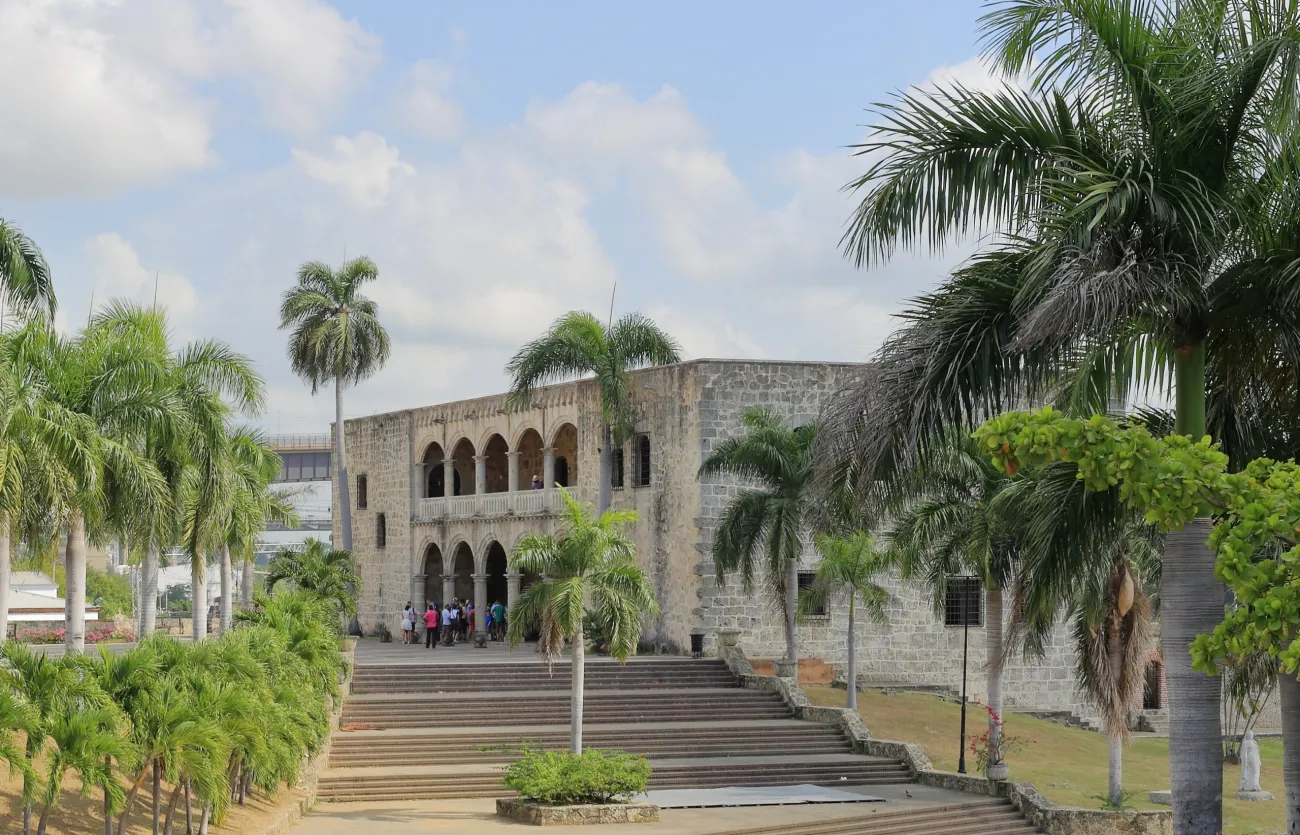
Photo: Martin Falbisoner · Santo Domingo - Alcazar de Colon 02.JPG · CC BY-SA 4.0.
Plaza España lets you photograph architecture as part of a wider place rather than isolating a doorway. The official Santo Domingo guide identifies the Alcázar and square among the Colonial City's principal sights. A wide frame can show the relationship between the stone building, open space and people using it.
Start with the whole scene, then look for a second picture based on repetition, texture or a detail. Check the edges of the frame for signs and objects that compete with the subject. Keeping the camera level can help avoid exaggerated converging verticals; step back when it is safe and permitted instead of forcing an extremely wide view from directly beneath a façade.
Exterior photography and entering a museum are separate plans. Check current access and photography rules if an interior matters to you. A source photograph of an open or unobstructed view does not establish today's works, crowds or entrance arrangements.
Parque Colón: photograph a square that people use
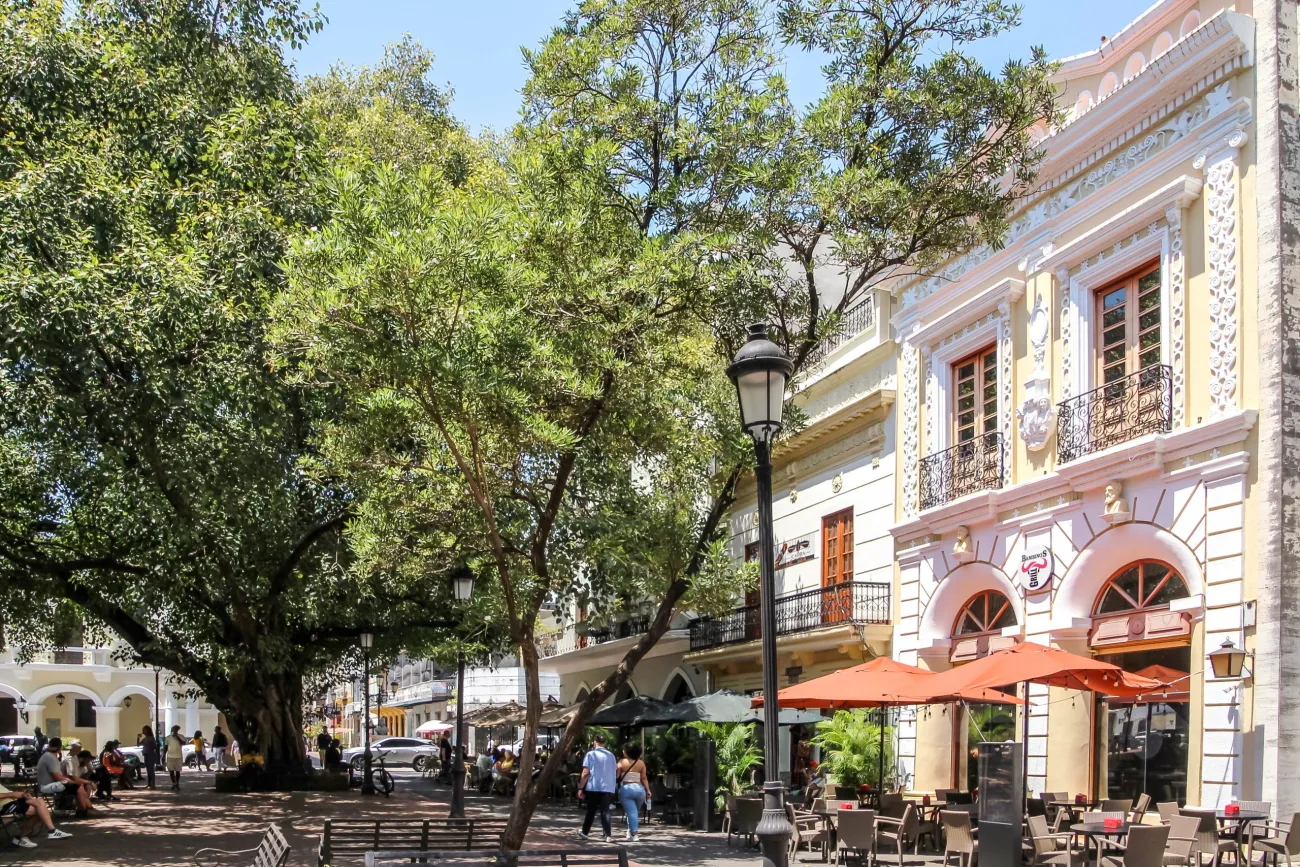
Photo: Dr. Thomas Liptak · Dominican Republic, Santo Domingo, Parque Colón.jpg · CC BY-SA 4.0.
Parque Colón and the cathedral area offer a more intimate city scene than the larger open setting of Plaza España. Include some of the square's life when you want a sense of place, or wait for a simpler view when the architecture is the subject. Both approaches can work without treating other visitors as obstacles.
Try one frame that explains the location and another that concentrates on a smaller relationship: shade against sunlit stone, a tree edge, a building line or a repeated architectural detail. Review the image before moving on. A slightly different position may solve a distracting edge more effectively than heavy editing afterward.
Keep paths and entrances clear, and ask before making a close portrait of someone. If performers or sellers become a principal subject, establish permission and any expected payment before photographing. Around church activity, follow the rules and preserve the space for people attending for reasons other than sightseeing.
You can combine these two Colonial City photo stops with a cultural walk. Do not let photography consume every available hour; a guide or museum visit can add context that changes what you notice when you return with the camera.
San Felipe Fortress: connect the architecture with the coast
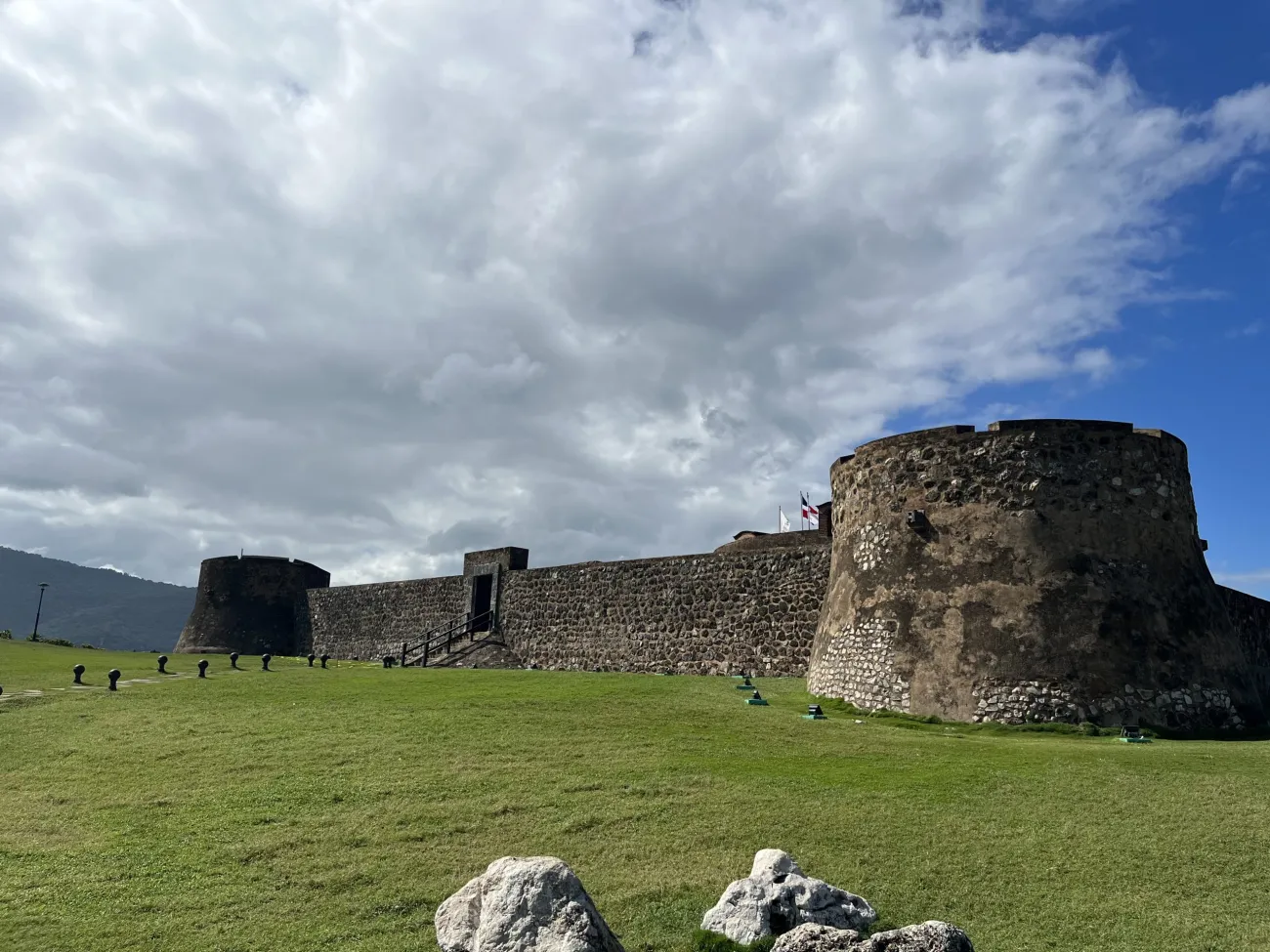
Photo: CareAhLine · Fortaleza de San Felipe DR 1.jpg · CC0 1.0. Resized.
San Felipe Fortress gives a Puerto Plata photo visit a different subject from beach resorts and colorful streets. The official destination page identifies the fortress and the Malecón as separate city attractions. Photograph the fortification in its coastal setting rather than relying only on a tightly cropped wall.
Look for a position that makes the shape of the structure readable and leaves a clear horizon when the sea is included. Use changing clouds or softer light if the day provides them, but avoid making the whole visit depend on a promised sunset effect. A well-composed daytime frame can be more useful than an unsuccessful wait for a particular sky.
Check opening and visitor boundaries before planning elevated or interior views. Do not climb barriers or stand where a wave or drop creates risk for a camera angle. If photographing alongside a city visit, keep equipment manageable and arrange the next transport before the light fades.
Los Tres Ojos: work with contrast rather than against it
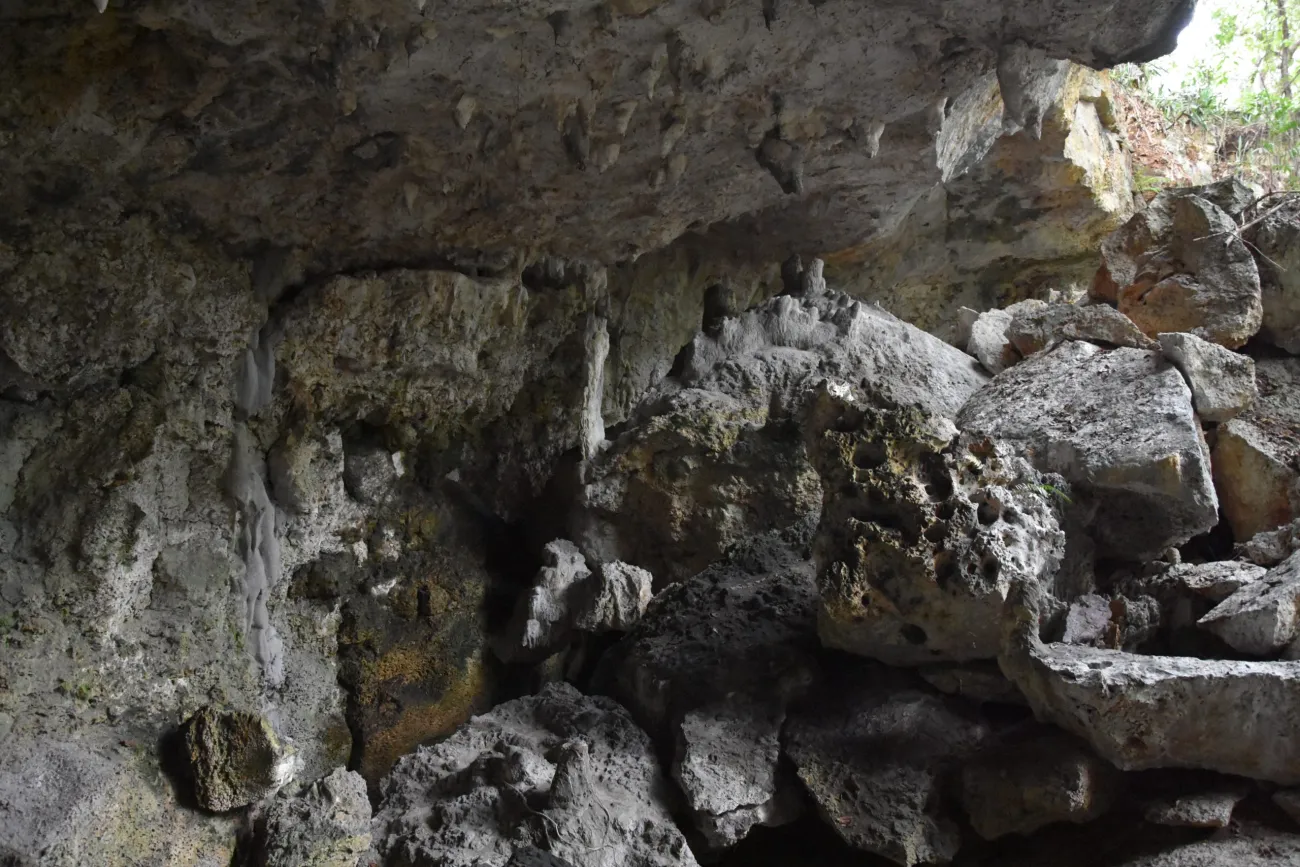
Photo: Phyrexian · Santo Domingo Este - Los Tres Ojos 0856.JPG · CC BY-SA 4.0. Resized.
The official Los Tres Ojos description explains the stairs, caves and paths around freshwater lagoons. Those features produce a photographic challenge: darker rock and vegetation can share the frame with bright openings and reflected light.
Pause where it is permitted and let your eyes adjust before choosing the picture. On a phone, check the brightest area and adjust exposure if the sky or limestone opening loses all detail. Make a second image if necessary rather than assuming the first automatic exposure has captured everything. A tighter frame can avoid an unmanageable bright patch.
Keep a steady grip, protect equipment from moisture and leave the path open. Ask before using a tripod or other equipment that occupies space. The presence of water does not make swimming part of the visit, and a photograph is not a reason to leave the authorized route.
This is an outing in Santo Domingo Este, not another corner of the Colonial City walking circuit. Plan transport separately and discuss stairs or footing before visiting if those affect your group.
Las Terrenas coast: choose a beach with a clear composition
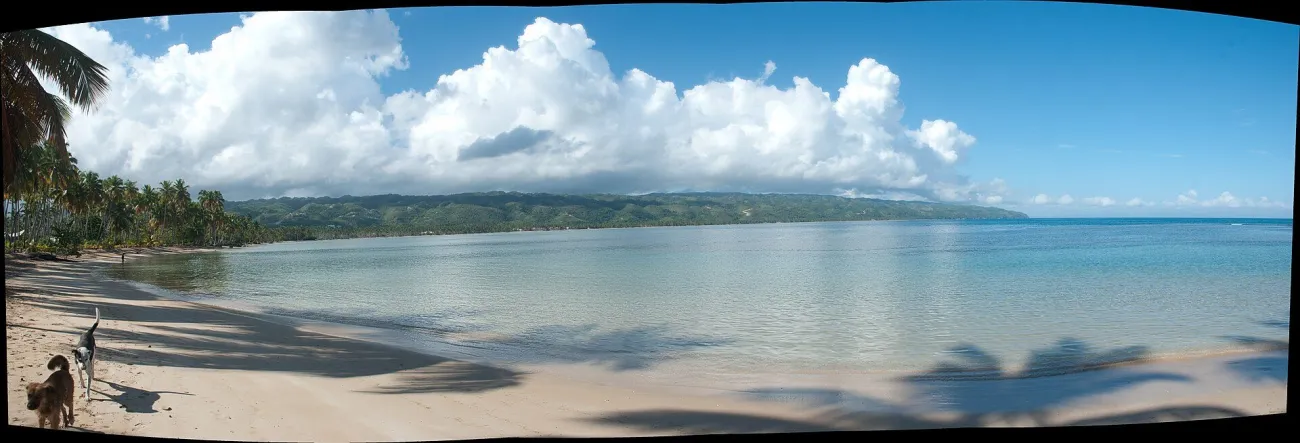
Photo: Max Bosio · Las-Terrenas-Dominican-Republic-Beach-Panoramic.jpg · CC BY 2.0.
The Las Terrenas guide names several beaches, including Bonita, Cosón, Las Ballenas and Punta Popy. Choose the particular shore that fits your stay and access arrangements. A panorama labeled Las Terrenas does not identify every visible stretch as the same beach.
For a wide coastal picture, begin with the horizon level and decide what leads the eye: the curve of the sand, a palm edge or a change in water color. Include a person only when it contributes scale and can be done respectfully. A panoramic frame works best when there is something to read across it, rather than simply more empty sea.
Keep sand and spray away from equipment and watch the water while concentrating on a screen. Avoid walking backward toward waves or roads. Use a legitimate beach entrance, respect hotel boundaries and take all packaging away. If sports or boats are active, stay clear of their launch and landing spaces.
Plan light, equipment and permissions
A phone is enough for many useful travel photographs. Carry the equipment you will actually use comfortably, with charged batteries and a way to back up important images. Take a small cleaning cloth and protection from tropical showers. More gear is not a substitute for a clear subject and a safe position.
For drones, check IDAC's current guidance and the rules of the specific park or property before travel. A small drone or recreational purpose should not be treated as blanket permission to fly anywhere. Commercial work, private access and special equipment may require separate arrangements.
Label your own pictures accurately afterward. Record the place and capture date while you still remember them; do not turn a broad destination name into an invented exact viewpoint. For wildlife and nature, follow the Responsible Travel guidance and avoid handling animals to create an image.
Photography questions
Do I need a professional camera?
No. A phone can handle many city, landscape and detail photographs. Concentrate on composition, exposure, a steady grip and safe positioning.
Can I visit all five spots on one walking route?
No. The Colonial City has two nearby stops here; Los Tres Ojos needs a separate city-area journey, and Puerto Plata and Las Terrenas are different destinations.
May I photograph people freely?
Ask before close portraits, respect a refusal and follow venue or event rules. Keep paths clear and take particular care around children and religious activity.
Can I fly a small drone?
Check current IDAC requirements and the rules for the actual location. Weight alone does not establish permission for a particular flight.
Does a published photograph prove current access?
No. Photographs record a view at the time of capture. Check current opening, visitor boundaries and conditions before planning the same position.
Last updated: