
User login
Map of the Dominican Republic
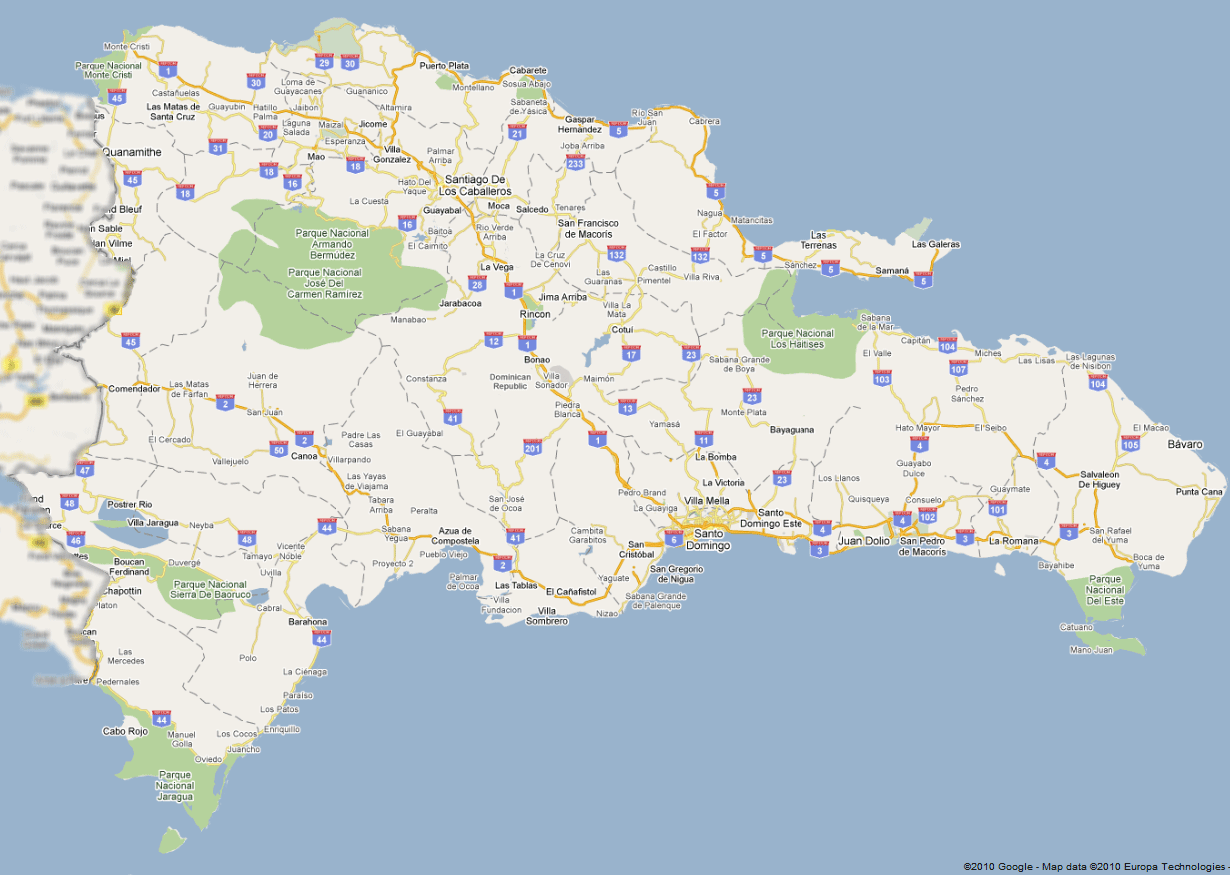
Map of Dominican Republic
Where is the Dominican Republic?
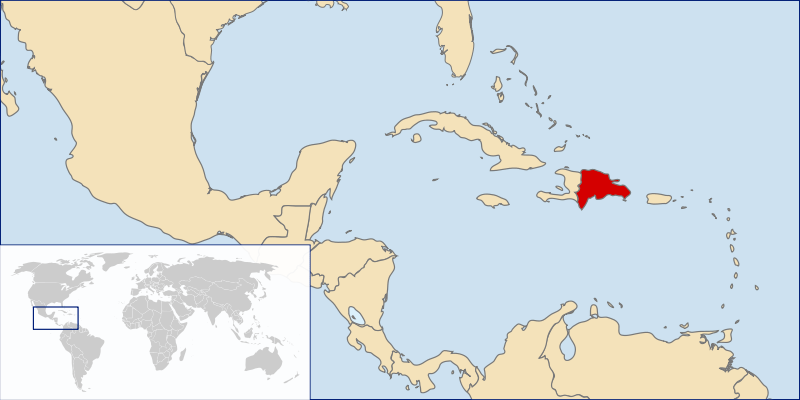
A clear and well-structured map of the Dominican Republic is one of the most useful tools for understanding the country’s geography, regions and travel distances. Located in the Caribbean, the Dominican Republic occupies the eastern portion of the island of Hispaniola and shares a land border with Haiti to the west.
This page explains how to read the Dominican Republic map and how geography influences travel planning, transportation choices and regional experiences.
Geographic Location
The Dominican Republic is bordered by the Atlantic Ocean to the north and the Caribbean Sea to the south. Its strategic position creates two distinct coastlines with different climates, sea conditions and landscapes.
On the map, the country appears as a varied terrain with coastal plains, mountain ranges and fertile valleys. This diversity plays a key role in shaping travel experiences across regions.
Main Regions on the Map
Most maps of the Dominican Republic highlight several key regions that are important for travelers:
- The Eastern Region, including Punta Cana and Bávaro, known for resort beaches and international airports
- The Southern Region, home to Santo Domingo, La Romana and Bayahibe
- The Northern Coast, featuring Puerto Plata, Sosua and Cabarete along the Atlantic
- The Samaná Peninsula, a lush and scenic area in the northeast
- The Central Highlands, including Jarabacoa and mountainous landscapes
- The Southwestern Region, including Barahona and remote coastal areas
Mountains, Rivers and Natural Features
A physical map reveals that the Dominican Republic has the most mountainous terrain in the Caribbean. The Central Mountain Range runs across the country and includes Pico Duarte, the highest peak in the region.
Major rivers, lakes and national parks are often marked on detailed maps, helping travelers understand why certain regions are cooler, greener or more isolated.
Cities and Transportation Routes
Maps commonly show major cities such as Santo Domingo, Santiago de los Caballeros and Puerto Plata, along with highways connecting tourist regions. These routes are important for estimating travel times and planning itineraries.
Distances on the map may appear short, but mountain roads and traffic conditions can affect travel duration. For detailed movement planning, see the Transportation Guide for the Dominican Republic.
Beaches and Coastal Areas
Beach-focused maps highlight coastal regions and offshore islands such as Saona Island. The southern and eastern coasts are known for calm Caribbean waters, while the northern coast faces the Atlantic and experiences stronger waves.
Understanding coastline orientation helps travelers choose beaches based on swimming, surfing or relaxation preferences. Explore coastal highlights in Beaches in the Dominican Republic.
How to Use the Map for Trip Planning
Using a map allows travelers to build realistic itineraries by grouping nearby destinations and balancing coastal, city and inland experiences. Combining regions reduces travel time and enhances overall trip flow.
Maps are also useful for identifying less-visited areas, scenic routes and nature-based destinations beyond resort zones.
Digital Maps and Navigation
Digital maps and navigation apps are widely used in the Dominican Republic, especially in cities and tourist regions. Downloading offline maps is recommended for areas with limited mobile coverage.
Clear map awareness improves confidence when exploring independently and supports safer travel decisions. For activity inspiration by region, see Things to Do in the Dominican Republic.
Why Understanding the Map Matters
The Dominican Republic’s geographic diversity is one of its greatest strengths. Understanding how regions connect on the map helps travelers appreciate the country’s variety and plan trips that go beyond a single destination.
Whether you are exploring beaches, mountains or historic cities, the map serves as a foundation for smarter, more flexible travel planning.