
Sign in
For Photos4Travel editors and team members.
Dominican Republic · Facts & Travel Essentials
Dominican Republic Facts & Travel Essentials
The Dominican Republic occupies the eastern part of Hispaniola, sharing the island with Haiti. Santo Domingo is the capital; Punta Cana is a resort region on the opposite, eastern side of the country. That distinction matters before you book anything: a hotel described as “Dominican Republic” may be several hours from your arrival airport. Start with the town, then check the address, transport and everyday facilities around the property.
On this page · 7 sections ShowHide
This is the practical reference for using your phone, paying for small purchases, charging devices and organising an ordinary day. Detailed entry rules, transport routes and health advice have their own guides. Keep the essentials below offline so that a flat battery or unreliable connection does not turn a simple arrival into a lengthy search.
Useful facts at a glance
Swipe or use the arrow keys to see the full table.
| Detail | What to prepare | Why it matters |
|---|---|---|
| Currency | Dominican pesos, shown as RD$ or DOP | A dollar symbol alone can be ambiguous; confirm the currency. |
| Language | Spanish; keep your address written down | English availability varies outside international tourism businesses. |
| Time | Atlantic Standard Time, UTC−4, throughout the year | Your home country may change clocks while the Dominican Republic does not. |
| Power | 110-volt supply and US-style plugs | Check both the plug and your device’s input-voltage label. |
| Mobile service | Unlocked compatible phone and passport | Local SIM registration and a data package are separate steps. |
| Water | Use sealed or reliably purified drinking water | Tap water is not a drinking-water option. |
Language and addresses that actually help
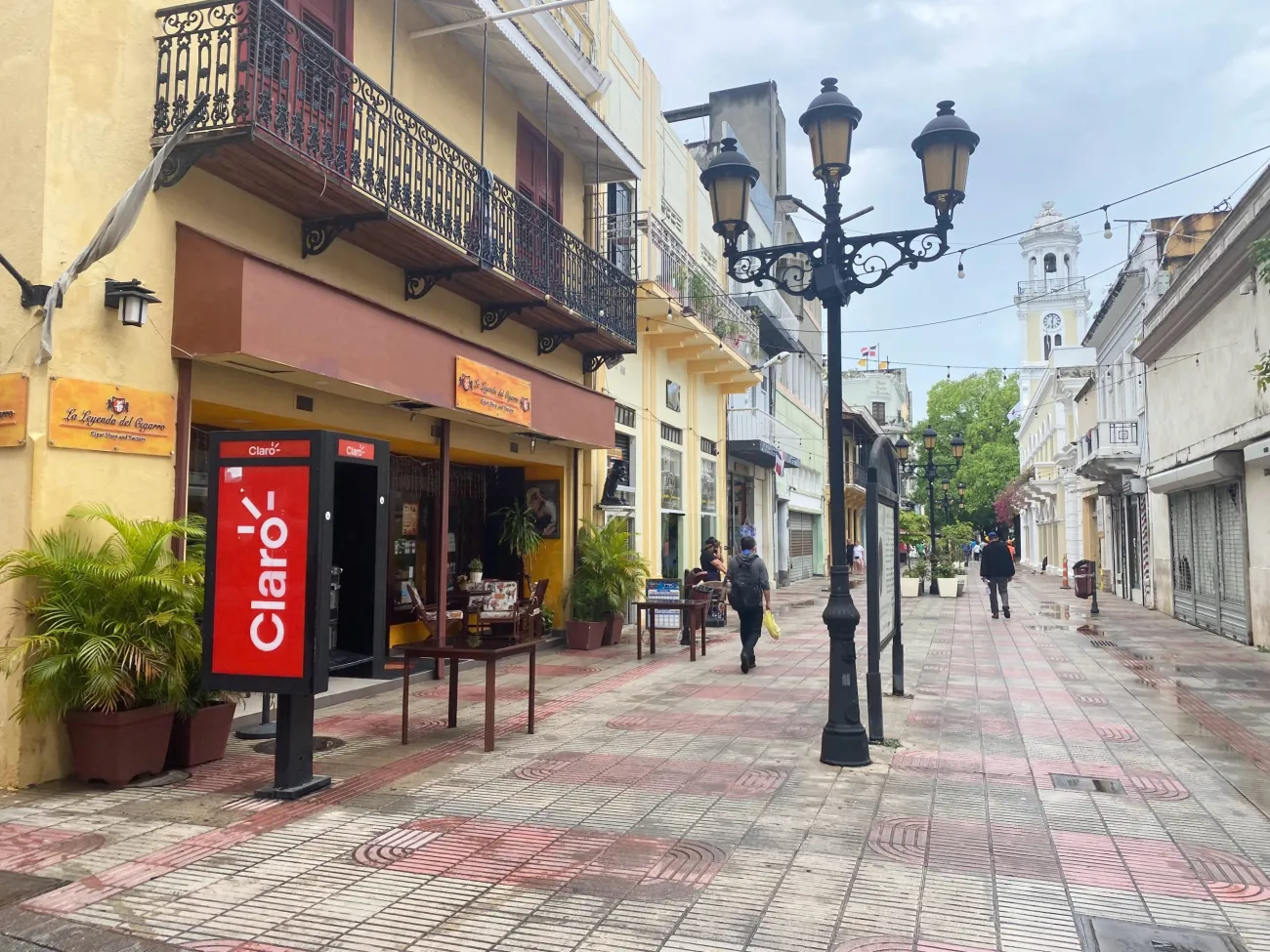
Photo: -wuppertaler · DOM Santo Domingo, Ciudad Colonial, Calle El Conde 0012.jpg · CC BY 4.0.
Spanish is the language to prepare for ordinary transactions. You may find English-speaking staff at a resort reception but need Spanish for a small shop, a bus conductor or a delivery driver. An address written in Spanish, a screenshot of the entrance and your host’s telephone number are more useful than a long translated explanation of the trip.
Ask a rental host for the province, municipality, sector, street and building or apartment number. A beach name alone may describe a large area. If reception closes overnight, obtain the actual late-arrival instructions before departure, including how to open the entrance and whom to call if the access code fails. Keep those details private rather than posting them in a public travel group.
A few short phrases remove uncertainty: “¿Cuánto cuesta?” asks the price; “¿Incluye impuestos?” asks whether tax is included; “¿En pesos o dólares?” checks the currency. “¿Dónde me bajo?” helps establish where to get off. Ask one question at a time and confirm a place or amount on the screen. Guessing from a familiar-sounding word is less reliable than showing the correct address.
Paying for small purchases
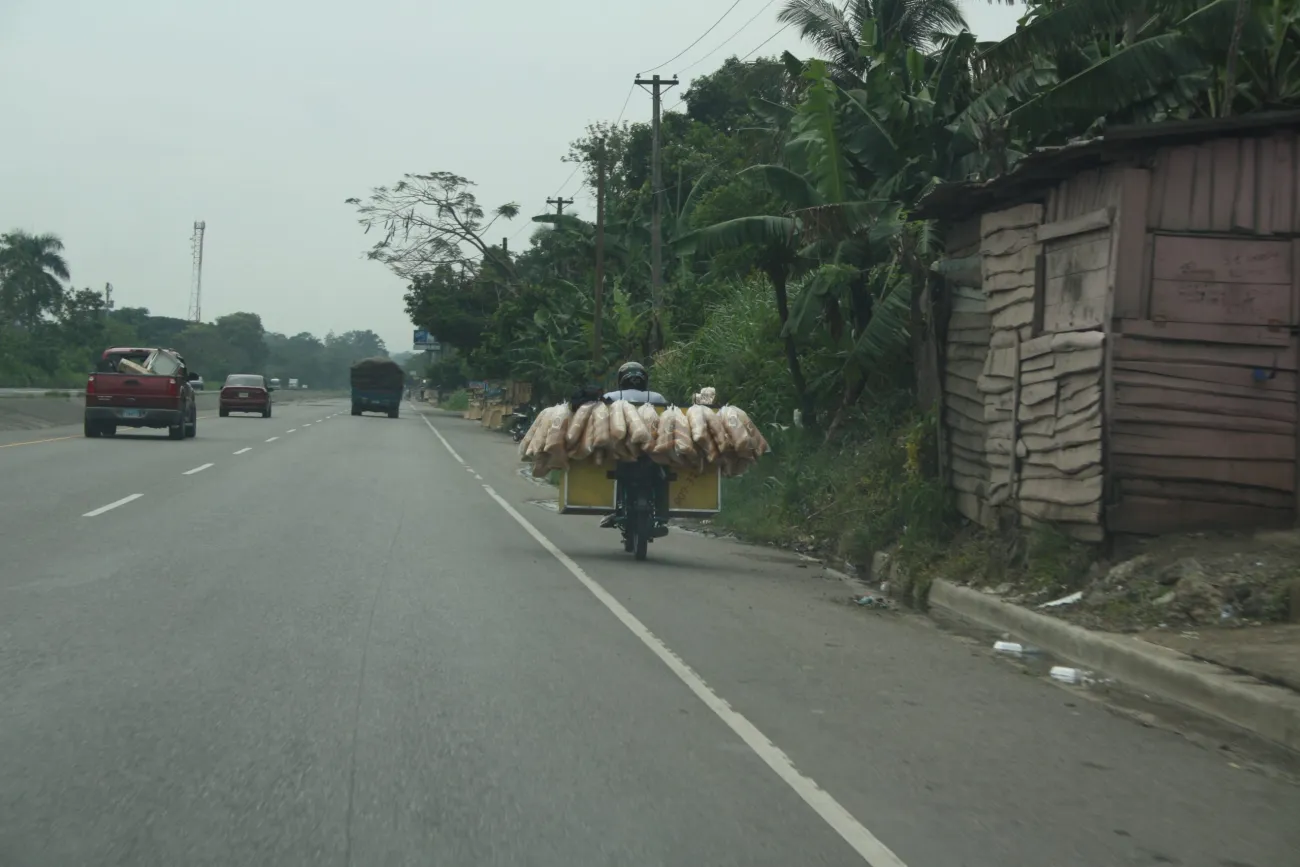
Photo: Jos1950 · Bread seller 339.jpg · CC BY-SA 4.0.
Keep a modest supply of pesos for transactions that are awkward by card: a small purchase, a local ride or an incidental charge at a place without a working terminal. Carry smaller notes alongside larger ones. A vendor agreeing to accept US dollars does not establish the exchange rate or guarantee that change will be given in dollars.
Before paying, look at the currency and the total on the terminal or written bill. If you are offered a conversion into your home currency, compare its stated rate and charges with your card’s terms rather than accepting automatically. Your bank can charge withdrawal or foreign-transaction fees even when a local machine makes a different charge. Keep a second payment method separately from the first.
For exchange references, use the Banco Central’s currency information. A published reference rate is different from the rate a bank, cash machine or shop offers you. Avoid memorising an old peso-to-dollar shortcut and treating it as today’s price; use the amount in pesos as the starting point for comparing everyday purchases.
Local SIM, eSIM and Wi-Fi
Bring an unlocked phone and your passport if you want a local connection. Check that the device supports the intended network and, for an eSIM, the relevant digital profile. “Unlocked” means free to use another operator; it does not mean that the phone automatically supports every network or eSIM service.
Claro and Altice provide local mobile services. Claro’s eSIM information describes compatible devices and activation or migration options. An eSIM profile, a telephone line and the data allowance are different things: a free profile does not provide unlimited free internet. Ask the shop to explain the package expiry and how to check the remaining balance before leaving.
For a longer visit, compare the validity period as carefully as the data allowance. A package expiring after a few days will need renewing even if you have used little data. Check whether calls, hotspot use and incoming messages are covered. Keep your home number available if your bank requires verification messages, while turning off unwanted roaming on that line.
Save maps, accommodation details and tickets offline. Hotel Wi-Fi being advertised tells you little about the signal inside your particular room or reliability during a power interruption. If a video call matters, ask about the room connection and a backup location before reserving; a photograph of a laptop by a pool does not establish usable working conditions.
Electricity, charging and outages
The tourism ministry’s practical guidance describes a 110-volt electricity supply and possible power interruptions. Visitors bringing European devices should check the charger label. An input range such as 100–240V normally addresses voltage compatibility, but you may still need an adapter for the socket. A plug adapter changes the connection shape; it does not convert voltage.
Check hairdryers, straighteners and other high-power appliances individually. Do not assume that a charger working in several countries makes every appliance suitable. A compact power bank is useful for a phone during a transfer, but follow the airline’s battery rules and carry it in the permitted luggage.
For an apartment, ask what backup power actually supplies. It may keep lights or a router operating while excluding air-conditioning or kitchen appliances. Likewise, a property advertising a generator has not necessarily promised uninterrupted service. Know where the stairs are and keep a small light accessible rather than relying entirely on the phone you need for calls.
Time, reservations and an ordinary day
The country stays on UTC−4 throughout the year. Time differences with Europe and parts of North America change when those places move their clocks. Use the destination time shown on the airline itinerary, and confirm the local pickup time directly with a transfer operator. A departure at midnight also deserves a careful check of the calendar date.
Opening hours belong to the business, not to the country. A supermarket, museum, pharmacy and restaurant can follow different schedules; holidays and private events can alter them further. Check the specific branch and avoid planning an essential purchase for the last minutes before its advertised closing time.
Build a little separation between arriving, checking in and buying supplies. A late flight is a poor moment to discover that your host expects cash, the closest shop has closed and your phone has no data. For the first night, know how you will obtain drinking water, a simple meal and any essential medication without having to cross town.
Dominican Republic practical facts FAQ
Is the Dominican Republic the same place as Dominica?
No. They are different Caribbean countries. Check the country name, airport code and accommodation address when buying flights, insurance or mobile data.
Can I use US dollars for everything?
Do not rely on it. Some tourism businesses accept dollars, but pesos are the practical choice for many small transactions. Confirm the currency and exchange terms before paying.
Will my European phone charger work?
Check its printed voltage range and the plug shape. A compatible multi-voltage charger may only require an adapter, whereas an incompatible appliance needs a suitable voltage solution.
Do I need a passport to buy a local SIM?
Bring your passport and an unlocked compatible phone. Ask the operator to confirm registration, package validity and activation before you leave the store.
Does the Dominican Republic change its clocks?
No. It uses Atlantic Standard Time, UTC−4, year-round. The difference from your home time can still change when your home country observes daylight saving time.
Tours, Tickets & Experiences
Dominican Republic Travel Tips & Inspiration