The smartest way to enjoy Amsterdam in the rain is to anchor your half-day around one compact neighbourhood cluster—pairing one major indoor museum or cultural venue with a brown café, reading room or indoor food hall a few minutes away. Unlike London’s sprawling Underground network or Paris’s glass-roofed arcades, central Amsterdam is built around open canals and narrow brick streets. Short, exposed walks between stops are part of any wet day, so choosing a tight area saves you from fighting wind and slick cobblestones across town.
Because Amsterdam’s rain arrives mostly as passing North Sea showers rather than day-long downpours, a wet forecast rarely ruins a trip. Even in November and December—the city’s dampest months by duration—official Dutch weather station records show precipitation falling during roughly a tenth of all hours. The trick is knowing which headline museums require weeks-ahead online slots, which indoor refuges welcome walk-ins when a squall hits unexpectedly, and which neighbourhoods keep outdoor crossings short.
This guide continues our rainy-day city series alongside London in the Rain and Paris in the Rain. Pick one of the four neighbourhood routes below, check the 2026 ticket and Monday-opening notes before leaving your hotel, and use our Amsterdam travel guide to slot dry-weather walks into brighter windows.
Which Amsterdam neighbourhood should you choose when it rains?
Start near your hotel or a direct tram or Metro line. Every pairing below fills three to five hours comfortably without zigzagging across the Canal Ring. Outdoor walking estimates reflect street crossings between the named transit stops and venues; they exclude queues, detours and your trip from accommodation, and they do not promise a completely dry route.
For a base near your chosen indoor route, compare Amsterdam hotels on Booking.com. Check the final total, cancellation terms and walking distance to your museum or tram stop.
On a small screen, swipe sideways to read all route columns.
| Neighbourhood & route | Best for & time to allow | Outdoor walking to allow for | Booking reality |
|---|---|---|---|
| 1. Museumplein: Rijksmuseum or Van Gogh Museum → Stedelijk or Concertgebouw | Major art museums and classical music; 3.5–5 hours | Roughly 10–20 minutes total across the open square and tram stops (windy in gusts). | High: Van Gogh is online-only; Rijksmuseum requires a timed start slot for all visitors. |
| 2. Oosterdok & Waterfront: OBA Central Library → NEMO or Het Scheepvaartmuseum | Families, architecture, maritime history and free shelter; 3.5–5 hours | Roughly 15–25 minutes total along exposed harbour walkways near Centraal Station. | Moderate: OBA is free walk-in; NEMO uses timed slots; Scheepvaartmuseum sells door and online tickets. |
| 3. Historic Centre & Canal Ring: Ons’ Lieve Heer op Solder or Foam → Café De Jaren or Café Hoppe | Atmosphere, canal houses, photography and classic cafés; 3–4 hours | Roughly 15–25 minutes total on cobbled streets and bridges; easy tram/Metro hops. | Flexible: generally far easier for same-day rain pivots than Anne Frank House or Van Gogh. |
| 4. Oud-West (De Hallen): Foodhallen → De Passage shops → De FilmHallen cinema | Zero-weather-stress lunch, browsing and a film under one roof; 3–4.5 hours | Under 10 minutes total from the tram 17 stop; once inside De Hallen, everything stays under cover. | Very flexible: Foodhallen and De Passage are free to enter; book cinema seats online or at the desk. |
Four indoor routes for a rainy day in Amsterdam
1. Museumplein: heavyweight art under three roofs
Suggested sequence: Tram 2, 5 or 12 to Museumplein / Rijksmuseum → one headline museum (Rijksmuseum or Van Gogh Museum) → indoor café lunch → optional Stedelijk Museum or Wednesday lunchtime concert at the Royal Concertgebouw.
Museumplein concentrates the Netherlands’ heaviest artistic firepower around one lawn, which makes it the default choice when heavy rain rules out canal strolling. The catch is that you need to pace yourself: combining two major museums back-to-back is plenty for one day, and attempting all three usually leads to gallery fatigue rather than a relaxed escape from the weather.
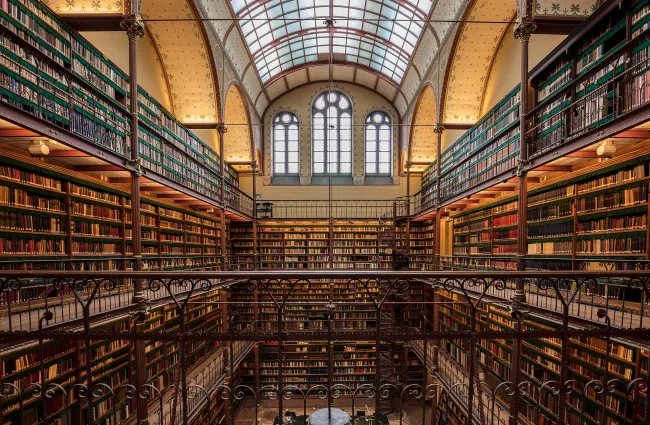
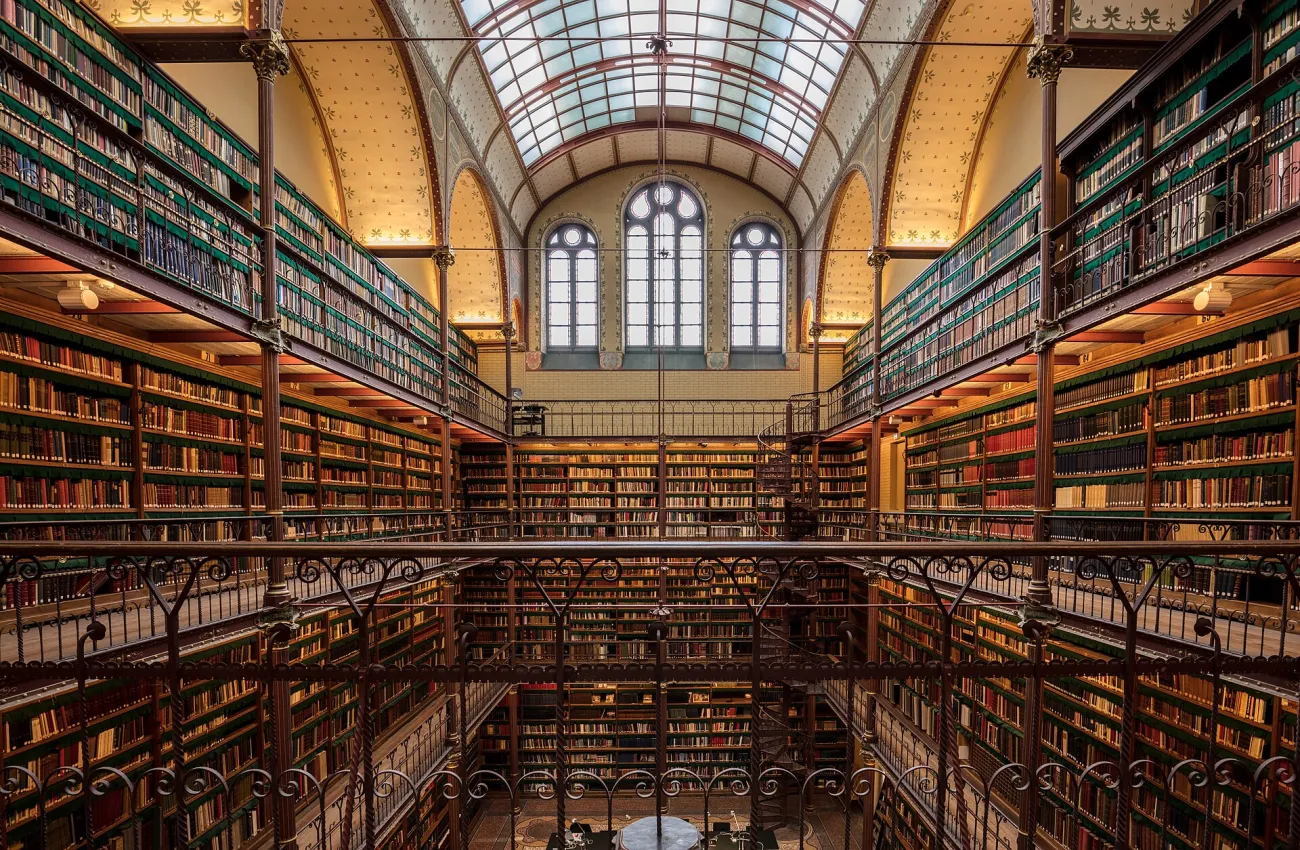
The Rijksmuseum is the most forgiving anchor for a long wet morning or afternoon. Open daily from 09:00 to 17:00, its galleries span 800 years of Dutch art and history—from Rembrandt’s The Night Watch and Vermeer’s The Milkmaid in the Gallery of Honour to model ships, Delftware, and the soaring 19th-century Cuypers Library reading room. Everyone, including Museumkaart and pass holders, must book a timed start slot; tickets can be bought at the entrance subject to availability, though booking online ahead guarantees entry when rain drives crowds indoors. Inside, the daylight-filled atrium, museum café and free audio tours on the Rijksmuseum app make it easy to spend three full hours without stepping back outside.
You can also check Rijksmuseum ticket availability on GetYourGuide. Compare the selected entry time, inclusions and cancellation terms with the museum’s official booking options above.
If your trip revolves around post-Impressionism, book the Van Gogh Museum days or weeks before you fly (open daily 09:00–18:00, with Friday evenings until 21:00 on most weeks). For contemporary art, design and photography—and often easier same-day slot availability than Van Gogh—walk two minutes across the paving to the Stedelijk Museum, open daily 10:00–18:00 all year round.
For your preferred visit date, check Van Gogh Museum tickets on GetYourGuide and confirm the timed entry slot before arranging the rest of your day.
Wednesday bonus: On Wednesdays from September through June, the Royal Concertgebouw across the square hosts a free 30-minute Lunchtime Concert at 12:30 (frequently a public rehearsal by the Concertgebouw Orchestra or a chamber recital). Free tickets are released online at 10:00 on the Thursday before each performance—a rare zero-euro indoor highlight in one of the world’s finest concert halls.
If the rain intensifies: Stay inside the Rijksmuseum atrium café or head straight into the Stedelijk rather than standing on the exposed, windswept grass of Museumplein. Our Amsterdam attractions guide compares all three Museumplein collections side by side.
2. Oosterdok & Eastern Docklands: glass roofs, views and family science
Suggested sequence: Amsterdam Centraal Station → OBA Oosterdok (Central Public Library) → NEMO Science Museum or Het Scheepvaartmuseum (National Maritime Museum) → indoor café break.
East of Centraal Station, Oosterdok delivers Amsterdam’s most modern, spacious indoor shelters—especially useful if you are travelling with children or want a free place to dry off and check the weather radar. Start with a short walk east along Oosterdokskade to OBA Oosterdok (Oosterdokskade 143), Amsterdam’s flagship public library. Entry is completely free without a library card (typically open 08:00–22:00 weekdays and 10:00–20:00 weekends). Ride the escalators up to the seventh floor for warm indoor seating and wide skyline views over the harbour at Restaurant Babel (note that the open-air panorama terrace typically closes from November through March, while the indoor windows stay open year-round).
From OBA, choose one major neighbour depending on who you are travelling with:
- With children or curious teenagers: Cross the footbridge to NEMO Science Museum, housed inside Renzo Piano’s green copper-clad building. Five floors of hands-on experiments easily absorb two to three hours. NEMO opens Tuesday to Sunday 10:00–17:30, plus Mondays during Dutch school holidays and much of spring and summer; timed entry slots apply, and weekdays after 14:00 are often calmer. See our Amsterdam family travel guide for age-specific tips.
- For Dutch history, cartography and architecture: Continue along the waterfront (or take a short bus hop in heavy wind) to Het Scheepvaartmuseum (National Maritime Museum, Kattenburgerplein 1), open daily 10:00–17:00. Its 1656 Admiralty storehouse encloses a striking compass-rose glass canopy over the central courtyard, and admission (€20 adult, free with Museumkaart or I amsterdam City Card; cashless payment only) includes an audio tour and the indoor exhibitions. Save the outdoor replica East Indiaman ship Amsterdam docked outside for a pause between showers.
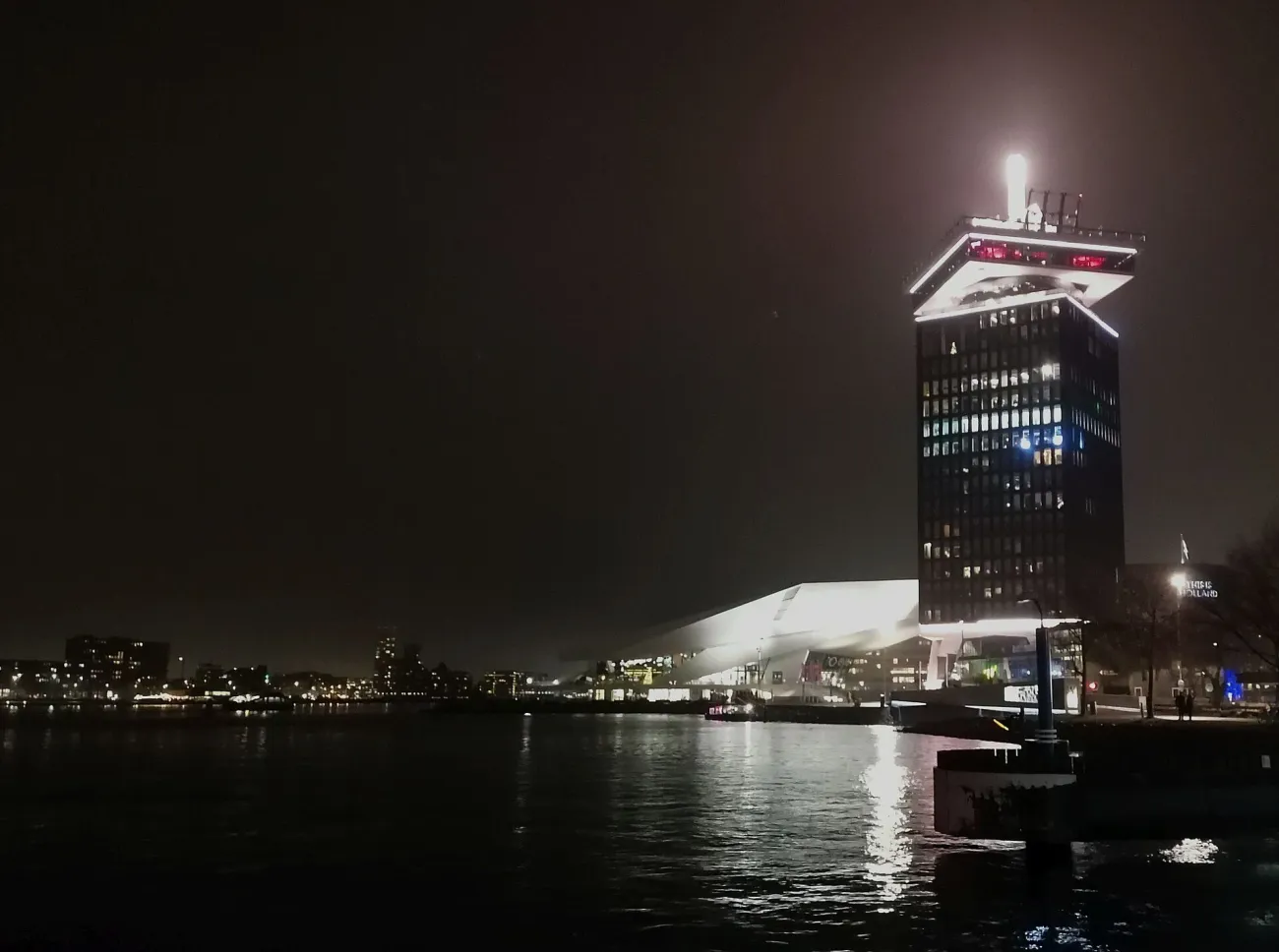
Alternative harbour hop: If you are already at Centraal Station and want modern cinema architecture instead of maritime history, walk through the station to the rear IJ waterfront and board the free GVB F3 ferry (Buiksloterweg) straight to Eye Filmmuseum in Amsterdam-Noord. The crossing takes only a few minutes on covered or open decks, and Eye’s sweeping white waterside bar-restaurant, interactive Basement gallery and four cinema screens make a memorable storm-watching afternoon. Note that Eye’s Monday schedule shifts seasonally (exhibitions close Mondays until mid-December 2026 before returning to daily opening from 19 December 2026), so verify your exact weekday on Eye’s site before crossing.
3. Historic Centre & Canal Ring: hidden churches, photography and historic cafés
Suggested sequence: Metro 52 to Rokin or Centraal → Museum Ons’ Lieve Heer op Solder (or Royal Palace / De Nieuwe Kerk on Dam Square) → slow warm-up at Café De Jaren or Café Hoppe → optional Foam photography museum on Keizersgracht.
When rain hits the medieval core, skip open-air squares and duck inside Amsterdam’s tightest architectural surprises. A five-minute walk from Centraal Station on Oudezijds Voorburgwal 38–40, Museum Ons’ Lieve Heer op Solder (Our Lord in the Attic) preserves a complete 17th-century Dutch merchant house concealing an entire three-storey Catholic church built secretly in the attic during the Reformation. Open daily 10:00–18:00 (opening at 11:00 on the first Sunday of the month from September to June), it takes roughly 75 to 90 minutes with the included audio guide and is rarely booked solid days in advance. Keep in mind that the historic narrow staircases are not step-free; check the museum’s access notes if stairs are an issue.
Closer to Dam Square, two indoor heavyweights sit steps apart: the Royal Palace Amsterdam (€13.50 with audio tour) and De Nieuwe Kerk (€20, daily 10:00–17:00, staging major rotating photography and cultural exhibitions). Because the Royal Palace remains an active royal reception venue—open to the public more than 230 days a year, but closed for state events—always verify its live opening calendar before walking over.
Prefer contemporary photography over 17th-century interiors? Walk or ride a tram south along the Canal Ring to Foam (Keizersgracht 609), housed in a linked trio of canal houses. Foam stays open until 21:00 on Thursdays and Fridays (10:00–18:00 Saturday–Wednesday), making it one of the best late-afternoon rain refuges in town. Nearby on Amstel 51, H’ART Museum (daily 10:00–17:00) hosts large-scale international art exhibitions in a grand 17th-century complex—helpful to know because the Amsterdam Museum’s traditional Kalverstraat headquarters remains closed for renovation. On the Plantage side, ARTIS-Micropia (daily 10:00–17:00) offers a fascinating, fully indoor look at microscopic life, while the historic greenhouses of Hortus Botanicus are warm and humid indoors (check current renovation notices, as the Palm House has partial restoration works underway).
4. Oud-West (De Hallen): Amsterdam’s easiest all-under-one-roof plan
Suggested sequence: Tram 17 from Centraal Station to Nicolaas Beetsstraat → indoor lunch at Foodhallen → browse independent shops and the library along De Passage → afternoon or evening screening at De FilmHallen.
If the rain turns relentless and you want zero exposed walking once you step off the tram, head to De Hallen in Amsterdam Oud-West. Built inside a restored early-20th-century brick tram depot, De Hallen connects an indoor street-food hall, a nine-screen independent cinema, a public library branch, local craft studios and a covered brick arcade (De Passage) under one continuous roof.
At its centre sits Foodhallen, open seven days a week from 12:00 to 23:00 (364 days a year, closing only on 25 December, with earlier 20:00 finishes on 24 and 31 December). Nearly two dozen food stalls serve everything from Dutch bitterballen and Vietnamese banh mi to dim sum, mezze and pastries around communal bars—ideal when your group cannot agree on one cuisine and wants a lively, no-reservation indoor lunch. When you finish eating, walk straight down the dry indoor passage to De FilmHallen (Hannie Dankbaarpassage 12) for an afternoon film. Note that English-language films in the Netherlands are shown in their original audio with Dutch subtitles, whereas non-English international films typically carry Dutch subtitles unless specifically marked with English subtitles on the cinema schedule.
Brown cafés, grand cafés and Dutch rainy-day rituals
In Amsterdam, ducking out of a shower for coffee, apple pie or a late-afternoon drink is not filler between museums—it is half the point of the city. Local café culture splits into two classic indoor experiences, both tailor-made for wet weather:
- Traditional brown cafés (bruine kroegen): Named for their dark oak panelling, low ceilings and patina earned over centuries, brown cafés are where locals wait out grey afternoons over a vaasje (small draught pilsner), a glass of Dutch jenever, or hot coffee with a warm plate of bitterballen and mustard. Classic stops include Café Hoppe (Spui 18–20, dating to 1670, three minutes from Rokin Metro and open from 09:00 daily), Café Papeneiland (Prinsengracht 2 on the edge of the Jordaan, renowned for its 1642 Delft-tiled interior and homemade appeltaart), and Café ’t Smalle (Egelantiersgracht 12, a former 18th-century distillery tucked beside a quiet Jordaan canal).
- Grand cafés with reading tables (leestafels): When you want tall windows, daylight and space to linger with a book or map without feeling rushed, choose a Dutch grand café. Café De Jaren (Nieuwe Doelenstraat 20, overlooking the Amstel between Rokin and Waterlooplein) spreads across two airy floors with a long communal reading table stocked with newspapers and magazines; it operates walk-in only and cashless, daily from 10:00.
- Warm Dutch appeltaart stops: In the Jordaan, both Café Papeneiland and Winkel 43 (Noordermarkt 43, baking deep-dish apple pie with whipped cream since 1983) turn a cold downpour into a comforting ritual. Expect a short wait for indoor tables at peak afternoon hours on weekends.

For neighbourhood dinner spots and Dutch comfort food beyond cafés, see our Amsterdam food and restaurants guide. If you want indoor browsing alongside coffee, the historic nine-street grid around De Negen Straatjes and the multi-floor department store De Bijenkorf on Dam Square are covered in our Amsterdam shopping guide.
Key indoor venues: 2026 hours, prices and booking rules
Opening patterns in Amsterdam are more Monday-friendly than in Paris—major attractions such as the Rijksmuseum, Van Gogh Museum, Stedelijk Museum, Het Scheepvaartmuseum and Foodhallen normally open seven days a week—but timed-entry ticketing is strict. Prices and hours below were verified against official venue pages on 26 November 2026; always recheck holiday exceptions and temporary exhibition surcharges before setting off.
On a small screen, swipe sideways to view hours, adult tickets and booking rules.
| Venue | Typical hours | Standard adult ticket & booking | Rainy-day note |
|---|---|---|---|
| Rijksmuseum | Daily 09:00–17:00 | €26.50 (under 18 free); timed start slot required for everyone. | Huge indoor space + Cuypers Library; door tickets subject to slot availability. |
| Van Gogh Museum | Daily 09:00–18:00 (most Fri to 21:00) | From €25.00 (under 18 free); online-only timed ticket. | No ticket desk on site; book well ahead—not a last-minute rain option. |
| Stedelijk Museum | Daily 10:00–18:00 (last entry 17:45) | €22.50 (under 19 free); online time-slot reservation recommended. | Open 365 days a year; often easier same-day access than Van Gogh. |
| Anne Frank House | Daily 09:00–22:00 (exceptions apply) | €16.50 incl. €1 fee (€17.00 from 2027); online-only, released Tuesdays 10:00 CET six weeks ahead. | Sells out weeks in advance; plan far ahead, never as a rain fallback. |
| Het Scheepvaartmuseum | Daily 10:00–17:00 | €20.00 (ages 5–17 €8.50; under 5 free); online or door, cashless. | Iconic glass-covered courtyard + free audio tour; Museumkaart & City Card accepted. |
| NEMO Science Museum | Tue–Sun 10:00–17:30 (select Mon open) | Timed start slot required; I amsterdam City Card accepted. | Best hands-on rain shelter for kids; weekdays after 14:00 tend to be quieter. |
| Ons’ Lieve Heer op Solder | Daily 10:00–18:00 (1st Sun Sep–Jun from 11:00) | €18.00 (ages 5–17 €7.50); audio guide included; passes accepted. | Compact historic canal house with steep stairs; easy central rain pivot. |
| Foam (Photography) | Sat–Wed 10:00–18:00; Thu–Fri 10:00–21:00 | From €16.00; walk-ins welcome, online slot advised. | Top Thursday/Friday evening indoor stop right on Keizersgracht. |
| OBA Oosterdok (Library) | Mon–Fri 08:00–22:00; Sat–Sun 10:00–20:00 | Free entry (no card needed). | Warm reading floors, Wi-Fi and 7th-floor harbour-view restaurant. |
| Foodhallen (De Hallen) | Daily 12:00–23:00 (closed 25 Dec) | Free to enter; pay per food stall. | Pairs seamlessly under one roof with De Passage shops and De FilmHallen. |
Rainy-evening ideas: historic cinema, live music and winter lights
When early dusk meets steady rain—especially between October and March—Amsterdam’s evenings shine indoors:
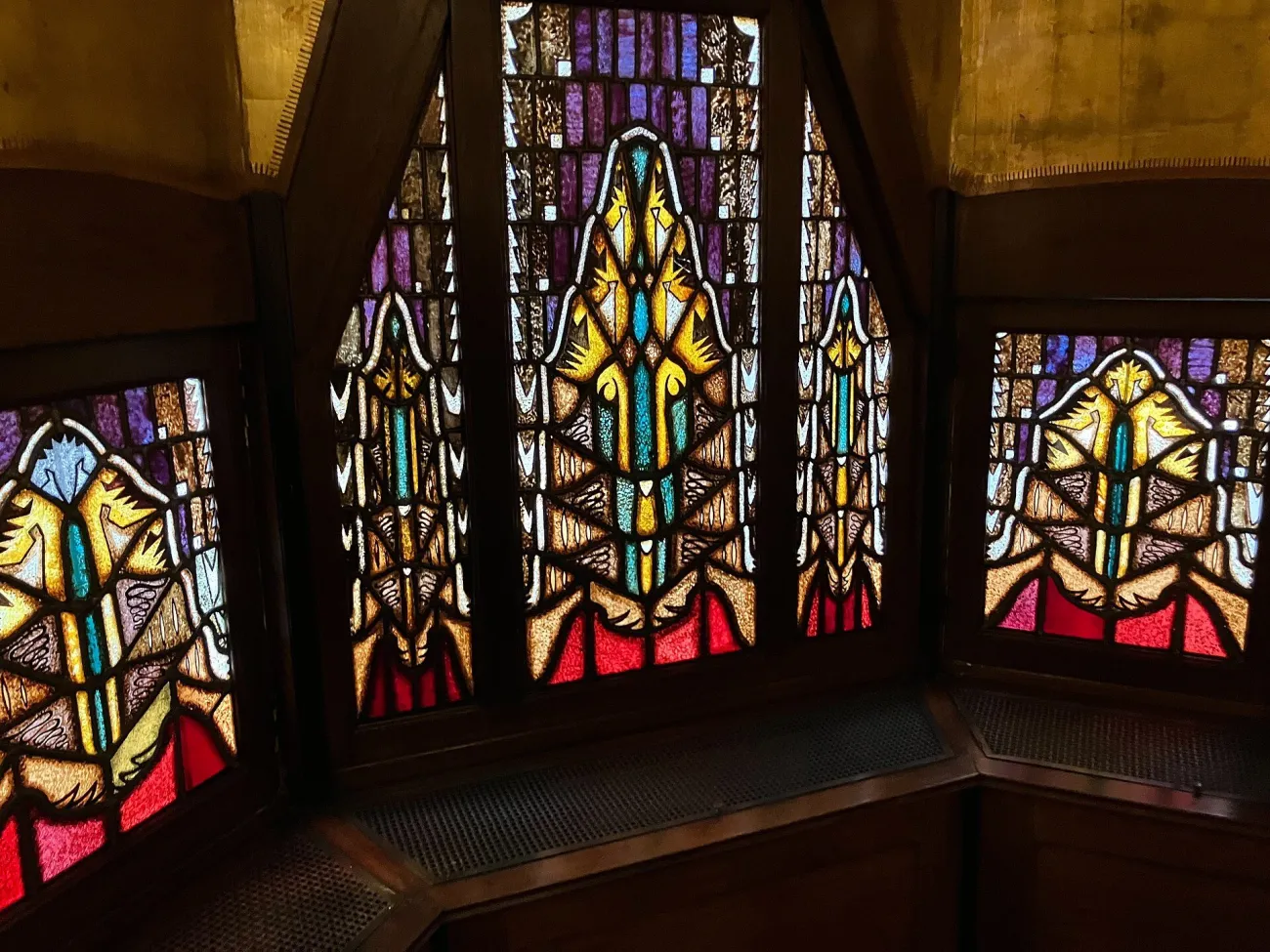
- Royal Theater Tuschinski (Reguliersbreestraat 26–28): Opened in 1921, Tuschinski blends Art Deco, Amsterdam School and Jugendstil details into stained-glass lobbies, painted ceilings and plush red-velvet love seats. Catching an evening film in the main auditorium (Grote Zaal) is one of Europe’s finest bad-weather experiences; book seats in advance through Pathé, as screenings in Hall 1 sell quickly on wet weekends.
- Covered canal cruises and the Amsterdam Light Festival: Do not automatically cancel a canal boat trip because of drizzle. Most standard Amsterdam sightseeing boats are fully glass-enclosed and heated, giving low-angle views of glowing canal bridges while raindrops streak past the glass. From 26 November 2026 to 17 January 2027, the 15th edition of the Amsterdam Light Festival illuminates the canals daily from 16:30 to 23:00 (closing at 21:00 on 31 December), turning a dark wet evening into a highlight—confirm before booking that your boat is covered rather than an open sloop. See our Amsterdam festivals and events guide for winter timing. For a covered option, compare this saloon boat canal cruise on GetYourGuide. Confirm the boat type, departure point and cancellation terms for your sailing; a standard canal tour should not be assumed to follow the Light Festival route.
- Evening museums and live music: On Thursday and Friday nights, Foam stays open until 21:00 and the Van Gogh Museum opens late on most Fridays; ARTIS-Groote Museum opens until 22:00 on Thursdays. For jazz and modern music right over the IJ harbour, check the programme at Bimhuis (covered in our Amsterdam nightlife guide).
How rain actually works in Amsterdam (and what to wear)
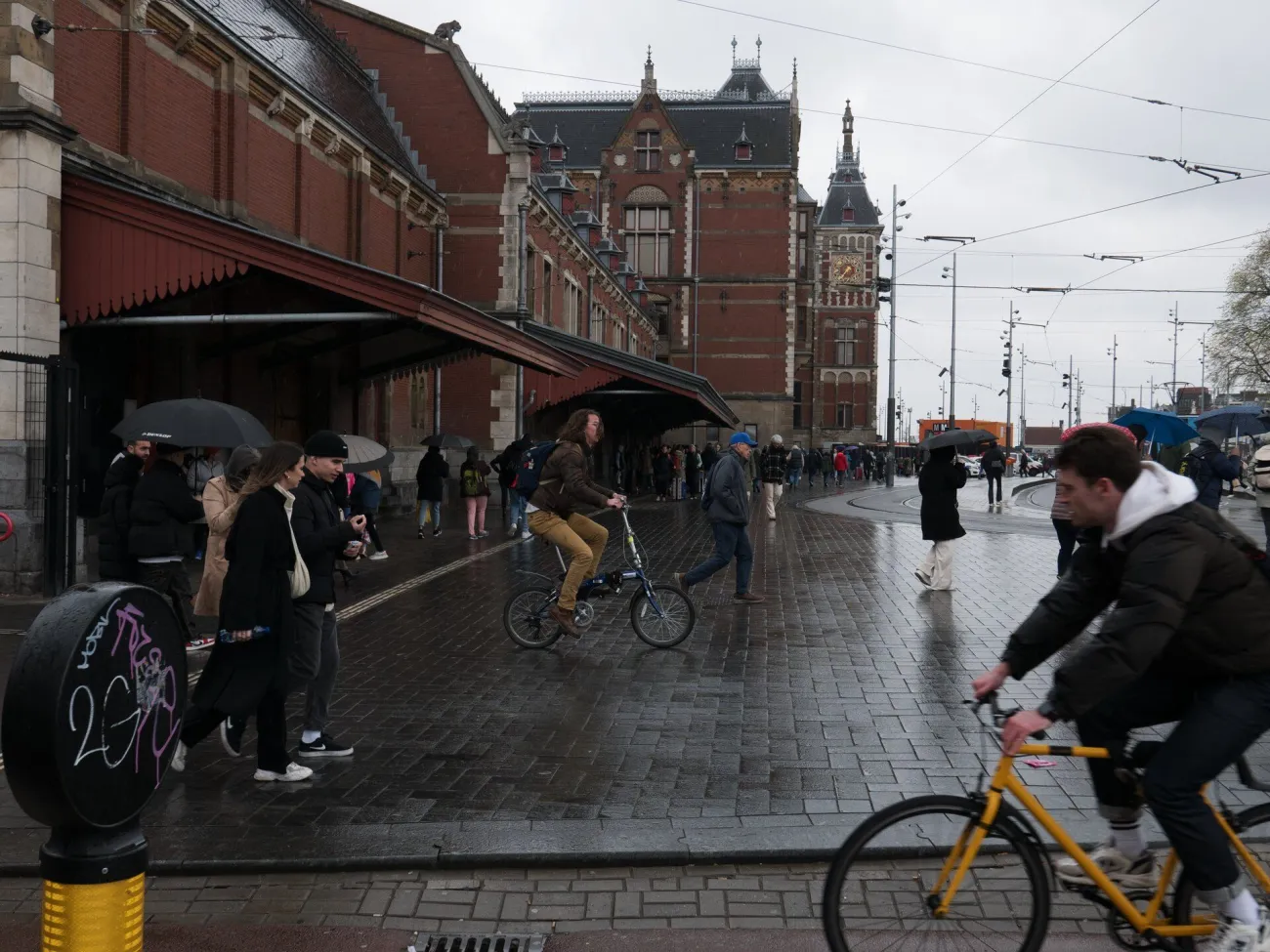
Travellers often picture Amsterdam under constant drizzle, yet official 30-year climate data tells a much more reassuring story. Using 1991–2020 daily station observations from the Royal Netherlands Meteorological Institute (KNMI, Schiphol Airport station 240), Amsterdam averages about 851 mm of precipitation across roughly 658 wet hours per year—meaning it is completely dry for more than 92% of the hours in an average year. Climate normals show long-term averages, not a forecast for your specific travel dates, so always check live radar on the day.
On a small screen, swipe sideways to read seasonal precipitation averages.
| Season | Avg. monthly rainfall | Days ≥1 mm / month | Share of hours with rain | What it feels like on the street |
|---|---|---|---|---|
| Spring (Mar–May) | ~49 mm (Apr driest at ~40 mm) | ~9.1 days | ~6.0% (Apr–May ~5.5%) | Brightest dry spells punctuated by quick, breezy passing showers. |
| Summer (Jun–Aug) | ~82 mm (Aug peak at ~99 mm) | ~10.7 days | ~5.7% | Short, heavier convective downpours that clear rapidly back to sun. |
| Autumn (Sep–Nov) | ~85 mm (Oct ~87 / Nov ~85 mm) | ~12.2 days (Nov ~13.4) | ~8.7% (Nov ~10.2%) | Longer grey fronts and coastal gusts; ideal for museum-and-café days. |
| Winter (Dec–Feb) | ~68 mm (Dec ~82 / Feb ~55 mm) | ~12.4 days (Dec ~14.1) | ~9.7% (Dec ~10.6%) | Frequent light rain, chilly wind and early dusk—best for indoor plans and winter lights. |
Notice the subtle difference between August and December: August actually delivers more total millimetres of rain than December, yet rain falls during almost half as many hours because summer rain arrives in brief, heavy bursts while winter brings lighter, longer Atlantic fronts. For month-by-month temperatures and daylight windows, consult our Amsterdam weather and seasons guide.
Three practical packing choices for wet Dutch weather:
- Choose a waterproof hooded jacket over an umbrella: Open canal bridges funnel gusty crosswinds that flip cheap umbrellas inside out in seconds, and narrow pavements crowded with cyclists leave little room for wide umbrella canopies.
- Wear grippy, water-resistant shoes: Wet brick cobblestones, metal tram rails and slick wooden bridge planks can be surprisingly slippery—especially when stepping off kerbs near cycle lanes.
- Use minute-by-minute Dutch rain radar: Locals rely on Buienradar (or the KNMI app) rather than generic daily rain icons. A day showing a rain cloud often has two or three completely dry two-hour gaps ideal for walking between stops.
Getting around dryly: trams, Metro and free IJ ferries
When heavy rain sets in, resist the urge to rent a bicycle unless you are already confident riding in busy urban traffic with wet brakes, slick tram tracks and limited visibility under a hood. Instead, lean on Amsterdam’s public transit network operated by GVB:
- Contactless tap-in, tap-out (OVpay): You can tap a contactless bank card or mobile wallet directly on trams, buses and Metro gates—just remember to check out when leaving every vehicle or station.
- North–South Metro Line 52: The fastest dry spine across the city, linking Centraal Station, Rokin (for Dam Square, Spui and Café De Jaren), Vijzelgracht (for the Canal Ring and Rijksmuseum approach) and De Pijp underground in minutes.
- Trams and covered shelters: Trams 2 and 12 connect Centraal Station directly to Museumplein; Tram 17 links Centraal straight to Foodhallen and De Hallen in Oud-West.
- Free GVB IJ ferries: Pedestrian ferries F1–F7 behind Centraal Station are free to board and run frequently across the IJ toward Eye Filmmuseum and Amsterdam-Noord.
Need route maps, 24-hour GVB ticket advice and airport rail details? See our Amsterdam getting-around guide, or build a multi-day wet-and-dry schedule with our Amsterdam itineraries guide and Amsterdam neighbourhood stay guide.
Amsterdam in the rain: frequently asked questions
What can I do for free in Amsterdam when it rains?
Start at OBA Oosterdok (the Central Public Library), which is completely free to enter and offers warm reading spaces plus 7th-floor harbour views. On Wednesdays from September to June, reserve a free ticket online (released the preceding Thursday at 10:00) for the 12:30 Lunchtime Concert at the Royal Concertgebouw. You can also ride the free GVB F3 ferry across the IJ to browse Eye Filmmuseum’s lobby and waterfront views, or wander dryly through De Passage at De Hallen and the galleries of the Amsterdam City Archives (Stadsarchief).
Are Amsterdam museums open on Mondays?
Yes—unlike Paris, most major Amsterdam museums open on Mondays, including the Rijksmuseum, Van Gogh Museum, Stedelijk Museum, Anne Frank House, Het Scheepvaartmuseum, Foam, H’ART Museum and Ons’ Lieve Heer op Solder. Notable Monday exceptions to check before going include NEMO Science Museum (closed on non-holiday winter Mondays) and seasonal Monday exhibition schedules at Eye Filmmuseum.
Can I visit the Van Gogh Museum or Anne Frank House last-minute if it rains?
Almost never. Both venues sell timed tickets online only and sell out well in advance—Anne Frank House releases tickets every Tuesday at 10:00 CET for visits six weeks later, and the Van Gogh Museum has no on-site ticket desk. For a spontaneous rainy-day pivot, check same-day availability at Het Scheepvaartmuseum, Foam, Ons’ Lieve Heer op Solder, H’ART Museum, the Stedelijk Museum or De Nieuwe Kerk instead.
Is an Amsterdam canal cruise still worth doing in the rain?
Yes, provided you book a standard glass-roofed, heated canal boat rather than an open electric sloop. Covered boats keep you dry and warm while giving atmospheric reflections of illuminated bridges and gabled houses—especially during the Amsterdam Light Festival from 26 November 2026 to 17 January 2027. Always verify the boat type and weather cancellation policy with your operator before paying.
What is the best rainy-day plan in Amsterdam with children?
Pair NEMO Science Museum with a snack break at neighbouring OBA Oosterdok (which has a dedicated children’s floor) or Het Scheepvaartmuseum’s interactive exhibits and glass-covered courtyard. For older kids and teenagers who want a casual lunch and a movie without walking between buildings, De Hallen (Foodhallen plus De FilmHallen) keeps the entire afternoon under one roof.
Should I bring an umbrella or a rain jacket to Amsterdam?
Pack a lightweight, breathable waterproof jacket with a fitted hood and water-resistant walking shoes with good grip. Gusty wind sweeping along open canals and bridges frequently turns umbrellas inside out, and umbrellas are awkward on narrow pavements shared near busy cycle paths. Check Buienradar before heading out so you can time short walks between passing showers.
We may earn a commission if you book through our Booking.com or GetYourGuide links.