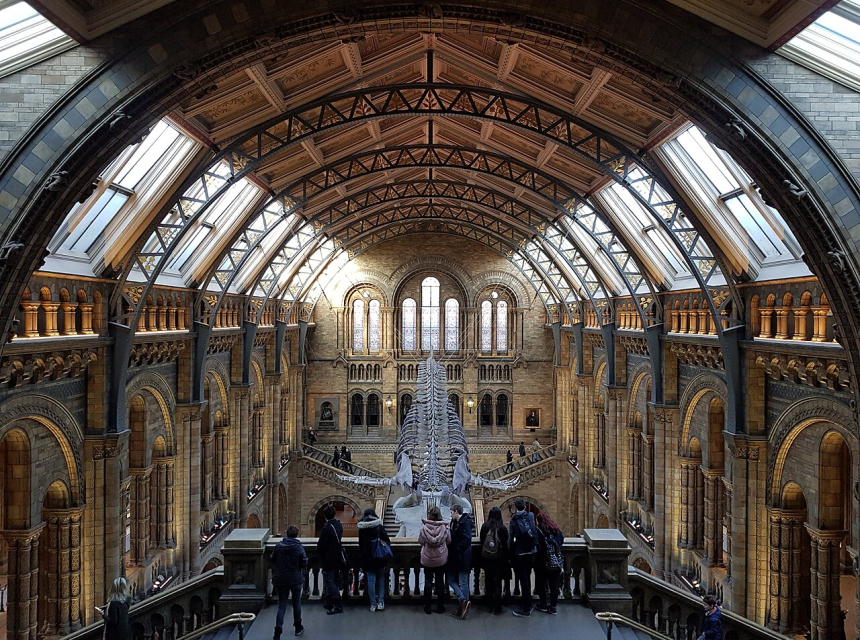
The vaulted roof and suspended blue whale skeleton in Hintze Hall at London’s Natural History Museum. Photo: Iridescent / Wikimedia Commons, 18 December 2017 · CC BY-SA 4.0. Display resized by the site.
The easiest way to enjoy London in the rain is to choose one neighbourhood, give a substantial indoor visit most of your time, and keep a second stop nearby. South Kensington suits museum-focused families; Bloomsbury works for a long British Museum visit; Trafalgar Square combines paintings, portraits and the West End; and Waterloo offers a compact film-and-culture afternoon around the Southbank Centre and BFI Southbank.
These four routes help you decide where to go, how much time to allow and which parts still involve walking outside. Each can fill a half-day without a cross-city transfer between attractions. Choose the area that fits your interests and starting point, then use our London travel guide to fit it into the rest of your trip.
Which London neighbourhood should you choose when it rains?
Start with the place you can reach conveniently. If you are already near Trafalgar Square, the National Gallery is a more practical choice than travelling to South Kensington just because it has more museums. Check admission availability before setting off, particularly during school holidays.
On a small screen, swipe left or right to see all columns.
| Area and route | Who it suits and time to allow | Outdoor walking to plan for |
|---|---|---|
| South Kensington: station → one main museum → optional neighbouring museum → station | Families, science, natural history or design; 3–5 hours | Allow roughly 15–25 minutes in total using street routes; entrances and tunnel availability change the walk. |
| Bloomsbury: Tottenham Court Road → British Museum → Tottenham Court Road | World history and a visit with few building changes; 3–4 hours including a break | Allow roughly 20–30 minutes in total to and from the museum. Staying inside avoids another outdoor transfer. |
| Trafalgar Square: Charing Cross → National Gallery → National Portrait Gallery → Leicester Square station | Art lovers and visitors with a West End evening; 3–4 hours | Allow roughly 15–25 minutes in total. A theatre or Covent Garden extension adds a separate outdoor walk. |
| Waterloo: station → Royal Festival Hall → BFI Southbank → station | Film, a seated break and a flexible cultural afternoon; 3–4 hours with a screening | Allow roughly 20–30 minutes in total. The short riverside link is not a continuous indoor passage. |
Use the venue directions linked below and TfL’s journey planner for your exact starting point, entrance and access needs. These are walking routes between buildings; they do not promise an entirely dry journey.
Four indoor routes for a rainy day in London
1. South Kensington: choose your museum before you arrive
Suggested sequence: South Kensington station → Natural History Museum or Science Museum → lunch → optional V&A visit → South Kensington station.
Choose the subject your group most wants to explore. Natural history works well when dinosaurs, animals or the Earth are the main draw; the Science Museum suits an interest in inventions and technology; the V&A gives you a different pace through art and design. Two people in the same family may want completely different things from a museum day, so agree on two or three priorities before entering.
The Natural History Museum has free general admission and recommends a free ticket to guarantee entry. The Science Museum requires advance booking of a free admission ticket. At V&A South Kensington, ordinary general admission is free without a booking. Special exhibitions and some activities have separate conditions or charges.
Allow about two to three hours for your main museum, then take a proper lunch break. Add roughly an hour at a neighbouring collection only if everyone still has energy. Trying to cover all three museums in depth turns a comfortable rain plan into a succession of entrances, cloakrooms and decisions.
Where you still get wet: the museums occupy separate buildings. South Kensington’s pedestrian subway can reduce exposure when available, but it is not a guarantee of an uninterrupted indoor route. Check the museum’s current entrance and transport notices; the current notice says South Kensington station is exit-only during the day from 30 October–1 November 2026, and the museum subway is closed. During this restriction, plan a different station or bus for your return journey; the normal round-trip walking allowance in the comparison table does not cover that detour. Confirm the arrangements for your own day.
If you need step-free access: distinguish a step-free museum entrance from the Underground journey. Plan the complete route with TfL and the museum’s access information. Avoid building your day around a particular gallery until you check closures; a museum can be open while a collection you hoped to see is unavailable.
2. Bloomsbury: make the British Museum the whole afternoon
Suggested sequence: Tottenham Court Road station → Great Russell Street → British Museum → an indoor refreshment break → one more collection → return to the station.
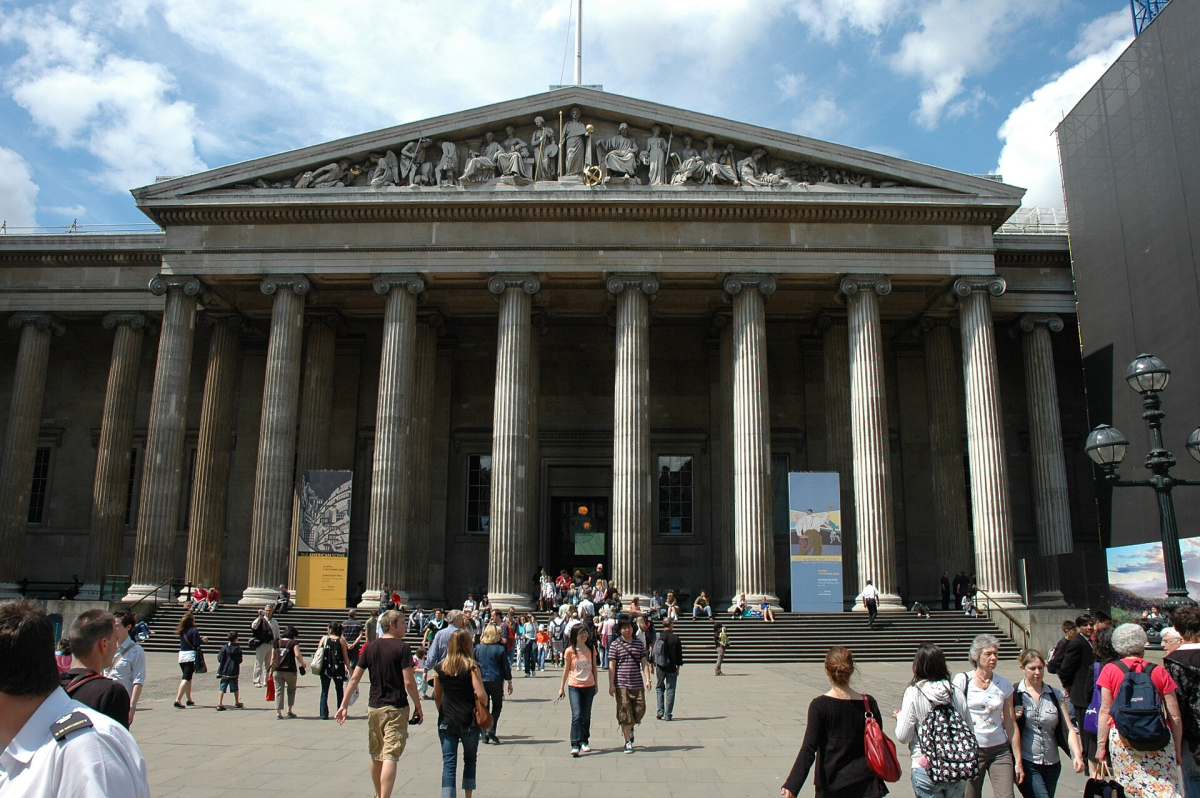
Bloomsbury is a useful choice when you want fewer changes of building. Give the British Museum one substantial block instead of treating it as the first stop in a list of unrelated museums. Choose a theme such as ancient Egypt, the Mediterranean world or early Britain, then add a contrasting collection rather than walking through every room in order.
The British Museum’s visitor information lists free permanent-collection entry and recommends booking ahead. Visitors without a reservation can face a longer wait, and admission depends on capacity. Allow time for the security check; wheeled luggage and large bags are not permitted. Check the current rules and leave travel luggage at your accommodation where possible.
A workable three-hour visit is roughly 75 minutes in your first chosen galleries, a 30-minute break, and another hour exploring a second theme, with the remaining time for orientation. This is a planning example, not a guided tour schedule. If the first collection holds your attention, let it take longer and shorten the second.
Where you still get wet: the street approach and entry queue can be exposed. Once inside, keeping your break in the building avoids a second journey through the rain. Food and drink purchases are separate from free museum admission, and available seating may affect your plans.
Optional extension: if the rain eases, add a short Bloomsbury bookshop or café stop. Keep it optional rather than promising a dry route between businesses. For help choosing between this museum and other collections, see our London attractions guide.
3. Trafalgar Square and the West End: paintings, portraits and a show
Suggested sequence: Charing Cross station → National Gallery → National Portrait Gallery → Leicester Square station, with an optional theatre booking afterwards.
This route suits a couple or a small group who want two contrasting collections close together. Spend around 90 minutes with a manageable selection of paintings at the National Gallery, then decide whether you want portraits or a long meal next. Keeping the second visit flexible is especially useful before a fixed theatre performance.
The National Gallery offers free general admission, with some exhibitions charged separately. Its main entrance is in the Sainsbury Wing, at the corner of Pall Mall and Whitcomb Street. A free advance ticket provides fast-track entry; walk-up admission is also available. Aim for the correct entrance instead of crossing Trafalgar Square repeatedly in the rain.
The nearby National Portrait Gallery also has free general admission and recommends advance booking. Its main entrance is at Ross Place. Allow roughly another hour for a selected set of portraits, plus the short street transfer and admission process. These are separate galleries with separate entrances.
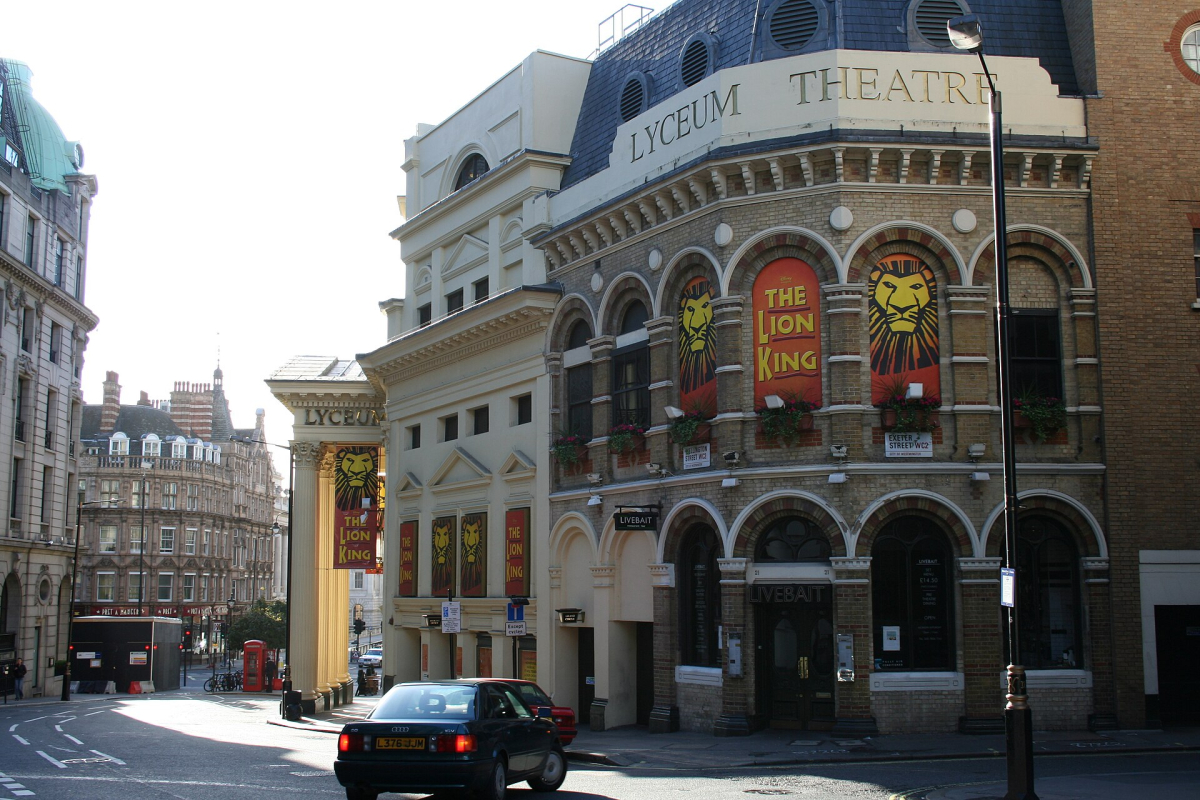
For an evening finish: choose a production through Official London Theatre or the venue, then arrange dinner near the actual theatre address. Leave enough time for the meal, walk and the theatre’s stated arrival requirements. Check age guidance, running time and seat restrictions before paying. A matinee can replace the second gallery rather than being squeezed between both visits.
Where you still get wet: Trafalgar Square, the gallery transfer and the walk to a theatre remain outdoors. Covent Garden’s covered sections do not make the whole neighbourhood an indoor shopping centre. In heavy rain, keep the gallery-and-portraits route compact and use a restaurant close to your evening venue. Our wider things to do in London guide covers other experiences for the rest of your stay.
4. Waterloo and the South Bank: a film and a slower afternoon
Suggested sequence: Waterloo station → Royal Festival Hall → BFI Southbank → Waterloo station.
Choose this route if you would prefer a film and a seated break to another museum. Start with the Royal Festival Hall’s public foyer when it is open, then make BFI Southbank the main event. Check the film programme first: a screening time gives the afternoon a useful structure, while an unsuitable film does not become a good choice simply because it is raining.
The Royal Festival Hall allows free access to its public interior during opening hours; the auditorium and ticketed events are separate. At the time of research, the building’s listed public hours were Tuesday–Sunday, 10am–11pm, with Monday closure. Seating availability and events can change how you use the foyer.
BFI Southbank combines ticketed screenings with free resources, including its Reuben Library and Mediatheque. Check each facility’s opening arrangements separately. Allow the actual film running time plus arrival, a drink or meal and your return walk; roughly three to four hours is a useful starting budget for the whole outing.
Where you still get wet: the station approach and the link between buildings include outdoor sections. Stay around Waterloo rather than automatically extending the walk east along the river. Tate Modern is a separate Bankside outing, not the next room of this cultural complex.
If the foyer is closed: build the visit around a confirmed BFI screening and a suitable food stop. Check BFI’s current visitor notices as well: bar and restaurant closures can differ from cinema opening hours. Confirm both your screening and food stop instead of assuming that every facility is available.
What does a rainy day in London cost?
You can keep attraction admission at £0 by choosing the general museum collections described above. Lunch, drinks, transport, cloakrooms, special exhibitions and performances are additional. Book the free ticket where required or recommended; free entry and immediate entry are different things.
On a small screen, swipe left or right to see all columns.
| Plan | Admission cost | Booking decision |
|---|---|---|
| South Kensington general collections | £0 | Science Museum: pre-book. Natural History Museum: booking recommended. V&A: no general-entry booking needed. Paid extras excluded. |
| British Museum permanent collection | £0 | Free advance ticket recommended; walk-up entry depends on capacity. |
| National Gallery and National Portrait Gallery general collections | £0 | Reserve each separately if using advance tickets. Special exhibitions are separate. |
| Standard BFI weekday matinee, adult non-member, booked online | £10 calculated total: £9 ticket + £1 booking fee | Check the selected film; this excludes any optional donation and exceptional event pricing. |
| Standard BFI evening or weekend screening, adult non-member, booked online | £15.50 calculated total: £14.50 ticket + £1 booking fee | Check the selected screening. Box-office purchases have no booking fee; special events can differ. |
The cinema examples use BFI’s published ticket and booking-fee information. The optional donation can be removed at checkout. For a simple planning budget, if you choose to set aside £20 for food and drinks, your free-museum afternoon becomes £20 plus transport; the standard online matinee example becomes £30 plus transport. The £20 is your spending allowance in this example, not a quoted meal price or a London average.
Before leaving: three checks that improve the day
- Check the day, not just the usual hours. Look for temporary closures, last-entry times, unavailable galleries and transport disruption. Save confirmation emails and the correct entrance.
- Match the route to your group. With children, choose one main collection and a flexible finish. For limited mobility, check step-free stations, working lifts and the street approach; the walking estimates above are not accessibility assessments.
- Protect the short outdoor sections. Bring a hooded waterproof layer, shoes suitable for wet paving and a small bag. Leave bulky luggage behind where possible. A covered attraction does not eliminate an outdoor queue.
Use our London transportation guide for payment and journey planning, and the London weather guide for seasonal packing. This article is designed for choosing an indoor route once wet weather affects your plans.
London in the rain: frequently asked questions
What can you do for free in London when it rains?
The general collections at the Natural History Museum, Science Museum, V&A, British Museum, National Gallery and National Portrait Gallery offer free options. Reservation rules differ, and special exhibitions or activities may cost extra. Choose one area rather than trying to visit them all.
Which rainy-day route works best with children?
South Kensington is a useful starting choice when a child is interested in nature or science. Pick the museum and specific activities first, check any separate tickets, and leave the second museum optional. The easiest route is the one that matches the child’s interests and energy.
Can you spend a rainy day in London without booking?
V&A South Kensington’s general collection does not require a booking. Some other venues allow walk-up visits subject to capacity, but the Science Museum asks visitors to pre-book. Check before travelling instead of assuming all free museums use the same system.
Are these routes completely indoors?
No. Station approaches, security queues and transfers between venues can be outdoors. Bloomsbury’s single-museum plan minimises building changes after arrival. If continuous shelter or step-free travel is essential, check the exact entrance and transport arrangements with the venue and TfL.
Research checked on 31 October 2026 using official venue information. Visit lengths, walking allowances and route combinations are editorial planning estimates, not firsthand measured routes. Opening arrangements, tickets and transport conditions can change; use the linked official pages before travelling.
- Log in to post comments