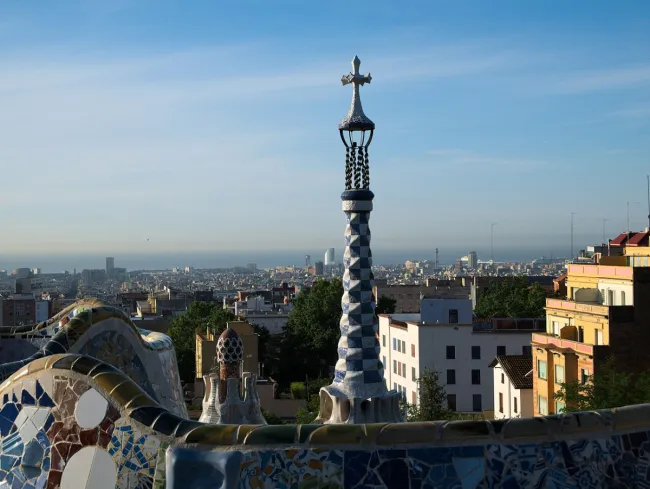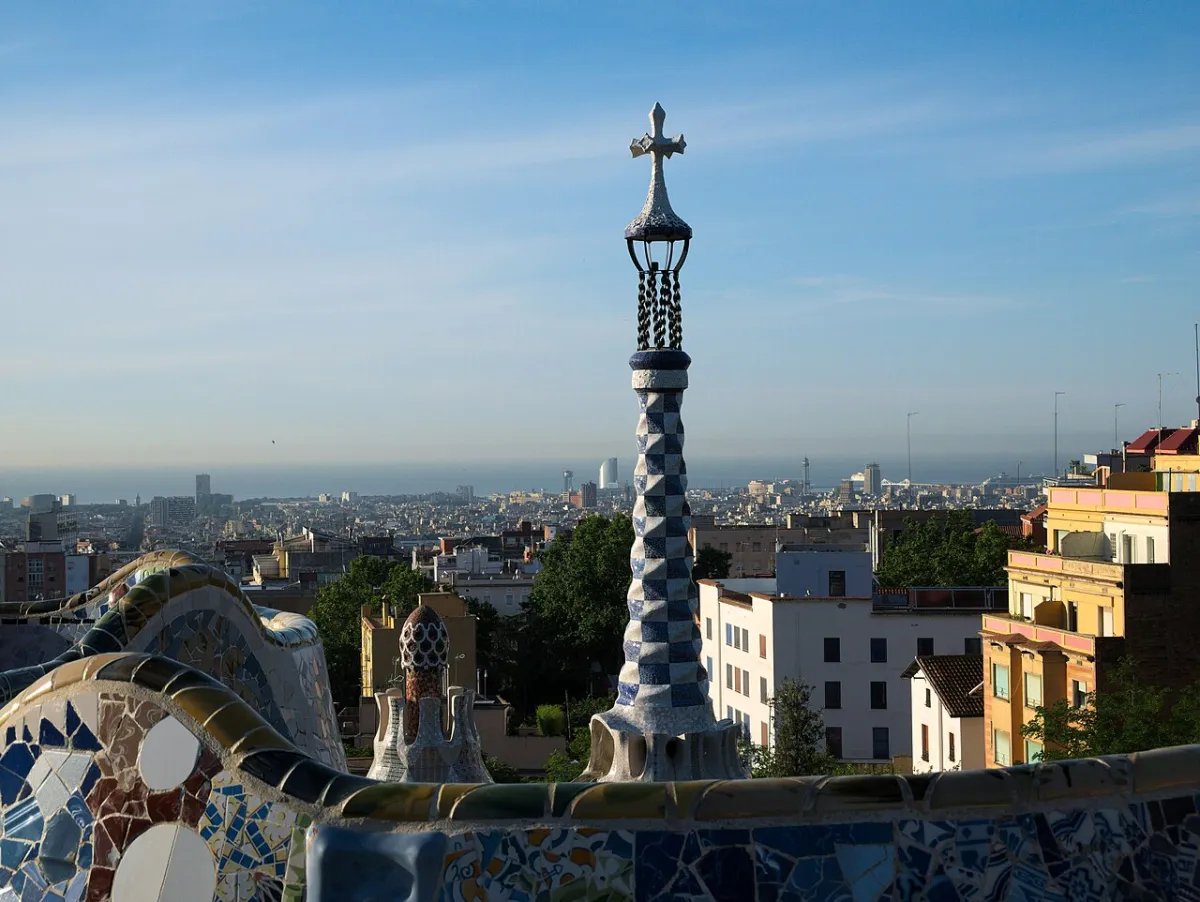
For a first trip to Spain, choose Madrid if you want world-class art museums, late-night neighbourhood dining, easy historic day trips and a slightly simpler booking rhythm. Choose Barcelona if Mediterranean beaches, Antoni Gaudí’s architecture and a coastal skyline are the main reasons you are flying to Spain. Both cities reward walking, work smoothly without a car and sit on opposite sides of Spain’s busiest high-speed rail corridor.
The clearest way to decide is to picture an ordinary afternoon. In Madrid, that often means moving from a sunlit boulevard into the Prado, pausing in Retiro Park and heading into La Latina or Chamberí as dinner gets going. In Barcelona, the same afternoon can move from Gothic Quarter alleys to Modernisme facades in Eixample and down toward the Mediterranean breeze along Barceloneta.
This comparison focuses on a four-day, three-night first visit without a rental car—enough time to settle into one city’s rhythm without turning the trip into a checklist. If you have six nights or more, the section near the end explains how to pair both cities by high-speed train.
Madrid vs. Barcelona at a glance
Start with the experience you would regret missing most. These recommendations reflect a typical first visit of three to four nights rather than a permanent ranking of two very different capitals.
On a small screen, swipe sideways to read the full table.
| Your priority | Madrid | Barcelona |
|---|---|---|
| Iconic architecture | Grand 19th-century boulevards, Habsburg plazas (Plaza Mayor) and the Royal Palace. | Gaudí’s Sagrada Família, Casa Batlló, Park Güell and medieval Gothic Quarter lanes. |
| Major art museums | Hard to beat: the Prado, Reina Sofía and Thyssen-Bornemisza sit minutes apart. | Strong focused museums (Picasso Museum, MNAC, Fundació Joan Miró), smaller overall museum core. |
| Beach and sea air | Inland at 667 m elevation; green spaces like Retiro Park replace the coast. | Direct Mediterranean coastline with urban beaches reachable by foot or Metro. |
| Advance ticket pressure | Timed tickets help at the Prado and Royal Palace, with more breathing room overall. | High: Sagrada Família and Park Güell require advance online timed bookings. |
| Day trips by train | Standout hub: Toledo, Segovia, El Escorial and Ávila are straightforward rail outings. | Strong coastal and mountain variety: Montserrat, Girona and Sitges. |
| Nightly tourist tax | None (€0 municipal or regional tourist tax). | Mandatory regional IEET plus €5 city surcharge per adult/night (capped at 7 nights). |
Architecture, art and overall feel
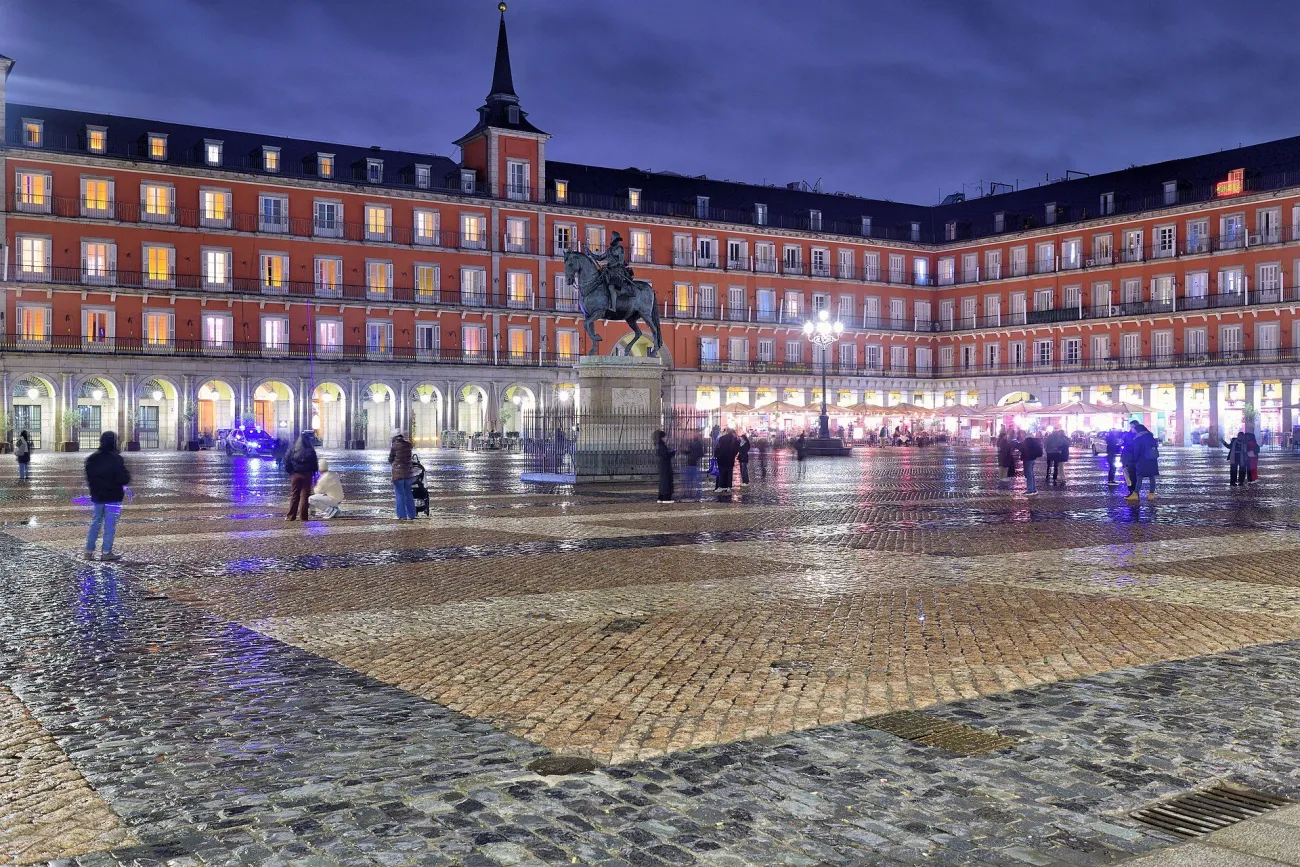
Madrid feels monumental, residential and unapologetically local. As Spain’s capital, it is built around wide avenues, grand stone facades, shady parks and distinct central barrios that blend seamlessly on foot. Its cultural anchor is the Golden Triangle of Art along the Paseo del Prado—where the Museo del Prado, Museo Reina Sofía and Museo Nacional Thyssen-Bornemisza put Velázquez, Goya, Picasso’s Guernica and centuries of European painting within one walkable corridor. Our Madrid things-to-do guide maps out how to pace those museums alongside Retiro Park and the Royal Palace.
Barcelona feels distinctly Catalan, coastal and visually playful. You hear Catalan alongside Spanish on signs and in cafés, and the city’s visual identity shifts dramatically by district: narrow medieval stone streets in the Gothic Quarter (Barri Gòtic) and El Born open onto Eixample’s chamfered grid lined with Catalan Modernisme facades. Rather than spending long blocks indoors at classical picture galleries, first-time visitors usually build their days around architectural landmarks—Sagrada Família, Casa Batlló, La Pedrera and Park Güell—paired with waterfront walks. See our Barcelona things-to-do guide for how to group them without zigzagging across town.
Where to stay: choosing the right neighbourhood
Hotel location shapes how effortlessly either city unfolds on foot, especially if you arrive by train or have only three nights.
In Madrid, Barrio de las Letras (Huertas), Justicia/Chueca and Retiro/Ibiza make strong first-time bases. Barrio de las Letras puts you within walking distance of the Prado, Retiro, Plaza Mayor and Atocha station without the heaviest late-night crowds directly around Puerta del Sol. Justicia and Chamberí give you a calmer, design-led neighbourhood feel with standout cafés and restaurants, while the streets around Sol and Gran Vía offer maximum transit convenience if you do not mind busy avenues. Compare options in our Madrid neighbourhood guide.
In Barcelona, Eixample (Dreta or Esquerra) is the easiest all-round base for a first visit. Its wide sidewalks, Metro links and proximity to Passeig de Gràcia make reaching both Sagrada Família and the old town straightforward, while feeling calmer at night than the tightest lanes around La Rambla. El Born suits travellers who want boutique hotels and tapas bars on medieval streets within reach of Ciutadella Park and the beach; Gràcia appeals if you prefer lively neighbourhood squares slightly north of the main tourist flow. Check street-level noise and transit links in our Barcelona accommodation guide.
Food culture and daily rhythm
Both cities eat late by Northern European and North American standards: lunch commonly runs from 14:00 to 16:00, and many traditional sit-down kitchens do not open for dinner until 20:30 or 21:00. Where they differ is how a meal fits into the evening.
Madrid shines for bar-hopping tapas, classic Castilian dishes and vermouth hours. Neighbourhoods such as La Latina (especially Cava Baja), Chamberí (Calle de Ponzano) and Lavapiés make it easy to build an evening around two or three stops—ordering a caña or glass of vermouth alongside patatas bravas, croquetas, calamari sandwiches (bocadillo de calamares) near Plaza Mayor, or a long midday plate of cocido madrileño in cooler months. Markets like Mercado de San Miguel are central and lively, while neighbourhood food halls such as Mercado de Antón Martín or Mercado de la Paz offer a quieter pace. Our Madrid food and drink guide covers dishes, neighbourhoods and meal timing in detail.
Barcelona pairs Catalan regional cooking with Mediterranean seafood and market culture. Expect pa amb tomàquet (bread rubbed with tomato and olive oil), bombas (potato croquettes rooted in Barceloneta), escalivada, grilled seafood, local cava and lively vermuterías. La Boqueria right off La Rambla is famous and visually striking, though busy at midday; Santa Caterina Market in El Born and Sant Antoni Market offer a more relaxed look at daily shopping and counter lunches. Explore Catalan classics and dining districts in our Barcelona food and drink guide.
Weather, seasons and the beach factor
Geography creates a noticeable climate split. Madrid sits inland at roughly 667 metres above sea level, while Barcelona sits directly on the Mediterranean coast. According to Spain’s state meteorological agency (AEMET) 1981–2010 standard climate normals, Madrid (Retiro) averages a daily maximum of about 9.8°C (50°F) in January and 32.1°C (90°F) in July (31.3°C / 88°F in August), with dry air and noticeably cooler nights. Barcelona (Aeropuerto) averages a milder 13.6°C (56°F) in January and 28.0°C (82°F) in July (28.5°C / 83°F in August), though coastal humidity can make midsummer afternoons and evenings feel warmer than the thermometer alone suggests. Climate normals show long-term averages, not a forecast for your travel dates.
What that means for trip timing:
- Spring (April–May) and Autumn (late September–October): Prime weather in both cities, with comfortable walking temperatures and long daylight hours.
- Winter (December–February): Barcelona is noticeably milder for outdoor cafés and coastal walks; Madrid brings crisp, often sunny blue-sky days paired with cold mornings and evenings—well suited to museum-heavy itineraries.
- Peak Summer (July–August): Madrid’s midday heat can be intense and dry, favouring early starts, indoor museum hours and late outdoor dinners; Barcelona adds sea breezes and swimming, though coastal humidity and peak crowds are highest then.
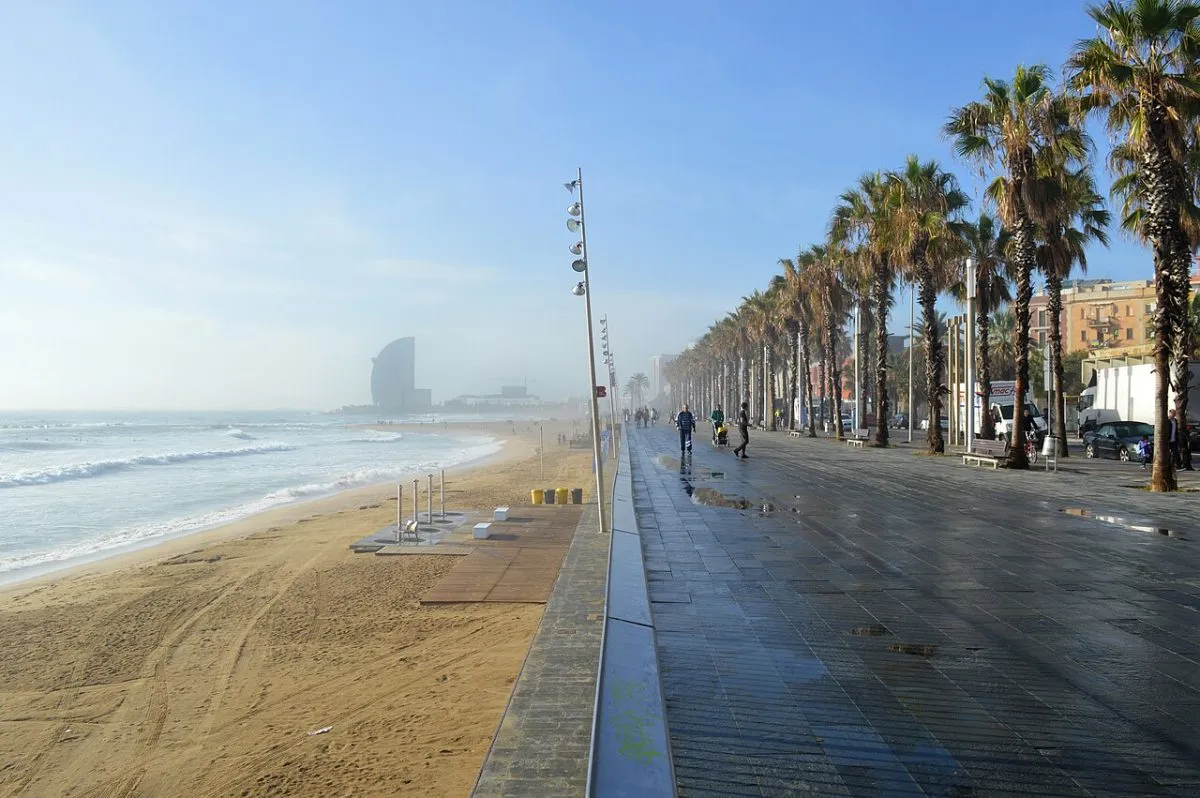
If swimming or relaxing on sand matters even for half a day, Barcelona wins automatically—Barceloneta, Bogatell and Mar Bella put urban beaches within minutes of the centre. Our Barcelona beaches guide compares the quieter stretches farther northeast with central Barceloneta. For month-by-month detail, see our Madrid weather guide and Barcelona weather guide.
Airports, tourist tax and real trip costs
Neither city requires a car, and both have reliable rail and bus connections from their international airports. Because hotel and flight prices move week by week—especially around trade fairs, football matches and summer holidays—there is no permanent citywide winner on total budget. Instead, compare the exact room quotes for your dates, then add two concrete fixed differences: airport transfers and mandatory nightly tourist tax.
On a small screen, swipe sideways to compare transfer fares and tourist taxes.
| Cost factor | Madrid (MAD) | Barcelona (BCN) |
|---|---|---|
| Airport Metro | Line 8 to Nuevos Ministerios (~15–20 min before transfer): €1.50–€2.00 Zone A fare + €3.00 airport supplement = €4.50–€5.00 (plus one-time €2.50 Multi card). | Line L9 Sud (requires transfer for centre): €5.90 single Airport Ticket (Bitllet aeroport); standard T-casual cards are not valid at airport Metro stations. |
| Airport Express Bus | EMT Line 203 (Exprés Aeropuerto), 24/7 to Cibeles & Atocha (~30–40 min): €5.00 flat fare (contactless accepted onboard). | Aerobús A1/A2, 24/7 direct to Plaça Catalunya: €7.75 one-way or €13.30 return (valid 90 days). |
| Other Airport Rail / Bus | Cercanías commuter rail runs from Terminal 4 directly to Chamartín and Atocha. | Rodalies R2 Nord train from Terminal 2 only (~18–20 min to Sants / Passeig de Gràcia): €4.60 single; TMB Bus 46 to Plaça Espanya: €2.90. |
| Mandatory Tourist Tax | €0.00 (no municipal or regional tourist tax). | Regional IEET + €5.00 city surcharge per adult/night (excl. VAT, capped at 7 nights, ages 16 & under exempt): €7.00 (1–3★ hotels), €8.40 (4★ hotels), €9.50 (holiday apartments), €12.00 (5★ hotels). |
The tourist tax gap is easy to overlook until check-in. Under Catalonia’s updated 2026 rates administered by the Agència Tributària de Catalunya alongside Barcelona’s €5.00 municipal surcharge, two adults staying three nights in a four-star Barcelona hotel pay €50.40 in nightly tourist tax (before VAT), or €57.00 in a licensed holiday apartment—compared with €0 in Madrid. Always check whether a hotel quote displays the tax separately at checkout.
Attraction spending also adds up differently. In Barcelona, visiting several signature Gaudí monuments (Sagrada Família, Park Güell, Casa Batlló or La Pedrera) means multiple paid timed tickets in a single trip. In Madrid, several headline museums offer generous daily free-entry windows (such as the Prado’s final two opening hours, subject to capacity), and parks like Retiro and squares like Plaza Mayor cost nothing to explore. For local transit passes and zone rules, see our Madrid transport guide and Barcelona transport guide, or confirm current fares directly with Metro de Madrid and TMB Barcelona.
Tickets and booking rules to check before you go
A smooth first trip depends less on packing more sights into the schedule and more on respecting each city’s entry rules.
- Sagrada Família (Barcelona): Tickets are sold online only via sagradafamilia.org—there is no on-site box office. Entry slots are strictly timed, tower access requires a separate add-on selected at booking, and early morning quiet hours require earphones for audio guides.
- Park Güell (Barcelona): Monumental-zone capacity is capped hourly, tickets are nominal (bring ID), and entry is limited to a strict 30-minute window from the time printed on your ticket. Early morning and late evening bands are reserved exclusively for local residents; book directly at parkguell.barcelona.
- Museo del Prado (Madrid): Open daily (Monday–Saturday 10:00–20:00, Sundays and public holidays 10:00–19:00; closed 1 January, 1 May and 25 December; shorter hours 6 January, 24 December and 31 December). Timed tickets are booked via museodelprado.es. Bags larger than 40×40 cm are not permitted inside, and photography and filming are prohibited inside the exhibition galleries.
- Museo Reina Sofía and Royal Palace (Madrid): Reina Sofía is closed on Tuesdays (check hours at museoreinasofia.es). The Royal Palace opens daily on seasonal winter/summer schedules, though official state ceremonies can trigger occasional closures—always verify your exact date in advance.
Photography: light, viewpoints and streets
Both cities are deeply rewarding with a camera, but they offer very different compositions.
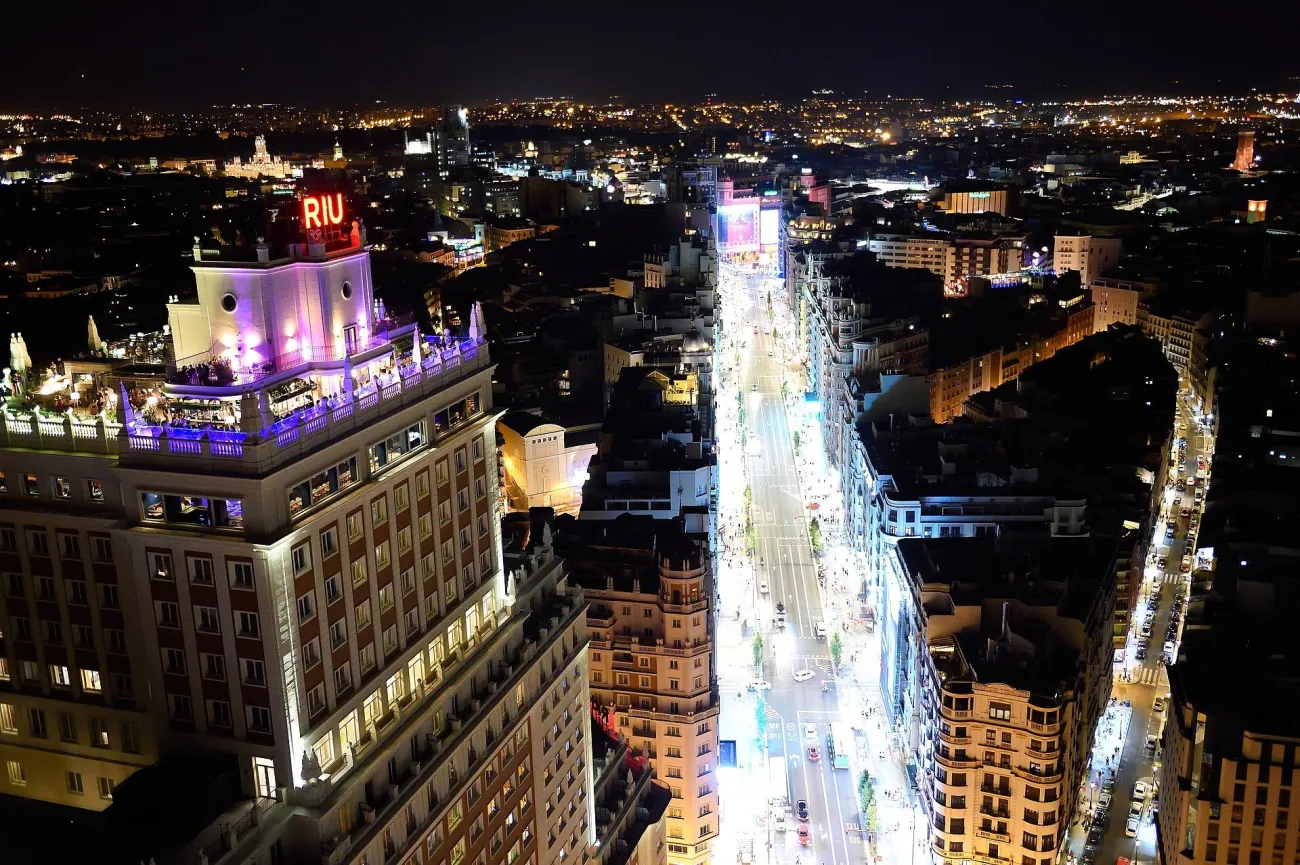
Madrid rewards warm late-afternoon light, symmetrical architecture and street life. Because of its inland elevation and dry air, golden hour across Gran Vía’s landmark Metropolis and Edificio Carrión silhouettes, the Crystal Palace and boating lake in Retiro Park, and the sunset ridge at Templo de Debod can be remarkably crisp. Indoors, note that the Prado’s strict no-photo policy shifts your visual storytelling outdoors to plazas, markets and rooftop terraces. Explore framing ideas in our Madrid photo spots guide.
Barcelona offers higher visual contrast in a single day. Within a few kilometres you can photograph stained-glass light pouring across Sagrada Família’s stone columns, geometric Modernisme balconies along Passeig de Gràcia, shadowed medieval arches in the Gothic Quarter, and wide coastal panoramas from Montjuïc or Carmel. Early morning (before 09:00) makes the biggest difference in Barri Gòtic and El Born, where narrow lanes fill quickly by mid-morning.
What four days actually look like in each city
These sample plans assume four calendar days and three nights—arriving by midday on Day 1 and departing in the afternoon or evening on Day 4. Each day clusters nearby areas to keep walking enjoyable and leave room for long Spanish lunches.
On a small screen, swipe sideways to compare both four-day plans.
| Day | Madrid plan | Barcelona plan |
|---|---|---|
| Day 1 | Drop bags; walk Habsburg Madrid (Plaza Mayor, Mercado de San Miguel, Royal Palace exterior) and catch sunset near Templo de Debod; tapas in La Latina. | Drop bags; wander El Born and the Gothic Quarter (Barcelona Cathedral, Plaça del Rei), then walk down to the harbour or Barceloneta for sunset. |
| Day 2 | Morning timed visit to Museo del Prado, lunch in Barrio de las Letras, slow afternoon in Retiro Park; evening stroll along Gran Vía or Chamberí. | Pre-booked morning slot at Sagrada Família, lunch in Eixample, afternoon along Passeig de Gràcia (Casa Batlló or La Pedrera interior/exteriors). |
| Day 3 | Option A: Half-day or full-day high-speed train to Toledo or Segovia. Option B: Royal Palace interior, Reina Sofía (avoid Tuesdays) and Malasaña cafés. | Pre-booked morning slot at Park Güell, lunch in Gràcia, afternoon up Montjuïc (gardens, MNAC terrace or Miró Foundation) for city-and-sea views. |
| Day 4 | Relaxed coffee and market stop (Mercado de la Paz or Antón Martín), last-minute neighbourhood walk, collect bags and head to MAD. | Early coffee in Sant Antoni or El Born, relaxed beach promenade or Picasso Museum visit if time allows, collect bags and transfer to BCN. |
Want to adjust pacing around museums, neighbourhoods or extra nights? Use our dedicated Madrid itineraries guide or browse the full Barcelona travel guide.
Day trips—and can you combine both cities?
If day trips are a big part of your appeal, Madrid has the edge for sheer historic variety within an hour. High-speed Avant trains reach medieval Toledo in roughly half an hour and Segovia (famous for its Roman aqueduct and Alcázar) in under half an hour from Madrid’s central stations, while El Escorial and Alcalá de Henares are easy commuter-rail outings. See practical routes in our Madrid day trips guide. Barcelona’s standout day trips bring different scenery—dramatic mountain monasteries at Montserrat, the riverside old town of Girona, or a relaxed seaside day in Sitges.
Should you visit both Madrid and Barcelona on your first trip? Only if you have at least six to seven nights. For three or four nights, splitting the stay turns an entire middle day into packing, station security, transit and a second check-in. When you do have a week or more, combining them is straightforward: direct high-speed trains operated by Renfe AVE, Iryo and Ouigo link Madrid-Puerta de Atocha and Barcelona Sants right from city centre to city centre. Plan for roughly 3 hours to 3 hours 20 minutes on direct services (temporary track speed limits on the corridor have added time compared with older 2.5-hour estimates, so always verify live schedules before booking tight connections). Booking an open-jaw flight—flying into Madrid and home from Barcelona, or vice versa—saves backtracking. Our Spain transport guide explains how to plan rail legs across the country.
Our pick for your first trip
Choose Madrid if you want Spain’s richest art museums, effortless tapas bar-hopping, dramatic Castilian day trips (Toledo or Segovia) and a trip that feels less dictated by pre-booked timed entry slots—and without Barcelona’s nightly tourist tax.
Choose Barcelona if seeing Gaudí’s landmarks in person, pairing city sightseeing with Mediterranean beaches and exploring Catalan culture alongside coastal views matter more than classical art galleries.
Still torn? Look at your travel month and flight options. For a winter escape where mild outdoor afternoons matter most, Barcelona’s coast gives it a real edge. For a short 3-night cultural break booked on shorter notice—when Barcelona’s headline timed tickets may already be tight—Madrid is often the calmer, more rewarding first choice. Whichever city you pick, our full Spain travel guide helps you map out the next step.
Madrid vs. Barcelona: frequently asked questions
Is Madrid or Barcelona better for a first-time visitor to Spain?
Choose Barcelona if Gaudí’s architecture, coastal scenery and Mediterranean beaches top your wish list. Choose Madrid if world-class art museums, late-night neighbourhood tapas, historic day trips like Toledo and Segovia, and a more flexible sightseeing pace appeal more.
How many days do you need in Madrid or Barcelona?
Three full days (four calendar days, three nights) is a comfortable minimum for a first visit to either city without rushing. Add a fourth full day in Madrid if you want to include a day trip to Toledo or Segovia, or in Barcelona if you want both Montserrat and a relaxed beach afternoon.
Is Madrid cheaper than Barcelona?
Flight and hotel prices fluctuate by season and events, so always compare final quotes for your exact dates. However, Madrid charges €0 in nightly tourist tax, whereas Barcelona adds a combined regional and municipal tourist tax of €7.00 to €12.00 per adult per night (before VAT, capped at seven nights) depending on hotel tier, plus Barcelona’s flagship Gaudí sites typically add more paid admission tickets.
How long is the high-speed train between Madrid and Barcelona?
Direct high-speed trains operated by Renfe AVE, Iryo and Ouigo between Madrid-Puerta de Atocha and Barcelona Sants typically take about 3 hours to 3 hours 20 minutes under 2026 schedules. Check live operator timetables when booking, as temporary speed restrictions can shift journey times slightly.
Which city is better in winter?
Barcelona is milder in winter thanks to the Mediterranean coast (averaging around 13.6°C / 56°F daily highs in January), making outdoor strolling and waterfront walks more comfortable. Madrid sits inland at 667 metres and is noticeably crisper (around 9.8°C / 50°F average January highs), which pairs well with sunny daytime walks and long afternoons inside its major museums.
Can you visit both Madrid and Barcelona in five days?
It is technically possible by high-speed train, but five days leaves only about two days per city once airport transfers, station check-in and hotel moves are counted. For five days or fewer, choosing one city gives you a far better first experience; aim for at least six to seven nights to enjoy both properly.