Choose Niseko if snow is the whole point of the trip. The weather station by Niseko records 921 cm of snowfall a year against 655 cm in Hakuba, and in December it gets almost twice as much. Choose Hakuba if skiing is one part of a wider Japan trip. It is under three hours from Tokyo, it gets about half as much sunshine again in midwinter, and its valley-wide pass is cheaper: ¥53,400 for five days in 2026/27, against ¥65,500 for Niseko’s All Mountain Pass in peak season.
Niseko, on Hokkaido, and Hakuba, in the Japanese Alps near Nagano, are the two names most foreign skiers start with. They feel very different on the ground. We compared them on the things that decide a trip: how much snow and sun each valley gets, what the 2026/27 lift passes cost, how big and how linked the ski areas are, and how long it takes to get there. Snow and sunshine figures are the Japan Meteorological Agency’s official 1991 to 2020 climate normals. Prices come from the resorts’ own 2026/27 price lists, checked on 22 November 2026.
For a wider look at skiing in Japan, including Nozawa Onsen, Furano and Zao, see our Japan skiing and winter guide.
At a glance
The short version: Niseko is one mountain with four linked resorts and a lot of snow. Hakuba is a valley of ten separate resorts with higher, steeper mountains around it.
| Niseko United | Hakuba Valley | |
|---|---|---|
| Where | Hokkaido, around Mount Annupuri | Nagano, Japanese Alps |
| Resorts on one pass | 4, linked at the top: Grand Hirafu, Hanazono, Niseko Village, Annupuri | 10, mostly separate and joined by shuttle buses |
| Snowfall a year (valley station) | 921 cm (Kutchan, 176 m) | 655 cm (Hakuba, 703 m) |
| January sunshine | 47 hours | 71 hours |
| Adult 1-day pass | ¥13,500 peak; ¥12,600 regular | ¥11,100 all season |
| Adult 5-day pass | ¥65,500 peak; ¥61,000 regular | ¥53,400 all season |
| Season 2026/27 | 28 Nov to 5 May (Grand Hirafu, Annupuri) | Happo-one opened 22 Nov; prices listed to 5 May |
| From the nearest big airport or city | About 3.5 hours by ski bus from New Chitose | About 2 hours 50 minutes from Tokyo by train and bus |
Snow and sunshine
Resorts publish their own snowfall figures, measured in different places and over different years, so they are hard to compare. We used the official climate normals for the nearest Japan Meteorological Agency station in each valley instead: Kutchan, a few kilometres from Grand Hirafu, and Hakuba village. Both stations sit low in the valley, so the slopes above get more snow than these numbers show. What the numbers do show fairly is the difference between the two places.
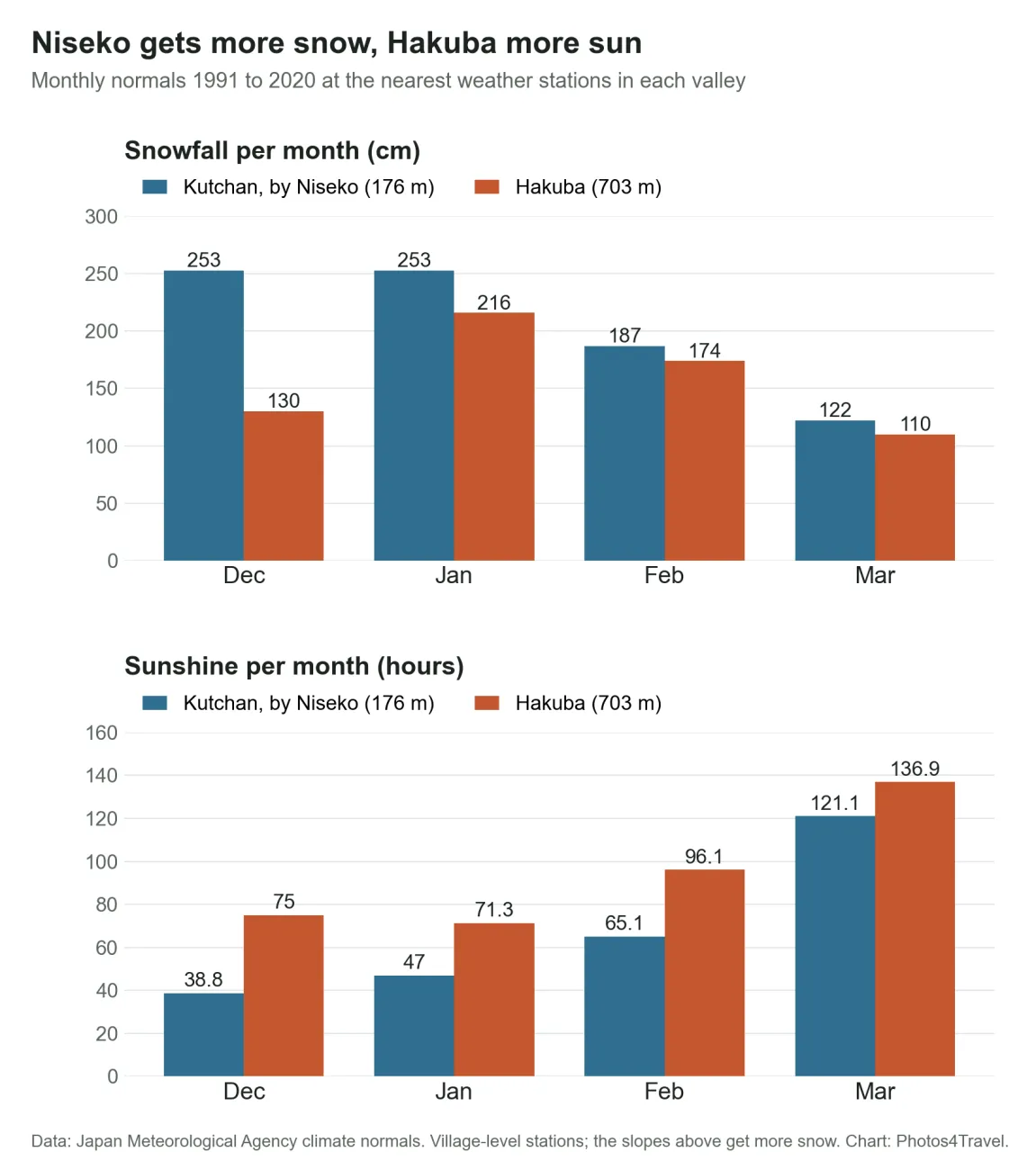
Three things stand out. Niseko’s station, only 176 m above sea level, records 41% more snow over the year than Hakuba’s at 703 m. The gap is widest in December: 253 cm against 130 cm. By February and March the two valleys are close.
Niseko is also colder. The average January temperature at Kutchan is −5.4°C, against −2.8°C in Hakuba village.
The trade-off is light. Hakuba gets about twice as much sunshine as Niseko in December and half as much again in January and February. Niseko’s famous snow comes with a lot of grey days; Hakuba’s mountains are more often in view.
| Normals 1991 to 2020 | Kutchan, by Niseko (176 m) | Hakuba (703 m) |
|---|---|---|
| Snowfall, December | 253 cm | 130 cm |
| Snowfall, January | 253 cm | 216 cm |
| Snowfall, February | 187 cm | 174 cm |
| Snowfall, March | 122 cm | 110 cm |
| Snowfall, whole year | 921 cm | 655 cm |
| Deepest snow in an average February | 181 cm | 97 cm |
| Mean temperature, January | −5.4°C | −2.8°C |
| Sunshine, January | 47 hours | 71 hours |
For a trip in December, the difference matters most. If you can only go in the second half of December, Niseko’s odds of deep snow are much better. From February on, both valleys are usually well covered. See our best time to visit Japan guide for the rest of the year.
Lift passes 2026/27
Niseko prices its pass by period. Hakuba Valley keeps one price for the whole season, and its 1-day ticket is valid only on the day of use. All prices below are for adults, in yen, as listed by the resorts.
| Pass | 1 day | 5 days | When |
|---|---|---|---|
| Niseko United All Mountain Pass, peak | ¥13,500 (¥12,800 online) | ¥65,500 (¥62,200 online) | 24 Dec 2026 to 28 Feb 2027 |
| Niseko United All Mountain Pass, regular | ¥12,600 (¥11,900 online) | ¥61,000 (¥57,900 online) | 12 to 23 Dec; 1 to 22 Mar |
| Niseko United All Mountain Pass, early and spring | ¥8,800 | ¥42,700 | 28 Nov to 11 Dec; 23 Mar to 4 Apr |
| Annupuri only | ¥7,800 peak; ¥7,500 regular | Annupuri lifts only | |
| Hakuba Valley All-Mountain ticket | ¥11,100 | ¥53,400 (6 days ¥63,900) | Whole 2026/27 season |
| Happo-one only, peak | ¥9,800 | 19 Dec 2026 to 22 Mar 2027 | |
| Happo-one only, early and spring | ¥6,400 | 1 to 18 Dec; 23 Mar to 5 May |
Over five days in peak season, Hakuba’s valley ticket is ¥12,100 cheaper than Niseko’s pass at the counter, or ¥8,800 cheaper than Niseko’s online price. Niseko’s early and spring weeks bring its price below Hakuba’s, but those are also the weeks with the least terrain open. Hakuba’s valley ticket is sold online and does not cover night skiing.
Niseko: one mountain, a lot of snow
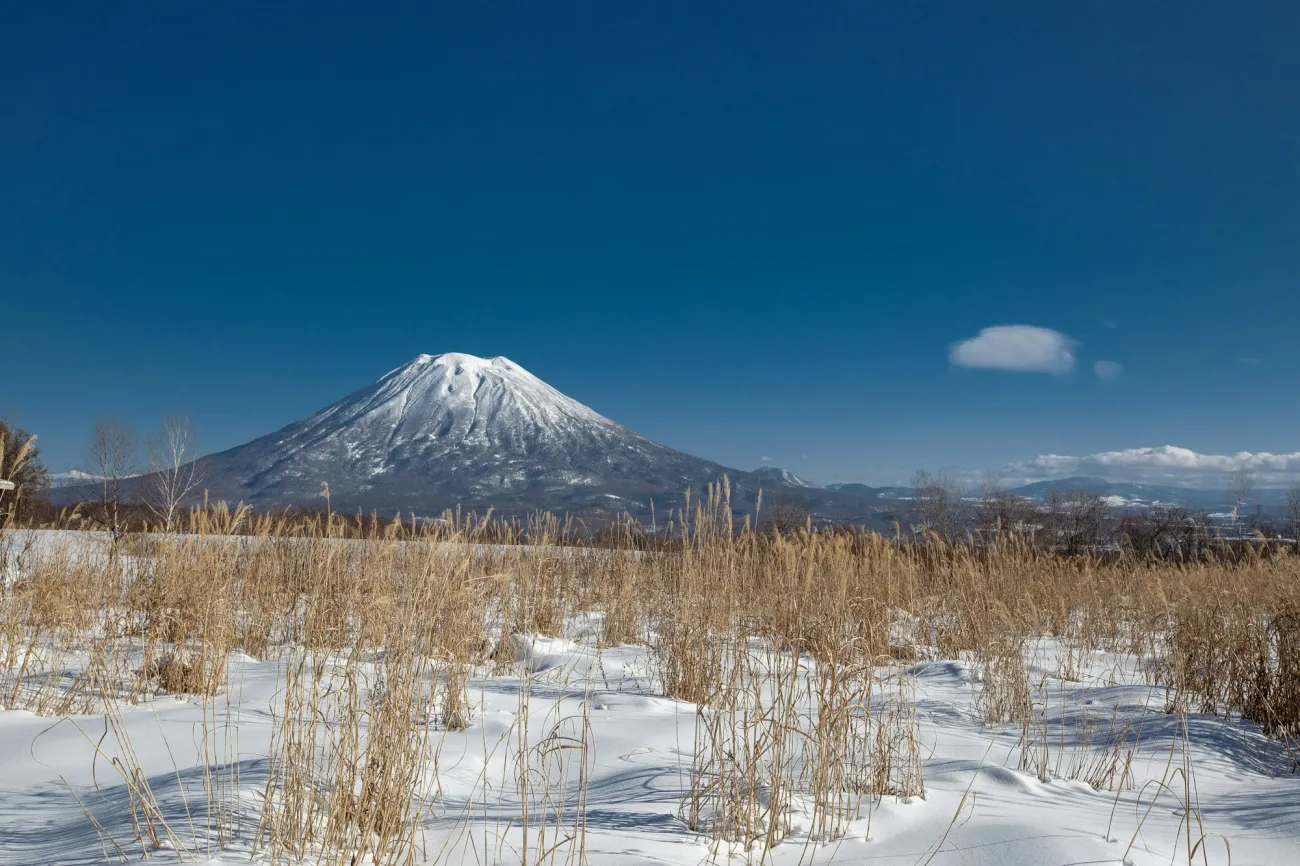
Niseko United is four resorts on the slopes of Mount Annupuri: Grand Hirafu, Hanazono, Niseko Village and Annupuri. They connect near the top, and one All Mountain Pass covers all of them. Together they have more than 47 km of groomed runs. Grand Hirafu alone has 22 trails, nine of them graded beginner, with a vertical drop of 940 m and a longest run of 5.3 km. Across the valley stands Mount Yotei, the near-perfect cone that shows up in most photos of Niseko.
Night skiing is a real part of the day here. From 12 December to 22 March, Grand Hirafu lights 12 trails until 19:00, Hanazono runs until 20:00 and Annupuri until 19:30. With the short December days, that adds hours to each trip.
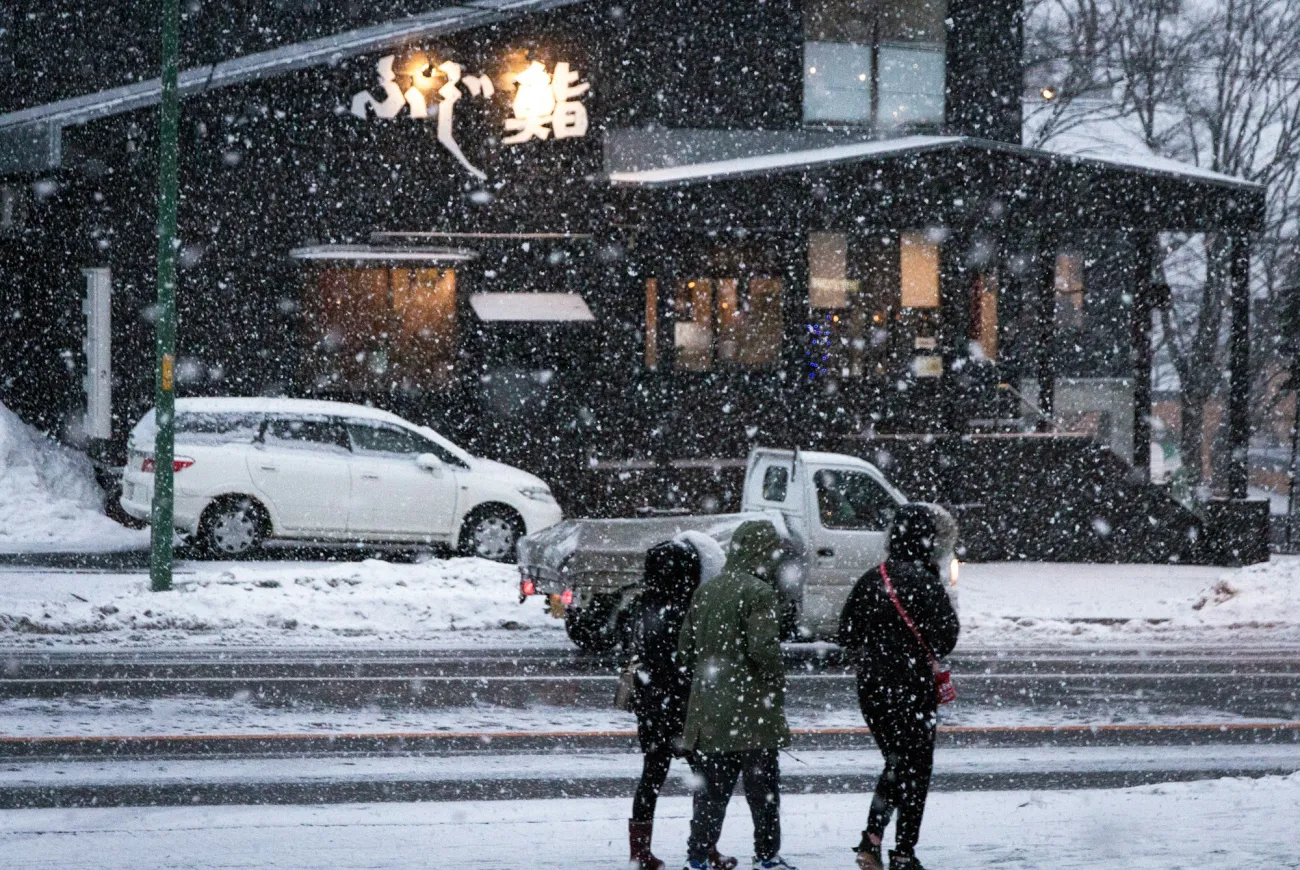
Hirafu is the largest village and the one most used to foreign visitors. The season runs from 28 November 2026 to 5 May 2027 at Grand Hirafu and Annupuri; Hanazono closes on 11 April and Niseko Village on 4 April.
Hakuba: ten resorts and the Alps behind them
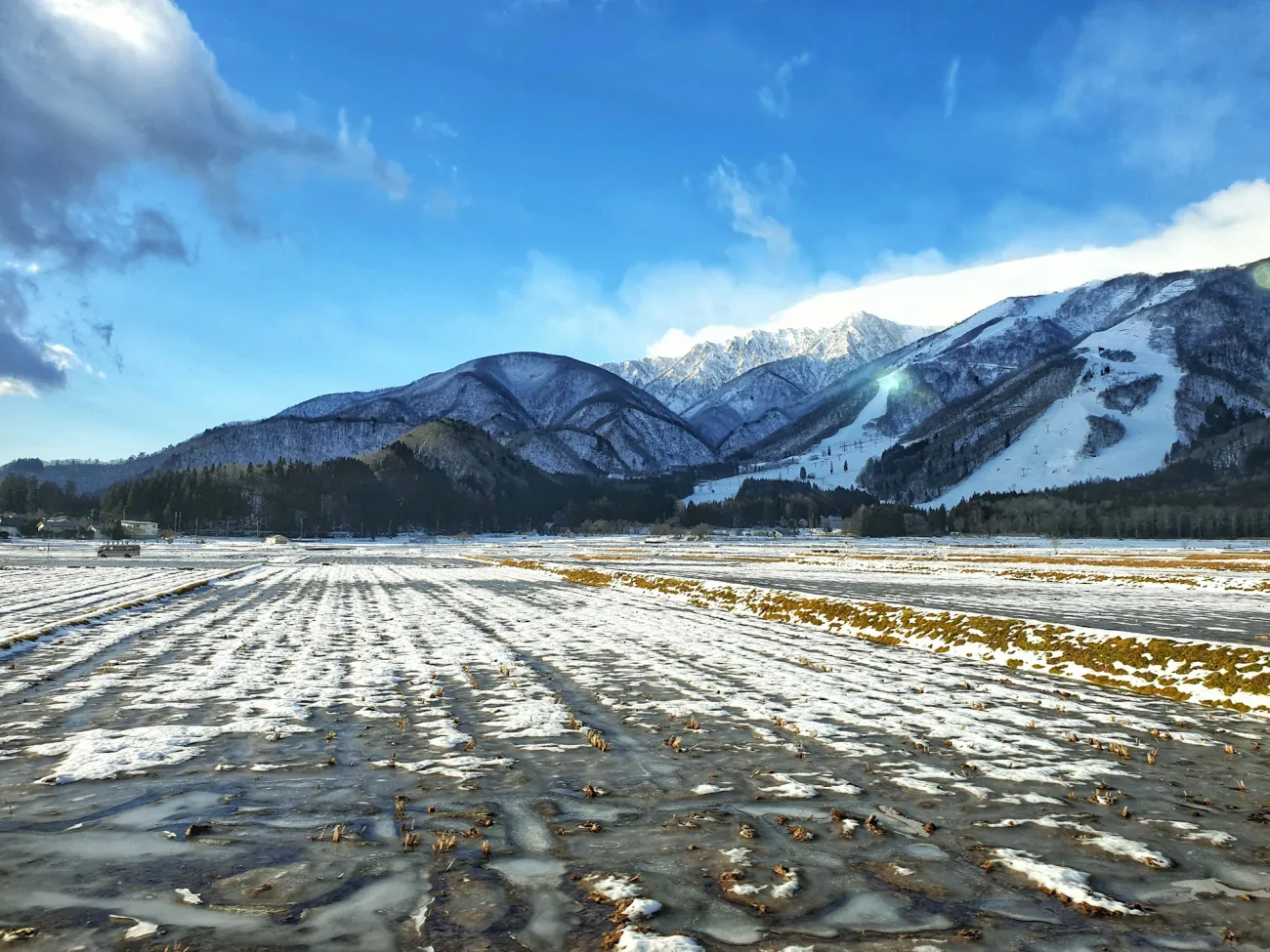
Hakuba Valley groups ten ski resorts in Hakuba, Omachi and Otari under one ticket. The biggest name is Happo-one, which runs from 760 m to 1,831 m with a vertical drop of 1,071 m and a longest run of 8 km. Its slopes are graded 30% beginner, 50% intermediate and 20% advanced. Goryu, Hakuba 47, Iwatake and Tsugaike are the other large areas.
The resorts are not linked on skis, apart from Goryu and Hakuba 47, so you move between them by shuttle bus. That suits a group that likes a different mountain every day, and it is the main reason Hakuba feels larger than Niseko. Night skiing is at Goryu, the biggest lit area in the valley, but it is not included in the valley ticket.
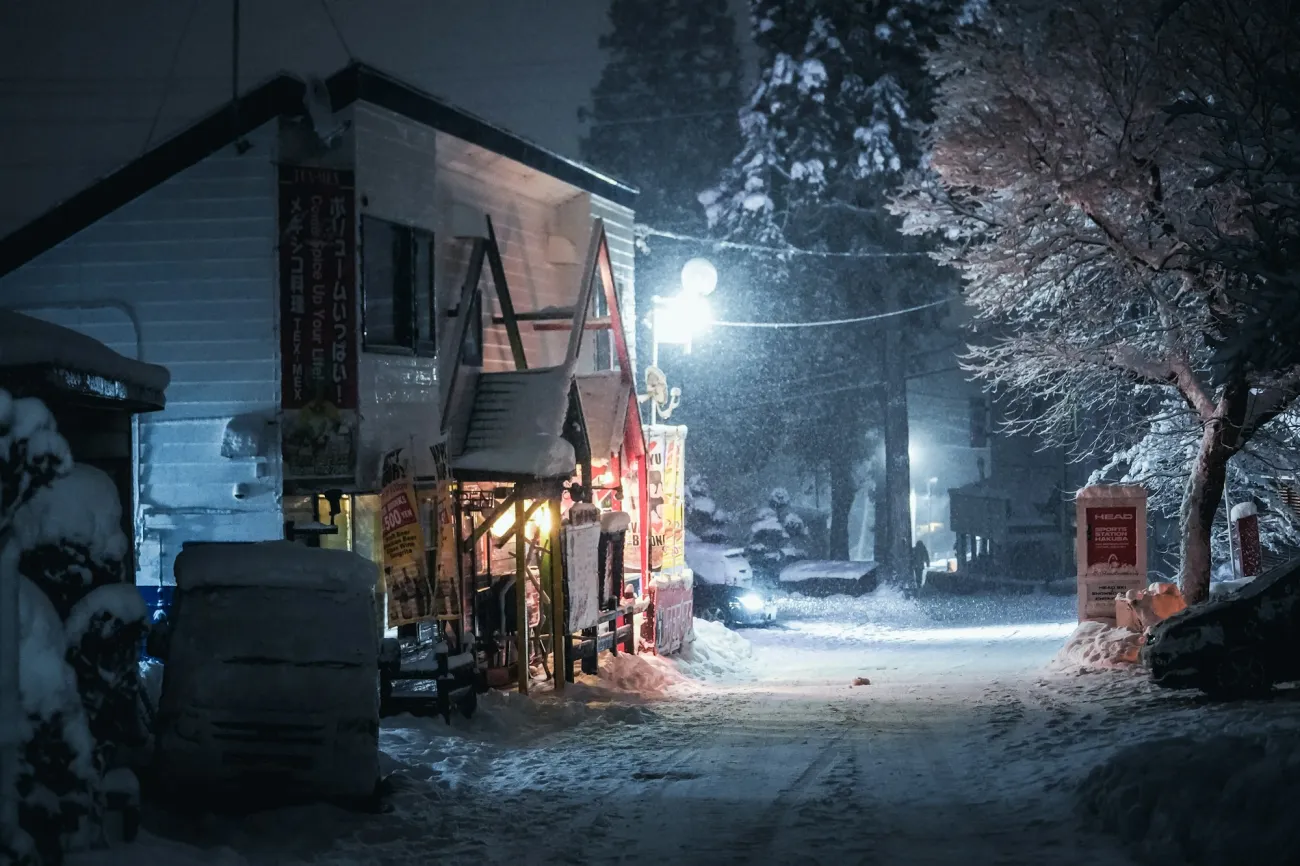
Off the slopes, Hakuba is closer to the rest of Japan. Nagano is a little over an hour away by bus, and from there you can reach the Jigokudani snow monkeys and the Zenkoji temple. One option is a snow monkeys, Zenkoji and sake day trip from Nagano, from €125 when we checked.
Beginners and families
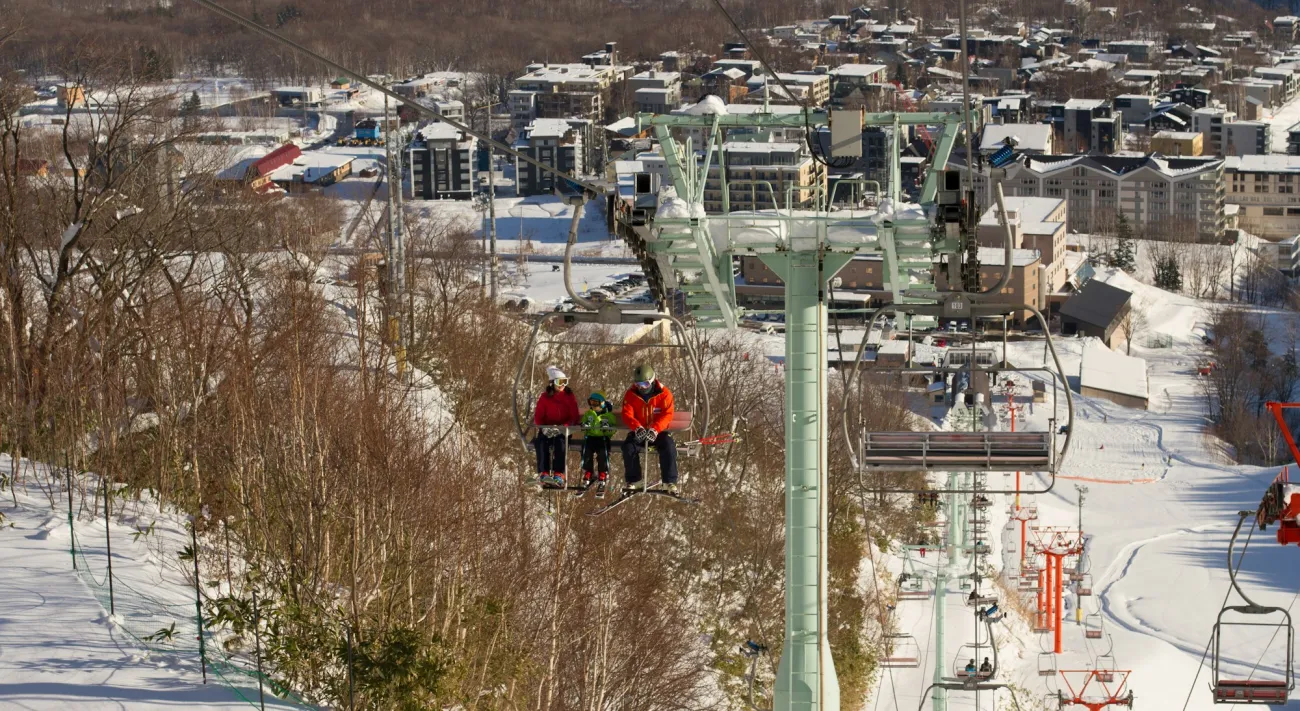
Both valleys have English-language ski schools, which is not a given everywhere in Japan. In Niseko, the Niseko International Snowsports School is based at Hanazono, which it calls the resort’s best area for beginners. Grand Hirafu’s own school teaches in Japanese or English and has a magic carpet for first-timers, and the Niseko Village school uses multilingual instructors. The Annupuri school uses Japanese staff.
In Hakuba, Evergreen International at Happo-one describes itself as the valley’s first English-language school, and Happo-one has a new beginner area for 2026/27, the Usagidaira Bunny Area. Hakuba Snow Sports School at Goryu teaches in English, Chinese, French and Spanish, and Hakuba 47 and Kashimayari also have English-speaking schools.
Small children ski free in both places: under 3 on Niseko’s pass, and 5 and under on the Hakuba Valley ticket, except at Jigatake and Kashimayari, where the limit is 3.
Getting there
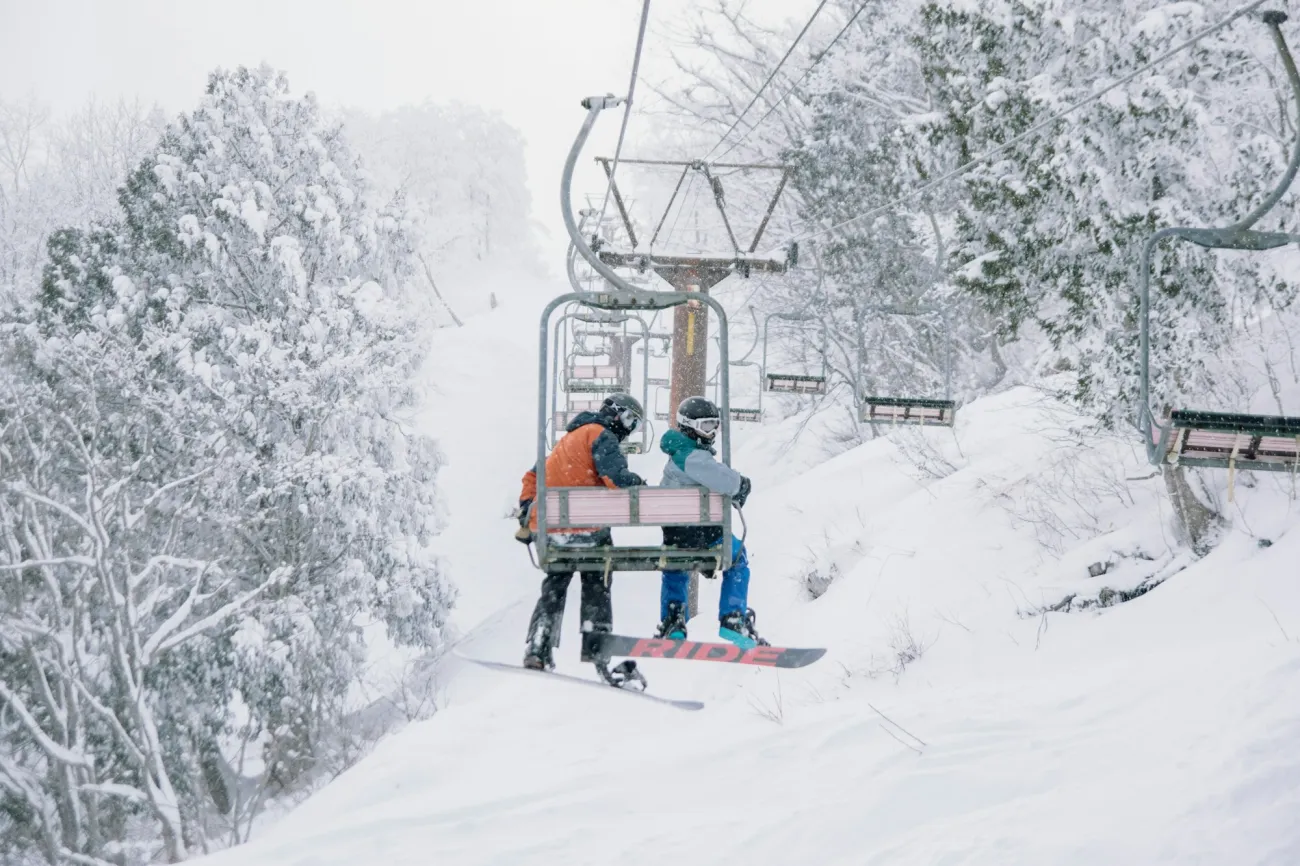
Hakuba is the easier add-on to a Tokyo trip. The Hokuriku Shinkansen runs to Nagano, and an express bus continues to the valley; the valley’s own site gives the shortest journey as about 2 hours 50 minutes. That makes a few days of skiing between Tokyo and Kyoto realistic.
Niseko usually means a flight to New Chitose airport near Sapporo. The Niseko United ski bus to Hirafu takes about three and a half hours, costs ¥6,000 one way and must be booked; it runs from 12 December 2026 to 21 March 2027. By car it is about two to two and a half hours. The train via Otaru is possible but slower, and services are limited. Our getting around Japan guide covers rail passes and domestic flights.
Which one to choose
Most people decide on one thing: snow, scenery, the rest of the trip or the budget. This is how the two compare on those.
| If you want… | Go to | Why |
|---|---|---|
| The best chance of deep snow | Niseko | 921 cm a year at the valley station, and almost twice Hakuba’s December snowfall |
| A ski trip before Christmas | Niseko | 253 cm of December snowfall against 130 cm in Hakuba |
| Skiing as part of a Tokyo and Kyoto trip | Hakuba | About 2 hours 50 minutes from Tokyo by train and bus |
| More sunshine and mountain views | Hakuba | About twice Niseko’s sunshine in December, half as much again in January |
| A cheaper multi-day pass | Hakuba | ¥53,400 for 5 days all season, against ¥65,500 in Niseko’s peak |
| Skiing after dark | Niseko | Lit runs at Grand Hirafu, Hanazono and Annupuri until 19:00 to 20:00 |
| A different mountain every day | Hakuba | Ten resorts on one ticket |
Planning a winter trip in Europe instead? Our guide to the best Austrian ski resorts for beginners compares six areas with 2026/27 prices.
FAQ
Is Niseko or Hakuba better?
For pure snow, Niseko: the nearest weather station records 921 cm a year against 655 cm in Hakuba. For a trip that also includes Tokyo or Kyoto, more sunshine and a cheaper pass, Hakuba.
Which gets more snow, Niseko or Hakuba?
Niseko. Japan Meteorological Agency normals for 1991 to 2020 give 921 cm of snowfall a year at Kutchan, next to Niseko, and 655 cm at Hakuba. The gap is largest in December, 253 cm against 130 cm.
How much is a Niseko lift pass in 2026/27?
The Niseko United All Mountain Pass costs ¥13,500 a day in peak season (24 December to 28 February) at the counter, or ¥12,800 online. Five days cost ¥65,500, or ¥62,200 online. Early and spring weeks are cheaper.
How much is the Hakuba Valley ticket in 2026/27?
The Hakuba Valley All-Mountain ticket costs ¥11,100 for one day, ¥53,400 for five days and ¥63,900 for six days, at one price all season. Children aged 6 to 12 pay ¥6,400 a day.
How do you get from Tokyo to Hakuba?
Take the Hokuriku Shinkansen to Nagano and an express bus to Hakuba. The shortest combined journey is about 2 hours 50 minutes.
When does the ski season start in Niseko and Hakuba?
For 2026/27, Niseko United opens on 28 November 2026, and Grand Hirafu and Annupuri run until 5 May 2027. In Hakuba, Happo-one opened on 22 November 2026, and its prices are listed until 5 May 2027.
Sources and checks
Last checked 22 November 2026. Prices are adult prices in yen from the resorts’ 2026/27 price lists and can change. Snow, temperature and sunshine figures are Japan Meteorological Agency climate normals for 1991 to 2020 at village-level stations. The comparisons and the chart are our own analysis.
- Climate normals: Japan Meteorological Agency, Kutchan and Hakuba.
- Niseko: Niseko United lift tickets and season dates, Grand Hirafu tickets, Grand Hirafu trails, Hanazono, Annupuri, getting to Niseko, ski schools.
- Hakuba: Hakuba Valley ticket 2026–27, resort information, access, Happo-one tickets, Happo-one 2026–27 news, Happo-one schools.
- Day trip price: GetYourGuide, checked 22 November 2026. Photos4Travel may earn a commission from bookings through this link.