
AUSTRIA · VIENNA GUIDE
Belvedere Garden Sculpture Photo Guide
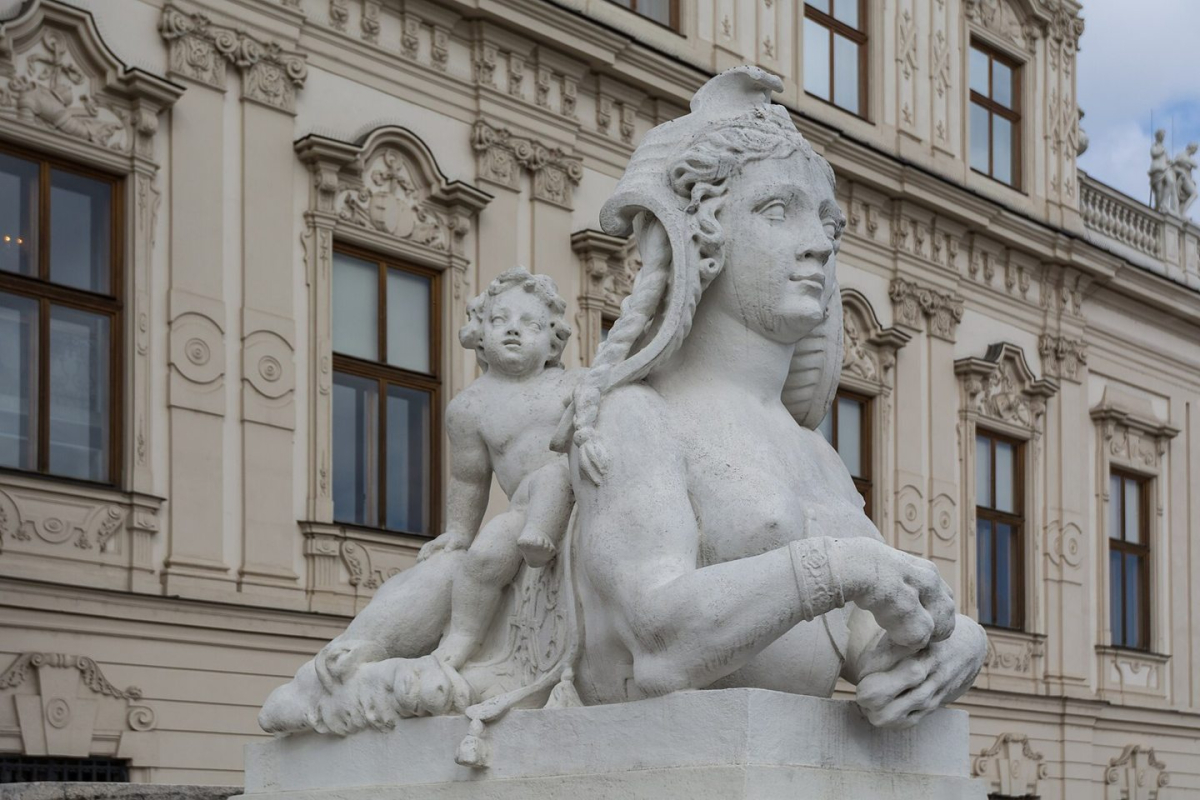
Use this focused guide to plan a photograph of Belvedere Garden Sculpture in Vienna. The image identifies a particular view; the suggestions below are editorial options for your own visit, not claims about the source photographer’s equipment or a personal on-site test.
Find This Photo Stop
The photograph shows a sphinx with a putto outside Upper Belvedere, not an unidentified statue elsewhere in Vienna. Use the Upper Belvedere garden setting at Prinz-Eugen-Straße 27 as your orientation. Keep the sculpture, pedestal and a little palace or garden context in one frame before moving to a surface detail; do not climb the base or cross planting to imitate the source angle.
Location and visit reference: Belvedere visitor information (checked 20 October 2026).
Choose the Subject and Framing
A garden sculpture is useful as a foreground that relates the palace to its landscape, or as a subject in its own right. Make the distinction deliberate. A close study should show the form and surface; a wider photograph can place the sculpture in the garden axis without making it appear larger than the building behind it.
Find a Considerate Viewpoint
Use the permitted path and do not touch or climb the sculpture. Avoid crossing planting to hide another visitor or alter the angle. If the central view is busy, change the background or wait briefly. A slightly off-axis view can retain the setting without blocking a shared route.
Light and Conditions
Side light can reveal texture, while softer light can retain detail in pale stone. Inspect bright surfaces and the sky before exposing. Do not add an invented title or symbolic meaning to a sculpture from its appearance alone; use the institution’s identification if a precise attribution matters.
Fit the Stop into Your Visit
Combine the stop with the Belvedere garden route and the correct museum location if you have a ticket. A sculpture photograph is not evidence that every part of the estate is open or step-free. Check current paths, seasonal conditions and visitor rules directly.
Confirm the official visitor information for current conditions.
| Decision | Practical approach |
|---|---|
| Time | Allow about 20–40 minutes for a selective exterior stop; extend only for a specific reason |
| Equipment | Choose a manageable camera or phone setup; check site restrictions before bringing a tripod |
| Access | Check the actual path, entrance and any required lift or stairs |
| Caption | Name the place and viewpoint accurately; do not invent the date, lens or access conditions |
Continue with Photos & Photo Spots for two wider walking plans, or the related Vienna planning section for the visit itself. Respect heritage and local life when choosing the photograph.
Frequently Asked Questions
Which sculpture is shown?
A sphinx with a putto outside Upper Belvedere. Keep that specific identification rather than assigning an unverified mythological name.
How does this differ from the palace photo stop?
The palace guide concentrates on the façade and formal garden axis. Here the smaller sculpture, surface and relationship to its immediate setting are the subject.

