
NORWAY · OSLO GUIDE
Getting Around Oslo: Metro, Trams, Buses & Ferries
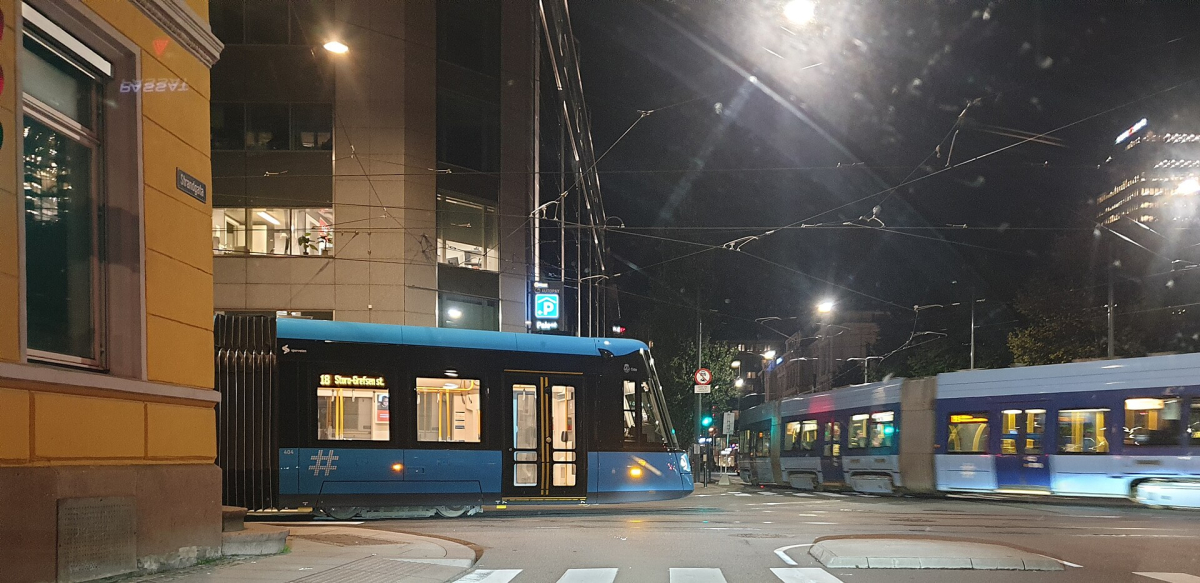
Oslo is easy to explore with a combination of walking and public transport. Use the metro for longer journeys and forest-side destinations, trams for neighbourhoods, buses for places such as Bygdøy, and Ruter ferries for the islands and regular fjord routes. A ticket is based on zones and time, rather than a separate fare for every mode.
This guide separates ordinary Ruter services from tourist boats and airport express products. It includes base Zone 1 fares checked on 18 October 2026, practical boarding advice and route examples. Check your dated journey before leaving: major metro works and seasonal ferry changes can alter an otherwise familiar route.
Which Transport Should You Use?
| Mode | When it helps |
|---|---|
| Metro / T-bane | Longer city journeys, Holmenkollen and Sognsvann; check line, direction and disruptions |
| Tram / trikk | Street-level trips between central sights and neighbourhoods, including Frogner approaches |
| Bus / buss | Bygdøy museums, routes between neighbourhoods and replacement services |
| Ruter ferry / båt | Inner-fjord islands and regular routes such as Aker Brygge–Nesodden; zones and seasonal timetables matter |
| Vy train | Eligible local and regional journeys within Ruter’s covered area, with the right zones; different from Flytoget |
| Walking | Bjørvika, Kvadraturen and adjoining central waterfront sights; allow for crossings, slopes and winter surfaces |
Current Ruter Ticket Prices: Zone 1
The table shows NOK per person for a ticket covering one zone, Zone 1 (Oslo), bought before boarding. These are standard prices, before any personal Reis discount or applicable family entitlement. Child means ages 6–17; the age-based senior category is 67+. Children under 6 travel free.
| Ticket | Adult | Child | Senior |
|---|---|---|---|
| Single | 46 | 19 | 23 |
| 24 hours | 137 | 69 | 69 |
| 7 days | 379 | 190 | 190 |
| 30 days | 655 | 238 | 328 |
Fare check: 18 October 2026. Prices were checked in Ruter’s live selector with both the starting and destination zone set to Zone 1. Recheck the single-ticket selector or period-ticket selector before purchase. These are city fares, not a quote for every airport or regional journey.
Single Tickets, Transfers and Zones
A one-zone single lasts 60 minutes from activation; each additional zone adds 30 minutes. You may transfer between covered services while the ticket is valid, provided time remains when boarding the next vehicle. You do not need another ticket merely because you change from metro to tram within its time and zones.
Ruter states that the entire metro network is in Zone 1. That does not make every regional bus, train or fjord journey a one-zone trip. Enter your actual start and destination in the journey planner so it calculates the required zones. Use the official zone guidance for the boundary rules; a distant-looking metro stop and a short ferry crossing need not have the same fare-zone treatment.
Which Ticket Is Better Value?
| Adult Zone 1 example | Compare at the standard fares above |
|---|---|
| Two separately paid single-ticket journeys | 2 × 46 = 92 NOK; less than a 137 NOK 24-hour ticket |
| Three separately paid single-ticket journeys within 24 hours | 3 × 46 = 138 NOK; the 24-hour ticket costs 137 NOK |
| Three 24-hour tickets for three full transport days | 3 × 137 = 411 NOK; a 7-day ticket costs 379 NOK, saving 32 NOK in this example |
These are arithmetic examples for one adult, not a promise that a period ticket is always best. Count new ticket purchases, not every boarding: transfers inside an existing single ticket may already be covered. Reis discounts, walking days and child or senior fares change the comparison. A 24-hour ticket runs from activation, rather than simply expiring at midnight.
Ruter also offers youth period-ticket categories for ages 18–19, while a single ticket has no separate youth or student discount. Student eligibility has additional conditions; an overseas student card alone should not be assumed sufficient. Use the selector for your category. For a museum-heavy trip, compare transport with the separate Oslo Pass decision after choosing the attractions you will actually enter.
How to Buy and Use Your Ticket
- Plan the full journey. Enter the destination stop or venue address, date and time in the Ruter app or official planner. Check the final walk and return as well as the outward ride.
- Select the right product. Confirm passenger category, zones and duration before paying. A payment card or a journey suggestion is not itself proof that you hold a valid transport ticket.
- Activate before travelling. Follow the app or travel-card instructions and have a valid ticket before boarding. Keep the ticket available for inspection; do not wait for an inspector to buy it.
- Check the departure. Match the line number, destination and platform or stop position to the vehicle display. Read disruption notices even when you know the route.
The Ruter app combines tickets, live departures, disruption information and saved destinations. Install it and check a working payment method before your first journey. Keep your phone charged and the actual ticket accessible; a saved itinerary or receipt is not a replacement for the ticket itself.
Without the app: Ruter lists physical travel cards at Narvesen, 7-Eleven, Mix and its Jernbanetorget customer service centre. A new card costs 50 NOK in addition to the ticket and can be reused. Check the current sales-point and activation instructions.
Buying on board: Single tickets can be bought on Ruter buses and boats, with an extra 20 NOK for adults or 10 NOK for children and seniors. Ruter currently specifies cash payment and no banknotes above 200 NOK for onboard sales. Tickets are not sold on board trams or the metro. Buying in advance avoids this surcharge and the need to organise cash at boarding.
Metro: Use the T-bane for Longer Journeys
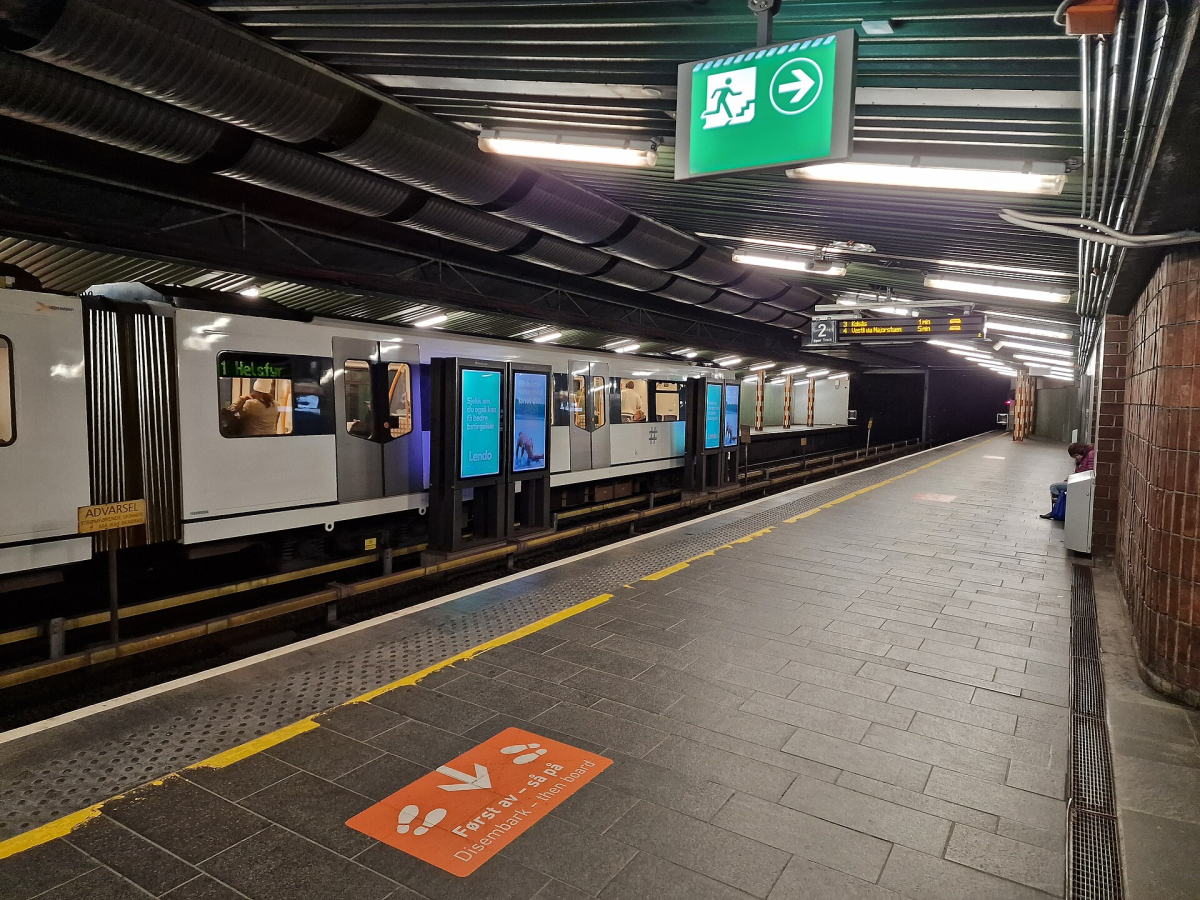
The metro is a useful way to cross the city and reach the outer neighbourhoods without navigating street traffic. Central interchange names to recognise include Jernbanetorget beside Oslo S, Stortinget, Nationaltheatret and Majorstuen. Choose the line and destination together: trains using the same central platform may branch towards different parts of Oslo.
Typical visitor journeys include line 1 towards Holmenkollen/Frognerseteren and line 5 towards Sognsvann. These are starting points for a dated journey search, not a guarantee of uninterrupted service. Holmenkollen station still leaves an uphill walk to the ski-museum and arena area; the venue’s directions allow about 15 minutes on foot. The official destination guide identifies the forest-side metro approaches.
Allow time inside interchange stations and follow the exit signs for your destination. A station name can cover several entrances; the nearest platform exit may not provide the best step-free street route. Use Ruter’s route maps and timetables for orientation, then confirm live operation in the planner.
Important Metro Works: 2026–2027
Checked 18 October 2026: Ruter’s metro-upgrade notice announces that almost the entire network is due to close 19–22 November 2026 for signalling tests. Extra buses and trams will not reproduce the metro’s full capacity. Do not assume there will be a direct replacement bus along every closed section.
The same project brings other dated and evening changes. For travel in the affected period, check the live metro-upgrade notice and rebuild your journey around the service actually offered. The published work dates and replacement arrangements can change; allow more time and favour nearby sights during a major closure.
Trams: Street-Level Trips Between Neighbourhoods
Trams, called trikk, are useful when you want a shorter street-level connection and a view of the neighbourhood along the way. The tram photograph at the top of this guide shows an SL18 vehicle; do not infer today’s route or departure time from its display.
For the Frogner and Vigeland area, tram 12 is a useful route to check. Bus 20 is another approach, and the best stop depends on the park entrance or the separate Vigeland Museum. The operator’s visitor information distinguishes these arrivals. Other city trips should be searched from their real start and end points, rather than forced onto one sightseeing tram.
Confirm the direction on the vehicle, let passengers off before boarding and take care at stops beside roads or cycle routes. Buy and activate the ticket in advance because trams have no onboard ticket sales. If you need a low-floor vehicle, use the accessibility indication for the specific departure and check both stops; a photograph of a modern tram does not establish the access conditions for every journey.
Buses: Bygdøy, Cross-City Routes & Replacements
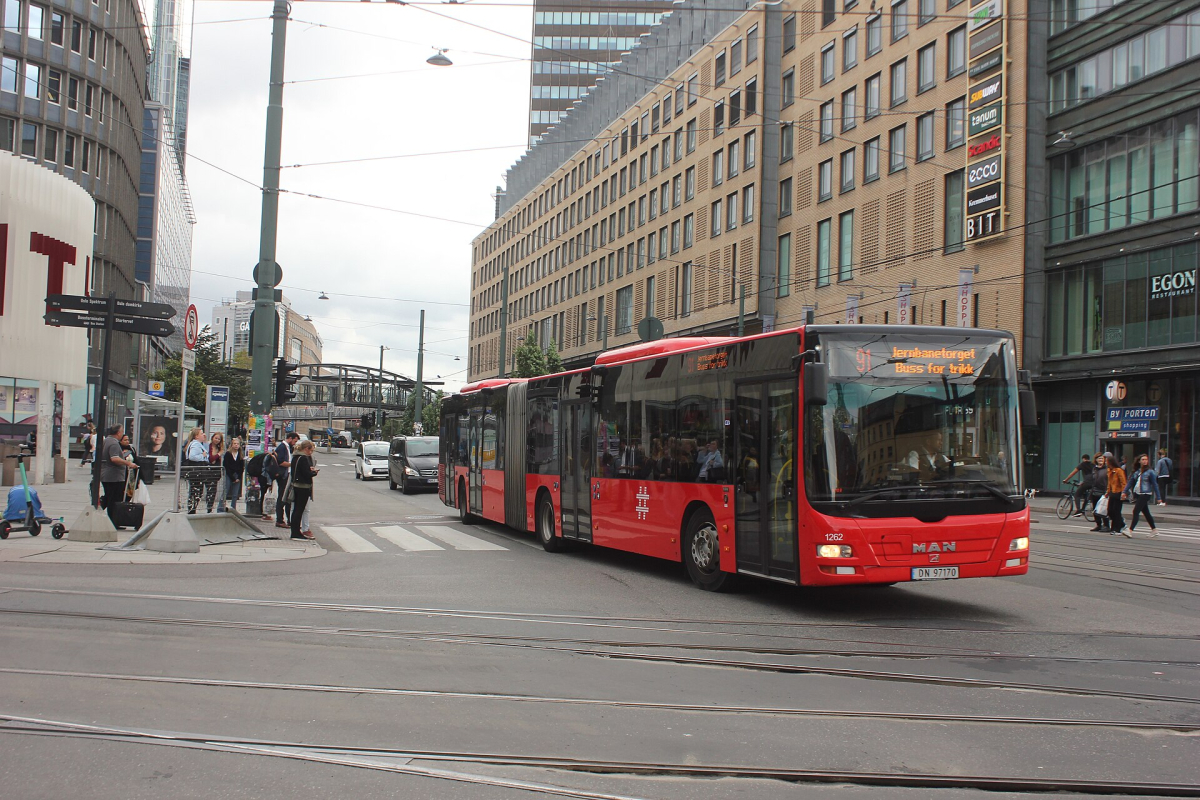
Buses fill the gaps between rail and tram routes and are particularly useful for Bygdøy. Bus 30 is the route identified by the Fram Museum for travel from the centre. Search for the actual museum: Folkemuseet is the stop for Norsk Folkemuseum, while the Bygdøynes end serves the Fram/Kon-Tiki waterfront cluster. Check the live stop and final walk because individual departures or diversions can differ.
The Fram visitor page and Folkemuseum directions provide the relevant arrival context. In the two-day itinerary, 45–60 minutes each way is a door-to-door planning margin including walking and waiting, not a published bus running time.
Check the letter or position of the stop as well as its name at larger hubs. Regional buses, city buses and replacement services may leave from different places. Watch the next-stop display and use the stop-request button in time. During engineering works, read the replacement-service instructions rather than waiting automatically at the usual metro entrance.
Ferries: Islands, Nesodden & Tourist Boats
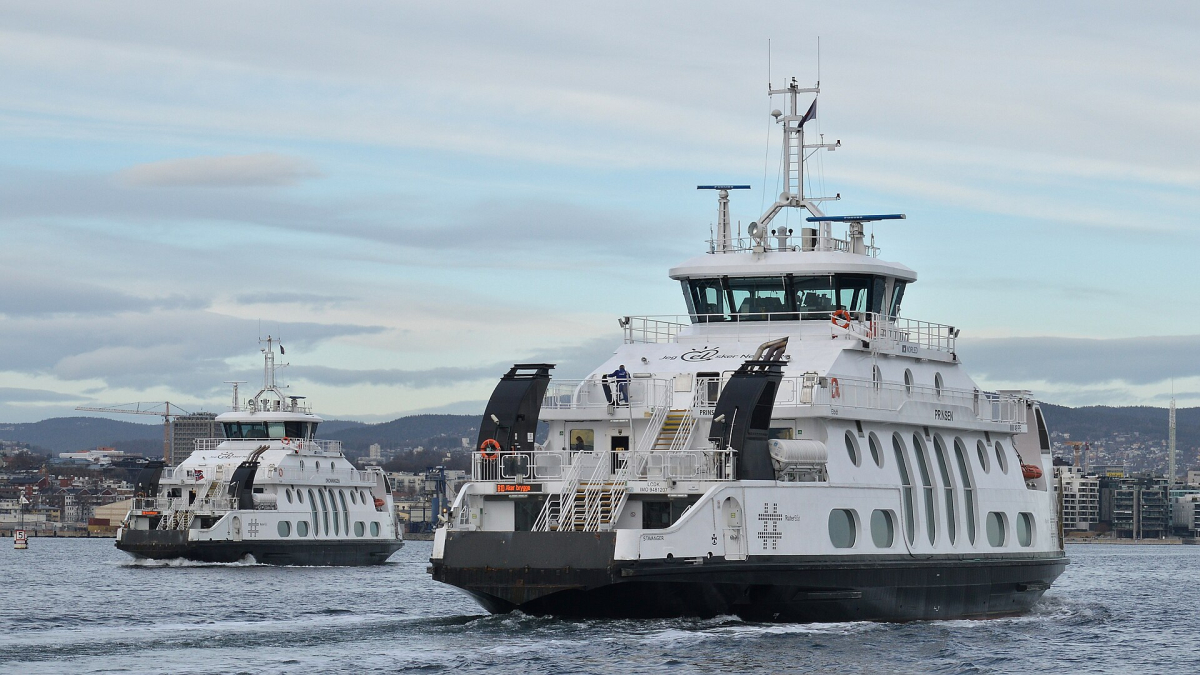
Oslo has several different boat networks sharing a small stretch of waterfront. Match the route, destination, pier and fare before boarding. A familiar white passenger boat or a departure from Aker Brygge does not mean every journey has the same ticket conditions.
Ruter Island Boats: B1 and Seasonal B2
Ruter’s island services depart from Aker Brygge for destinations such as Hovedøya, Lindøya and Gressholmen; B2 serves the Langøyene route in its operating season. The stops, frequency and extra summer services change. As checked on 18 October 2026, the official ferry timetable page lists an autumn B1/B2 timetable through 18 October and a winter B1 timetable from 19 October 2026. Do not plan a winter visit to Langøyene by assuming the summer B2 service continues.
Use a regular Ruter ticket covering the journey’s zones and time. Pick a practical return before leaving, arrive early enough to queue and leave room for a missed departure. A short crossing can still become a much longer outing when waiting and the island paths are included.
Regular Fjord Routes: Nesodden and Beyond
B10 links Aker Brygge with Nesodden. Other fjord services have their own destinations and calendars, so check the current timetable rather than treating them as a continuous sightseeing loop. Trips farther into the fjord can need more zones than a central-city ticket. The Prinsen and Dronningen photograph illustrates this regular fjord-ferry context; it is not a photograph proving which vessel operates your departure today.
Bygdøy Museum Ferry and Sightseeing Cruises
The Bygdøy museum ferry is a separate tourist service. The boat operator states that ordinary Ruter tickets are not valid; check its own fare, date, departure pier and Oslo Pass conditions. Dronningen and Bygdøynes serve different parts of the peninsula. A sightseeing cruise is another separately sold product, even when it passes the same landmarks. Use bus 30 when a suitable boat departure is unavailable.
Useful Journeys for Visitors
| Where you are going | A practical starting approach |
|---|---|
| Opera House and MUNCH | Walk from Oslo S/Jernbanetorget towards Bjørvika, or search a tram/bus approach to Bjørvika |
| National Museum and western waterfront | Nationaltheatret plus a walk, or a suitable Aker brygge tram connection |
| Vigeland Park | Check tram 12 or bus 20 for the entrance you want, then allow time inside the park |
| Bygdøy museums | Bus 30; Folkemuseet for the open-air museum, Bygdøynes for the waterfront cluster, subject to the current departure |
| Holmenkollen | Metro 1 towards Frognerseteren, with an uphill final walk; check engineering works |
| Sognsvann | Metro 5 towards Sognsvann when operating normally; include the return and surface conditions |
| Inner-fjord islands | Dated B1/B2 journey from the correct Aker Brygge pier; check seasonal stops and return |
Use these as orientation, then check the planner for your actual travel date. The Oslo map helps group nearby visits, while 1, 2 and 3-day itineraries include realistic transfer and visit allowances. Walking between neighbouring sights is often simpler than descending to a metro platform for one short hop.
Accessibility, Strollers & Family Travel
Check the complete journey: street approach, stop or station entrance, lift, vehicle boarding, destination exit and final path. Ruter’s accessibility information explains the differences between modes. The app identifies low-floor trams and gives information about features such as stairs, ramps and elevation at certain stops.
On B1/B2, unusually high or low water can make boarding harder even where wheelchairs and strollers can be carried. Some island paths are rough; accessible boarding does not make the entire outing step-free. Ask for help or a specific route assessment if needed, and check the current status of essential lifts before setting off.
Travelling with children: Children under 6 travel free. On Saturdays, Sundays and public holidays, a valid adult, senior or student ticket can include up to four children aged 6–17 under Ruter’s family-travel rule. Keep the group together and confirm the rule applies to the service you choose; it does not automatically extend to every tourist boat or express operator. Allow extra boarding time and space when using a stroller.
Evenings, Disruptions & Airport Journeys
Search the actual return date and time, especially around midnight, weekends and public holidays. Do not assume a metro, tram or island route runs all night. Check Ruter’s traffic status before departure and again before a late return. A replacement bus can take longer and use a different stop from the rail service it replaces.
Airport distinction: A Zone 1 ticket is not enough for a standard trip between central Oslo and Oslo Airport Gardermoen. Ruter tickets are accepted on eligible Vy trains within their stated area when the correct zones are covered, but no Ruter ticket is valid on Flytoget. Flybussen has its own ticket partnership and conditions; do not treat every airport product as interchangeable. Use the operator’s current validity rules and the dedicated Airports & Transfers guide for your arrival route.
For a taxi, identify the operator and confirm the price or fare basis before accepting the ride. For a short central day, there is usually no reason to add a rental-car collection and parking problem to the itinerary; check the final accommodation approach if you are arriving by car.
Common Transport Questions
Do I pay again when changing from metro to tram?
Not if your Ruter ticket still covers the zones and has time remaining when you board the next vehicle. A transfer does not automatically mean buying another single.
Can I buy a ticket on the tram or metro?
No. Buy and activate it before boarding. Onboard single-ticket sales are available on Ruter buses and boats with the stated surcharge and payment conditions.
Does a Ruter ticket cover every boat?
No. It covers Ruter’s own routes within the ticket’s zones and validity; the Bygdøy tourist ferry and sightseeing cruises have separate conditions.
Fares and operating information checked 18 October 2026 against the linked Ruter and venue/operator sources. Prices are NOK per person under the stated conditions; personalised discounts and future tariff changes can alter the amount payable. Route examples are orientation, not a live departure board. Photograph dates describe the image rather than a guarantee of today’s vehicle, route or stop layout.


.jpg)

