
NORWAY · OSLO GUIDE
Oslo Beaches & Swimming Spots
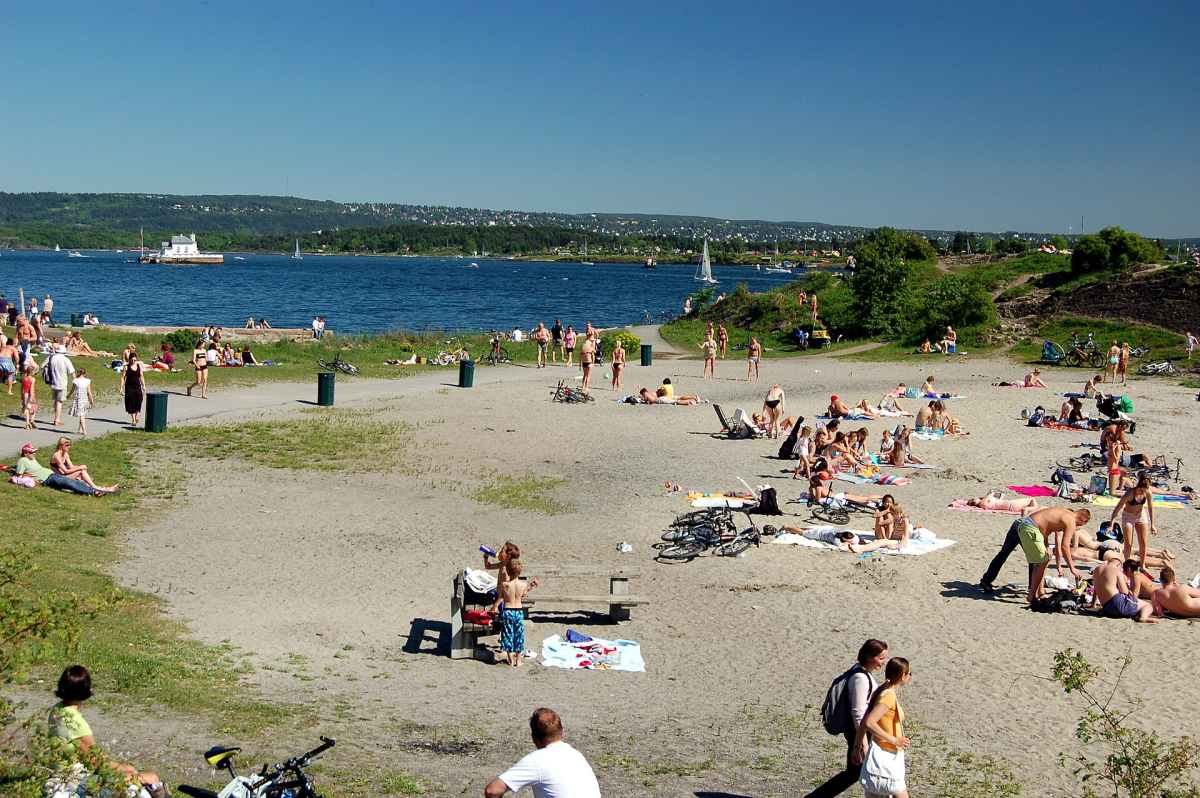
A beach day in Oslo can be a short break beside the Opera House, an island picnic reached by ferry or a longer outing along the southern shore. The useful distinction is sandy or pebbly entry versus a bathing platform with deeper water. Choose the shore and facilities that suit your group, then check the route and conditions for your date.
For an easy mainland outing, start with Huk. For a central swim, compare Sørenga, Operastranda and Tjuvholmen. Hovedøya and Langøyene require a ferry plan; Hvervenbukta and Ingierstrand reward more time outside the centre. Sognsvann provides a freshwater alternative. These are outdoor bathing places, with seasonal services and changing water conditions, rather than heated resort beaches.
Choose Your Beach or Swimming Area
The suggested time is an editorial allowance at the destination, excluding travel. It leaves room for a walk or picnic and does not imply that you should spend that long in the water.
| Place & setting | Getting there |
|---|---|
| Huk Sand, grass and rocks; 2–4 hours | Bus 30 to Huk |
| Sørenga Urban sea bath; 1–2 hours | Walk from Bjørvika |
| Operastranda Central sand beach; 1–2 hours | Oslo S / Opera House |
| Tjuvholmen Pebble beach and pier; 1–2 hours | Walk via Aker Brygge |
| Hovedøya Island beaches and paths; 3–4 hours | Aker Brygge ferry |
| Langøyene Long sandy island beach; 3–5 hours | Seasonal ferry service |
| Hvervenbukta Sand, grass and coastal path; 2–4 hours | Ruter to the bay / Fiskevollbukta |
| Ingierstrand Beach and historic bathing complex; 3–4 hours | Seasonal bus or date-specific route |
| Sognsvann Freshwater and forest; 2–4 hours | Metro 5 to Sognsvann |
Huk: A Mainland Beach on Bygdøy
Huk offers sand, lawns and rocky shoreline at the end of Bygdøy. The municipal site lists a beach suitable for children, bathing jetties, an accessible bathing ramp and a separate naturist area. Choose the intended section when you arrive; the different shore types are not interchangeable for a child or a swimmer who needs gradual entry.
Getting there: take bus 30 towards Huk and continue the short distance from its terminal stop to the shore. Check your boarding stop and departure in Ruter. A museum visit on Bygdøy can fit before the beach, but leave enough time for the actual coast rather than trying every museum first.
Facilities and practicalities: toilets, accessible toilets, a café/kiosk, bicycle parking and ball-game areas are listed. Check food opening hours for your season. Barbecuing directly on rock is not permitted; follow the designated facilities and current fire restrictions. Huk facilities and water information.
Nearby alternative: Paradisbukta
For a smaller sandy bay, follow the coastal walking route towards Paradisbukta, north of Huk. This is a useful extension for a walk and a quieter setting, with no promise of an empty beach. Bring supplies rather than assuming Huk’s services are beside you. Check the path surface and the return walk before choosing it with a pushchair or mobility aid. Official Paradisbukta visitor information.
Sørenga: A Central Seawater Bath
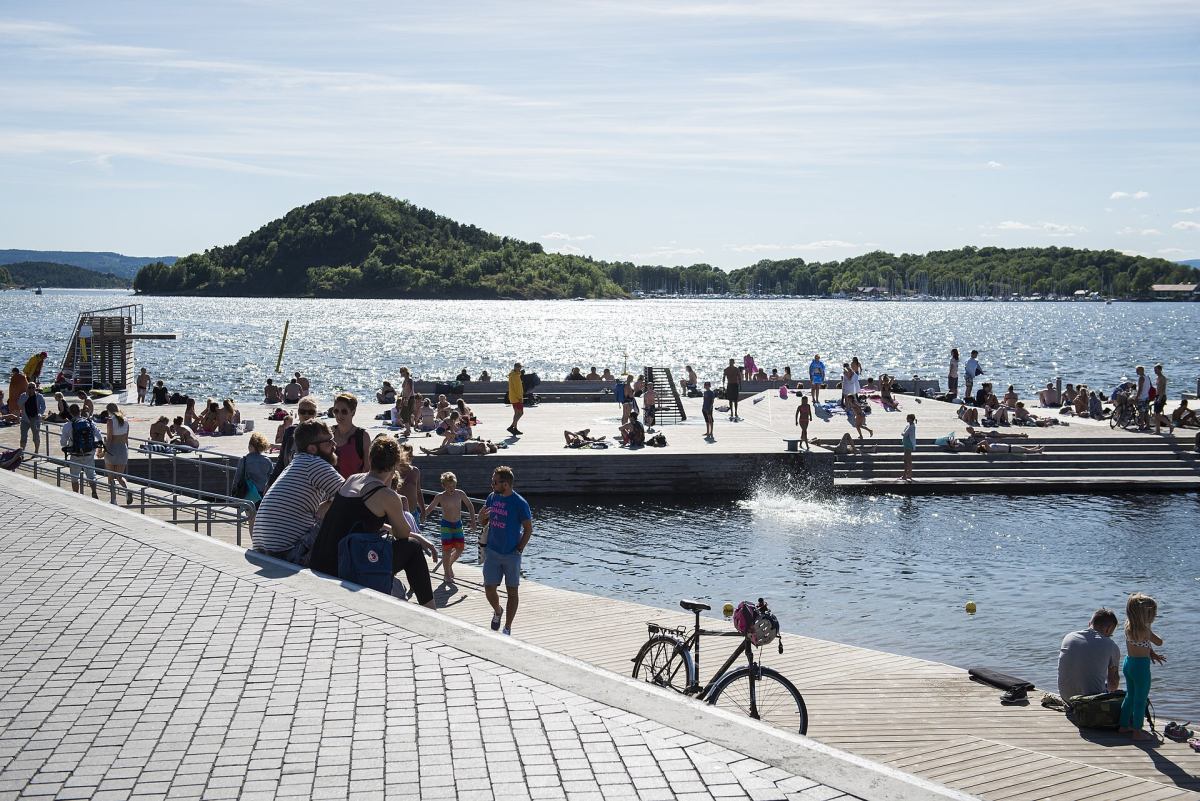
Sørenga suits a city day in Bjørvika when you want a proper bathing area without taking a ferry. It combines sun decks, a beach, jetties and a 50-metre swimming area. The deeper-water sections and diving facilities serve different users from the beach; look at the actual entry and exit before deciding where to swim.
Getting there: walk along the waterfront from the Opera House and MUNCH towards Sørengkaia. Check the pedestrian route on the day rather than relying on a photograph of a bridge or a temporary connection. The municipal site lists opening hours of 07:00–22:00.
Facilities: ordinary and accessible toilets, drinking water inside the toilet facilities, sand and swimming ladders. Toilet hours are listed as 07:00–22:00 from 1 April to 14 October, and 07:00–16:00 from 15 October to 31 March. Lifeguards are listed for 12:00–20:00 during the school summer holiday, not throughout the year. Verify the staffing and any closure on arrival. Official Sørenga hours and water checks.
Operastranda: Sand Beside the Opera House
Between the Opera House and MUNCH, Operastranda is the convenient choice for a short beach stop during a cultural itinerary. Its central position means you can keep the rest of your day flexible rather than spending it on a dedicated island excursion.
Getting there: walk from Oslo S through Bjørvika towards the Opera House and follow the waterfront to the beach. Facilities: the municipality lists sand, toilets including an accessible toilet, showers, play equipment and a floating jetty with a ladder. Food is available in the surrounding district, subject to individual opening hours.
Use the designated bathing area and local signs. The municipal water-information panel did not show a dated current quality result at our check; do not treat that absence, or a summer photograph, as proof that the water is suitable today. Operastranda facilities and notices.
Tjuvholmen: Pebbles and a Swimming Pier
Tjuvholmen City Beach sits at the end of the Astrup Fearnley Sculpture Park. The shore is pebbly, while the pier gives access to deeper water. It is an easy coastal break when your day already includes Aker Brygge, the sculpture park or the museum.
Getting there: walk through Aker Brygge to the tip of Tjuvholmen, using Strandpromenaden 2 as a reference. Bring water shoes if pebbles are uncomfortable. The surrounding neighbourhood has cafés and restaurants, but this is a compact city beach: do not assume lockers, staffed swimming supervision or a full changing complex are included. Plan toilet access and check local signs before settling in. Official Tjuvholmen beach description.
Hovedøya: Beaches, Woods and a Ferry Ride
Hovedøya has two main bathing beaches on its western side, with grassy areas and paths that make a half-day outing worthwhile even if you skip swimming. The monastery surroundings add interest, but the beach plan does not depend on access to every historic feature.
Getting there: depart from Aker Brygge on the island service shown for your date. B1 is the regular island route, with different stopping patterns and extra services in summer. Allow time to walk from the landing to the bathing area. The municipality describes an accessible bypass around the hill near the café and ruins; check boarding assistance and the complete approach separately.
Facilities and rules: toilets, accessible toilets and a bathing ramp are listed, with summer refreshments at Klosterkroa. Camping is prohibited. Vegetation is protected; use only the designated barbecue facilities and follow any additional ban. Hovedøya facilities, access and nature rules.
Langøyene: The Larger Sandy Island Outing
Choose Langøyene when the beach is the main event. Its long sandy bathing beach and broad grass areas offer more room for a picnic and games than the small central shores. The island lies geographically in Nesodden but is owned and managed by Oslo municipality.
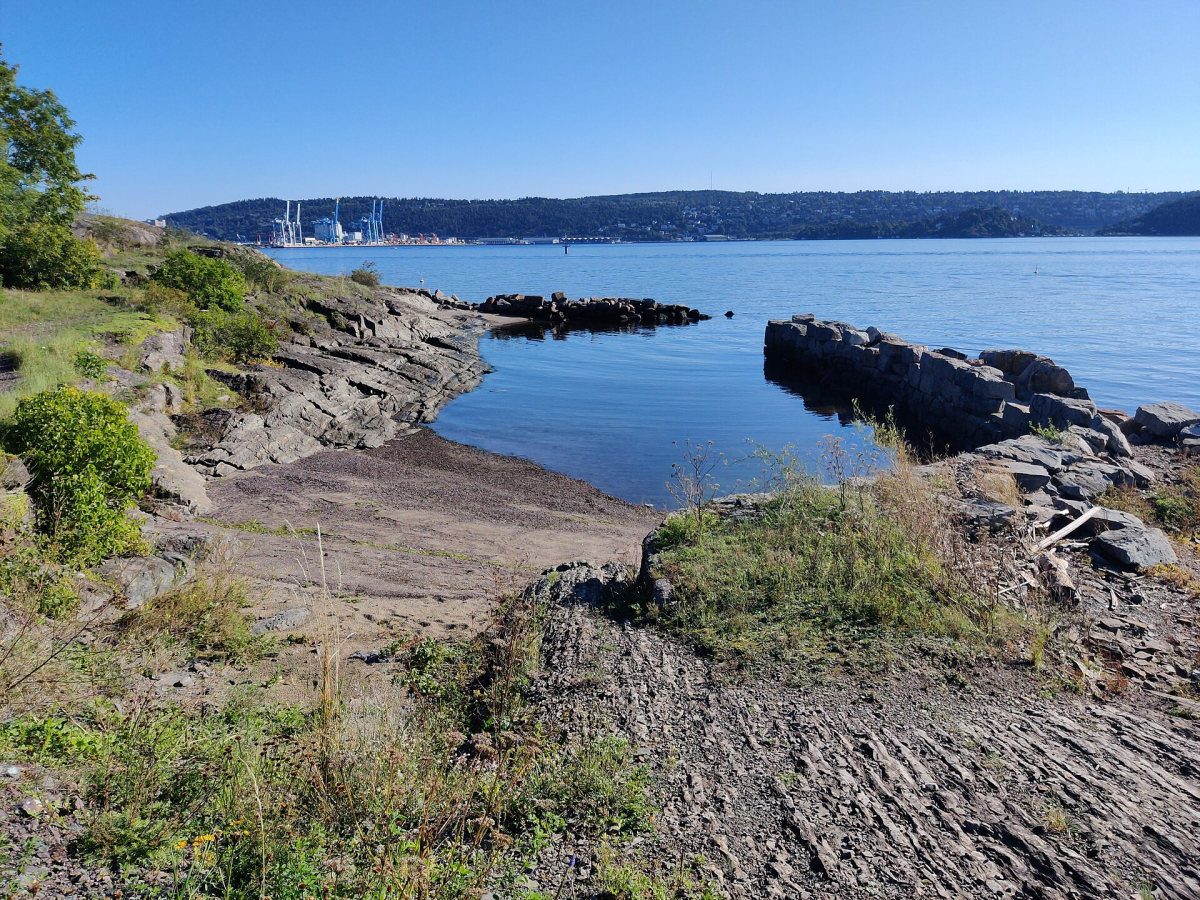
Getting there: check the seasonal B2 service from Aker Brygge and the return journey before leaving. At our 18 October 2026 check, Ruter listed B1/B2 autumn timetables through 18 October, followed by a B1-only winter timetable from 19 October. Do not assume a year-round Langøyene sailing or reuse those dates for another year.
Facilities: a bathing ramp, accessible toilets, drinking water, a kiosk building and volleyball areas are listed. The municipality says toilets and water operate through week 40, so verify services for a later visit. Camping is limited to designated northern zones for up to two days, with rotating closures; it is not permission to pitch a tent anywhere. Langøyene facilities and seasonal rules.
Hvervenbukta: Sand and the Southern Coastal Path
Hvervenbukta is a mainland option south-east of central Oslo, combining two sandy stretches, lawns and rocks. It works well for a longer picnic or a short coastal walk around Ljanskollen, with the choice of remaining on land when water conditions are unsuitable.
Getting there: search Ruter for Hvervenbukta and compare Fiskevollbukta if you are willing to walk further. Bus service and the final walking route differ by season; the published 2026 summer beach-bus programme included this bay. Cycling and car parking are also possible, but a sunny weekend is a poor time to depend on a space beside the beach.
Facilities: café/kiosk, benches, bathing ramp, accessible toilet, showers and drinking-water facilities are listed. Municipal toilet operation is approximately 15 May–15 September. Summer-holiday lifeguard hours are listed as 12:00–20:00. A coastal path is adapted for wheelchair users, but confirm the specific entrance and present access condition if essential. Hvervenbukta facilities and water notices.
Ingierstrand: A Beach Beyond the City Boundary
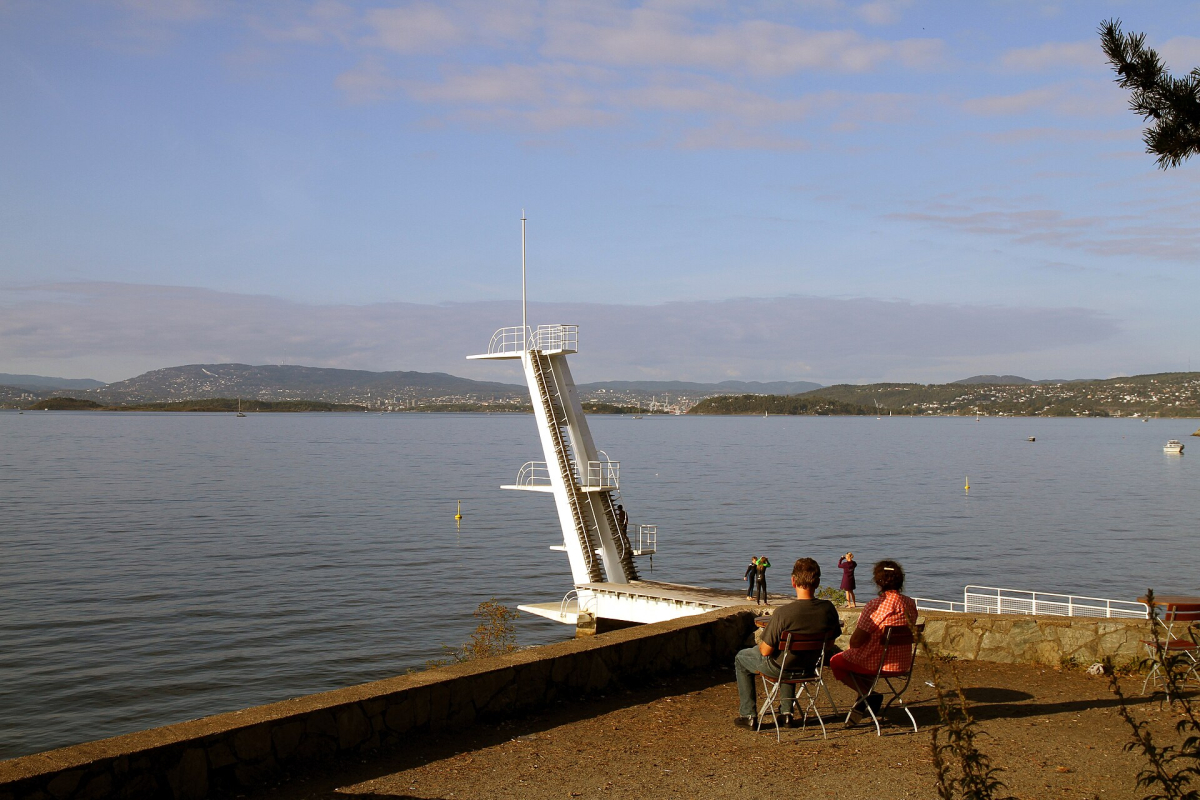
Ingierstrand lies in Nordre Follo, around 15 kilometres south-east of Oslo, and is managed by Oslo municipality. Sand, grassy slopes, rocks and its distinctive diving tower make it a different outing from the urban waterfront. The 1930s bathing complex is also of architectural interest.
Getting there: use a date-specific Ruter search for Ingierstrand. For summer 2026, Ruter advertised beach buses 89 and 585 from 8 June to 9 August; route 89 linked Jernbanetorget with Ingierstrand and route 585 connected via Hauketo. That seasonal programme has ended at our October check. Confirm the next available journey, transfers and return rather than copying an older bus number.
Facilities: toilets, showers, bathing ramp, jetties, benches and bicycle parking are listed. Toilets are normally seasonal, approximately 15 May–15 September. The municipality states that the water points here are not drinking-water quality, so bring your own drinking water. Summer lifeguard cover does not make the diving tower appropriate for every visitor. Ingierstrand facilities and notices.
Sognsvann: The Freshwater Alternative
Sognsvann is a lake at the forest edge north of Oslo, not a fjord beach. It suits a group that wants a swim option beside a walk and picnic, without planning an island return. The lakeside circuit is 3.3 kilometres; keep that separate from any time in the water.
Getting there: take metro line 5 towards Sognsvann and walk from the terminus to the southern end of the lake. Check Ruter for engineering work or replacement transport. Facilities: the municipality lists toilets including an accessible toilet, bathing jetties, ramps, a bathing enclosure and a kiosk. Confirm seasonal kiosk and service hours. Use the designated access and check the lake’s own water information rather than applying a fjord report to freshwater. Sognsvann facilities and bathing information.
Best Season for an Oslo Beach Visit
| Season & plan | Check first |
|---|---|
| June–August Main beach and picnic season; longer daylight | Water temperature, busy returns and staffed hours |
| May / September Coastal walks and a weather-dependent beach stop | Reduced ferries, kiosks, toilets and colder water |
| October–April Shoreline sightseeing; specialist cold-water activity only if appropriate | Shorter daylight, slippery access and winter service |
For most visitors, June–August is the simplest planning window for a beach day, with July and August worth considering when swimming is the priority. Warm air does not guarantee comfortable water. Check the actual forecast and the latest dated water information; municipal temperature readings are normally collected during June, July and August, not continuously all year.
Go earlier on a warm weekday if you want more room, and avoid building a tight evening connection around the last popular ferry. For monthly weather and daylight context, see Best Time to Visit Oslo. Winter bathing is a separate cold-water activity, not a substitute for a summer family beach day.
Transport, Tickets and the Last Return
Use the official Ruter journey planner with the exact date and beach name. Ordinary Ruter tickets apply on Ruter’s island boats; choose a ticket covering the zones and validity period of the full journey. A private cruise or the Bygdøy museum boat is a different service, so do not assume the same ticket applies. See Getting Around for ticket choices and current prices.
The official ferry timetable page separates summer, autumn and winter services. Summer stopping patterns can differ from the regular B1 pattern. Ruter says it continues taking passengers home when a final island departure is full, provided they are on the pier for the scheduled departure; this does not remove the need to arrive on time. An earlier return is easier with children, luggage or a fixed onward connection.
Southern coastal services also change by season. The 2026 summer service notice is useful context for Hvervenbukta and Ingierstrand, not a timetable for a future summer. Allow extra time for the final path, sand or ramps; a low-floor vehicle alone does not establish a fully accessible beach journey.
Water Quality and Practical Swimming Checks
- Check the beach, not just the weather: read municipal notices and signs at the actual bathing area. Oslo advises against swimming for 24 hours after heavy rain. An active warning may last longer.
- Read the date: the latest sample or temperature displayed can be older than your visit. A four-year bathing-water classification describes a longer period and is not a same-day clearance.
- Know the way out: identify the ladder or gradual entry before entering. Do not jump where depth, underwater hazards or other swimmers cannot be checked.
- Watch children closely: choose the appropriate shallow entry and supervise actively, including when lifeguards are present. A ramp or bathing enclosure is not a guarantee of safe independent use.
- Match conditions to your ability: swim with company, remain close to shore and avoid alcohol. Cold water, wind, boat movement and slippery edges can change an easy-looking dip.
Use the municipal bathing-place directory, each beach’s current notices and the Norwegian Society for Sea Rescue’s swimming guidance. If water information is missing or conditions are doubtful, choose a shore walk instead. For health and emergency help, see Health & Safety.
What to Bring and How to Leave the Shore
Pack drinking water, a towel, sun protection, water shoes for stony entry, a dry warm layer and a bag for wet clothing. Carry food when kiosks may be closed. Bring a litter bag and remove everything you take to an island; do not feed wildlife or disturb protected plants. Use designated barbecue areas only when local fire rules permit. The Responsible Travel guide explains nature, waste and fire considerations.
Beach Planning Questions
Which places are easiest with children?
Compare the sandy sections at Huk, Operastranda, Hvervenbukta or Langøyene, then the exact entry and facilities. Langøyene adds a seasonal ferry journey. Tjuvholmen is pebbly, and deep-water platforms at Sørenga require a different decision from a sandy shore.
Can I visit without swimming?
Yes. Huk and Paradisbukta suit a coastal walk, Hovedøya adds island paths, and Sognsvann has a lakeside circuit. Choose a mainland option when the ferry season or weather makes an island plan inconvenient.
Are facilities open outside summer?
Not necessarily. Sørenga lists shorter winter toilet hours, Hvervenbukta and Ingierstrand have seasonal toilets, and Langøyene publishes a seasonal water/toilet period. Confirm the service you need before travelling.
Facilities, rules and published transport periods checked 18 October 2026. The beach descriptions are planning information; they do not certify same-day water quality, lifeguard staffing or a future sailing. Continue with Oslo Itineraries to fit a shore visit into your stay.



