For an emergency requiring police, fire or an ambulance, call 911. For LVMPD non-emergency police assistance, use local 311 or +1 702 828 3111. The police explain when to use each number; when unsure whether immediate assistance is needed, call 911 and let the call taker assess the situation.
Personal safety and evenings out
Keep your phone, wallet and camera secure in crowded places. Avoid leaving a bag on the back of a chair or a phone on a table while watching a show. Hotel entrances, retail areas and gaming floors can be distracting; check your belongings before moving on. The LVMPD's public-area advice stresses awareness of surroundings and belongings.
Choose your return journey before the evening starts. Use a hotel's designated taxi or rideshare area and verify the vehicle details before getting in. If a route becomes unfamiliar, poorly lit or uncomfortable, return to an occupied public place and arrange transport rather than continuing simply because the map distance appears short.
Keep control of drinks and make your own decisions about offers from strangers. Avoid sharing your room number. If you feel threatened or unwell in a resort, contact its security team or staff; use 911 where immediate help is needed. Keep enough phone battery and accessible funds for the journey back.
Travelling alone or with a group
Solo travellers can share the day's plan and hotel details with someone they trust. Groups should agree a meeting point and a way to contact one another if separated. A casino or shopping complex can have several exits, so name the actual entrance or pickup area. Parents should establish the same plan with children and explain who to approach for help.
A statement about one visitor's experience is not evidence that every route or neighbourhood has the same risk. Use current local information and your circumstances when deciding where to walk at night. For practical routing, see Getting Around.
Heat and health in Las Vegas
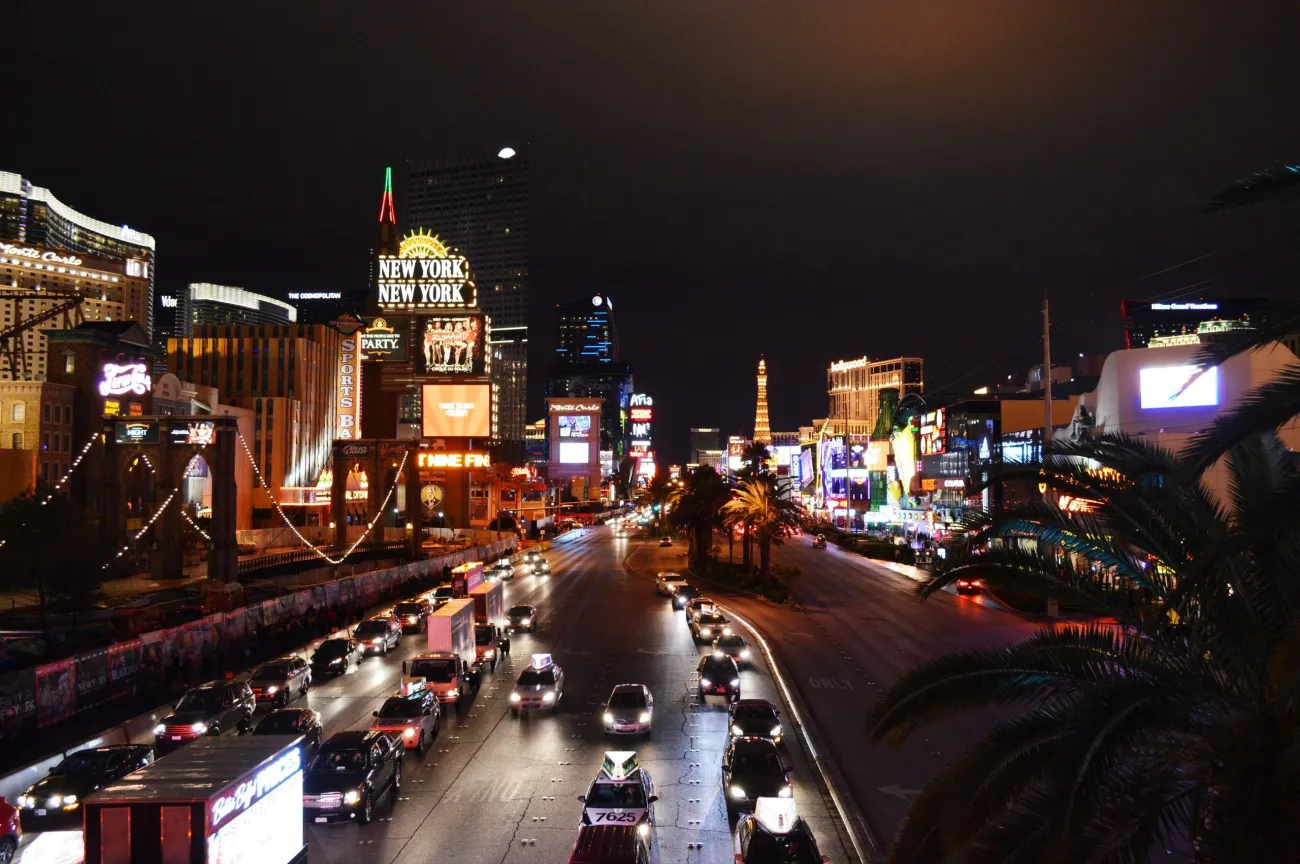
Heat can turn an ordinary sightseeing walk into a health problem. Plan outdoor activities for cooler parts of the day, carry drinking water and use shade or air-conditioned breaks. A hotel that looks close across the skyline may involve a longer pedestrian route, bridges and time inside a resort before reaching the street.
The Southern Nevada Health District's heat advice recommends reducing exposure, taking precautions and recognising heat illness. Do not wait for a photograph, bus or fountain show to finish if someone is becoming unwell. Children, older adults and people with certain medical conditions can need extra care; ask a clinician about personal concerns before travelling.
When heat becomes an emergency
Confusion, collapse or suspected heat stroke require urgent action: call 911 and move the person to a cooler place if it is safe. Seek help from nearby staff rather than leaving the person alone while looking for transport. Follow the emergency call taker's instructions.
For less severe discomfort, stop the activity and cool down rather than trying to finish a planned route. People with symptoms that persist, worsen or concern them should seek medical advice. This guide is not a diagnosis or a substitute for individual medical care.
Check the National Weather Service Las Vegas forecast and warnings before an exposed walk or desert outing. A forecast for the hotel area is not a complete forecast for every higher-elevation or remote destination. The Best Time to Visit guide helps with seasonal planning.
Plan for medical help before you need it
Save your insurer or assistance provider's contact number and check what your cover includes in the United States, including the activities on your itinerary. Carry the information needed to identify your medicines and allergies. If you use prescription medicine, plan for the length of the trip and any delay, and check the relevant border and airline requirements before packing.
Know the difference between an emergency, a routine pharmacy question and a problem needing a clinician. Hotel staff may help locate nearby services, but emergency care should not be delayed while seeking a recommendation. Do not assume a hotel's first-aid provision replaces medical treatment.
In shared spaces, basic hygiene and consideration for others still matter. If you are ill, adjust activities rather than forcing a demanding itinerary. Keep water, regular meals and rest in the plan, especially when changing time zones or spending late nights out.
Roads, crossings and outdoor trips
Use marked crossings, pedestrian bridges and designated paths. Do not stop in traffic or step into a roadway for a better camera angle. Allow more time when event barriers, construction or lift access change the route; a navigation app's direct line may not describe the actual pedestrian journey.
For day trips, check the destination authority's warnings, access conditions and required reservations. Match an activity to the least experienced member of the group. A short urban walk and an exposed desert hike are different tasks; choose the appropriate equipment, water and timing for the actual outing.
Never enter a closed area to reach a viewpoint. Conditions can change quickly, and a dry-looking route is not a reason to ignore a warning. If the planned activity becomes unsuitable, have an indoor or shorter alternative ready.
If something happens
On smaller screens, swipe or scroll horizontally to read the full table.
| Situation | First step | Useful detail to provide |
|---|---|---|
| Immediate danger, serious illness or injury | Call 911 | Exact location and what is happening |
| Police matter with no immediate threat | Local 311 or +1 702 828 3111 | Location, time and whether anyone remains at risk |
| Problem inside a hotel or venue | Contact onsite security or staff; call 911 if urgent | Room/floor, entrance or named area |
| Lost item without an emergency | Contact the venue or transport operator's lost-property service | Journey, time, item description and contact details |
| Lost passport | Contact your own consulate or embassy through its official website | Identity details and any police report requested |
The numbers above were checked against the LVMPD visitor information on 9 November 2026. For tourism and transport contacts rather than an emergency, see Useful Contacts.
Las Vegas health and safety FAQ
Is it sensible to walk everywhere on the Strip?
Plan the real pedestrian route and weather conditions. Long distances, bridges and heat can make a walk harder than the skyline suggests. Use an appropriate transport option when the route or conditions do not suit you.
What number should I call for an ambulance?
Call 911 for an emergency needing immediate police, fire or ambulance assistance. Give the exact location and follow the call taker's instructions.
What should I do if someone may have heat stroke?
Call 911, get help nearby and move the person to a cooler place if it is safe. Confusion or collapse should not be treated as an ordinary sightseeing inconvenience.
Can I use 311 for tourist information?
LVMPD's 311 is for non-emergency police response, not general sightseeing questions. Use the tourism or transport contacts in Travel Essentials for trip-planning help.
Should I change a desert outing when there is a warning?
Follow the destination authority's current advice and any closure. Keep an alternative plan; a booking or planned photo does not make unsuitable conditions safe.