




Sign in
For Photos4Travel editors and team members.
USA · LAS VEGAS GUIDE
Getting Around Las Vegas: Walking, Buses, Monorail & Cars

For a Las Vegas city break, start with a combination of short walks and transport between areas. The useful question is how to travel between your actual entrances, not which single service is best for the whole city. A pass can be good value when its route matches your plans; a direct ride can be worth the extra cost when it saves a difficult connection.
Use the map and neighbourhood guide to group stops, and the airport guide for your first and last journey. Choose accommodation around the journeys you will repeat most often.
Choose transport for the journey
On smaller screens, swipe or scroll horizontally to read the full table.
| Journey | Starting choice | Main consideration |
|---|---|---|
| Nearby stops in one Strip section | Walk using the signed pedestrian route | Heat, bridges, resort corridors and the actual entrance |
| A journey served by Monorail stations | Compare the paid Monorail | Include access and exit walks; not all resorts are on the route |
| Strip to Downtown | Check current RTC services or compare a direct ride | Traffic and waiting can matter more than map distance |
| Downtown neighbourhood stops | Check the free Downtown Loop and walking links | Operating hours and temporary stop changes |
| Off-Strip timed attraction | Plan a direct ride or an appropriate bus connection | Leave time for the final walk and check-in requirements |
| Independent desert outing | Car or a suitable organised trip | Reservations, weather, return transport and parking |
Walking: plan one area at a time
The Strip is best explored in sections. Its large buildings can make a destination appear closer than its usable entrance. Pedestrian bridges, controlled crossings and indoor resort corridors add distance, and a route suitable in pleasant weather may feel very different on a hot afternoon.
Use signed crossings and open public access routes. For a timed reservation, find the venue entrance before deciding how much sightseeing to add on the way. If a bridge, escalator or route is unavailable, allow for the detour rather than forcing the original schedule.
Build an indoor or seated break into a walking day. When the National Weather Service heat guidance or current forecast calls for additional caution, reduce the outside programme. Walking every possible segment is not necessary to have a good Las Vegas visit.
Las Vegas Monorail: useful for the right corridor
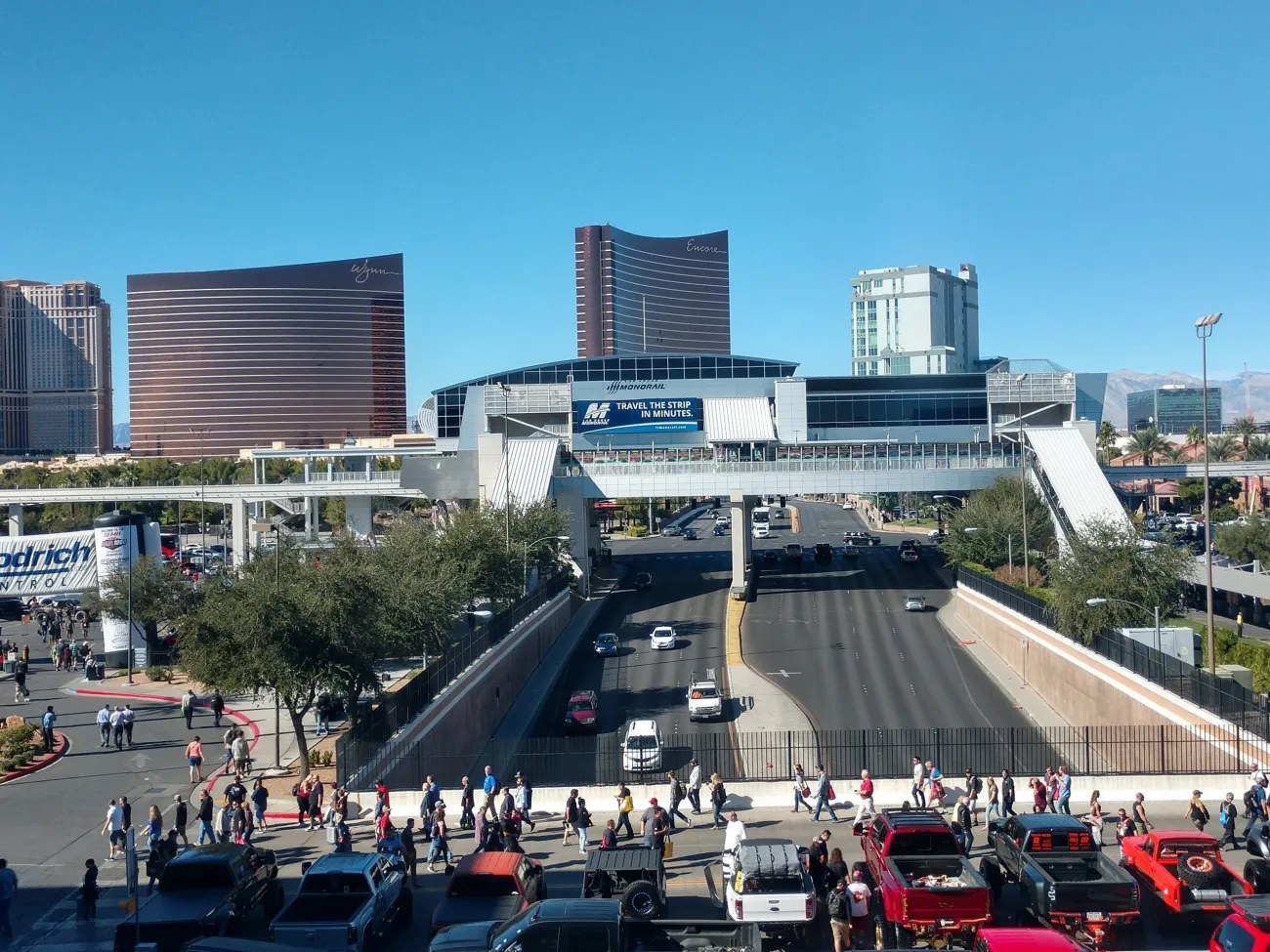
The paid Monorail runs between MGM Grand and SAHARA, with seven stations serving several east-side resorts and the Las Vegas Convention Center. Its official route map is the best way to test whether it joins the places on your itinerary.
Include the walk from the resort entrance to the station and from the final station to your venue. Station names do not mean the train stops at every named property's front door. It also does not provide an airport or Downtown connection.
Buy for the journeys you expect to take. A multi-ride ticket is less useful if you spend most of the day in an area away from the stations. Review current prices and operating hours with the operator and keep a separate return option for a late performance.
RTC buses and the Deuce
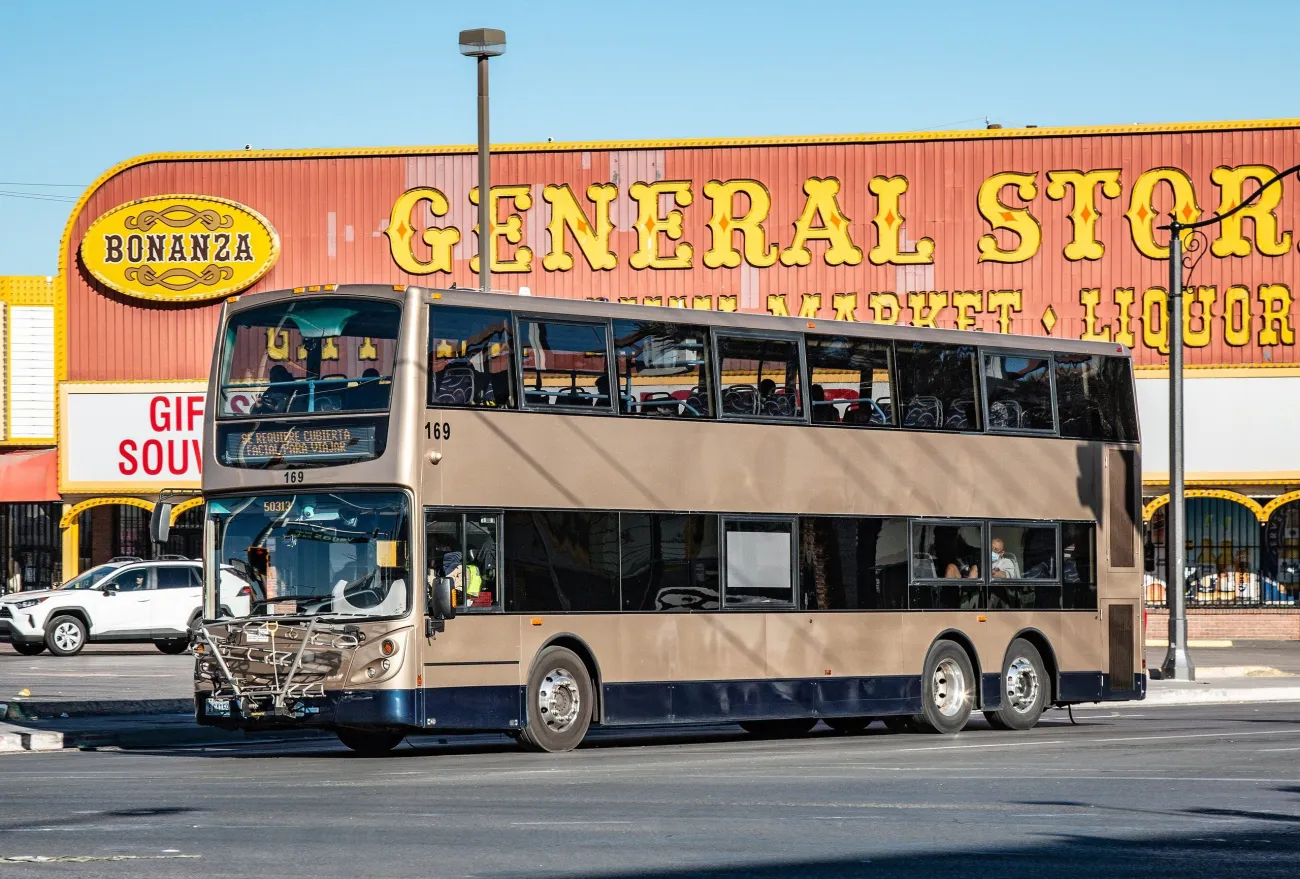
RTC services can connect the Strip, Downtown and other parts of the valley. The Deuce is the recognisable Strip service, but buses still share road conditions and stop to board passengers. It is sensible to leave more room around a time-sensitive reservation than the shortest journey estimate suggests.
Use the current route planner for the exact stop, direction and transfer. Some passes and fare categories have different conditions, so check the RTC fares and passes page before buying. Do not select a resident or reduced ticket unless you meet its eligibility rules.
Airport travel needs a separate check. The current airport public-bus guidance places RTC service at Terminal 1 Level Zero and directs Terminal 3 passengers there by inter-terminal shuttle. That does not mean the Deuce itself collects you at baggage claim.
Downtown Loop
The City of Las Vegas Downtown Loop is a free shuttle linking selected Downtown stops, including arts and entertainment areas. It can be useful when moving between Downtown outings rather than spending energy on the connector walk.
Check the current operating window and stop list before depending on it. The service does not run all night, and a stop can move temporarily during works. Arrange a separate way back if dinner or a show ends after its service period.
Resort trams and indoor connections
Some resorts have limited tram or indoor connections. These can help on a specific part of the Strip but should not be mistaken for a continuous rail line serving the whole corridor. The ARIA transportation page explains its own tram connection.
Check the route and hours with the relevant resort. A complimentary connection is helpful only when its access and exit points fit your journey. The paid Las Vegas Monorail, resort trams and Downtown Loop are separate systems with different coverage.
Taxis and app-booked rides
A direct ride can be the simplest choice for a group with luggage, an off-Strip booking or a late return. Compare the complete quoted journey with the number of people and bags. Live app estimates change, and a service advertised at a hotel may have a designated pickup well away from its main doors.
Use the official queue or designated pickup area and confirm the destination. After an event, allow time to reach the pickup and meet your driver; the end of a show is not the moment you are automatically on the road. The airport guide covers LAS pickup rules separately.
When a rental car is useful
A car is more compelling when your programme includes independent trips beyond the city, dispersed appointments or accommodation whose location makes other journeys impractical. Compare the whole cost: rental, taxes and other booked charges, fuel, parking and the time used collecting and returning it.
For a city-only stay, first test whether a walk-and-transit plan covers your needs. Renting just for the days that require driving may be worth comparing, but check the collection location and rental terms before assuming it is cheaper.
Planning accessible and family journeys
Check the complete route when you need step-free access, seating, space for a stroller or a suitable vehicle. The accessible station or hotel is only part of the journey. Ask operators about the assistance or equipment you need and check current lift access close to travel.
For a family day, compare the cost and practicalities for the whole group rather than one adult fare. Keep walks short enough for the least mobile person and make the return plan before everyone is tired. See the travel essentials for more preparation.
Travel TipPlan each journey from the actual hotel entrance to the attraction entrance. A rail station or map pin can still leave a substantial walk through a resort.
Frequently asked questions
Do I need a car in Las Vegas?
A city visit can be planned without one. The case for a car becomes stronger with independent desert trips, dispersed destinations or accommodation poorly matched to your other transport options.
Are all Las Vegas trains and trams free?
No. The Las Vegas Monorail is paid. Some limited resort connections are complimentary, and the Downtown Loop is a separate free shuttle. Check each operator rather than treating them as one network.
Does a Monorail ticket cover the Deuce?
They are separate services. Check the terms of the ticket you are buying; do not assume that one operator ticket includes the other.
Can I use public transport for a late-night return?
Check the current operating hours for the exact route and date. Keep an alternative when an evening reservation may finish after the last service.
How do I avoid spending the day in transit?
Choose a convenient base and group stops by area. Use the itinerary as a starting point, then remove cross-city jumps that do not serve an important booking.
Tours, Tickets & Experiences
Las Vegas Travel Tips & Inspiration