
Sign in
For Photos4Travel editors and team members.
Cayman Islands · Travel Costs & Money
Cayman Islands Money & Travel Costs: CI Dollars, US Dollars and a Realistic Budget
The quickest way to underestimate a Cayman Islands holiday is to read a bare dollar sign as US dollars. A CI$24 lunch, a US$24 lunch and a US$24 lunch before service are three different prices. Ask which currency applies before ordering, and compare accommodation using the full amount payable for your dates.
This guide separates the currency used on the islands, the conversion a visitor may actually encounter and the costs that belong in a holiday budget. The examples use two adults sharing one room. They are planning allowances and worked arithmetic, not promises of available rooms or current market averages.
Which currency do the Cayman Islands use?
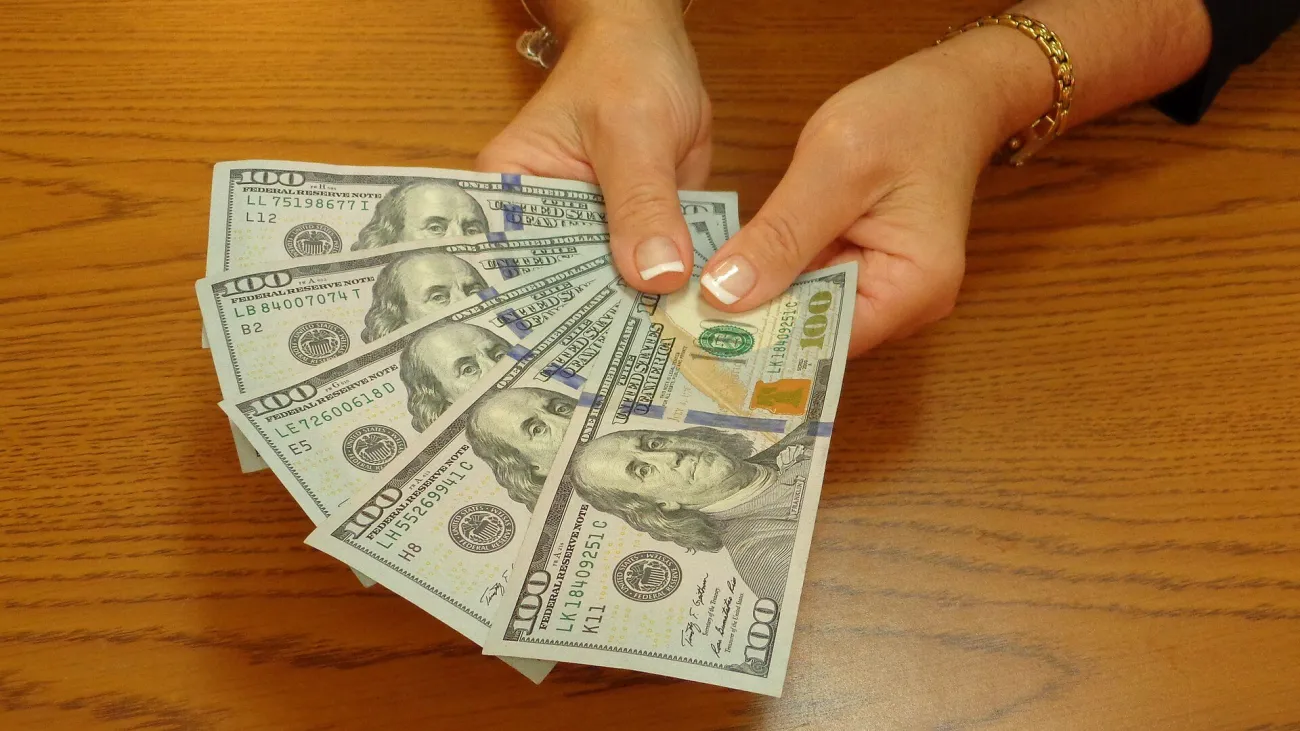
The local currency is the Cayman Islands dollar, written CI$ and identified by the code KYD. US dollars are widely accepted, but the two dollars are not interchangeable at face value. Look for an explicit CI$, KYD, US$ or USD label on menus, room confirmations, excursion quotes and card receipts. If the label is missing, ask.
There are several exchange figures in circulation because they describe different transactions. In its 2024 annual report, the Cayman Islands Monetary Authority describes issuing and repurchasing currency through retail banks at CI$1 to US$1.20. That monetary arrangement is not a guarantee that a restaurant will accept a US$120 payment against a CI$100 bill.
For visitor payments, the Airports Authority's visitor information describes the familiar merchant calculation of US$1 to CI$0.80, equivalent to CI$1 to US$1.25. Confirm the merchant's stated conversion. Separately, CIMA's currency FAQ lists US$1.227 for its collector-item counter and says that counter does not provide public foreign-exchange services. Those figures should not be combined into one universal tourist rate.
How to convert a CI-dollar price before paying
At a merchant conversion of CI$0.80 for US$1, divide the CI-dollar total by 0.80 to get the US-dollar amount. CI$10 becomes US$12.50; CI$40 becomes US$50; CI$100 becomes US$125. Work from the final bill after any disclosed service charge, rather than converting only the menu subtotal.
Swipe or scroll sideways to compare the full table.
| Price in CI dollars | Amount in US dollars | Calculation |
|---|---|---|
| CI$10 | US$12.50 | 10 ÷ 0.80 |
| CI$40 | US$50 | 40 ÷ 0.80 |
| CI$100 | US$125 | 100 ÷ 0.80 |
These examples illustrate one disclosed retail conversion, not a live bank quote. An ATM operator, card issuer or currency-exchange counter may apply its own rate and fees. A British, Canadian or euro-area visitor also needs to consider conversion into their home currency. Keep the original currency on every booking record so that a later exchange-rate calculation does not silently change the room price.
Cash, cards and keeping a usable reserve

Cards are accepted by most hotels and restaurants, according to Canada's Cayman Islands travel advice. Still carry a modest amount of small-denomination cash for public buses and any small business that cannot take your card. Ask taxi drivers about payment before the trip. A second payment method stored separately is more useful than carrying the entire holiday budget in cash.
Before accepting a card transaction, check the currency and amount on the terminal or printed slip. Do not assume the card will be charged in KYD, that a retailer offers a currency choice or that your bank's advertised exchange rate is the only conversion involved. Ask the issuer about foreign-transaction fees and cash-withdrawal charges before leaving home. Keep a receipt when the conversion differs from what you expected.
Arrange cash before a Sister Islands stay rather than relying on a particular machine being available on arrival. Cayman Airways Vacations specifically advises bringing cash because banking access is more limited there. For Grand Cayman buses, the Public Transport Unit publishes fares and routes; use the approved fare shown for your journey rather than treating every trip as one flat island-wide price.
Read the hotel bill before comparing room prices
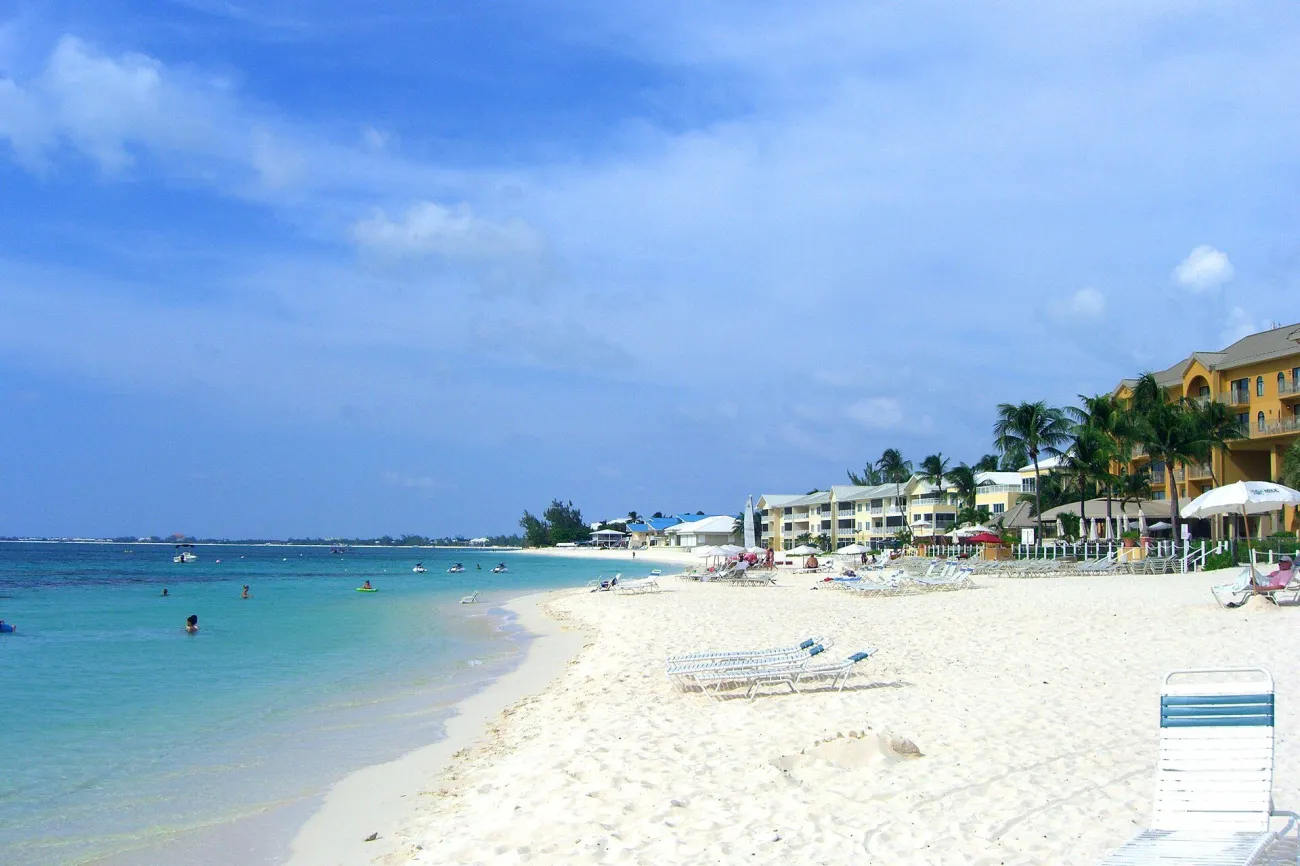
The Tourist Accommodation (Taxation) Law sets a 13% tourist accommodation tax, with specific provisions for timeshares. Property charges can also include a service charge, resort fee or cleaning fee. Those are separate questions: a mandatory hotel fee is not automatically the accommodation tax, and an attractive headline nightly rate is not automatically the checkout total.
Use the final booking breakdown. Identify the room currency, number of nights, tax, mandatory property charges and whether any amounts are collected later. If the displayed total already includes tax, do not add another 13%. Where a property applies tax to an additional charge, use its written breakdown rather than assuming the taxable base is always the bare room alone.
For simple arithmetic, a hypothetical US$250 room for six nights costs US$1,500 before charges. If 13% applies to that room amount, it adds US$195. A separate hypothetical US$55 nightly property charge adds US$330 before any further levy applicable to that charge. The combined US$2,025 is therefore only a subtotal under those stated assumptions, not a universal six-night hotel bill. Ask for the full amount payable, including how the property treats its fees.
Breakfast, airport transfers, parking and beach facilities need their own checks. A kitchenette may have a refrigerator and microwave without a cooking hob. Compare the exact category in the accommodation guide, and record included benefits before setting aside money for them again.
A restaurant receipt: menu price, service and conversion
A useful example comes from the restaurant's own Cayman Cabana lunch menu, accessed on 17 November 2026. The undated PDF lists fresh daily catch at CI$24 and Cayman-style stew beef at CI$19, with 15% gratuity and the stated US$1 = CI$0.80 conversion. It is a published menu example, not a guarantee that either dish or price will be available on your visit.
Those two dishes produce a CI$43 subtotal. Fifteen per cent service adds CI$6.45, making CI$49.45. At that menu's conversion, the result is US$61.81 after rounding. Drinks, starters and any additional voluntary tip are excluded. The arithmetic shows why a pair of main courses that looks like “43 dollars” can require a larger US-dollar allowance.
Read the actual receipt before adding a gratuity. An extra tip line does not prove service is absent. Nor should the 13% accommodation tax be added to every restaurant meal. For where to eat, local dishes and practical stops, use the Food & Drink guide.
Three planning budgets for two adults: 21 days and 20 nights
The table is an illustrative allowance model in US dollars, prepared on 17 November 2026. It covers two adults sharing one room for 20 nights and eating over 21 calendar days on Grand Cayman. It does not price the three-island itinerary in the main guide; that plan needs its own flight, accommodation, package and transfer quotations. The three styles describe spending choices, not bookable packages or verified minimum prices. Replace every allowance with your own dated quote before reserving.
Room assumptions are US$180, US$300 and US$600 per night. The model applies 13% tax to the assumed base room amount. Separate property-charge allowances are US$0, US$55 and US$75 per night; these lines are treated as the final allowance for those charges including any tax on them. They are hypothetical figures, not fees attributed to a named hotel. A property with different tax or fee treatment needs a new full-room total.
Swipe or scroll sideways to compare the full table.
| Cost for the couple | Self-catering focus | Mixed hotel holiday | Higher-spend stay |
|---|---|---|---|
| Base room: 20 nights | 3,600 | 6,000 | 12,000 |
| Room tax: 13% of base | 468 | 780 | 1,560 |
| Property-charge allowance: 20 nights | 0 | 1,100 | 1,500 |
| Food: 21 days for two | 1,890 | 3,360 | 5,460 |
| Ground transport: trip allowance | 650 | 1,200 | 1,800 |
| Activities: trip allowance for two | 450 | 900 | 1,800 |
| Subtotal | 7,058 | 13,340 | 24,120 |
| Additional 10% contingency | 705.80 | 1,334 | 2,412 |
| Model total for two | 7,763.80 | 14,674 | 26,532 |
Food allowances are US$90, US$160 and US$260 per couple per day, including groceries or restaurant meals and their service charges. They assume no meals are included in the room line. Deduct meals already paid for in a breakfast or meal package before adding a separate food allowance. Ground transport covers the trip's airport journeys and chosen buses, taxis or car costs; if renting, include insurance, fuel, parking and mandatory rental charges within that line. Activities are one combined allowance for both adults, not a per-person amount to be doubled again.
International flights, inter-island flights, travel insurance, shopping, dive certification, substantial specialist diving packages and refundable security deposits are excluded. The contingency is an extra reserve after the subtotal, not another tax. A 21-day trip has 20 hotel nights in this model: adding a twenty-first room night would change the trip length. Arrival and departure days still receive a food allowance; adjust them to the actual flight plan.
Adapt the budget to the holiday you actually want
Start with the final room total, because it is usually the largest fixed commitment. A less expensive base can lose its advantage if every dinner, beach visit and excursion meeting point needs a long taxi trip. Map the property against your planned activities, then price transport for that pattern. A kitchen is only a saving if you intend to use it and can buy groceries conveniently.
Spend on the experiences that brought you to Cayman and leave room for free shoreline time. One carefully chosen boat trip and several beach days can be a better fit than booking paid activities every morning. Ask what a tour price includes: equipment, transfers, fees, food and gratuities should be checked before comparing two apparently similar excursions. Use the Things to Do guide to decide what deserves a full day.
A Sister Islands diving package needs a separate calculation. If a package already includes the room, meals, transfers and dives, enter its total once and add only genuine exclusions. Confirm whether it is priced per person sharing or per room. Keep a small reserve available for changes, and avoid tying your final payment to an assumed ATM withdrawal on the morning of an early departure.
Travel Tip: Before the first meal, ask “Are these prices in CI dollars, and is service included?” Before booking a room, ask for the final amount for every night, in one stated currency.
Cayman Islands Travel Costs & Money FAQ
Can I spend US dollars in the Cayman Islands?
US dollars are widely accepted, but confirm the price currency and the merchant's conversion. At US$1 = CI$0.80, a US$20 note has CI$16 spending value. Change may be returned in CI dollars.
Is CI$1 worth US$1.20 or US$1.25?
CIMA describes currency issuance and repurchase at CI$1 = US$1.20. Many visitor cash examples use a merchant conversion of CI$1 = US$1.25. These describe different transactions; ask the business what rate it will apply to your bill.
Are the budget totals live Cayman hotel prices?
No. They are explicit planning allowances for two adults over 21 days and 20 nights. The room, fees, meals and activities must be replaced with your own date-specific quotations.
Should I add 13% tax to everything I buy?
No. The 13% figure here concerns tourist accommodation. Use each supplier's disclosed bill and do not add it again when already included.
Should I tip again if service is already on the bill?
Check the receipt first. An additional tip is your choice; a blank gratuity line does not mean the existing service charge has disappeared.
Last updated: