
Map of Madrid
Map of Madrid
Plan your Madrid trip: Where to go · When to visit · Where to stay · Getting around · Visa & entry · Day trips
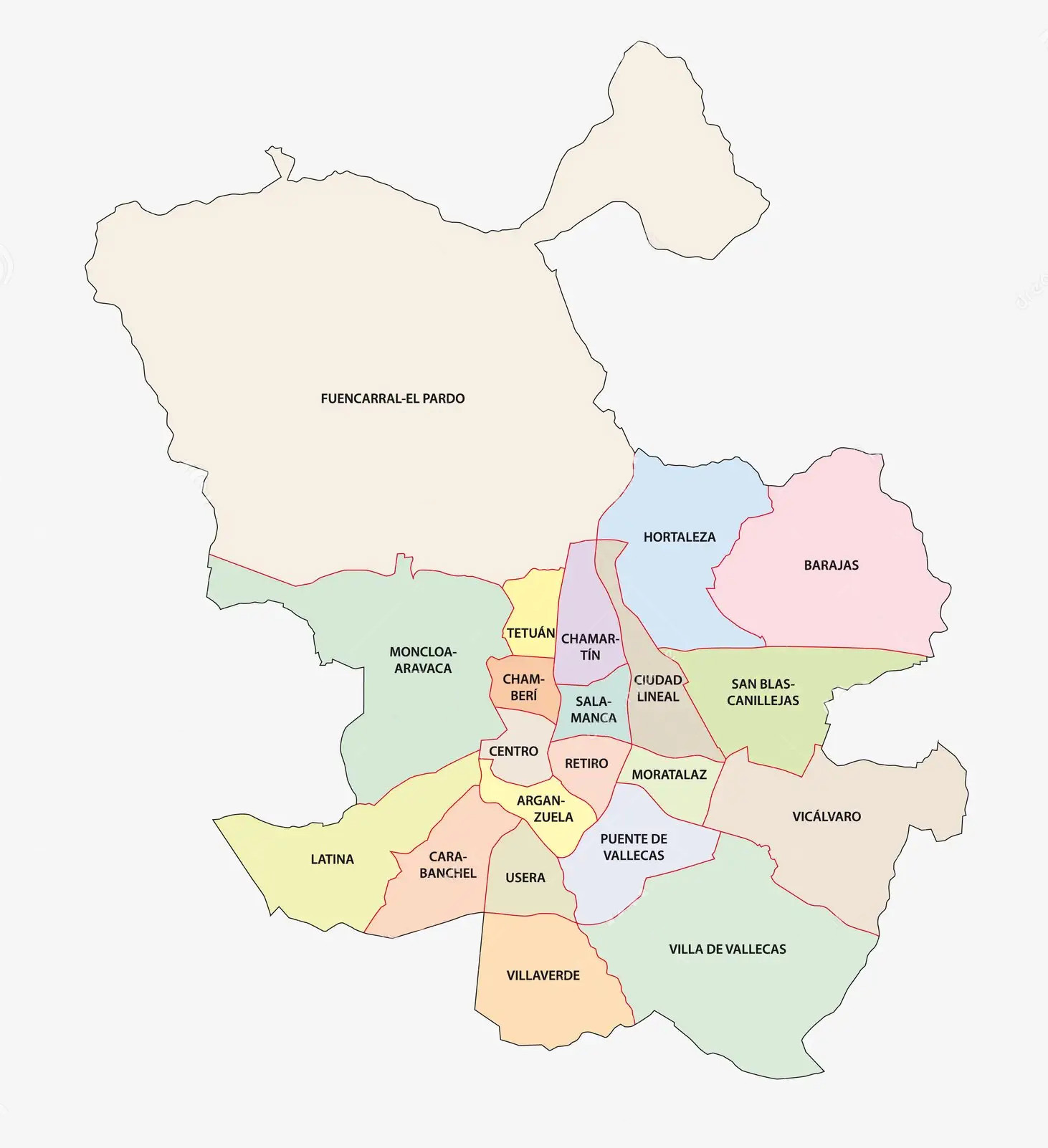
Madrid becomes much easier to plan once you understand how its central neighborhoods fit together. The historic core is compact, but accommodation listings often use broad area names that can make distances look smaller than they feel. This guide explains Madrid’s layout from a traveler’s point of view so you can choose a neighborhood, group attractions efficiently and avoid unnecessary transport.
Madrid’s Historic Center
Puerta del Sol is the most useful mental reference point for central Madrid. Plaza Mayor lies a short walk to the west, Gran Vía runs north of Sol, the Royal Palace sits farther west, and the Prado Museum and Retiro Park are to the east.
If you stay within this central zone, many major attractions are walkable. The trade-off is more pedestrian traffic, nightlife noise and higher accommodation demand.
Sol
Sol is the geographic and symbolic heart of central Madrid. It is surrounded by shopping streets and sits close to Plaza Mayor, Gran Vía and many Metro connections. It is highly convenient but almost never quiet.
Madrid de los Austrias
The area west of Sol contains some of the oldest central streets, Plaza Mayor, Mercado de San Miguel, Plaza de la Villa and the approach to the Royal Palace. Travelers who prioritize historic atmosphere often spend substantial time here.
Gran Vía
Gran Vía runs across the northern side of the historic center and works as one of the city’s clearest orientation lines. It connects shopping, theaters, hotels and nightlife areas, with easy access toward Malasaña and Chueca.
Malasaña
Malasaña lies north of Gran Vía and is associated with independent shops, cafés, nightlife and the cultural legacy of La Movida Madrileña. Streets can be lively late into the night, so hotel location matters for light sleepers.
Chueca
Chueca sits east of Malasaña and north of Gran Vía. It is known for restaurants, bars, boutiques and a strong LGBTQ+ identity. It is central, walkable and energetic.
Barrio de las Letras
This district stretches east and southeast of Sol toward the Prado corridor. It works especially well for travelers who want museums, restaurants and atmospheric streets without staying directly on Gran Vía.
Lavapiés
Lavapiés lies south of the historic center and is known for multicultural dining, cultural venues and local street life. It offers a more mixed and less polished atmosphere than Salamanca or Retiro.
La Latina
La Latina is west of Lavapiés and south of the oldest central core. It is known for tapas bars, plazas and the Sunday El Rastro market. The neighborhood is especially lively on weekends.
Retiro
Retiro Park is east of the museum district. The neighborhoods around it are generally calmer and more residential than Sol or Gran Vía while remaining close to major cultural sites.
Salamanca
Salamanca lies northeast of Retiro and the city center. It is associated with luxury shopping, elegant streets, restaurants and upscale hotels. It is less historic in feel but comfortable and well connected.
Chamberí
Chamberí is north of the center and offers a more residential atmosphere with strong local restaurants and good Metro access. It can be an excellent choice for repeat visitors who do not need to sleep beside the major landmarks.
Atocha
Atocha is an important transport zone south of Retiro and the Prado corridor. Travelers using high-speed trains frequently pass through the area. It can be convenient for day trips and onward rail journeys, though it feels different from the historic core.
Chamartín
Chamartín is north of central Madrid and contains another major rail hub. It is practical for specific train routes, business travel and some airport connections, but most first-time visitors prefer to stay farther south.
Madrid-Barajas Airport
Adolfo Suárez Madrid-Barajas Airport lies northeast of the center. Travel time varies considerably by terminal and transport mode. For details, see Madrid Airport.
Where Are the Main Attractions?
- Prado Museum: east of the historic center near Paseo del Prado.
- Retiro Park: immediately east of the Prado area.
- Royal Palace: west of Sol.
- Plaza Mayor: just southwest of Sol.
- Gran Vía: north of Sol.
- Reina Sofía: close to Atocha.
- Temple of Debod: northwest of the Royal Palace area.
- Santiago Bernabéu: north of the historic center along Paseo de la Castellana.
Best Area for First-Time Visitors
Sol, Gran Vía and Barrio de las Letras are easiest for first trips because they place many attractions within walking distance. However, they are not automatically the best choice for every traveler. Retiro or Chamberí may be more comfortable for quieter evenings, while Malasaña or Chueca is better for nightlife.
See Hotels in Madrid for a neighborhood-by-neighborhood accommodation guide.
How to Group Madrid Sightseeing
Historic West
Combine Sol, Plaza Mayor, Mercado de San Miguel, the Royal Palace and Almudena Cathedral.
Art and Retiro
Combine the Prado, Thyssen-Bornemisza, Retiro Park and Barrio de las Letras.
Gran Vía and Northern Centro
Combine Gran Vía, Malasaña, Chueca and rooftop viewpoints.
South-Central Madrid
Combine Lavapiés, Reina Sofía, Atocha and the southern end of the museum district.
North-South Orientation
Paseo de la Castellana is one of Madrid’s major north-south axes. It runs from the central business area past the Santiago Bernabéu zone and toward the city center, where it continues through major boulevards toward the Prado corridor.
East-West Orientation
Gran Vía and Calle de Alcalá are useful central east-west references. They help explain how Sol, Cibeles, Chueca and the western historic center fit together.
Where to Stay for Day Trips
If day trips are central to your itinerary, the best hotel area depends on the rail station used by your route. Atocha is particularly useful for many southbound and high-speed routes, while Chamartín serves numerous northbound services. Check your actual ticket before assuming.
Public Transport and the Map
The Metro makes distant districts easy to reach, but central station spacing can be short enough that walking is faster. For ticket options and airport connections, see the Madrid Transportation Guide.
Map Strategy for Day Trips
If day trips are important, accommodation near Atocha or with a simple Metro connection to the relevant train station can save time. Check your actual departure station before booking because different routes use different Madrid terminals.
For the best places to prioritize within the city, continue to Top Destinations in Madrid.
How Far Apart Are Madrid’s Main Areas?
Central Madrid often looks larger on a transport map than it feels on foot. Sol to Plaza Mayor is a short walk, Sol to Gran Vía is also close, and the museum district can be reached on foot from the historic center by travelers comfortable with a longer stroll. By contrast, Santiago Bernabéu, Chamartín and the airport are genuinely farther away and usually justify public transport.
Choosing a Hotel by Map Position
Do not judge a hotel only by the phrase “city center.” Open the map and compare the property with the attractions you actually plan to visit. A hotel east of Retiro can be excellent for museums but less convenient for late-night La Latina; a property near Sol is central but may require more travel if your trip revolves around football or business meetings in northern Madrid.
Using Metro Stations as Landmarks
For practical navigation, Metro stations are often more useful than district boundaries. Sol, Gran Vía, Banco de España, Retiro, Atocha, Tribunal, Chueca, La Latina and Nuevos Ministerios are easy reference points. Save the nearest station to your hotel before arrival.
Where the Museums Cluster
The Prado, Thyssen-Bornemisza and Reina Sofía form a cultural corridor around Paseo del Prado and Atocha. If museums are a major priority, staying in Barrio de las Letras, Retiro or near Atocha can reduce daily travel considerably.
Where Nightlife Clusters
Malasaña and Chueca sit north of Gran Vía, Huertas lies closer to Barrio de las Letras, and La Latina spreads southwest of the historic core. Travelers who want late nights should consider whether they prefer to walk home or use taxis and night buses.
Where Shopping Clusters
Gran Vía and Preciados cover mainstream retail, while Salamanca’s Serrano area is the main luxury-shopping zone. Independent boutiques are more concentrated in Malasaña and Chueca. See Madrid Shopping Guide for a deeper breakdown.
Map Planning for Summer
In hot weather, a route that looks perfectly walkable on paper can be tiring at 4 p.m. Use museums, lunch and Metro strategically during the hottest hours, then return to walking in the morning and evening.