
Warsaw Photo Archive: A Licensed Poland Image
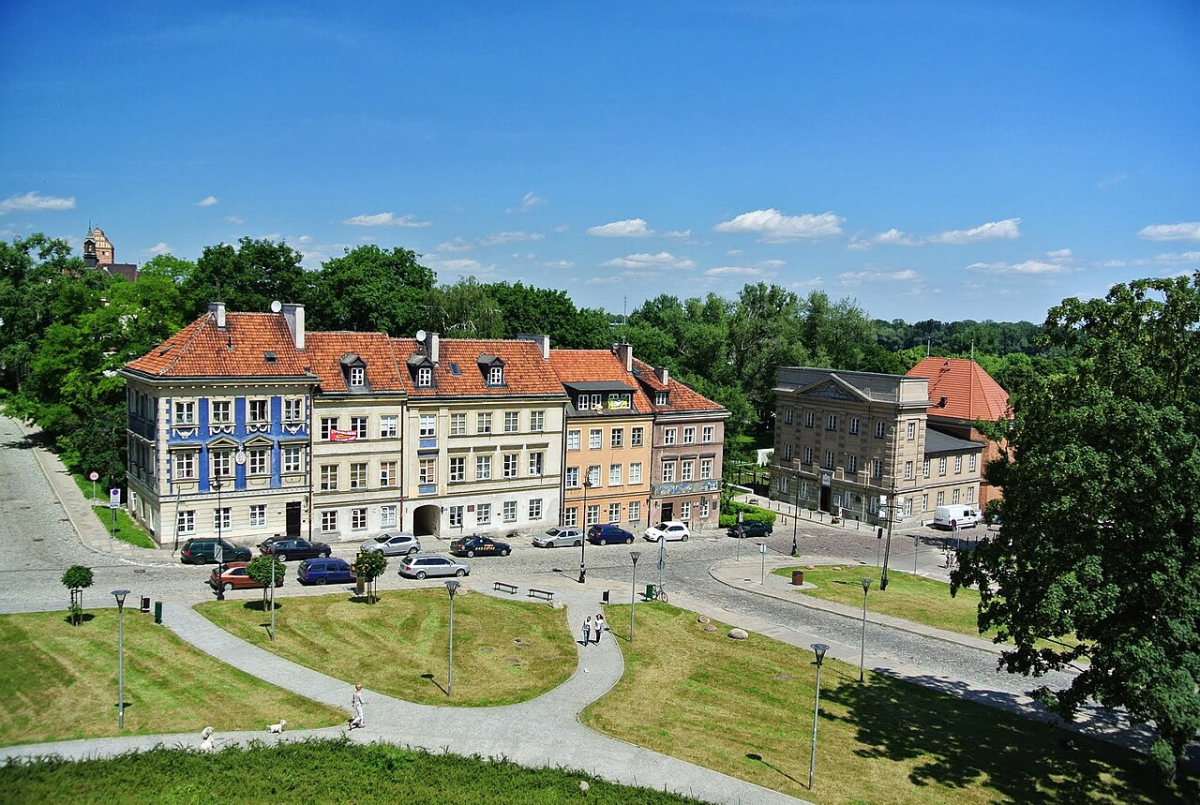

This Warsaw archive presents a licensed photograph of historic buildings identified in its source as part of the city’s Old Town setting. The picture offers a way to look at building groups, open space and vegetation together, rather than treating an architectural subject as an isolated façade. It is an archive illustration, not a current access map or a verified instruction for reaching the photographer’s exact position. Follow the credited file record for provenance and current local information for visit planning.
Warsaw photography can involve contrasting urban settings, from historic streets to modern buildings and parks. This page has a narrower purpose: interpreting one historic architectural frame and preparing a considered visit that leaves room for observation. It does not repeat the country-wide selection of photo locations or provide a new list of every Warsaw attraction. Use Poland Photos & Photo Spots for the broader comparison, and Map & Regions and Where to Stay for choosing a Warsaw base within the actual journey.
Read the buildings as a group
Look first at the relationship between the main façades and the space around them. Different roof heights, window patterns and building colours can create a rhythm that a tight photograph of one doorway would not reveal. Vegetation and the foreground help establish distance and the way the buildings occupy the setting. Notice which element attracts your eye and whether the photograph gives it enough surrounding context to make the group understandable.
When preparing your own frame, choose whether the subject is the architectural ensemble, a particular detail or the relationship between the buildings and public space. These choices lead to different compositions. A wider view can explain the setting, while a detail may reward attention to texture or repeated windows. Do not assume that the archive’s standing position is publicly accessible today. Find a permitted position, keep a safe approach and adapt the frame to the view available rather than treating a close reproduction as the only successful outcome.
Keep the archive’s identification separate from unverified detail
The source provides the city and an Old Town description. That is useful provenance, but it should not be expanded into an unverified name for every building or a precise route to the scene. An attractive historic façade can be misidentified when a caption is copied without checking. If a particular institution, address or historical period matters to the visit, use the relevant official source and confirm that it refers to the actual subject you intend to see.
A photograph also cannot establish the present use of every room or entrance. A building’s appearance does not tell you whether it contains homes, offices, a venue open to visitors or a temporarily closed space. Treat ordinary entrances and courtyards carefully, and read posted instructions rather than assuming historic architecture belongs entirely to tourism. The archive can inform visual observation while current venue and municipal information determines the practical access decision.
Decide what the light should reveal
Historic building groups can change substantially with light direction and cloud cover. Side light may reveal texture, while a bright sky behind shaded façades can require a different exposure choice. Look at the actual subject and decide which detail you want to retain. An even cloudy day may be useful for architectural colour and form, while stronger light can emphasise edges or produce shadows that become part of the composition.
Allow the visit to adapt when the weather differs from expectations. Check the local IMGW forecast and prepare for time spent standing as well as walking. A winter visit, a warm summer afternoon and a rainy day require different comfort decisions even when the intended subject is the same. Weather & Packing explains those practical preparations. The archive image records its own conditions; it does not promise the same foliage, sky, illumination or clear foreground at another time of year.
Use foreground and vegetation with a clear purpose
Open space and plants can help explain an architectural setting, but they can also distract if they dominate a frame whose main subject is a building group. Consider what the foreground contributes. It may show scale, approach or the relationship between the architecture and its surroundings. A change in framing from the same permitted position can sometimes clarify that relationship more effectively than moving closer to the buildings.
Avoid altering the scene to suit the photograph. Do not move planting, cross protected areas or ask people to leave a shared space simply to produce an empty frame. If the view is partly obscured, choose a different detail or return at another appropriate time. Seasonal foliage can be an interesting part of the subject rather than a defect to remove. A photograph that acknowledges the setting honestly can have more value than a composition presented as ordinary access when it depended on an inappropriate position.
Combine photography with an informed Warsaw visit
Choose a manageable historic-area outing and reserve separate time for any institution whose interpretation or interior you want to experience. Photography of the exterior and a substantial museum or cultural visit serve different purposes. A timed admission needs its own schedule; waiting for light or a quieter foreground should not cause you to miss that commitment. Attractions and Things to Do help select visits elsewhere in the Poland itinerary without turning this archive into another comprehensive attraction list.
Do not attach a distant modern district, park and several museums automatically to the same short photography period. Warsaw’s variety is useful, but it still requires actual journeys and enough time for the party. Pick the main subject for the day and leave another interest for a separate segment when that produces a calmer route. A focused visit can include a meal or rest stop and provide more attentive observation than a day built around collecting as many façades as possible.
Plan movement and accessibility before the frame
Check the route from the accommodation to the area you intend to explore. A central address can still involve a meaningful walk, a local connection or surfaces that do not suit every traveller. Ask precise questions about entrances, steps and the permitted visitor route when mobility affects the plan. A general description of a historic area cannot establish the accessibility of every viewpoint or interior. Choose a position and outing that fit the participants rather than relying on the photograph’s appearance.
Getting Around provides the transport context, while Travel Essentials helps organise offline addresses, phone readiness and everyday preparation. Keep equipment and bags practical for the journey. If travelling with others, agree how the photography time fits their interests and identify a sensible meeting arrangement when people separate. The aim is a Warsaw day that works for the party, with photographs arising from the visit rather than forcing everyone to follow an impractical route for one frame.
Photograph a lived-in historic setting considerately
Public streets and historic neighbourhoods are used by residents, workers and visitors with different purposes. Keep entrances and crossings clear, and avoid standing where a group or tripod would obstruct movement. Ask before making a close portrait, respect refusal and take particular care around children, worship and sensitive situations. A person appearing in an archive image does not provide permission to treat strangers in your own visit as part of a staged architectural scene.
Follow current rules for any museum, religious building or private property involved. Do not infer permission to enter from an open gate or permission to photograph from a view through a window. Where equipment restrictions are unclear, ask the responsible institution and choose an ordinary alternative if necessary. Responsible Travel explains the broader approach to shared space and heritage. Considerate behaviour remains relevant when a photograph is technically possible and the location appears quiet.
Preserve attribution and ask the right archive questions
The caption links the photograph to its credited creator, Wikimedia Commons source and recorded licence. Review that record for reuse conditions and retain the required attribution. This archive photograph appears once in the Poland guide. A different filename, size or crop would still be the same image, so it is not repeated elsewhere as another city illustration. Rights to reuse the credited photograph and permission to make your own picture at a location are separate questions.
Does the archive guarantee a clear viewpoint? No; the current permitted position and conditions determine your own visit. Can the image supply a complete building history? No; use a suitable institutional source for claims beyond the visible scene and recorded identification. Should you recreate the exact frame? Only if an appropriate position and the actual visit make that useful; a different observation can be equally worthwhile. Check the forecast, route, access and party’s needs, then give Warsaw’s historic setting attention that extends beyond the camera screen.
Compare the photography decisions
| Choice | Focus | Check |
|---|---|---|
| Subject | Historic building group | Ensemble, detail or the surrounding open space |
| Conditions | Light and seasonal vegetation | Respond to the actual frame and permitted position |
| City day | Photography plus a selected cultural visit | Separate fixed admission from flexible observation |
Image provenance and official information
Checked on 12 October 2026. The photograph and linked file record support the visible subject and credit. Confirm current access, venue activities and transport before your own visit.