
Poznań Photo Archive: A Licensed Poland Image
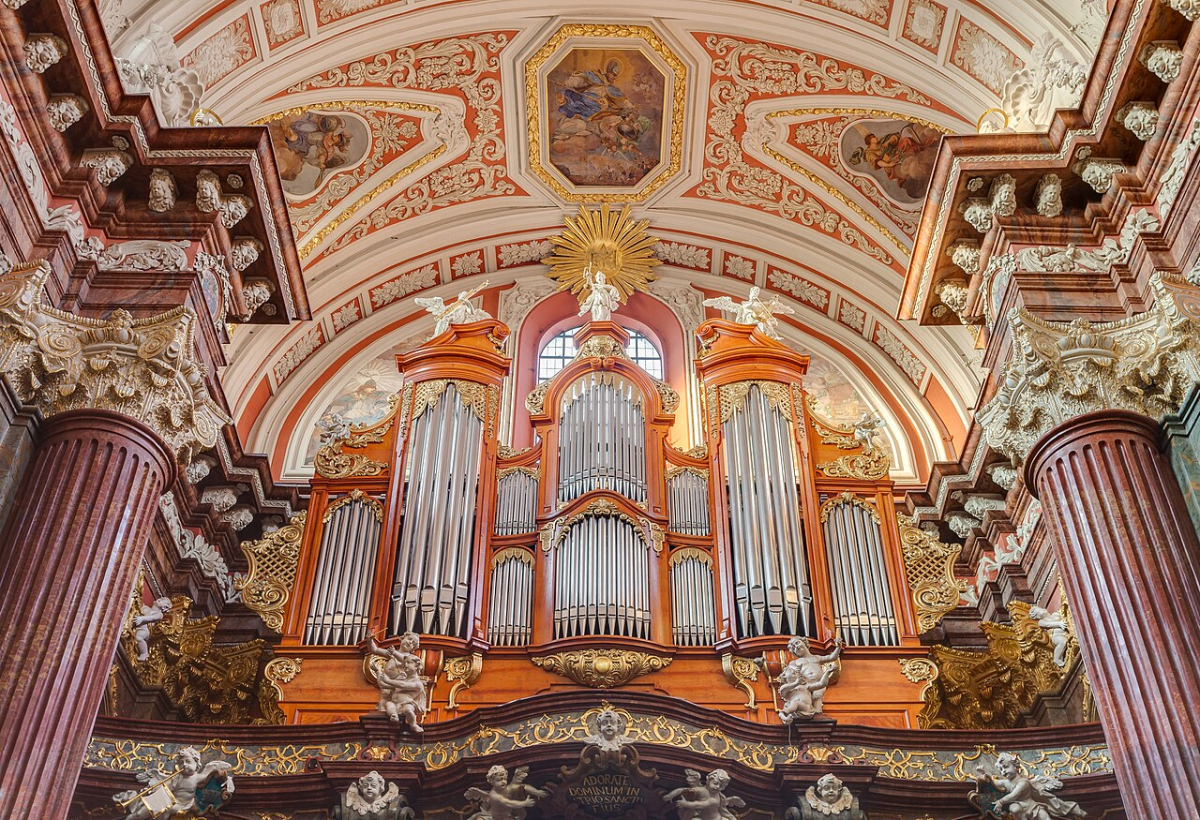

This Poznań photo archive presents a licensed interior photograph of the organ in the city’s Collegiate Church. The image gives a specific subject for looking at ornament, musical architecture and the relationship between a focal object and its surroundings. It is an archive illustration rather than a current invitation to photograph a service, enter a restricted part of the building or use particular equipment. Follow the credited source for provenance and the institution’s current instructions for your own visit.
An interior photography visit needs a different approach from a walk around an outdoor market square. Light can be limited, other people may be worshipping or attending a programme, and the permitted position may be fixed. Prepare for those conditions without assuming that every church or cultural venue has the same rules. This page focuses on reading the Poznań organ photograph and planning a respectful interior visit. The wider Poland Photos & Photo Spots guide helps compare this interest with outdoor city, coastal and landscape subjects.
Find the focal structure within the ornament
The organ provides a strong central subject, while the surrounding decoration gives the picture depth and context. Look at how repeated forms, curves and vertical elements guide the eye through the frame. An image of this kind can be read first as an arrangement of shapes and then as a record of a musical and religious setting. Keep those layers together rather than treating the ornament as an anonymous backdrop that could belong to any interior.
For your own photograph, decide whether you want the instrument as a whole or a particular relationship between the organ and surrounding architecture. A close detail can show texture or ornament, while a wider composition explains how the subject occupies the room. Use only the positions permitted to visitors. Do not move furniture, climb fixtures or enter a gallery because it would provide a more symmetrical frame. A different composition from an allowed position is preferable to a picture based on access you were never granted.
Understand the purpose of the place before choosing a time
A church is a place of worship as well as a possible architectural or musical interest. Services, rehearsals and other activities can determine whether an ordinary visitor should enter, remain quiet, wait or return later. Check the current visitor information and posted instructions at the Collegiate Church rather than assuming that an archive photograph establishes continuous tourist access. The rules for photography may differ from the rules for simply visiting or attending an event.
If hearing the organ is central to the trip, look for an actual announced programme and confirm the venue, date and admission arrangements. A photograph of the instrument does not promise that it will be played during your visit, and an open building does not establish a public recital. Reserve time for the experience you intend to have. An attentive architectural visit and a scheduled performance can each be worthwhile, but they involve different expectations about movement, noise and photography.
Work with available interior light
Interior light can create bright highlights alongside shaded decoration. Decide which part of the subject matters most and review whether the exposure retains the detail you want. Taking many frames with the same setting is less useful than noticing what the light is doing. A phone or camera you understand can serve the visit well, particularly when the permitted space or available time makes a complicated setup impractical.
Check whether flash, tripods or other equipment are allowed before using them. Permission cannot be inferred from the presence of a photograph online. Flash may disturb others or be restricted, while a tripod can obstruct a narrow passage even where the equipment itself is permitted. If a handheld image requires a compromise, make that decision honestly rather than asking others to stop their normal activity. Review the resulting photograph for softness or excessive processing, and keep any adjustments faithful to the subject you observed.
Compose without taking over the room
A symmetrical instrument can invite a symmetrical photograph, but the allowed visitor route and the people present may make a different frame more suitable. Consider how the edges of the picture relate to the organ, the ceiling or the surrounding decoration. Avoid unintentionally cutting through a major visual element when a small adjustment from the same permitted position would improve the result. Do not let the search for a perfect alignment distract from the purpose and use of the room.
Make a small number of considered photographs and step aside when others need the space. Lower the camera during worship or a performance when appropriate, and follow the institution’s instructions if photography is prohibited. Silence devices and avoid repeated audible shutter or notification sounds where they would disturb the setting. The archive is useful for understanding an architectural subject; it should not be used as a reason to disregard the people whose activities give the place its continuing meaning.
Connect the interior visit with a manageable Poznań stay
Plan the church visit as one part of a Poznań day rather than making an interior photograph the sole reason for an impractical transfer from another region. Use Map & Regions and Itineraries to place Poznań within a connected route, and check the actual journey to the city and accommodation. A realistic base gives room to return at another suitable time if the institution is closed to ordinary visitors when you first arrive.
Combine the interior interest with an outdoor walk, meal or other visit that serves the party’s needs. Keep any timed booking separate from uncertain access to a religious interior. If travelling with someone who prefers a shorter cultural visit, agree how much time to spend and identify a suitable alternative from current information. This makes the day work for the people involved rather than requiring everyone to wait while one person tries to reproduce an archive frame.
Prepare for access, mobility and everyday needs
Ask precise questions when access affects the visit. An institution being open does not answer whether the entrance, visitor route or permitted photography position suits a wheelchair user or someone who needs to avoid steps. Nor does a general description of a historic building establish seating, facilities or space for a larger group. Confirm the requirements that matter to the participants through the responsible venue, then choose a plan that fits the answers.
Keep bags and equipment compact enough for the space, and follow any instructions about storage or entry. Arrange food, breaks and onward transport so that the visit does not become uncomfortable through avoidable fatigue. Travel Essentials and Getting Around provide the broader preparation, while the institution supplies the actual access conditions. A quieter or shorter visit can be the right choice when the party’s needs and the available route call for it.
Keep place names, provenance and reuse accurate
The archive identifies the subject as an organ inside Poznań’s Collegiate Church. It does not supply an independently verified organ specification, a construction history or a performance calendar. Do not attach dates, dimensions or technical claims to the image merely because the ornament suggests an architectural period. Use an appropriate institutional source if those details matter to your interest, and keep a distinction between what is visible in the photograph and what a source establishes about its history.
The caption records the credited photographer or source and links to the Wikimedia Commons file page and licence. Review those terms for any intended reuse, and preserve the required attribution. Permission to reuse this photograph does not authorise your own access or photography inside the church. This image appears once in the Poland guide’s inventory; another size or crop would still be the same photograph. Different subjects and new observations should determine a photo series rather than multiplying versions of one frame.
Poznań interior photography questions
Can you expect an organ performance when visiting? Only a current programme can establish that; the archive photograph cannot. Is a tripod automatically acceptable for a low-light interior? Check the venue’s rules and the space available, and use a suitable handheld alternative when necessary. Must you copy the central composition? No; work from the actual permitted position and the conditions of the visit. A modest frame that respects the room can be more useful than a technically elaborate photograph made at the expense of others.
Before entering, review the current access instructions, any service or event taking place, the equipment restrictions and the needs of your companions. Then decide how the photography fits the visit’s purpose. Give the interior attention beyond the camera screen, and allow the instrument and its setting to be understood as part of Poznań’s cultural life. Use the archive as a starting point for observation, with accurate provenance and considerate behaviour, rather than as a guarantee of identical access, light or activity.
Compare the photography decisions
| Choice | Focus | Check |
|---|---|---|
| Subject | Organ and surrounding decoration | Whole instrument versus a permitted detail |
| Visit purpose | Architecture, worship or a performance | Current access and the specific programme |
| Equipment | A practical interior setup | Flash, tripod and passageway rules |
Image provenance and official information
Checked on 12 October 2026. The photograph and linked file record support the visible subject and credit. Confirm current access, venue activities and transport before your own visit.