
Sign in
For Photos4Travel editors and team members.
Jamaica · Photo Spots
Jamaica Photo Spots: Coastlines, Heritage and Forest Scenes
Jamaica offers more than a bright beach and a palm tree. A convincing set of photographs can include the shape of a cove, the texture of a fort, the movement of water and a quiet detail from a forest. Choose a few subjects near your base and give each time, rather than treating the island as a list of roadside viewpoints.
The five settings below pair a subject with a practical approach to light, composition and access. The photographs are examples from their stated places and dates; they do not promise that a specific viewpoint, trail, business or weather condition is available today.
Plan the light around access, not the other way round
Choose an early or late light window when it suits the location's actual opening arrangement. A paid beach or heritage attraction may open after sunrise or close before sunset. You can still make good pictures in its operating hours by changing the subject: details in shade, a tighter view of water or the relationship between a building and its surroundings.
Scout from a lawful, comfortable place before unpacking extra equipment. Check the edge of the frame for bright distractions, straighten the horizon and decide what the picture is about. A single clear subject usually works better than a wide image trying to include the entire holiday. Phones are capable of useful travel photography; light, position and patience matter more than carrying every lens.
On 19 November 2026, recovery remains specific to places and facilities. Check operators for your intended visit and use the Jamaica map to group photographs by base. A distant transfer after dark for one possible sunset is a poor trade when a closer subject gives you more time and a comfortable return.
Swipe or scroll sideways to compare the full table.
| Setting | A workable light approach | Composition idea | Access question |
|---|---|---|---|
| Negril coast | Early softer light, or late light from a suitable west-facing shore | Keep one foreground shape and a level sea horizon | Which beach entrance or cliff property permits the visit? |
| Port Royal / Kingston heritage | Side light when it fits visiting hours; shade for details | Use a wall, doorway or repeated fort element to lead the eye | Are the site and chosen areas open, and is a tripod allowed? |
| Port Antonio coves | Early or later light where access allows; bright overcast for green shorelines | Show the curve of the cove without filling the image with empty sky | Is the exact viewpoint public or permission-based? |
| Blue and John Crow Mountains forest | Soft cloud cover for foliage and layered mist | Separate one tree or leaf pattern from a clean background | Has the precise road, facility or trail reopened? |
| Dunn's River / north-coast waterfalls | Even light without harsh sun patches | Choose a small cascade or a foreground rock for scale | Can you photograph from a designated dry viewing area? |
Negril coast: make the shore the subject
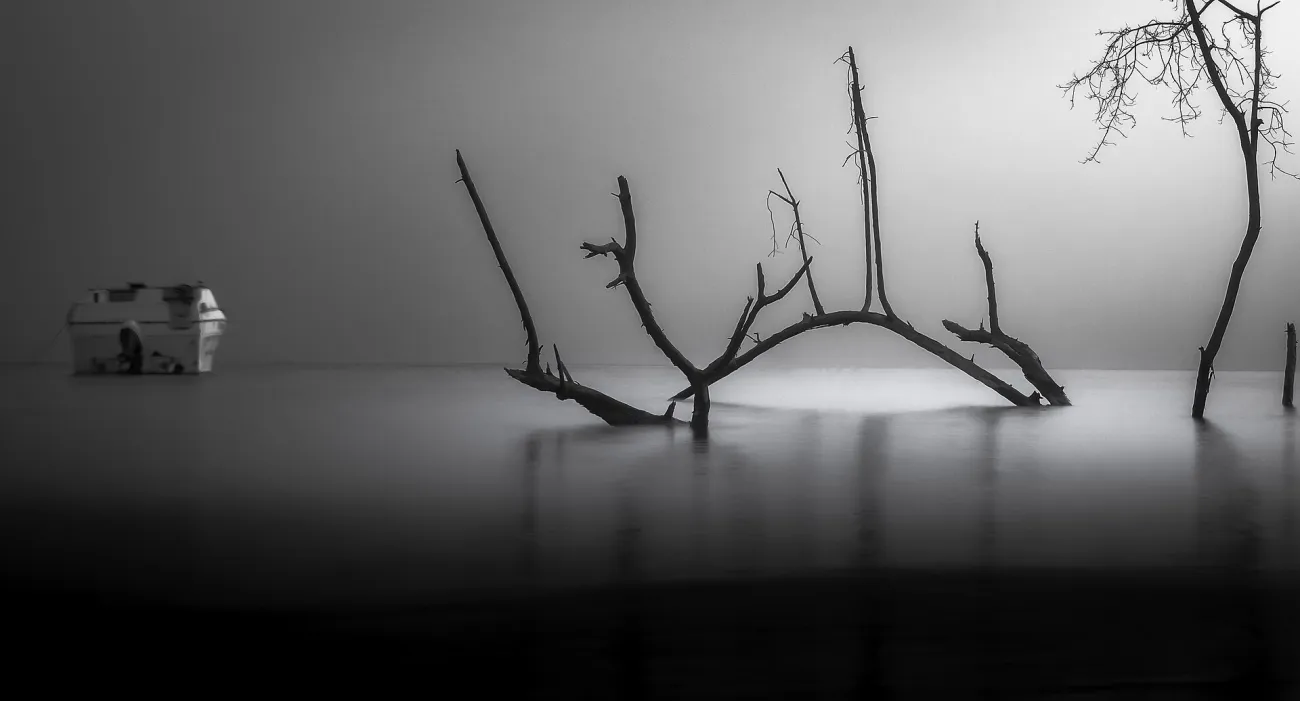
Photo: Bloody Bay Negril - Flickr - J a s o n B o l d e r o — Jason Boldero · CC BY 2.0 · Resized.

Negril offers sandy-beach and cliff-coast photographs, but they require different positions. On the sand, start with the coastline's curve, a natural foreground shape and space around the main subject. On a cliff property, work from the authorised terrace or path. A pleasing view does not justify moving towards an unprotected edge.
Late light can suit a west-facing coastal view, while an earlier visit may give quieter compositions and softer contrast. The precise effect depends on the season, cloud and the direction you are looking. If the sunset turns into a flat grey sky, switch to the texture of rock, a line of palms or a closer study of water instead of waiting for colours that may never arrive.
A phone's wide lens can make an attractive shore look distant. Try a modest crop or the normal camera view before using the widest setting, and avoid placing a very close palm at the edge where distortion stretches it. Keep swimmers and hotel guests out of an otherwise empty landscape frame unless you have their consent. Arrange the evening return before concentrating on the light.
Port Royal and Kingston: photograph buildings with context
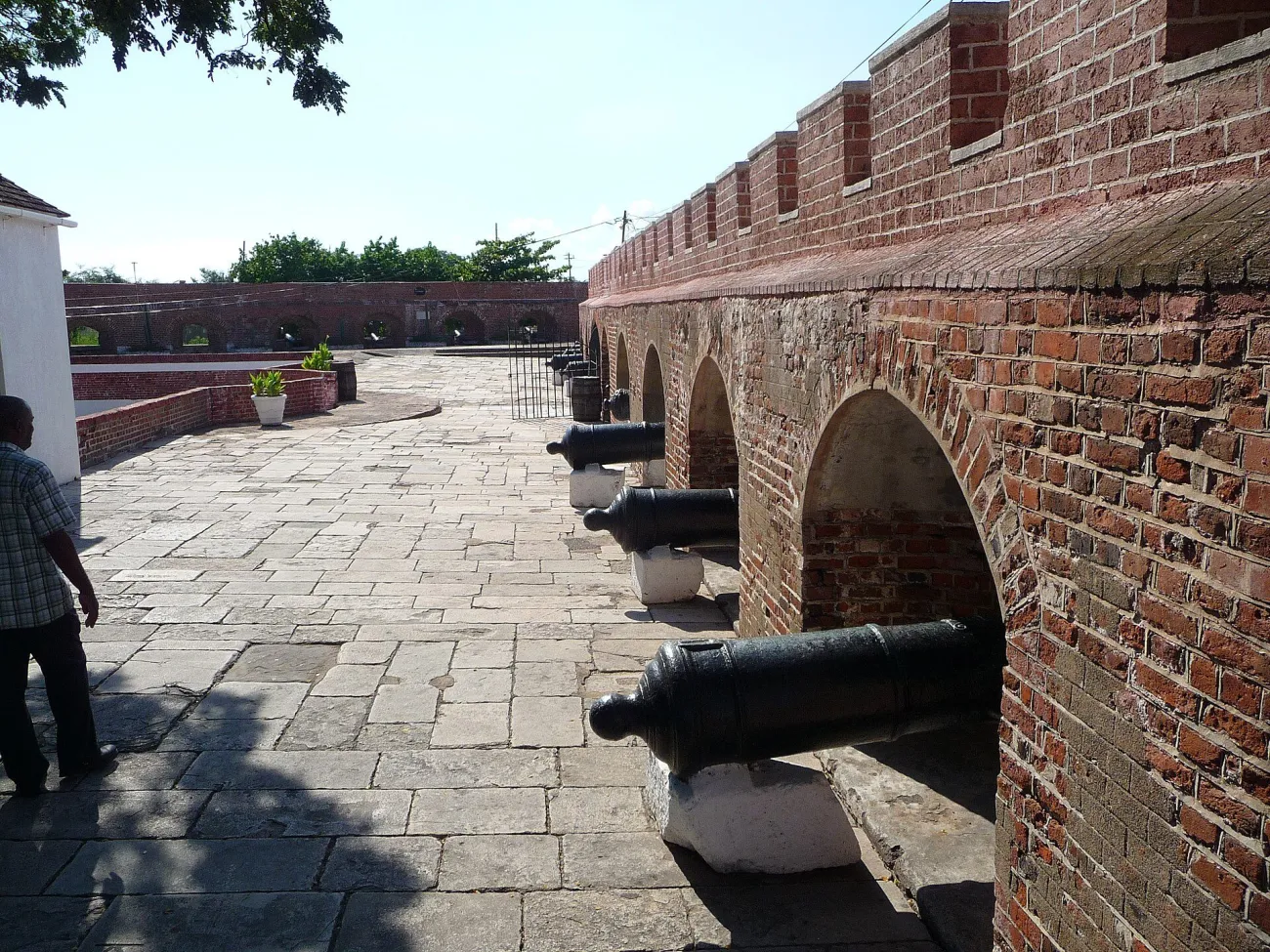
Photo: Raychristofer · CC BY-SA 4.0 · Resized.

Port Royal's Fort Charles offers a heritage subject tied to Kingston Harbour. The National Heritage Trust identifies the fort and its history; confirm current visiting arrangements with the operator before travelling for photography. Within authorised areas, a repeated line of defences, a doorway or the angle between wall and sea can create a more deliberate image than an isolated snapshot of a cannon.
Side light can reveal texture, while open shade is useful for brick, timber and small architectural details. If the bright sea or sky overwhelms a darker building, change your position or make separate wider and tighter photographs. Keep vertical lines upright unless the tilt is an intentional part of the composition; stand farther back before using an extreme wide angle.
Kingston's other heritage and street settings need their own route and access decisions. Do not assume every building on a list is open for an interior visit, or that a historic residential street is a performance for visitors. Work with a suitable local guide where helpful, avoid blocking a doorway or pavement and ask before making a person central to the picture.
Port Antonio and San San: show the shape of a cove
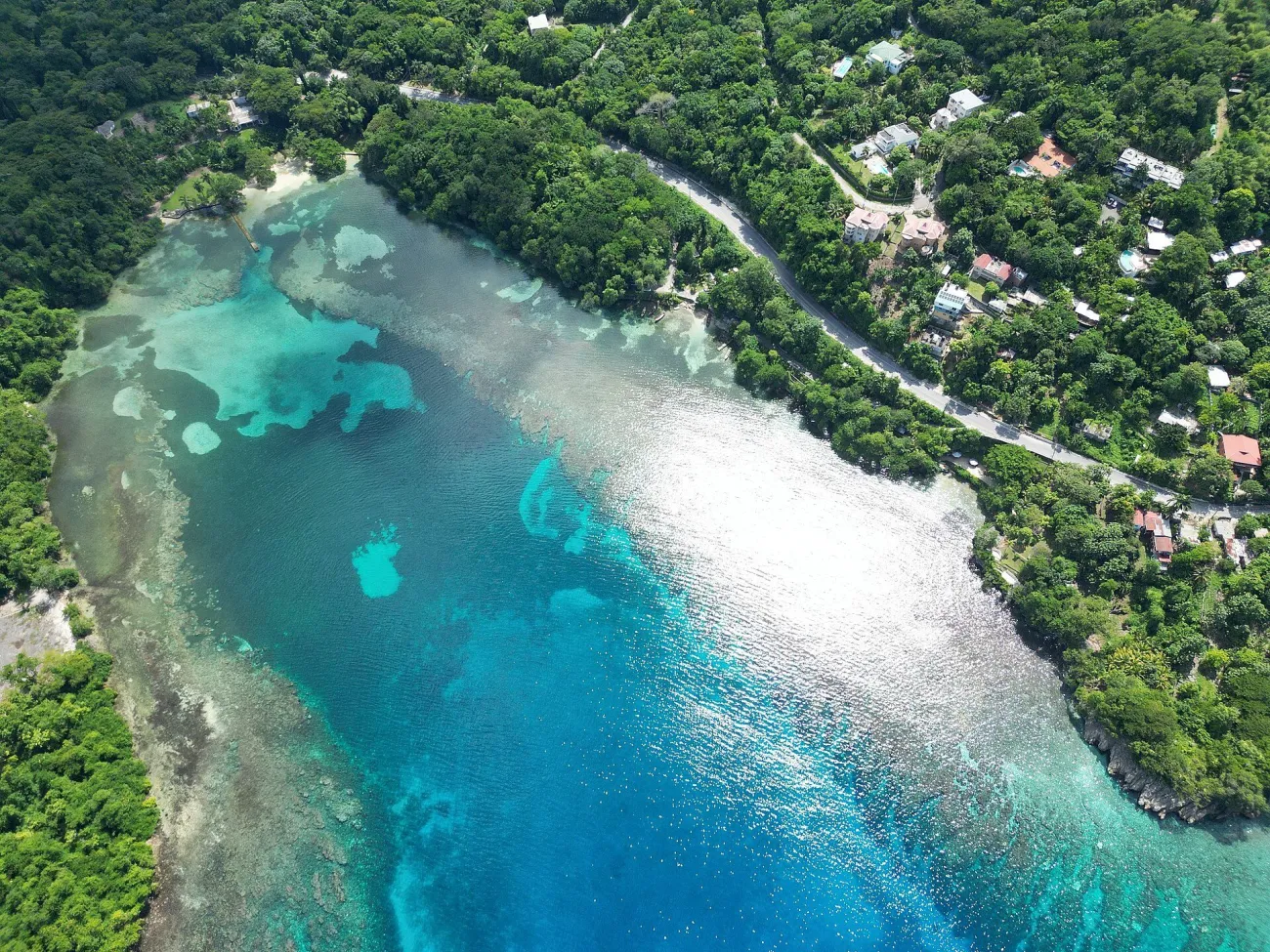
Photo: Layneartz19 · CC BY-SA 4.0 · Resized.

The coastline around Port Antonio and San San gives photography a natural structure: a curved bay, vegetation and changing tones of water. Begin by choosing what explains the place. A small area of foreground can anchor the scene; too much sky or too many overlapping branches can hide the cove you came to photograph.
Bright overcast weather can work well for foliage and shoreline detail. In stronger sun, protect highlights on water and pale sand rather than trying to make every shadow bright. On a phone, tap the important area and lower exposure slightly if the brightest parts lose detail; inspect the result instead of assuming the screen's vivid colours reflect the finished image.
Not every attractive angle is a public viewpoint. Ask about the actual path, property boundary and permission before going onto land for a higher view. Frenchman's Cove provides a separate managed beach visit with its own rules; it is not interchangeable with every San San shoreline photograph. If access or sea conditions disappoint, make a tighter composition from a permitted shore or return to Port Antonio's harbour setting.
Blue and John Crow Mountains: forest photographs need a verified place
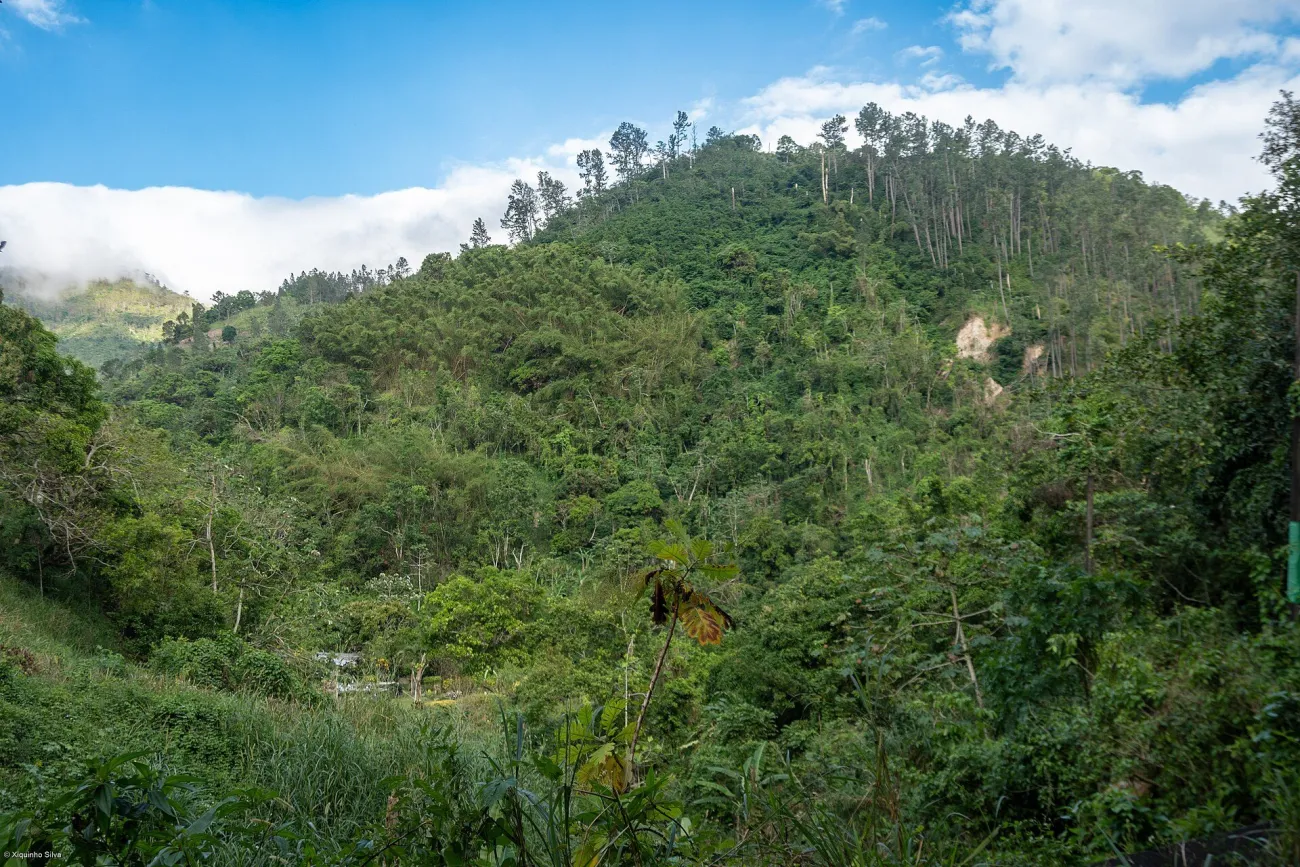
Photo: xiquinhosilva · CC BY 4.0 · Resized.

Mountain forest photographs can work through layers, texture and quiet light rather than a distant summit panorama. Mist can simplify a background, cloud can soften the contrast on leaves and a wet trunk can give the image a clear anchor. Choose a small subject first: a curve of branch, a pattern of foliage or the relationship between one tree and the forest behind it.
Access is the first decision. The official 3 October 2026 restoration report describes damage to roads, trails and facilities in the Blue and John Crow Mountains, including work at Holywell and Portland Gap. It does not announce blanket reopening. Confirm the exact site and route with JCDT before arranging a visit; an archived forest photograph is not proof that you can reach its viewpoint today.
Keep equipment simple and protected from moisture. Wipe the lens before each sequence, use a rain cover and stop in a stable permitted place rather than making photographs while moving on a slippery path. When mountain access is unavailable, work with foliage in the grounds of an open property where photography is permitted. Caption the actual location honestly; a hotel garden should never be presented as the national-park forest.
North-coast waterfalls: work from the viewing area
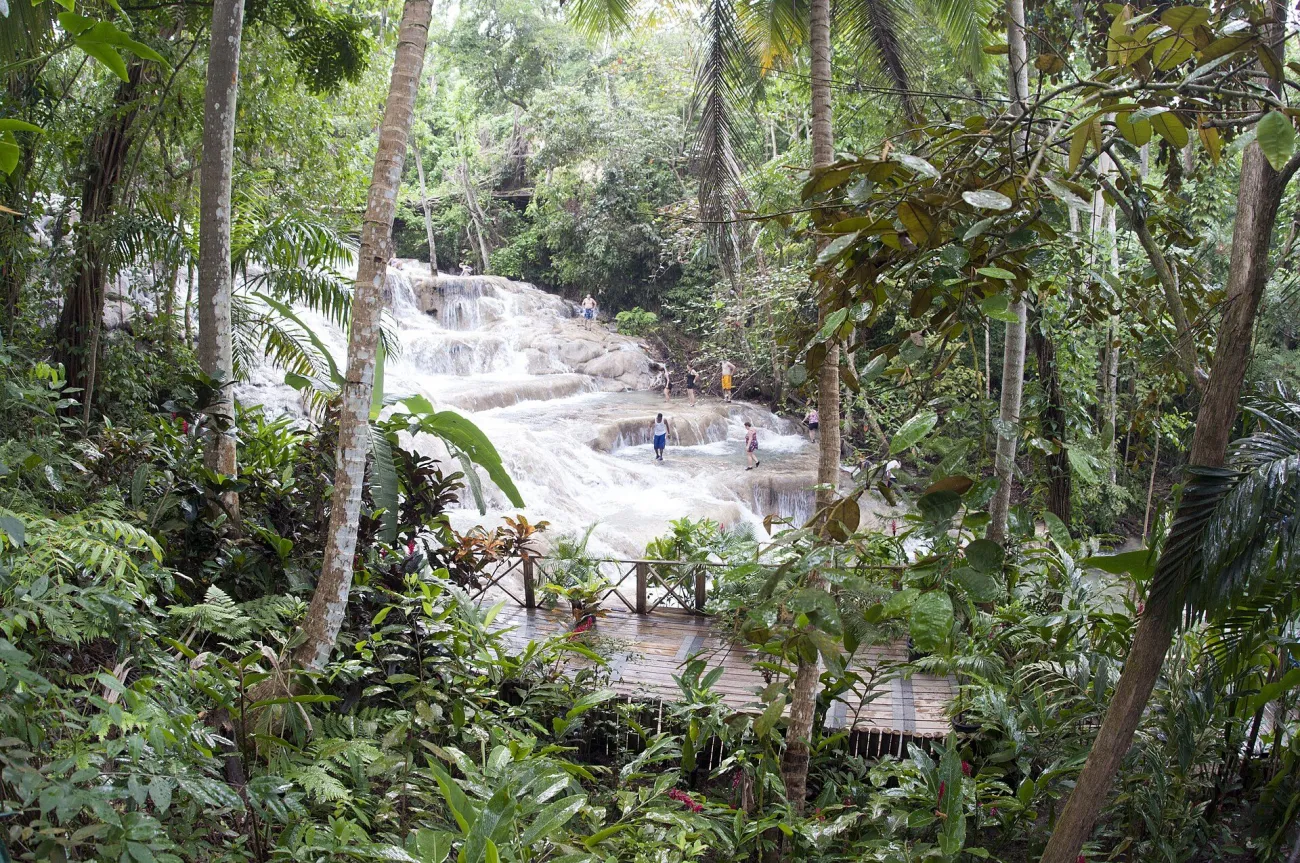
Dunns River Falls wide Photo Don Ramey Logan.jpg from Wikimedia Commons. Photograph by Don Ramey Logan, CC BY-SA 3.0. Resized.

Dunn's River Falls near Ocho Rios gives you patterns of terraced water and rock as well as the larger attraction scene. The operator describes viewing areas for visitors who do not climb. Those are useful places to think about a frame without simultaneously balancing in moving water or trying to protect a phone.
Even light makes white water easier to expose than a scene with bright sun patches and deep shade. Try a tighter view of one cascade instead of including every visitor and staircase. A fast shutter emphasises droplets; a slower exposure can show flow if your camera is supported in a place where that is allowed. Neither effect is worth setting a tripod where it obstructs a walkway.
Phones can make a strong waterfall photograph using the normal camera and a steady stance. Protect highlights, keep the lens dry and check that spray has not softened the frame. Put equipment away before entering the water. A guided climb is an activity with instructions to follow, not an opportunity to stop a group while arranging a photograph. If the water or weather prevents the visit, use another subject rather than seeking an unofficial entry.
Carry gear you can comfortably use
A phone, a clean cloth and a practical way to keep electronics dry cover many beach and heritage visits. If carrying a camera, a versatile normal-range lens is often more useful than repeated lens changes near sand or spray. Bring a spare battery or power bank and enough storage, then make a backup when you return to your accommodation.
A polarising filter can sometimes reduce reflections and help with foliage, but it can also make a wide sky look uneven; assess the actual image instead of using it automatically. A tripod is useful only when the site permits it and there is space to work without obstructing others. For a busy attraction, a clear handheld frame is usually the more considerate choice.
Keep a short set of images in mind: one wider view for context, one closer study for texture and one detail that is specific to the place. That approach produces a coherent record without requiring another long journey each time you want variety.
Ask for portraits, and treat drone planning separately
Ask before making a portrait or photographing a vendor's work closely. A purchase does not automatically include permission to use someone's face commercially. Keep children and private moments out of the frame unless appropriate permission is clear, and accept a refusal without turning it into a negotiation.
Follow the site's photography rules, especially inside museums, religious buildings and privately managed attractions. Personal handheld photography, a staged shoot and equipment-heavy commercial work can require different arrangements. Establish the intended use with the operator before arriving with lights, a crew or a plan that affects other visitors.
Drone photography has a separate aviation framework. The Jamaica Civil Aviation Authority distinguishes recreational operators from professional operators, with professional activity requiring a Special Aerial Work Permit. Recreational use must still comply with operating guidelines, including property permission, people and airspace restrictions. The absence of a recreational permit requirement is not permission to fly at a beach, fort or near an airport. Check the current JCAA guidance and the location's rules before bringing a drone into the plan.
Build a photo outing that still feels like travel
Choose one main setting and plan the journey, permitted visiting window and meal together. Leave room to look before shooting. Returning to a nearby shore under different cloud can be more productive than spending half the day driving to another famous view.
Match the image to the place and conditions you actually encountered. Keep the capture date with your files, retain the photographer and licence details when sharing someone else's work, and do not describe an archive picture as a current condition report. A smaller set of clear, honest photographs makes a stronger travel story than a long gallery with uncertain locations.
Photo Spots questions
Do I need a dedicated camera for Jamaica photo spots?
No. A phone can handle many coast, building and waterfall photographs. Use a clean lens, a deliberate position and careful exposure before adding equipment.
Can I photograph Blue Mountain forest now?
Confirm the exact site, trail and approach road with JCDT first. The October 2026 restoration report does not establish blanket reopening, and the example photograph is not current-access evidence.
What if an attraction is not open at sunrise or sunset?
Work within its actual visiting hours. Photograph details in shade, use softer overcast light or choose a permitted local shore for early or late light.
Can I use a drone freely as a tourist?
No unrestricted permission is implied. JCAA distinguishes recreational and professional operations, and location, people, property and airspace rules still apply. Check current official guidance and the site's permission.
Should I climb the falls with my camera ready?
Put equipment away when movement and footing need your attention. Use designated viewing areas for deliberate photography, and follow the climb guide's instructions if participating.
Last updated: