
Sign in
For Photos4Travel editors and team members.
Cuba · Best Time to Visit
Best Time to Visit Cuba: Weather and Seasonal Trade-offs
For a walking-heavy Cuba route, start by comparing November through April. The weather can still change from one coast to the other and a winter cold front can make a north-coast beach day feel cooler than expected. Weather is only one part of the decision. Check the current travel advisory and usable flights before selecting dates.
On this page · 4 sections ShowHide
Cuba weather by season
Swipe or scroll sideways to compare the full table.
| Period | Typical planning consideration | What to build in |
|---|---|---|
| November to February | Generally drier, with cooler spells possible around Havana and the north coast | Keep a light layer and a museum or indoor meal in reserve. |
| March to April | Often a useful compromise for city walks and a beach trip | Carry water and schedule the exposed part of the walk early. |
| May to August | Hotter and generally wetter, with the Atlantic hurricane season starting in June | Put long outdoor plans early in the day and keep bookings flexible. |
| September to October | Part of the Atlantic season with significant storm exposure | Recheck forecasts and cancellation terms before each road or air leg. |
Havana weather by month
The Cuban Institute of Meteorology figures on the WMO service give measured climate averages for Havana during 1961–1990. The high and low columns are averages of daily extremes, and the rainfall column is the monthly total averaged over the period. Use these figures to choose a season. Check a live forecast and local access near departure.
Swipe or scroll sideways to compare the full table.
| Month | Mean daily high | Mean daily low | Mean monthly rain |
|---|---|---|---|
| January | 25.8 °C / 78.4 °F | 18.6 °C / 65.5 °F | 64.4 mm |
| February | 26.1 °C / 79.0 °F | 18.6 °C / 65.5 °F | 68.6 mm |
| March | 27.6 °C / 81.7 °F | 19.7 °C / 67.5 °F | 46.2 mm |
| April | 28.6 °C / 83.5 °F | 20.9 °C / 69.6 °F | 53.7 mm |
| May | 29.8 °C / 85.6 °F | 22.4 °C / 72.3 °F | 98.0 mm |
| June | 30.5 °C / 86.9 °F | 23.4 °C / 74.1 °F | 182.3 mm |
| July | 31.3 °C / 88.3 °F | 23.8 °C / 74.8 °F | 105.6 mm |
| August | 31.6 °C / 88.9 °F | 24.1 °C / 75.4 °F | 99.6 mm |
| September | 31.0 °C / 87.8 °F | 23.8 °C / 74.8 °F | 144.4 mm |
| October | 29.2 °C / 84.6 °F | 23.0 °C / 73.4 °F | 180.5 mm |
| November | 27.7 °C / 81.9 °F | 21.3 °C / 70.3 °F | 88.3 mm |
| December | 26.5 °C / 79.7 °F | 19.5 °C / 67.1 °F | 57.6 mm |
In this series, March averages 46.2 mm of rain, compared with 182.3 mm in June. Use those differences to choose a season for long outdoor walks. The Santiago tourism authority describes a separate contrast between the drier southern coast and the wetter mountains. Check the conditions for your particular trail or coast.
Havana and Santiago airport temperatures, 1991–2020
Use these monthly mean temperatures to compare west and southeast. The values were calculated from NOAA Global Summary of the Day station observations and published in the José Martí and Antonio Maceo station summaries. They describe two airport locations. The historical Havana table above is from an earlier period. For regional rainfall, use the World Bank’s 1991–2020 CRU climatology with the subnational view.
Swipe or scroll sideways to compare the full table.
| Month | José Martí, Havana | Antonio Maceo, Santiago de Cuba |
|---|---|---|
| January | 21.0 °C | 24.3 °C |
| February | 21.7 °C | 24.5 °C |
| March | 22.7 °C | 24.8 °C |
| April | 24.5 °C | 25.7 °C |
| May | 25.7 °C | 26.4 °C |
| June | 26.6 °C | 27.3 °C |
| July | 26.9 °C | 27.8 °C |
| August | 26.9 °C | 27.9 °C |
| September | 26.5 °C | 27.5 °C |
| October | 25.4 °C | 26.8 °C |
| November | 23.3 °C | 25.9 °C |
| December | 21.9 °C | 25.0 °C |
In January the airport means differ by 3.3 °C. That is useful for packing layers for Havana and warmer city walks in Santiago. Conditions on the south coast and in the mountains still need their own forecast.
Why Havana weather does not predict every stop
Havana is exposed to northern winter fronts. On trips around Trinidad, upland trails can be wet even when the town is comfortable. In Viñales, the same valley can be clear from one lookout and hidden by mist shortly after. Ask about conditions at the destination, including whether unpaved roads or river routes are open.
Cuba’s hurricane season and a backup plan
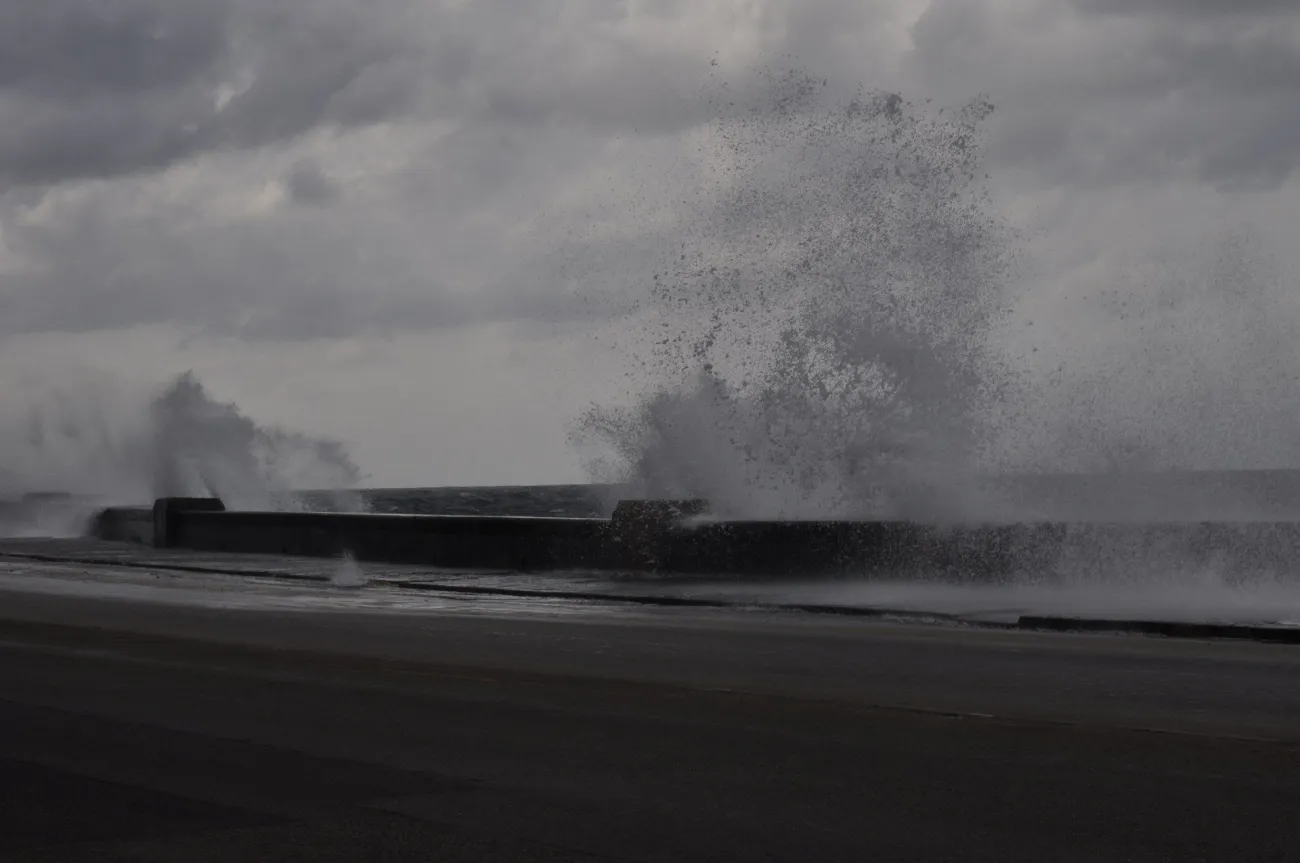

The National Hurricane Center describes the Atlantic season as June 1 through November 30. Tropical systems can still occur outside those dates. Base decisions on active advisories and local instructions during a storm, not a historical average. Reconfirm the carrier before starting a long drive to the airport.
Cuba weather FAQs
What months are usually drier in Cuba?
November to April is the broad planning window. A cold front or local storm can still change conditions.
Is December always good for swimming in Varadero?
Wind and cold fronts can make the north coast cool or rough. Use the local marine conditions and flags to decide.
What months are hurricane season?
The official Atlantic season is June 1 to November 30.
Which season is better for walking?
Choose a drier period where possible, then check local access after rain. For heat, start your exposed walk early in the day.