
User login
Cuba Money
Understanding money in Cuba is essential for a smooth and stress-free trip. The island’s dual-currency past, limited card use, and reliance on cash make financial preparation key. This guide explains everything you need to know about Cuban currency, exchanging money, paying for services, and managing expenses during your stay.

Understanding Cuban Currency
Since 2021, Cuba has used a single national currency — the Cuban Peso (CUP), locally called the moneda nacional. The former convertible peso (CUC) was removed from circulation. All payments within Cuba — hotels, restaurants, taxis, and shops — are now priced in CUP.
- Currency code: CUP
- Symbol: $ (often written as CUP$ to avoid confusion)
- Banknotes: 1, 3, 5, 10, 20, 50, 100, 200, 500, 1000 CUP
- Coins: 1, 3, 5 CUP and smaller centavos
Foreign visitors can pay in CUP cash, euros, or U.S. dollars in many tourist areas — but local businesses typically prefer CUP. Exchange rates may vary slightly between official banks and informal exchanges.
Exchange Rates & Where to Change Money
The most reliable places to exchange currency are official CADECA (Casas de Cambio) offices, banks, and hotel reception desks. Avoid street money changers who may offer poor rates or counterfeit bills.
- Best currencies to bring: Euros (€) and U.S. dollars (USD)
- Average exchange rate (2025): ≈ 1 USD = 120–130 CUP (official)
- Airports & hotels: Convenient but sometimes lower rates
- Local banks: Banco Metropolitano, Banco de Crédito y Comercio (BANDEC)

Using Cash in Cuba
Cuba remains a predominantly cash-based economy. While some hotels and upscale restaurants accept cards, most daily transactions — taxis, cafés, shops, and museums — require cash.
- Carry small denominations (50 CUP – 500 CUP) for convenience.
- Check banknotes carefully; older notes can be worn or hard to read.
- Always confirm prices before paying — some venues quote in USD or EUR.
- Keep cash safe; hotel safes are generally reliable.
ATMs & Credit Cards
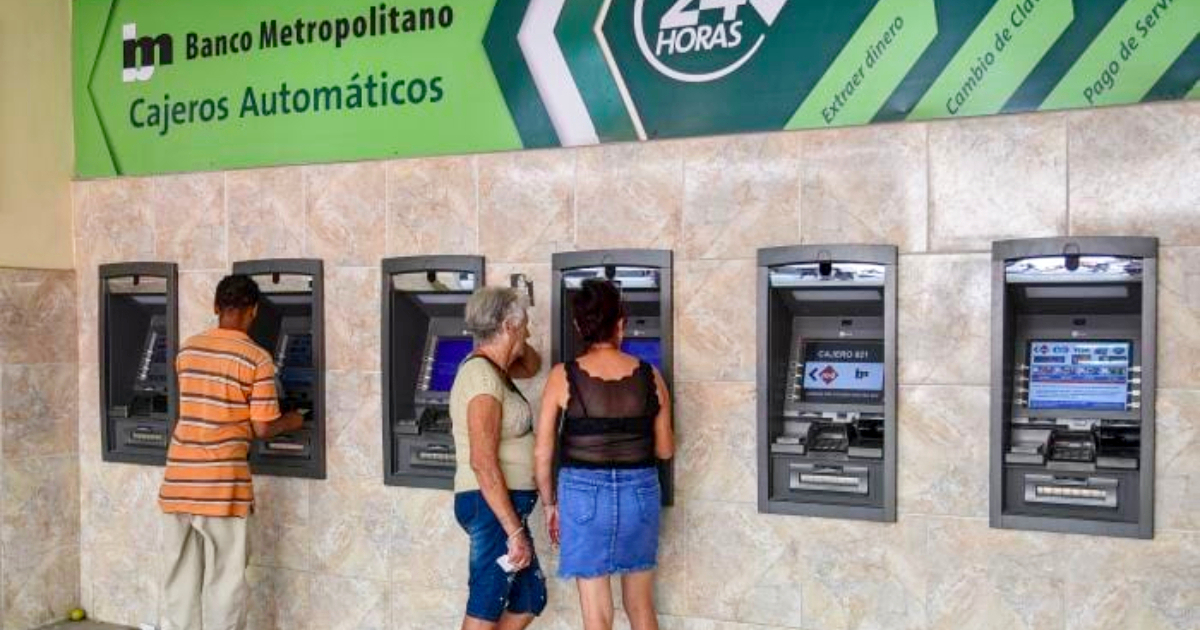
ATMs exist in major cities but can be unreliable or temporarily offline. Cards issued by U.S. banks do not work in Cuba due to sanctions. European and Canadian cards (Visa, Mastercard) function in most state-run ATMs.
- Best banks for withdrawals: Banco Metropolitano, BANDEC
- ATM fees: 3–5 USD per withdrawal
- Withdrawal limits: 5,000 CUP – 10,000 CUP per transaction
- Tip: Bring a mix of cash and cards — never rely solely on ATMs.
Paying in Foreign Currencies
Many hotels, car rental offices, and tourist restaurants accept payments in euros or U.S. dollars. However, they usually apply their own conversion rate, which may differ from the official one. Paying in CUP is almost always cheaper.
- Always ask if prices are quoted in CUP, USD, or EUR.
- Some resorts charge in foreign currency only — bring extra cash.
- Shops serving locals rarely accept anything but CUP.
Mobile & Electronic Payments
Cuba is slowly expanding digital payment systems. Locals use mobile apps like Transfermóvil and EnZona, but foreign visitors generally cannot access them without a Cuban SIM card and local bank account.
As a visitor, expect to rely mainly on cash for the majority of transactions.
Budget & Daily Costs
Cuba can be surprisingly affordable if you spend wisely. Local restaurants and transportation are inexpensive, but imported goods, resorts, and car rentals can be costly.
| Item | Average Cost (CUP) | Equivalent (USD) |
|---|---|---|
| Local meal (paladar) | 500–900 | 4–8 |
| Coffee or soft drink | 150–300 | 1–2 |
| Taxi (Havana city ride) | 1,500–3,000 | 12–25 |
| Bus (Viazul intercity) | 2,000–4,000 | 18–35 |
| Hotel (mid-range) | 15,000–30,000 | 125–250 |
Tipping & Service
Tipping is customary and appreciated. A small amount goes a long way, as service workers often rely on gratuities.
- Restaurants: 10 % of the bill (some include service charge)
- Hotel porters: 1–2 USD per bag
- Taxi drivers: Round up the fare
- Guides & musicians: 2–5 USD depending on service
Money Safety Tips
- Exchange money only at official CADECA or banks.
- Keep your receipts — required for re-exchanging leftover CUP before departure.
- Divide cash between wallet and hotel safe.
- Bring a currency converter app to verify rates.
- Avoid showing large bills in crowded areas.
Where to Go Next
- Cuba Travel Tips – Essential advice for budgeting and spending smart.
- Transportation Guide for Cuba – Understand costs for taxis, buses, and rentals.
- Cuba Health & Safety – Stay safe while handling money and valuables.
Cuba’s monetary system may seem unique, but with a bit of preparation, it’s easy to navigate. Bring cash, exchange wisely, and embrace the slower rhythm of transactions — it’s all part of the authentic Cuban experience.
