
Sign in
For Photos4Travel editors and team members.
Cuba · Photo Spots
Cuba Photo Spots: Havana, Viñales & Trinidad
Pick a few places you can revisit. A single return to a square when the light changes usually teaches you more than a taxi circuit of five monuments. The photographs show specific viewpoints, streets or subjects. They are not proof that access and conditions are the same today.
On this page · 11 sections ShowHide
Malecón, Havana: use the curve of the seawall
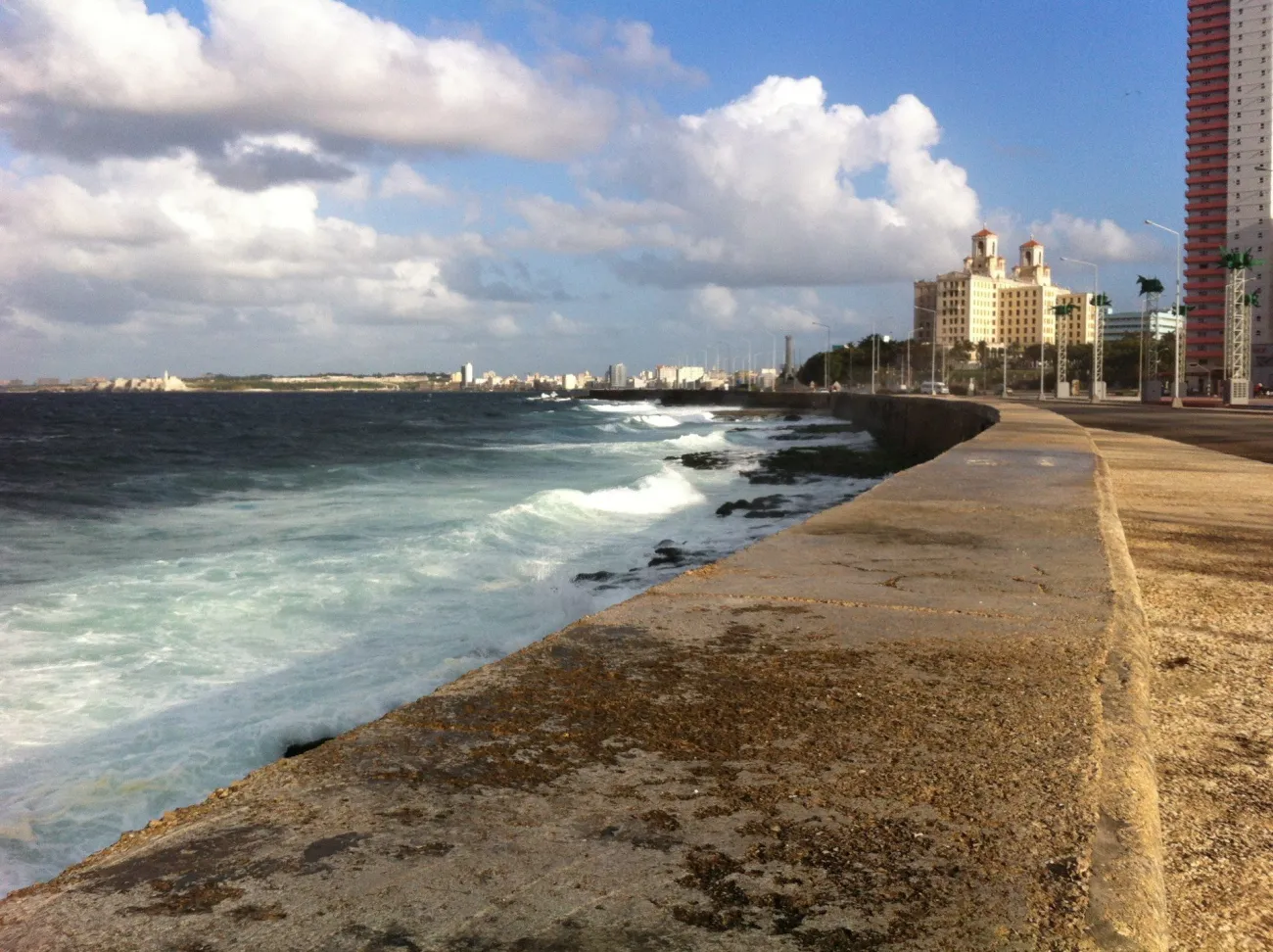

Work from a dry, public part of the Malecón promenade with a view along the coast. Place the near edge of the seawall low in the frame so the line leads towards the distant buildings. The example shows how the bend gives depth even without a sunset. If the promenade is wet or waves break over the wall, move onto a protected city-side route. Go back once conditions settle.
Calle Mercaderes, Old Havana: frame a corner from the shade
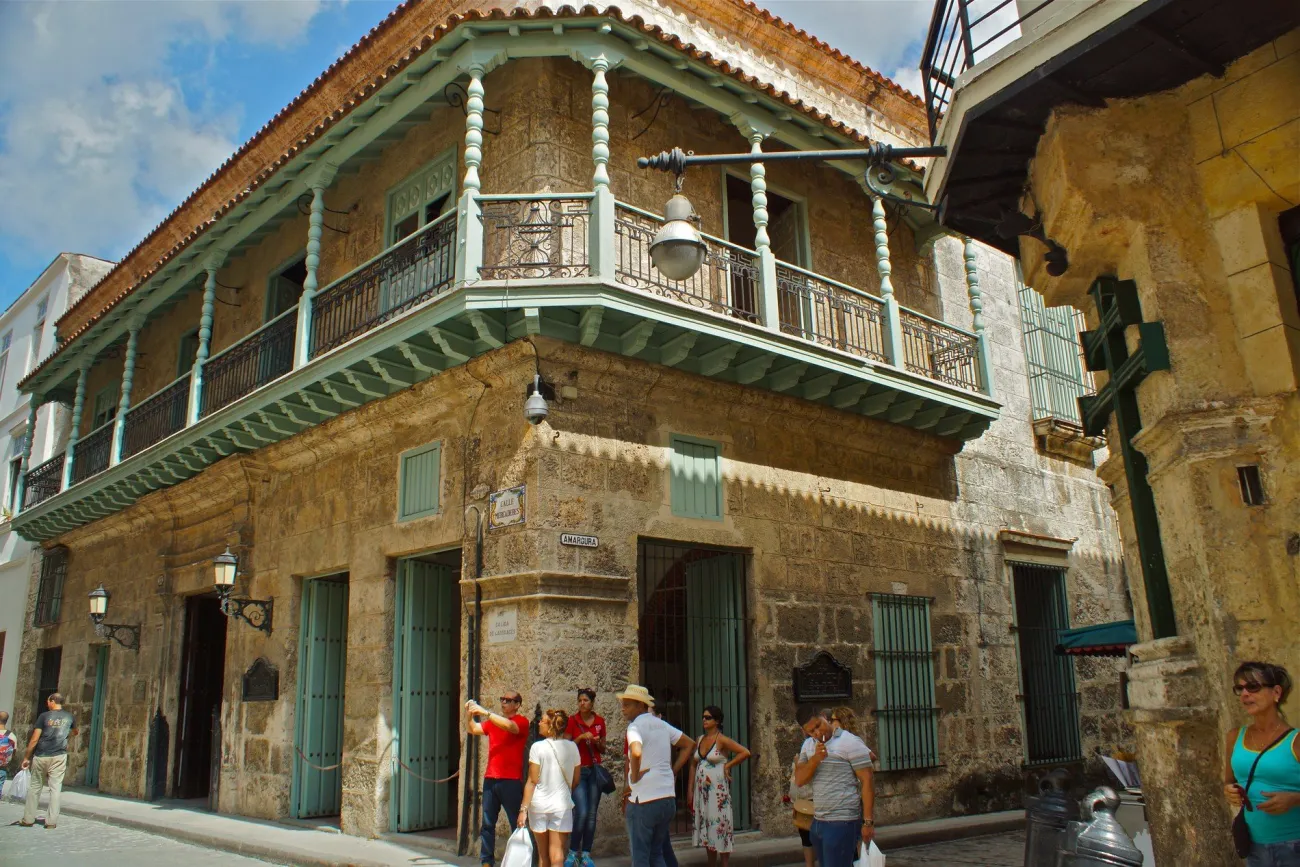

From Plaza Vieja, walk north on Mercaderes towards Plaza de Armas. Stop at Amargura and find a position where you can see both sides of the corner balcony. A wide lens includes the long overhang and the pavement. Step farther back if the balcony starts to lean at the edges of the frame.
Expose for the bright wall and use the shaded doorway for depth. Let pedestrians pass before making the frame. Continue to the fort if you want a second subject on the Old Havana heritage walk.
Gran Teatro: give the façade room in the frame
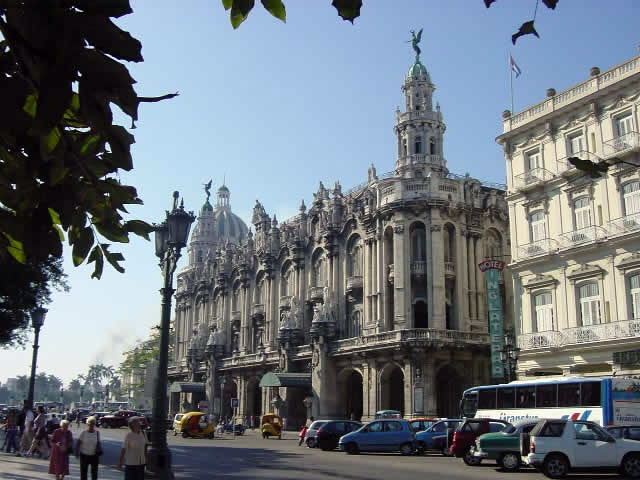
The façade is the subject of this archive photograph; it does not show the García Lorca auditorium. Give the upper ornament enough space and check that a tight crop has not cut through a tower or sculptural detail. Try a wider view before moving closer for stonework. This image is not evidence of present-day entry or performance arrangements; use the linked event guide when planning an indoor visit.
Havana Cathedral: balance the towers and square
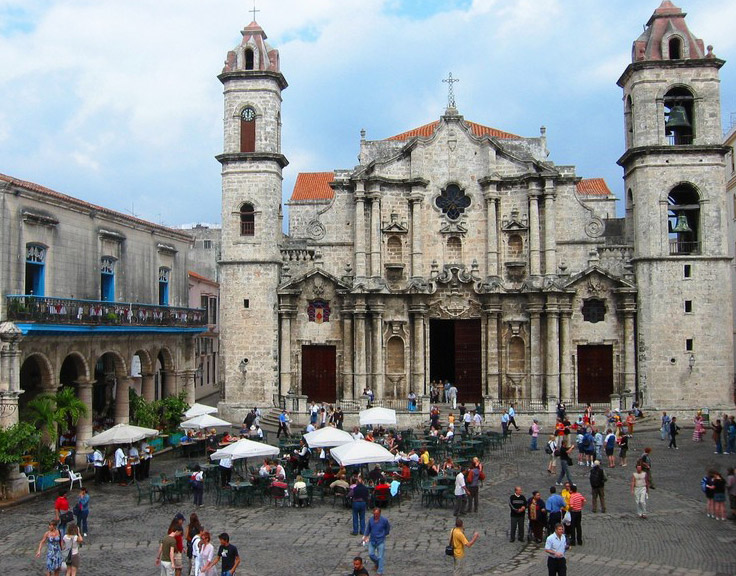
The square gives the cathedral a foreground that changes the scale of the two towers. Start with a frame that includes some paving, then compare it with a closer view of the façade. Keep the camera level when you want straighter vertical lines. Let people move through the square without blocking their route, and ask about photography before entering a religious service. The archive does not record the hour or the camera position, so it cannot establish a precise best-light time.
José Martí Memorial: compare the statue and tower
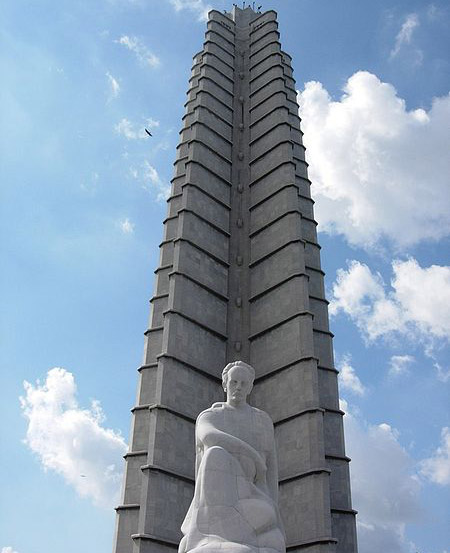
This upward composition concentrates on José Martí and the memorial tower, rather than documenting the whole square. Compare a vertical frame that holds both elements with a closer study of the stone figure. Look at the edges before shooting so that the top of the tower is not clipped. The recorded image gives no current visitor route, opening time or permission to enter a restricted area; follow posted instructions and keep to places open to visitors.
University of Havana: use the stairway as a leading line
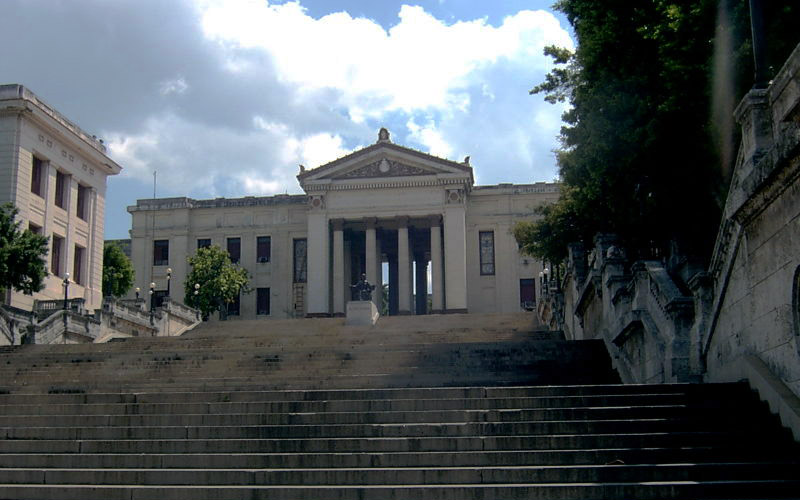
The broad flight of steps leads towards the columned entrance in this archive view. A centred frame emphasises that relationship; a view from one side can make the depth of the stairway clearer. Work from a place where you can stop without interrupting people using the steps. The photograph does not establish current campus access or interior photography permission. Ask before going beyond a visitor entrance, and choose a level public viewpoint if the stairs are unsuitable for you.
Los Jazmines, Viñales: separate the layers of hills
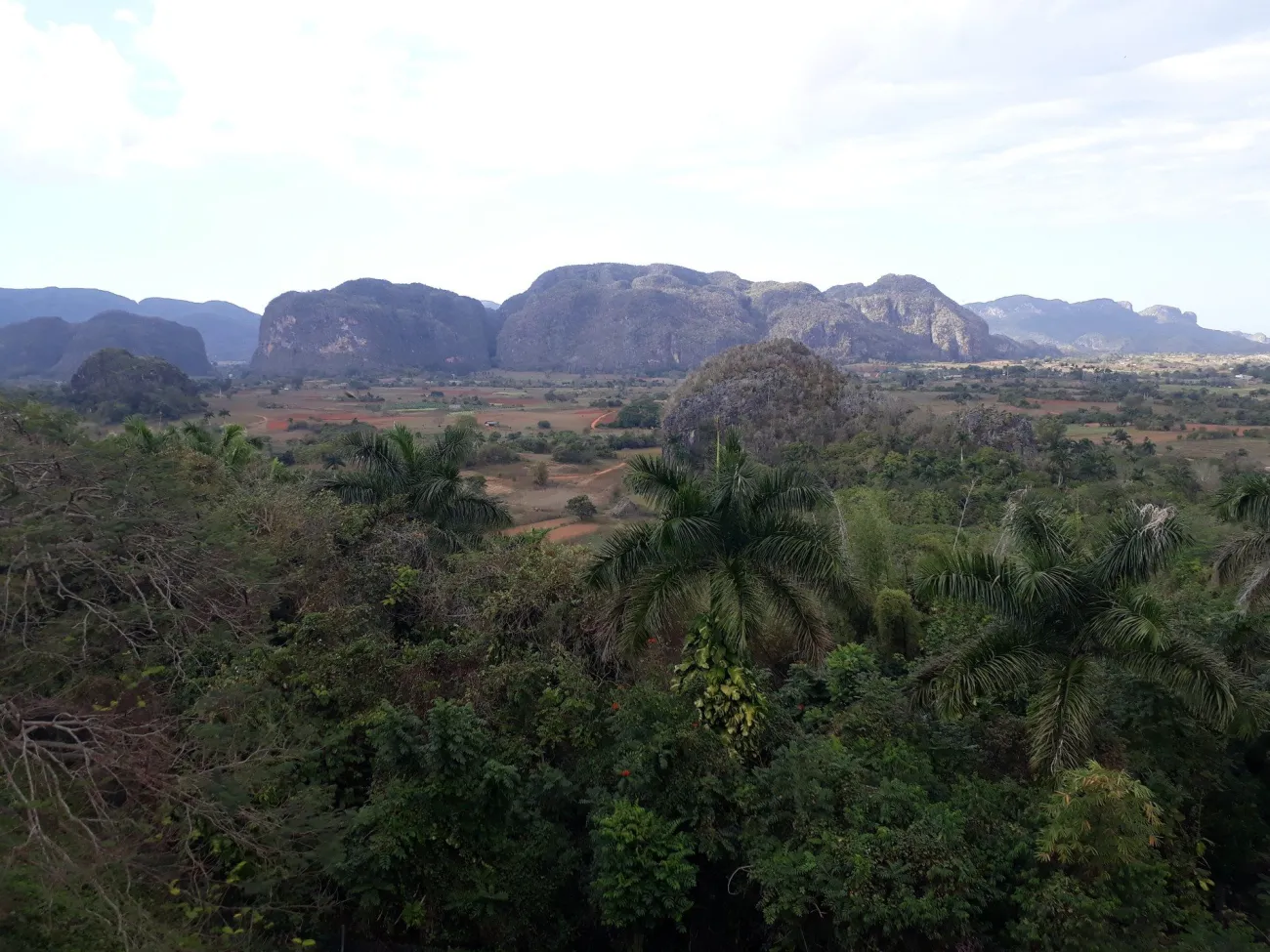

Arrange the viewpoint ride before the morning you want it. At Los Jazmines, use a longer focal length to isolate overlapping mogotes and a wider frame for the fields below. Mist can soften the first view. If it stays too thick, work from a permitted farm path later and make the tobacco barn, soil or field boundary the subject. The Pinar del Río visitor guide identifies the lookout.
A lower angle when mist covers the overlook
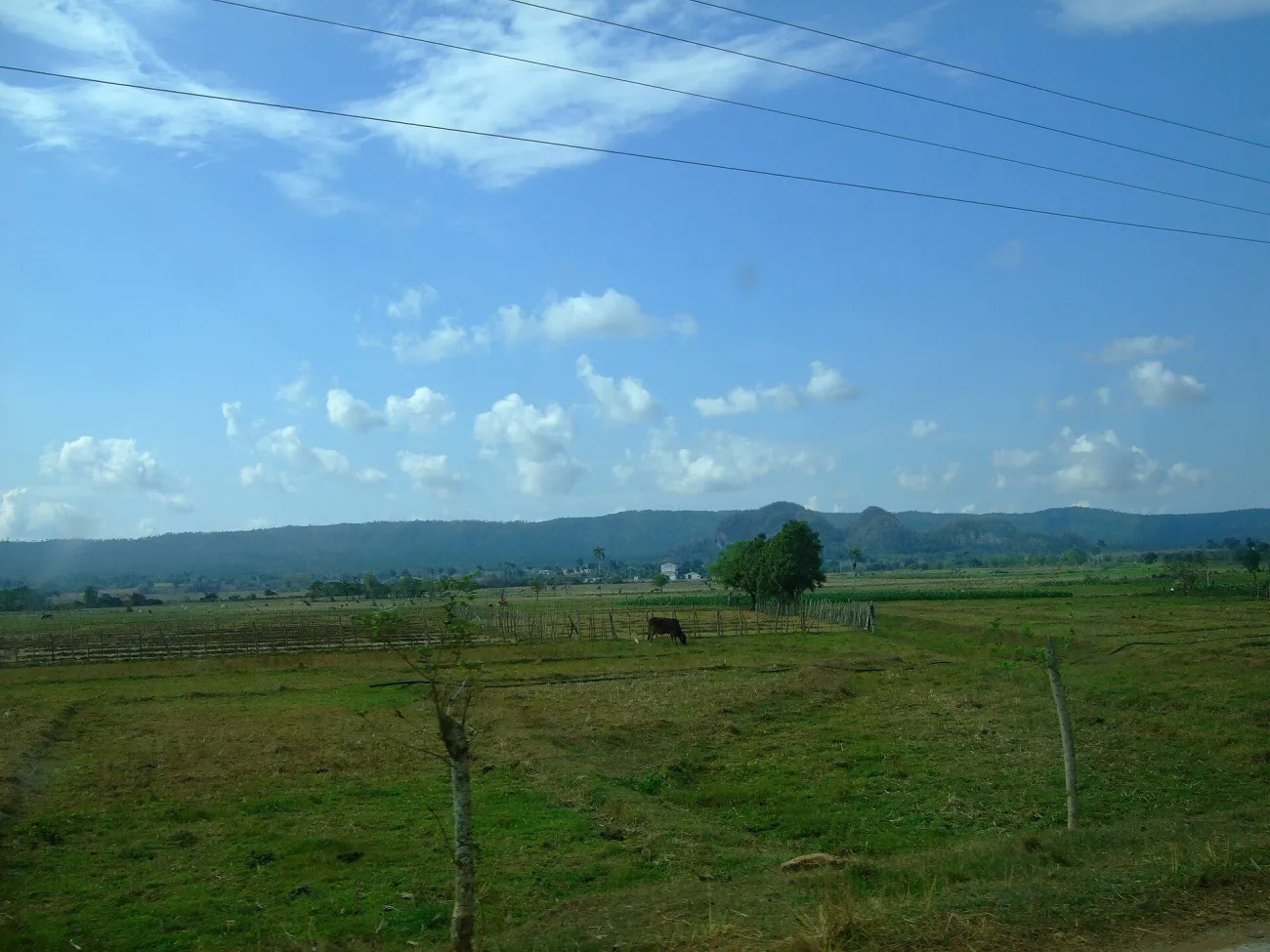

Stay on a public route or a farm path you have permission to use. Put a barn, fence or field edge in the foreground. That turns a hidden skyline into a composition you can still make at ground level.
Trinidad: photograph streets at pedestrian pace
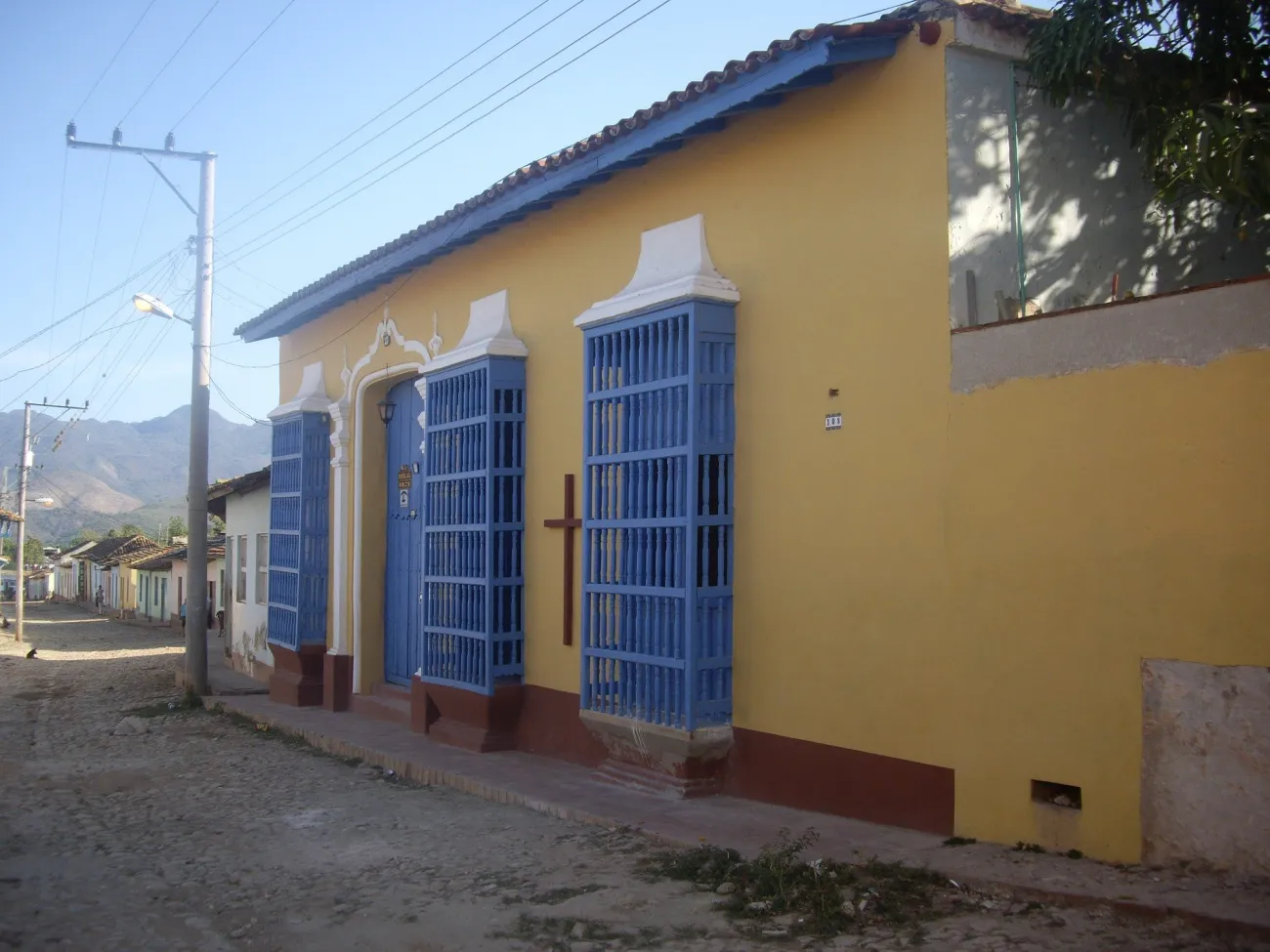

Start at Plaza Mayor in the morning, then take a short walk into Calle Amargura. Look along the street from the shade, with the cobbles and painted facades in the same frame. Look for a viewpoint with a clear walking line for residents. If the opening is blocked by deliveries, return to the square instead of taking a tripod into the lane.
Trinidad street archive: foreground and scale
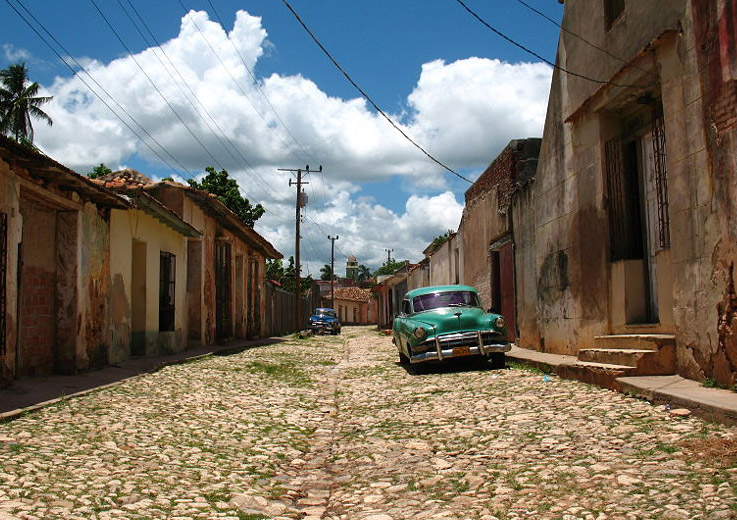
Use the parked car and the low roofline in this archive photograph to compare scale. The uneven stones carry the eye into the street, while the houses keep the composition close to ground level. The street name and the camera position are not recorded, so use the image as a study of foreground and scale rather than as directions to an exact spot. When making your own photograph, leave a clear route for residents and moving vehicles.
Photography rules and practical access
For ordinary visitor travel, leave the drone at home. The UK Foreign Office’s Cuba entry guidance, checked 18 November 2026, says passengers cannot bring drones into Cuba. It warns that a drone can be confiscated on arrival and held until departure. Specialist photography equipment and reporting can need separate import or journalism permissions.
Ask before photographing people, homes, businesses or religious services. Respect posted restrictions and keep military or security installations out of the frame. Keep both hands available on slick cobbles and put a dry bag within reach near the seawall.
Cuba photo locations in this guide
Browse Havana architecture and Trinidad street photographs here, or follow the park, beach and music links for their related planning sections.
- Alejandro de Humboldt National Park
- Beach on Cayo Largo del Sur
- Casa de la Trova in Santiago
- José Martí Memorial
- Havana Cathedral
- Gran Teatro de La Habana
- Trinidad
- University of Havana
Cuba photography FAQs
Where can I shoot Havana at sunset?
Choose a safe, calm stretch of the Malecón promenade or a confirmed indoor viewpoint if seas are rough.
Is sunrise the only time to photograph Viñales?
No. A clear later view works well for farms and field patterns. Early light and mist create a different scene.
What should I bring for Trinidad’s cobbles?
Wear shoes with grip and keep both hands available where the surface is uneven. A small camera or one lens may be enough.
Can I photograph people in markets?
Ask first and stop if someone signals that they prefer not to be photographed. Avoid blocking shoppers or a vendor’s work.