Use the cathedral in its street setting
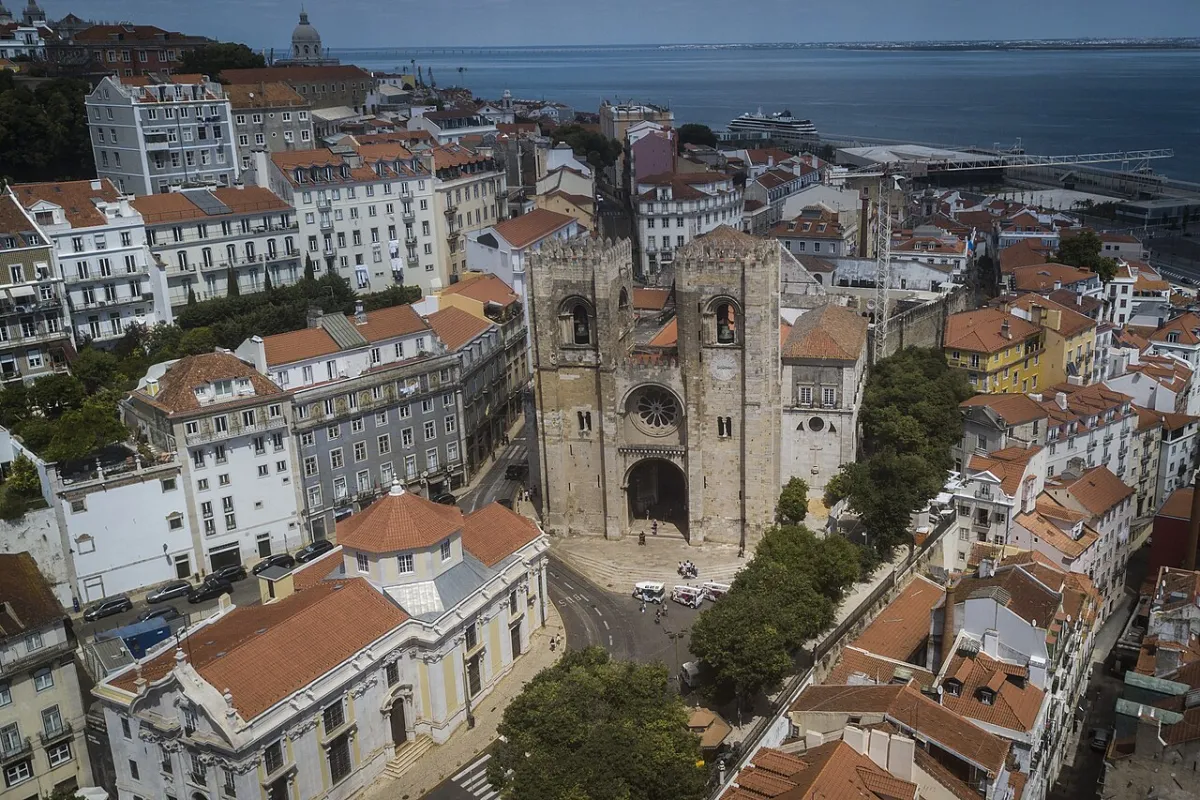
The photograph places the cathedral façade among surrounding roofs and streets. The two towers provide a recognisable architectural subject, while the neighbouring buildings explain that Sé belongs to a working part of the city. Choose whether your own image should isolate the stonework or show that neighbourhood relationship.
At street level, trams, pedestrians and worshippers take priority over a camera position. Establish a safe place to stop before framing, and wait from the pavement rather than stepping into the carriageway. A closer detail may be more practical than a wide façade if the public space is busy. Do not infer an interior photography permission from the fact that an exterior image is published here.
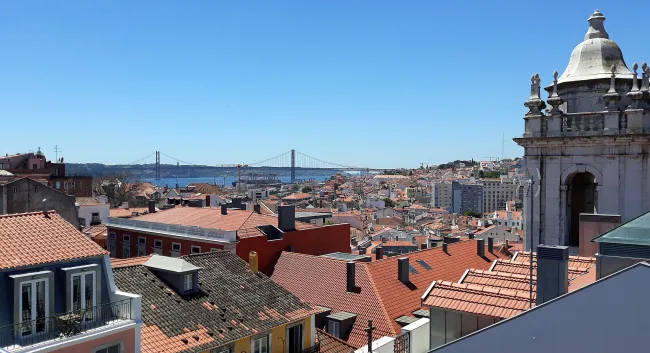
Check the cathedral’s current visitor arrangements through the official source below. Religious activity, sightseeing access and paid visitor areas may have different conditions. Keep voices low, follow signs and ask staff about tripods or other equipment. A Sé stop can fit an Alfama-area day, but the route onward includes slopes and potentially steps; the accessibility section explains the checks to make. Compare the rooftop view when choosing between a building-focused and a broader hillside composition.
Visitor circuit and worship access are different
The cathedral’s rules effective 18 May 2026 require a ticket for sightseeing inside, including the baptistery in the museum circuit. The same notice identifies a separate unticketed Sunday interior-access period. Do not read a general Sunday closure for sightseeing as proof that worship access and the paid visitor route are identical.
For the paid visit, the published schedule lists November–March Monday–Saturday 10:00–18:00, last entry 17:30; April–October 09:30–19:00, last entry 18:30, with Sundays, holy days, Christmas and New Year closures for that visitor schedule. Check any exceptional notice and staff instructions before entering or photographing inside.
Choose your composition
| Subject | Photo approach | Practical limit |
|---|---|---|
| Neighbourhood context | Keep surrounding roofs or streets in the frame. | The published high-level view is not a guaranteed public camera position. |
| Façade detail | Concentrate on towers, doorway or stonework from a safe pavement. | Never stand in the carriageway or on tram tracks to fit the building in. |
| Inside the cathedral | Choose the authorised visitor route and respect worship. | A sightseeing ticket does not itself grant permission for all equipment or spaces. |
On a small screen, swipe the table or focus it and use the arrow keys.
Original portrait photograph of Lisbon Cathedral (opens the existing image file).
Fit this photograph into the trip
Use Lisbon Photo Spots to compare subjects, Map & Neighbourhoods for geographic context and Getting Around for the journey. The source photograph keeps its original credit and licence; route suggestions are editorial planning guidance, not a claim of personal field inspection.
Questions about Lisbon Cathedral
Is all of the cathedral interior free to sightseers?
No. The cathedral’s May 2026 rules require a sightseeing ticket and include the baptistery in the museum circuit. Worship-related access is a separate arrangement.
Can I stand on the tram tracks for a façade photo?
No. Choose a safe permitted pavement position and accept a tighter or different view. Road users, pedestrians and worshippers take priority.
Does the published image identify a public viewpoint?
It shows the cathedral’s wider setting but does not establish a camera position you can access. Plan your own photograph from permitted space.