
Spain Airports
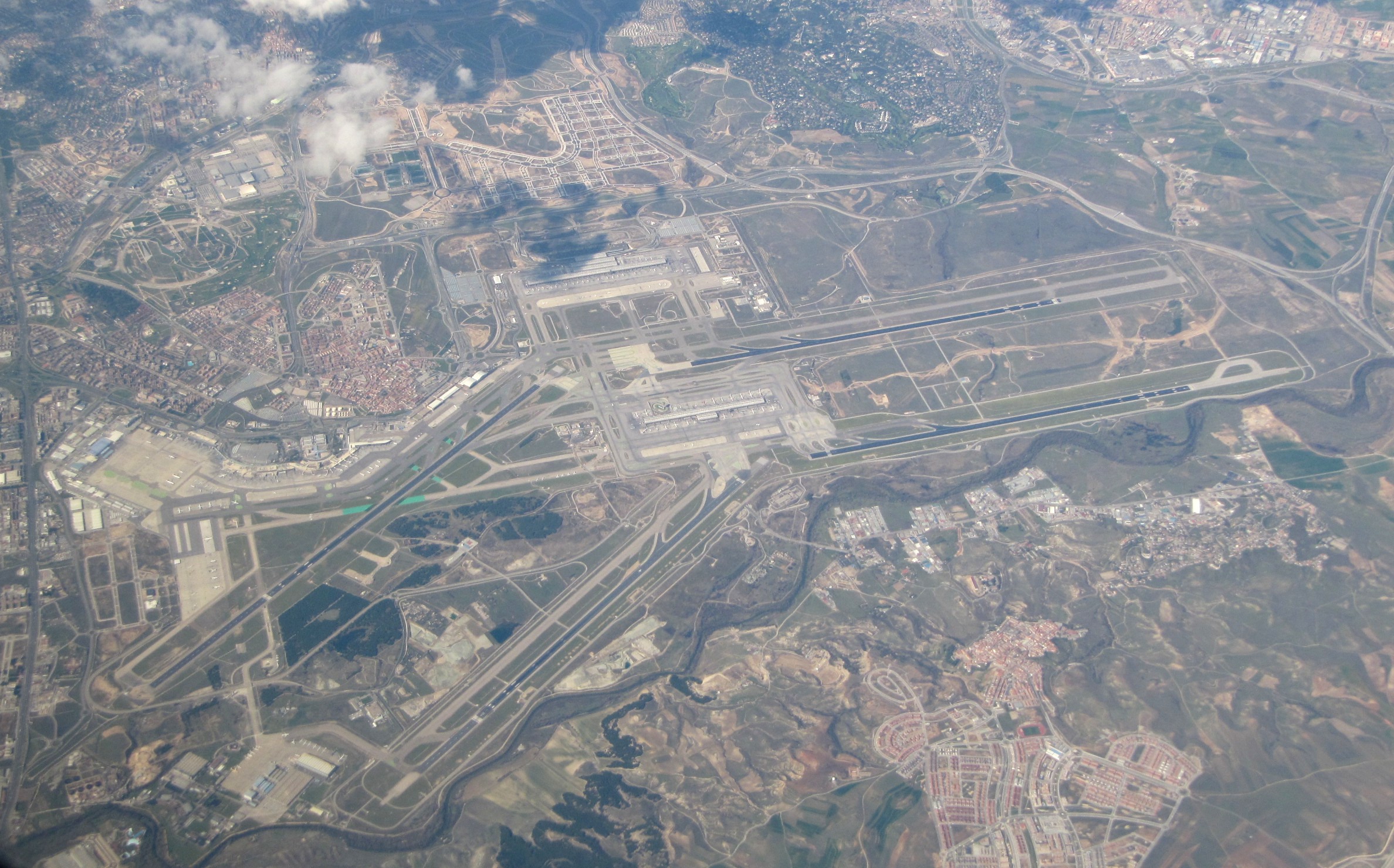
Spain Airports — Complete Guide to Major Airports & Best Flight Options
Spain has one of Europe’s most extensive and traveler-friendly airport networks. With dozens of commercial airports and several major international hubs, flying into Spain is often the fastest and easiest way to start your trip — whether you are planning a short city break, a multi-stop itinerary or a beach holiday in the Balearic or Canary Islands.
This guide explains how Spain’s airports are organised, which ones work best for different types of trips, how long it takes to reach city centres and how you can connect airports with trains, buses and ferries. It also links to our wider Spain travel cluster so you can easily match your arrival airport with the right region, coast or island.
Spain Airports Map – Mainland, Balearic & Canary Islands
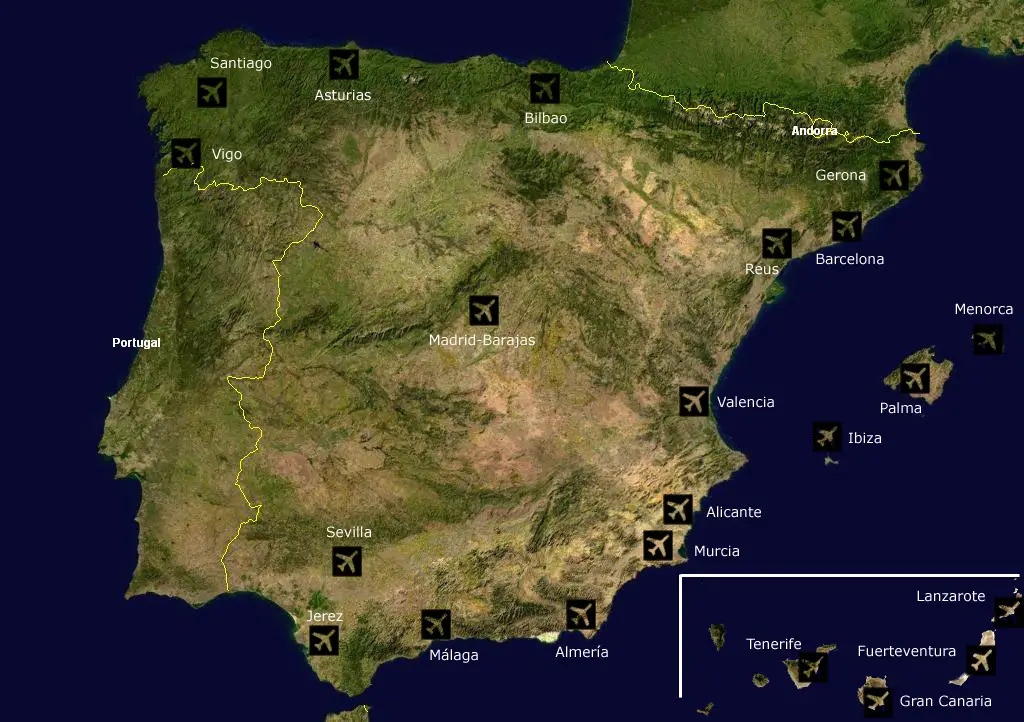
On the map, most of Spain’s busiest airports sit close to the Mediterranean coast, the central plateau around Madrid and the major islands. This layout makes it easy to combine different regions on a single trip: you might fly into Madrid and out of Barcelona, arrive in Málaga for the Costa del Sol or land directly on an island such as Mallorca or Tenerife.
For trip planning, it is helpful to remember that Spain’s airports fall into three broad categories: large international hubs, important regional airports on the mainland and island airports in the Balearics and Canaries. The sections below walk through each group in more detail.
Main International Airports in Spain (Top 10)
The airports below handle the highest passenger numbers and offer the most flight options from across Europe and beyond. They also have reliable onward transport links, making them ideal starting points for many itineraries.
1. Madrid Barajas Airport (MAD)
Madrid Barajas is Spain’s largest and busiest airport, and one of Europe’s key aviation hubs. It offers long-haul connections to North and South America, the Middle East and Asia, as well as a dense network of European and domestic flights.
- Best for: First-time visitors, multi-region itineraries, business trips and long-haul connections.
- Location: North-east of Madrid, with excellent public transport into the city.
- Into the city: Metro takes around 25 minutes, the Cercanías train 17–28 minutes depending on the line, and official taxis run on a fixed-rate system to most central districts.
- Connections: High-speed trains from Madrid link quickly to Barcelona, Seville, Málaga, Valencia and northern Spain (see our Spain Transportation Guide).
If you plan to see several regions in one trip, flying into Madrid often makes sense: you can spend a few days in the capital, then use fast trains or domestic flights to reach the coast or islands.
2. Barcelona El Prat Airport (BCN)
Barcelona El Prat serves Catalonia and much of Spain’s north-eastern Mediterranean coast. It is a major hub for low-cost and full-service airlines and is ideally placed for city breaks, conferences and beach trips.
- Best for: Barcelona city breaks, Costa Brava and Costa Dorada holidays, design and food-focused trips.
- Into the city: Aerobus services reach Plaça Catalunya in around 30–35 minutes, while the metro and regional trains take about 30 minutes depending on your stop.
- Nearby coastlines: North to the rocky coves of the Costa Brava, or south to the resort towns of the Costa Dorada.
Barcelona is also a natural starting point if you want to combine urban culture, beaches and day trips into the Pyrenees or wine regions.
3. Málaga Airport (AGP)
Officially named Málaga–Costa del Sol Airport, AGP is the main gateway to one of Europe’s most popular holiday coasts. It is also a good entry point for wider Andalusia itineraries.
- Best for: Costa del Sol resorts, Málaga city, Marbella, Torremolinos and Andalusia road trips.
- Into the city: The local train reaches Málaga city centre in about 12 minutes, while buses and taxis serve coastal towns in both directions.
- Good to know: Many low-cost airlines fly here year-round, making it a solid option for shoulder-season sun.
4. Palma de Mallorca Airport (PMI)
Palma de Mallorca is the largest airport in the Balearic Islands and handles a huge volume of seasonal holiday traffic alongside year-round connections.
- Best for: Beach and resort holidays, cycling trips, family travel and island road trips around Mallorca.
- Into the city: Regular buses connect the airport to Palma’s centre and seafront; car rental is popular for exploring the island.
- Connections: Ferries link Mallorca to Ibiza, Menorca and mainland ports, useful if you plan an island-hopping trip.
5. Alicante Airport (ALC)
Alicante is the primary airport for Spain’s Costa Blanca region. It offers a strong mix of low-cost and charter flights and is close to many well-known resort towns.
- Best for: Benidorm, Alicante, Altea, Calpe and other Costa Blanca destinations.
- Into the city: Buses take around 20–25 minutes to Alicante centre; direct coach services also run to major resorts.
- Popular with: Long-stay visitors and winter sun seekers thanks to the region’s mild climate.
6. Valencia Airport (VLC)
Valencia’s airport is compact and easy to navigate, yet well connected to both the city and surrounding coastline.
- Best for: Valencia city breaks, food-focused trips, Costa del Azahar and central Costa Blanca.
- Into the city: Metro lines 3 and 5 connect the airport with central stations in about 20 minutes; taxis are quick and reasonably priced.
- Good combination: Valencia pairs well with beach time on the Costa Blanca or a cultural loop including Barcelona and Madrid.
7. Seville Airport (SVQ)
Seville’s airport is smaller than Madrid or Barcelona but ideal for cultural holidays in western Andalusia.
- Best for: Seville city breaks, routes that include Córdoba, Jerez and white villages in western Andalusia.
- Into the city: Airport buses take around 30–35 minutes to the historic centre; taxis are faster but more expensive.
- Connections: From Seville’s rail stations you can easily reach Cádiz, Córdoba and Málaga.
8. Tenerife South Airport (TFS)
Tenerife South is the main international gateway to the Canary Islands, especially for package holidays and winter-sun trips.
- Best for: Southern Tenerife resorts, winter beach escapes and volcano + hiking itineraries around Teide National Park.
- Season: Busy all year, with peak demand in winter when much of Europe is cold.
9. Gran Canaria Airport (LPA)
Gran Canaria Airport sits roughly halfway between the island’s capital, Las Palmas, and the main resort areas in the south.
- Best for: All-inclusive beach holidays, island road trips and wider Canary Islands connections.
- Connections: Frequent buses run north to Las Palmas and south to Maspalomas and Playa del Inglés.
10. Bilbao Airport (BIO)
Bilbao serves the Basque Country and much of Green Spain along the Atlantic coast. The airport’s striking terminal was designed by architect Santiago Calatrava.
- Best for: Basque Country city breaks, San Sebastián, surfing spots and road trips along Spain’s northern coast.
- Into the city: Airport buses reach Bilbao centre in around 15–20 minutes.
Airport-by-Region Overview
Spain’s major airports line up closely with its main travel regions. Thinking in terms of regions makes it easier to pick the right arrival point for your style of trip.
Northern Spain Airports
- Bilbao (BIO) – main hub for the Basque Country.
- Santander (SDR) – serving Cantabria and coastal towns.
- A Coruña (LCG) and Santiago de Compostela (SCQ) – gateways to Galicia and the Camino de Santiago routes.
These airports are perfect for cooler summer road trips, hiking in the Picos de Europa and exploring rugged Atlantic coastlines.
Mediterranean Coast Airports
- Barcelona (BCN) – Catalonia and Costa Brava/Costa Dorada.
- Valencia (VLC) – Valencia region and Costa del Azahar.
- Alicante (ALC) – central and southern Costa Blanca.
- Murcia (RMU) – more low-key resorts and golf developments further south.
Use these airports if your focus is on beaches, coastal towns and city + coast combinations along the Mediterranean.
Andalusia Airports
- Málaga (AGP) – primary gateway to the Costa del Sol and much of Andalusia.
- Seville (SVQ) – ideal for western Andalusia and cultural routes.
- Jerez (XRY) – smaller airport serving sherry country and the Costa de la Luz.
- Almería (LEI) – access to quieter Mediterranean beaches and natural parks like Cabo de Gata.
Balearic Islands Airports
- Palma de Mallorca (PMI) – main Balearic hub.
- Ibiza (IBZ) – Ibiza and nearby Formentera.
- Menorca (MAH) – quieter island with family-friendly beaches.
These airports are heavily seasonal, with intense summer schedules and more limited winter flights. For island-hopping, combine flights with ferries between islands and the mainland.
Canary Islands Airports
- Tenerife South (TFS) and Tenerife North (TFN)
- Gran Canaria (LPA)
- Lanzarote (ACE)
- Fuerteventura (FUE)
The Canaries sit far to the south-west of mainland Spain and work best as dedicated winter-sun or nature trips. Flight times from Madrid or Barcelona are usually around 2.5–3 hours.
Transportation From Spain’s Airports to City Centres
One of the most important planning questions is how quickly you can reach your hotel after landing. Below are approximate travel times from major airports to central areas; always check current timetables before you travel.
- Madrid (MAD) → city centre: 25 minutes by metro, 17–28 minutes by Cercanías train, or a fixed-rate taxi ride.
- Barcelona (BCN) → Plaça Catalunya: around 30–35 minutes by Aerobus, roughly 30 minutes by metro or regional train.
- Málaga (AGP) → Málaga centre: about 12 minutes by local train; buses and taxis continue onwards to coastal resorts.
- Valencia (VLC) → city centre: approximately 20 minutes by metro.
- Alicante (ALC) → city centre: 20–25 minutes by bus.
- Seville (SVQ) → historic centre: roughly 30–35 minutes by airport bus depending on traffic.
- Palma de Mallorca (PMI) → Palma: 15–25 minutes by bus depending on route and traffic.
For a deeper explanation of Spain’s transport options — including high-speed trains, long-distance buses, domestic flights and ferries — see our dedicated Spain Transportation Guide.
Best Airport for Your Trip Type
Different airports suit different styles of travel. Use the suggestions below as a quick shortcut when planning your route.
City Break Traveler
- Madrid (MAD): excellent for museums, shopping and multi-city rail connections.
- Barcelona (BCN): blend of culture, architecture and city beaches.
- Valencia (VLC): foodie hotspot and relaxed coastal city.
- Seville (SVQ): ideal for flamenco, historic quarters and tapas.
Pair your arrival airport with our Accommodation in Spain and Things to Do in Spain guides to choose the right neighbourhood and key sights.
Beach & Relaxation Traveler
- Málaga (AGP): Costa del Sol resorts and Andalusian beaches.
- Alicante (ALC): Costa Blanca and long-stay winter escapes.
- Palma de Mallorca (PMI): coves, sandy bays and island resorts.
- Barcelona (BCN): easy city + beach combinations.
For a deeper coastal overview, visit Beaches in Spain and match your chosen airport to the kind of coastline you prefer.
Culture & History Traveler
- Madrid (MAD): access to Toledo, Segovia, Ávila and Salamanca.
- Seville (SVQ) and Málaga (AGP): routes through Seville, Córdoba, Granada and white villages.
- Barcelona (BCN): Gaudí architecture, historic quarters and nearby medieval towns.
Combine this section with our About Spain and Things to Do in Spain pages for background and must-see sites.
Food & Wine Traveler
- Barcelona (BCN) and Girona: Catalan cuisine and wine regions such as Priorat.
- Bilbao (BIO) and San Sebastián: pintxos bars and Michelin-starred dining in the Basque Country.
- Seville (SVQ) and Málaga (AGP): tapas culture, sherry country and coastal seafood.
Start planning with Food & Drinks in Spain and use Spain Restaurants for tips on meal times, reservations and restaurant styles.
Road Trip & Outdoor Traveler
- Bilbao (BIO): Perfect for a Green Spain road trip along the Atlantic coast.
- Málaga (AGP): Good for driving routes through white villages, Ronda and inland Andalusia.
- Barcelona (BCN): Access to the Pyrenees, Costa Brava and rural Catalonia.
- Tenerife South (TFS) or Gran Canaria (LPA): Volcanic landscapes, hiking routes and coastal walks in the Canary Islands.
Where to Go Next in Our Spain Guide
Once you have decided which airport fits your trip, continue planning with the rest of our Spain travel cluster:
- Spain Fast Facts – essential background, currency, language and travel basics.
- About Spain – geography, regions, culture and daily life.
- Weather in Spain & When to Go – seasonal advice for cities, coasts and islands.
- Beaches in Spain – how coastlines differ between the Atlantic, Mediterranean and islands.
- Accommodation in Spain – choosing the right area and type of stay near your arrival airport.
- Food & Drinks in Spain – what to eat and drink in each region.
- Things to Do in Spain – highlight experiences matched to regions and airports.
- Spain Transportation Guide – trains, buses, domestic flights and ferries.
- Spain Travel Tips – safety, money, etiquette and practical logistics.
- Canary Islands Travel Guide – detailed look at island-hopping and winter-sun routes.
With the right airport selected and these guides open in separate tabs, it becomes much easier to design a Spain itinerary that flows logically — from arrival and transfers to coastlines, cities, islands and the journey home.