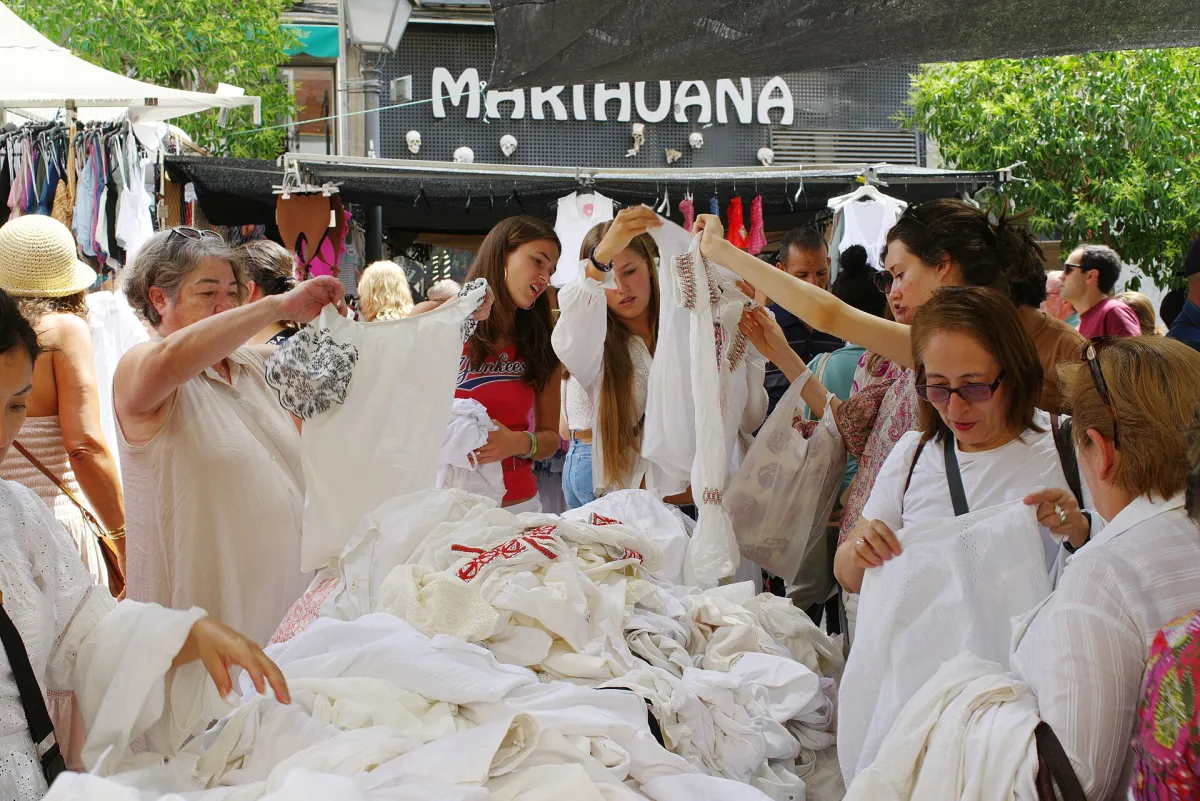
This guide helps you compare city shopping areas, regional crafts and markets, check the product you are buying and plan how to take it home.
Why Spain Is One of Europe’s Best Shopping Destinations
- Affordable high-quality fashion (Zara, Mango, Massimo Dutti—Spain-based)
- Handmade crafts that reflect centuries of regional tradition
- World-class markets for food, art, antiques and textiles
- Compare the actual product, quality and final price.
- Seasonal sales: verify the advertised reduction and the item’s final price.
- VAT refunds for eligible residents and qualifying goods: check the Spanish Tax Agency’s procedure.
Spanish shopping blends modern trends with deep-rooted artisanal culture—making it both exciting and authentic.
Best Cities for Shopping in Spain
Madrid
Madrid combines luxury, indie fashion, vintage stores and massive markets. Each neighborhood has its own shopping personality.
Best Shopping Districts in Madrid
- Gran Vía: Major brands, flagship stores, global fashion chains. Great for fast fashion and everyday essentials.
- Salamanca & Barrio de Serrano: Luxury boutiques, Spanish designer brands, leather goods. Comparable to Paris’s Avenue Montaigne.
- Malasaña: Independent designers, vintage fashion, second-hand shops, alternative accessories.
- Chueca: Stylish concept stores, artisanal jewelry, design-focused boutiques.
- El Rastro (Sundays): Spain’s most iconic flea market—antiques, vinyl, handmade crafts.
Calle Velarde in Malasaña is one area to explore for vintage shops; check current businesses and opening times.
Barcelona
Barcelona is Spain’s capital of design, creativity and boutique shopping. The city blends international luxury with local Catalan designers and artisan studios.
Best Shopping Districts in Barcelona
- Passeig de Gràcia: Gucci, Chanel, Cartier + high-end Spanish brands.
- El Born: Small workshops, jewelry makers, leather artisans. Perfect for unique gifts.
- Gràcia: Locally made clothing, eco-friendly fashion, ceramic ateliers. Compare individual shops and opening times.
- Portal de l’Àngel: Popular brands like Zara, Mango, Pull&Bear.
- La Boqueria Market: Gourmet food items—spices, sweets, olive oil.
In Gràcia and El Born, compare independent shops and ask about the maker and production location.
Seville
Seville is the heart of Andalusian craftsmanship—ceramics, fans, embroidery, leather and flamenco clothing dominate the local shopping scene.
Where to Shop
- Triana: Explore the district’s ceramic tradition, then ask individual shops about the origin and maker of their products.
- Santa Cruz: Hand-painted fans (abanicos), embroidered scarves, small artisan shops.
- Sierpes Street: Fashion accessories, shoes, bridal & flamenco outfits.
In Triana, ask a workshop whether visits or demonstrations are offered; do not assume working studios admit visitors.
Valencia
Valencia blends modern shopping districts, creative boutiques and markets full of local foods.
- Colón Street & Colón Market: Fashion brands and boutique stores.
- Ruzafa: Trendy shopping streets—art, clothing, indie designers.
- Mercado Central: Best place to buy spices (pimentón), saffron, jamón and citrus products.
Planning Tip: For gourmet local products, look for Valencian arroz bomba—the exact rice used in traditional paella.
Basque Country (Bilbao & San Sebastián)
The Basque region is perfect for food shopping—anchovies, cheeses, cider and txakoli wine.
Where to Shop
- Bilbao Old Town: Leather goods, artisan crafts.
- San Sebastián: Luxury gourmet products.
Balearic & Canary Islands
- Mallorca: Pearls (Majorica), espadrilles, olive wood products.
- Ibiza: Boho clothing, beachwear, handmade jewelry.
- Lanzarote: Volcanic stone crafts, black jewelry.
What to Buy in Spain
1. Fashion & Footwear
- Leather boots + sandals (excellent quality & price)
- Spanish fashion brands (Zara, Mango, Massimo Dutti)
- Designer fashion (Loewe—Spain’s luxury powerhouse)
2. Artisan Crafts
- Talavera ceramics: White-blue hand-painted patterns.
- Seville ceramics: Moorish-style azulejos.
- Fans (abanicos): Hand-painted wooden fans from Andalusia.
- Guitar workshops: Madrid is known for major classical guitar makers.
3. Gourmet Food Products
- Jamón ibérico (bellota): Spain’s finest cured ham.
- Olive oil: Premium oils from Jaén and Córdoba.
- Pimentón: Smoked paprika from La Vera.
- Saffron: From Castilla-La Mancha.
- Spanish cheese: Manchego, Idiazabal, Mahón.
- Wines: Rioja, Priorat, Ribera del Duero, Albariño.
What to Buy by Region (Quick Guide)
| Region | Signature Products |
|---|---|
| Catalonia | Jewelry, ceramics, artisan fashion |
| Andalusia | Ceramics, fans, leather, olive oil |
| Basque Country | Anchovies, txakoli wine, gourmet tins |
| Valencia | Paella rice, citrus products, ceramics |
| Madrid | Fashion, leather goods, guitars |
| Mallorca | Pearls, espadrilles, olive wood |
Hidden Gem Shopping Streets
- Calle de las Infantas (Madrid): Indie designers & vintage.
- Carrer Verdi (Barcelona, Gràcia): Artisan boutiques.
- Calle Regina (Seville): Handmade accessories, ceramics.
- El Clot Market (Barcelona): Less touristy food market.
Traditional Markets in Spain

Local Markets Worth Visiting
- El Rastro (Madrid): Antique heaven.
- Mercado de San Miguel (Madrid): Premium food stalls.
- La Boqueria (Barcelona): Fresh produce & tapas.
- Valencia Central Market: One of Europe’s largest food markets.
Practical Shopping Hours and Sale Checks
1. Know When to Shop
- Opening hours: Some small shops close in the afternoon. Check the individual shop’s current hours.
- Sundays and holidays: Opening depends on the shop and local arrangements; check before making a special journey.
- Evenings: Locals shop after 18:00.
2. Understand Rebajas (Seasonal Sales)
Spain has two major sale periods:
- Winter Rebajas: January–February
- Summer Rebajas: July–August
Compare the final price, available size and return policy before choosing a sale purchase.
3. Avoid Tourist Traps
Compare price and quality at several shops, and ask for clear product information before paying.
4. Food Shopping Tip
Ask for “producto artesanal”—Spanish vendors proudly point to handmade or small-production items.
VAT Refunds: Eligibility and DIVA
A VAT refund depends on residence, qualifying goods and the required departure procedure. Use the DIVA guidance below; a non-EU passport and a receipt alone are insufficient.
Check the Product, Maker and Practical Use
For a craft purchase, ask who made it, where it was produced and which parts were made by hand. A shop in a historic district can sell both local work and imported souvenirs. Look at the actual object and its label rather than treating the street address as proof of origin. The official ceramics overview offers a starting point for researching regional traditions.
For tableware, ask whether the item is intended for food use and how to clean it. A decorative tile and a serving dish have different purposes even if they share a pattern. For leather, fabrics or jewellery, check the material, size and care instructions. Take a photograph of the maker's details and keep the receipt so that you can identify the item after returning home.
Markets: Go with a Purpose and a Manageable Bag
A food market, a flea market and a craft fair offer different shopping experiences. At a produce market, leave room for people making ordinary daily purchases. Ask before taking a close photograph of a worker or stall, and avoid blocking an aisle while comparing items. Check opening days and current visitor arrangements with the market itself, especially around public holidays.
At a flea market, inspect the condition and completeness of an item before agreeing on a price. If a purchase is valuable or described as antique, ask for clear documentation and check whether export controls or other restrictions apply. Do not assume an old-looking object can be taken home without further checks. A small, well-documented purchase may be more practical than a bulky item that needs uncertain shipping.
Food, Wine and Gifts to Bring Home
Check your destination country's import rules before buying meat, cheese, plants or other restricted products. Packaging does not automatically make a food admissible. For wine and olive oil, compare airline luggage and liquid restrictions with the customs allowance where you will arrive. Keep fragile bottles protected and ask the retailer about suitable packaging, while confirming transport limits with the carrier.
For saffron, cured meat or cheese, read the origin and product description carefully. A premium term on a sign should match the actual label. If you need a gift for someone with an allergy or dietary restriction, choose a product with ingredients they can check. Buy a manageable quantity and keep receipts; the cheapest large package can be poor value if it cannot travel safely or be brought into the destination country.
Returns, Payment and Sale Labels
Ask about the shop's return policy before paying, including whether an unwanted item can be refunded, exchanged or returned only for store credit. Policies for a change of mind differ from remedies for faulty goods. Keep the receipt and original packaging where practical, and check whether a sale item has particular conditions. Do not assume a physical shop has the same return arrangements as an online purchase.
Compare the final price of an item you actually want. A sale percentage is not a guarantee of value, and the lowest price may be for a different size or model. Check that the currency and amount are correct before approving a card payment. If shipping is offered, obtain the full price, expected delivery arrangements and contact information in writing, including who handles any loss or damage.
VAT Refund Planning for Eligible Travellers
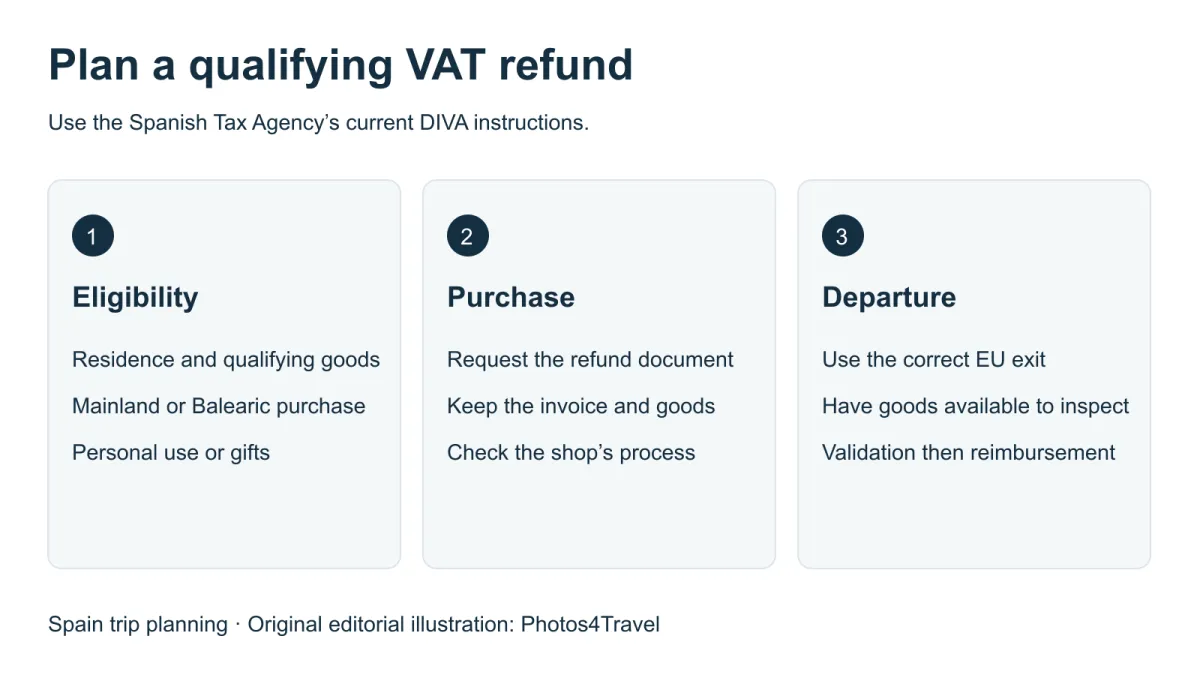
Eligibility is based on residence and qualifying purchases, not simply on holding a non-EU passport. Ask the retailer for the electronic refund document when buying eligible goods on the mainland or Balearic Islands. Keep the goods and documents available for the required departure validation. Hotel nights, meals and other services do not qualify under the goods refund procedure.
Use the Spanish Tax Agency's DIVA instructions for eligibility, deadlines and the correct point of validation. If your final EU departure is in another country, follow the procedure for that exit. Validation and receiving the money are separate steps; a refund intermediary may charge a fee. Purchases in the Canary Islands, Ceuta and Melilla have different tax treatment.