
SPAIN · CANARY ISLANDS GUIDE
Canary Islands Photos & Photo Spots
The Canary Islands offer several very different photographic subjects: high coastal cliffs, cultivated volcanic ground, layered mountain silhouettes and historic streets. This guide helps you choose a subject and plan a practical visit. It does not claim personal shooting experience or identify an exact camera position where the source record does not establish one.
Plan access before light. A sunset photograph is only useful inspiration if you can reach an authorised viewpoint and return safely. A dramatic cliff image does not establish a legal path to the edge, and a photograph from an earlier visit is not evidence that a route is open today. Use local notices and the relevant authority for the actual day.
Los Gigantes cliffs, Tenerife
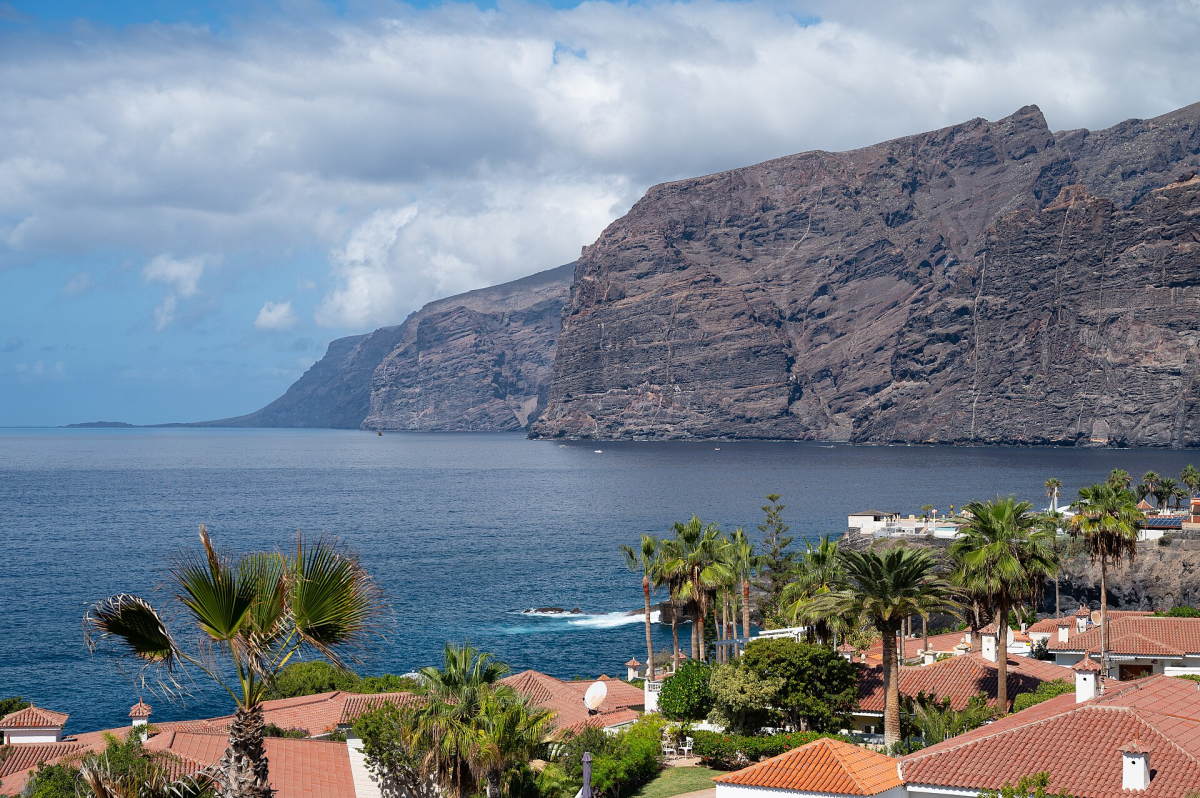
The cliffs form a strong landscape subject from the town and its authorised public viewpoints. A wider frame can show their relationship to the sea and settlement; a tighter view can emphasise the layered rock face. Decide whether you want a landscape record or a photograph that includes the life of the waterfront before choosing a lens and waiting position.
The example photograph was taken from Los Gigantes towards the cliffs. It illustrates that broad relationship, not permission to enter a private terrace or use an unofficial cliff path. Choose a public place where you can stand without blocking others. If a foreground element improves the composition, keep it within the space you are permitted to use rather than climbing a barrier to remove an obstruction.
Compare the actual light and visibility when you arrive. Haze can reduce distant detail, while cloud can change contrast across the cliff face. Do not rely on a universal “best hour” without checking the season, your viewpoint and the weather. If you want an evening photograph, plan the route back and any transport before setting up.
A boat offers a different viewpoint but also changes stability, spray exposure and the time available for a frame. A wildlife or sightseeing excursion is not automatically a photography charter. Ask what the programme allows and keep the operator's safety and wildlife instructions ahead of the shot.
La Geria vineyards, Lanzarote
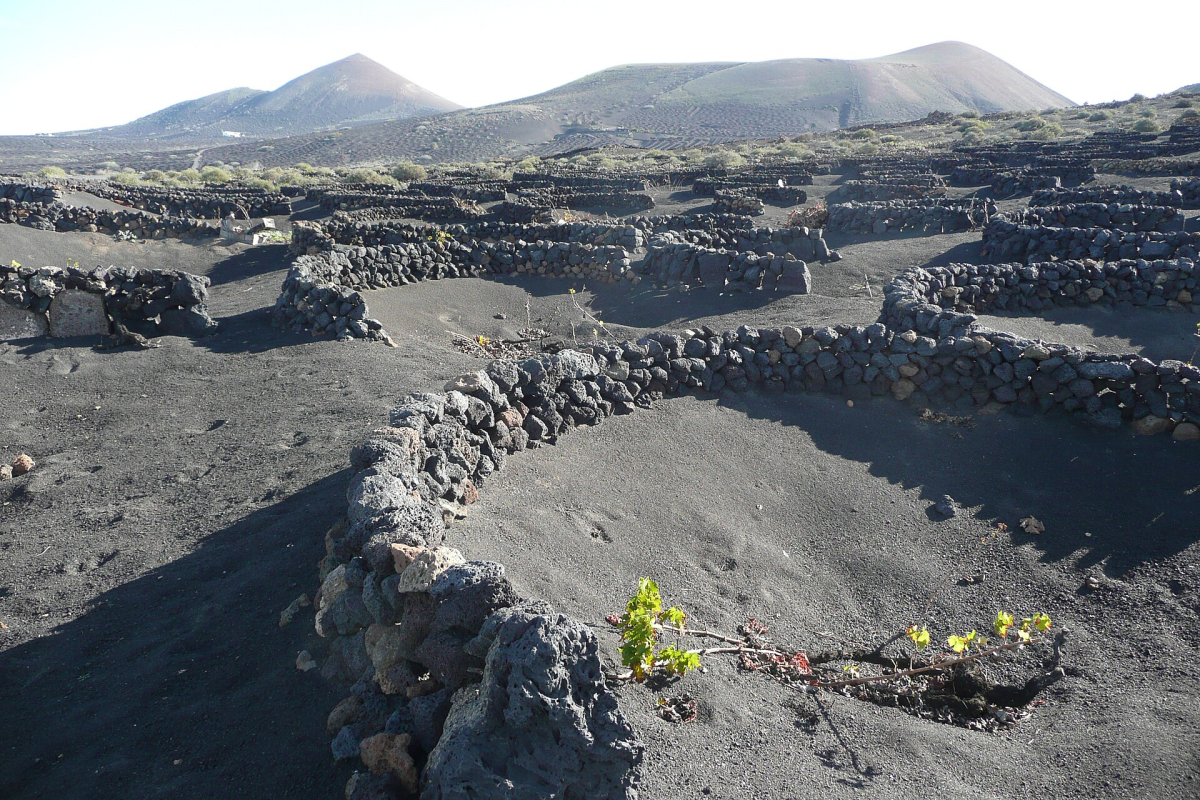
La Geria's volcanic ground and stone enclosures create patterns that reward careful framing. A broad composition can show repeated forms and the relationship to the surrounding hills. A closer view can focus on a vine and its protective wall, but it should be made from an authorised path or as part of a permitted producer visit.
The cultivation is working land. Do not step into a planted enclosure, move stones or cross a wall to obtain a cleaner foreground. A road verge is not automatically a safe place to park or set up a tripod. Use a designated stop, a public route or a winery's agreed visitor area, and ask the landholder when the access is unclear.
The example image shows the relationship between planted depressions and volcanic material. Use it to think about scale: a line of walls may read as a pattern at one focal length and as a set of individual growing spaces at another. Let the actual route and light determine the framing rather than trying to copy an image from a position you cannot verify.
A winery visit can add explanation of the landscape and make the photographic subject more meaningful. Check the booking arrangements and whether photography is permitted during the programme. Keep any tasting and the onward drive planned separately; the photo stop should not leave transport unresolved.
Roque Nublo and layered mountain views, Gran Canaria
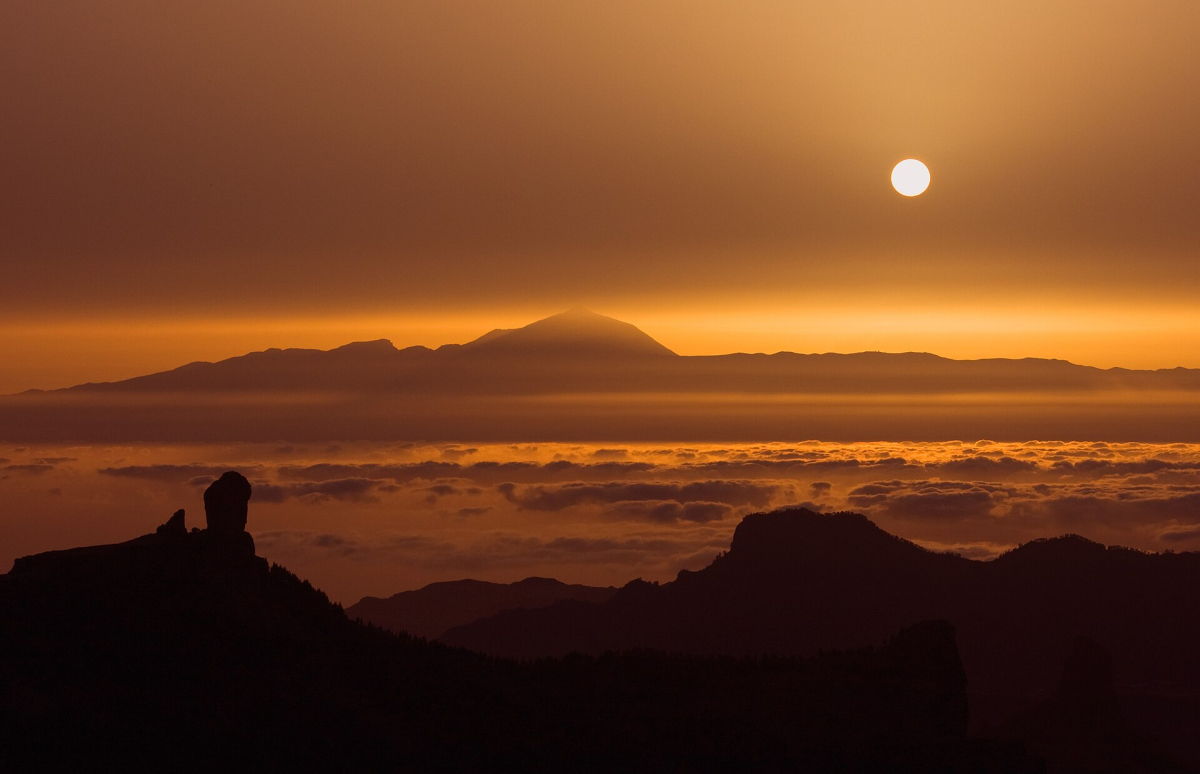
Mountain silhouettes can provide a different kind of image from a close view of a landmark. The example includes Roque Nublo, distant Teide and atmospheric haze. It is a record of those conditions, not a guarantee that the same distant island will be visible on your date. Visibility, cloud and dust can change the whole composition.
Choose an authorised viewpoint and check current access arrangements before making the journey. A named landmark can be visible from several places; the image alone does not establish that its camera position is public or accessible. Avoid claiming an exact shooting coordinate without a reliable source. A sensible alternative viewpoint is preferable to an improvised approach.
For an evening plan, check the sunset time for the date and allow for the complete return, including the walk to the vehicle. Carry the equipment and layers appropriate to the outing, and avoid making a long unfamiliar drive part of a rushed schedule. Do not stand in a road or block a viewpoint while waiting for the light.
Keep the scene honest when editing a documentary travel photograph. Adjustments that change the apparent position or scale of distant landforms can mislead someone using the image to understand the geography. A dramatic crop is not evidence of a close or easy connection between the islands.
Balconies and streets in Santa Cruz de La Palma
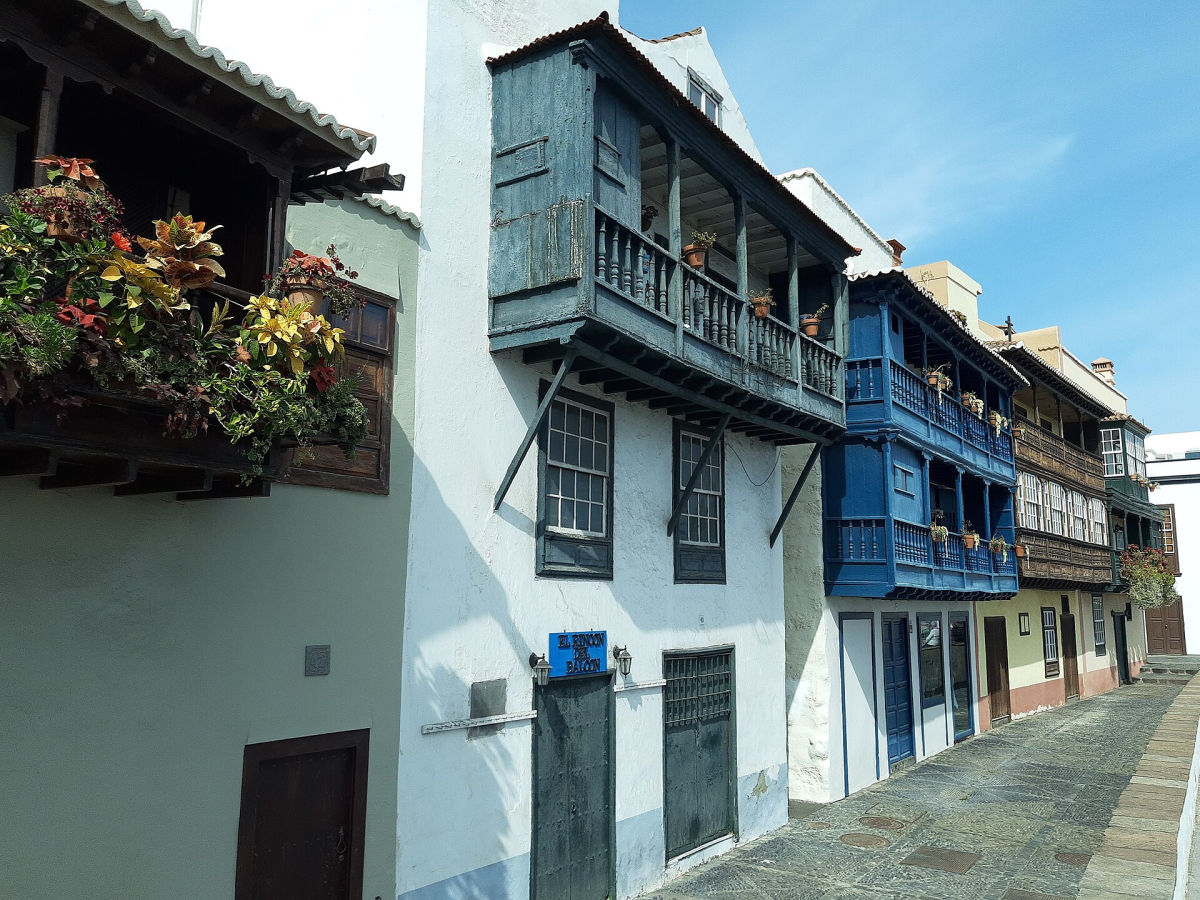
The town's traditional balconies provide colour, rhythm and architectural detail. A wider street frame can show how a building relates to its neighbours, while a detail can emphasise timber, planting or the repetition of forms. Choose the perspective from a public space and avoid obstructing entrances or pedestrians while making the image.
Many attractive buildings remain homes or working premises. Ask before entering a courtyard or making a close photograph of a resident. A public street view does not grant access to a balcony, and a visible interior should not be treated as a staged scene. Give people room to use their own neighbourhood without becoming part of a photograph they did not choose.
Check how the light falls on the particular façade rather than assigning one ideal time to the whole town. Shade can help retain colour and detail, while a strong contrast may need a different composition. If a street is busy, wait in a place that does not create an obstacle and use a smaller setup where practical.
The example records the balconies from street level. It is intended to help identify the subject and plan a respectful walk, not to suggest that every building is a visitor attraction. Combine the photography with a slower cultural visit rather than moving from façade to façade without noticing the town around them.
A practical photo outing checklist
| Before leaving | At the location | Before returning |
|---|---|---|
| Check the route, weather and any access restriction | Choose an authorised standing place | Leave enough daylight or an agreed night return |
| Carry only the equipment suited to the outing | Keep paths, roads and entrances clear | Take litter and all equipment with you |
| Save the address or route offline | Ask before close portraits or private access | Review the next day's conditions separately |
Drone use requires its own current checks and should never be inferred from this page. Protected areas, airspace and the precise location can impose different restrictions. Use the responsible authority's information before carrying out a flight. A still photograph taken from above does not establish that a drone flight is allowed.
Keep source and capture-date information with any photograph you later share. It helps distinguish a record of a particular visit from current access advice, especially where a viewpoint, road or visitor facility has changed.



